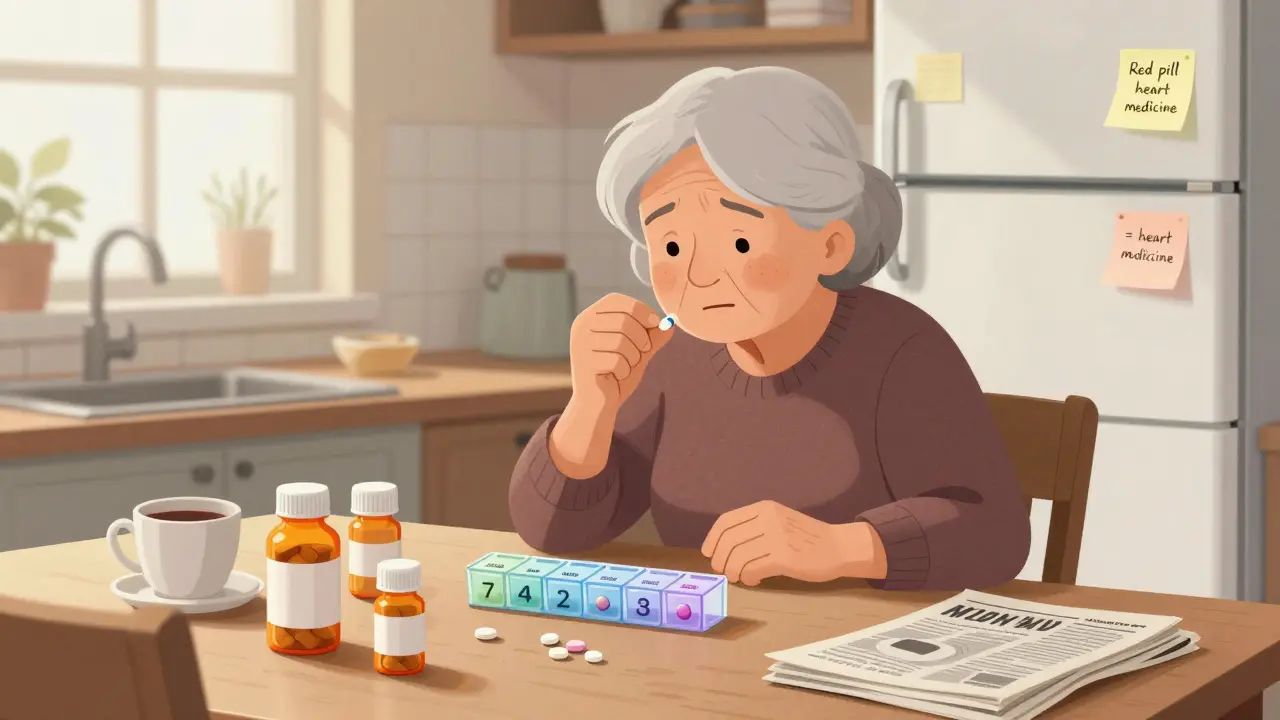
More than 88% of adults over 65 in the U.S. take at least one prescription drug. Nearly half take five or more. And yet, nearly half of them don’t take them as directed. This isn’t laziness. It’s not forgetfulness alone. It’s a system failing people who need it most.
Why Older Adults Miss Doses
It starts with the sheer number of pills. A 72-year-old with high blood pressure, diabetes, arthritis, and heart disease might be juggling eight different medications. Some need to be taken with food. Others on an empty stomach. One at breakfast, another at bedtime, two in the afternoon. The schedule looks like a spreadsheet. No wonder people get confused. Cognitive decline makes it worse. Memory fades. A pill bottle sits on the counter. Was that yesterday’s dose or today’s? Did they already take the blue one? The confusion isn’t always obvious. Sometimes, the person insists they’re doing fine-until they end up in the hospital with a preventable reaction. Physical changes add another layer. Arthritis makes it hard to twist open childproof caps. Vision loss means small print on labels becomes unreadable. Hands shake, so pills spill. A simple task becomes a frustrating, even humiliating, ordeal. Cost is a silent killer. One in three older adults skips doses or delays filling prescriptions because they can’t afford them. Women are more likely than men to cut back. Black and Hispanic seniors face higher rates of cost-related nonadherence. And for those struggling with food insecurity? The choice isn’t between medicine and luxury-it’s between medicine and dinner. Six times more likely to skip meds than those who have enough to eat. Then there’s the system. Doctors prescribe. Pharmacists dispense. But rarely do they sit down together with the patient and say: “Let’s figure out what’s realistic for you.” A patient might stop taking a statin because they heard it causes muscle pain. They don’t tell their doctor. They just stop. No one checks in. No one asks.What Really Helps: Simple, Proven Fixes
The good news? You don’t need fancy tech or expensive programs to make a difference. Real change comes from small, consistent adjustments. Simplify the regimen. Ask the doctor: “Can any of these be combined? Can we switch to once-daily versions?” Many blood pressure pills now come in combo packs. Diabetes meds have long-acting forms. Reducing eight doses a day to two can double adherence rates. A study in the Journal of the American Geriatrics Society found that cutting daily doses from four to one improved adherence by 40%. Use a pill organizer. Not the fancy app-connected kind. Just a basic seven-day box with morning/afternoon/evening slots. Fill it weekly with help from a family member or home care aide. Seeing the empty slots is a visual cue. It’s not high-tech, but it works. In a CDC pilot, seniors using simple organizers were 35% more likely to take meds correctly. Get pharmacy support. Many pharmacies offer blister packs-pre-sorted pills sealed in daily packets. Some even deliver them to your door. Ask if your pharmacy offers this. It’s often free with insurance. Pharmacists are trained to spot interactions. They can flag when a patient is getting two drugs that do the same thing-common in polypharmacy. Link meds to habits. Take your pill after brushing your teeth. After breakfast. After the evening news. Tying it to a routine you already do makes it stick. This is called “habit stacking.” It’s used by athletes, busy parents, and now, proven for seniors. Involve family-without taking control. Don’t just hand someone a pillbox and say, “You’re on your own.” Sit down with them. Ask: “What’s the hardest part?” Maybe it’s the cap. Maybe it’s remembering why the red pill matters. Listen. Help them write a simple note: “Red pill = heart medicine. Take with breakfast.” Keep it in the kitchen.When Cost Is the Real Problem
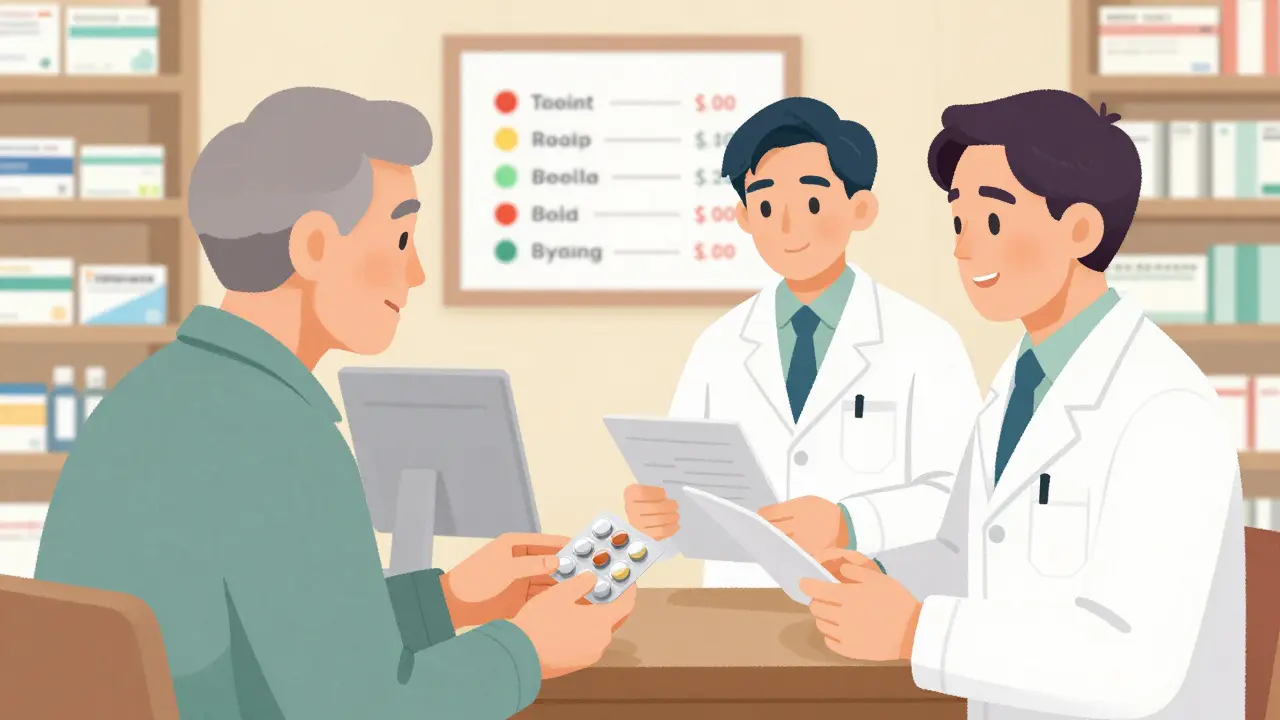
Medication cost isn’t just about price tags. It’s about trade-offs. A woman in her late 70s in Bristol told me she skips her cholesterol pill every other week so she can afford her insulin. That’s not an isolated story. There are legal ways to reduce costs:- Ask for generic versions-most are 80% cheaper.
- Use mail-order pharmacies for 90-day supplies (often cheaper than monthly refills).
- Check if the drugmaker offers a patient assistance program. Most big pharma companies have them.
- Apply for Extra Help (Low-Income Subsidy) through Medicare. It caps out-of-pocket costs at under $10 per prescription.
- Ask your doctor about therapeutic alternatives. Sometimes a different drug in the same class costs far less.
Technology Isn’t the Answer-But It Can Help
Smart pill dispensers that beep and send alerts? Great-if the person wants to use them. But many older adults find them intimidating. A phone app that reminds them? Useful-if they’re comfortable with smartphones. The real tech win? Text message reminders. A 2023 study in The Lancet Healthy Longevity found that weekly text reminders improved adherence by 22% in seniors who didn’t use smartphones. Simple. Low-cost. No training needed. Family members can set up a weekly text: “Hi Mum, just checking in-did you take your blood pressure pill today?” It’s not surveillance. It’s connection.Doctors and Pharmacists Must Do Better
Too often, medication reviews happen only when something goes wrong. That’s too late. Every older adult on multiple meds should have a medication reconciliation at least once a year. That means: sitting down with a clinician (preferably a pharmacist) and asking:- What is each pill for?
- Can any be stopped?
- Are we doubling up on the same effect?
- What happens if I skip one?
What Works for Some Might Not Work for Others
One size doesn’t fit all. A retired teacher with a strong support network might thrive with a pillbox and weekly calls. A widowed man with dementia and no family nearby needs more: daily visits, a home care worker, maybe even a monitored dispenser. The key is asking: “What’s stopping you?” Not “Why aren’t you taking your meds?” There’s a world of difference. Some seniors hide pills because they’re embarrassed. Others stop because they feel fine and think they don’t need them anymore. A 2024 CDC report found that 18% of older adults stopped a medication because they didn’t feel any different-never realizing the drug was preventing a stroke or heart attack.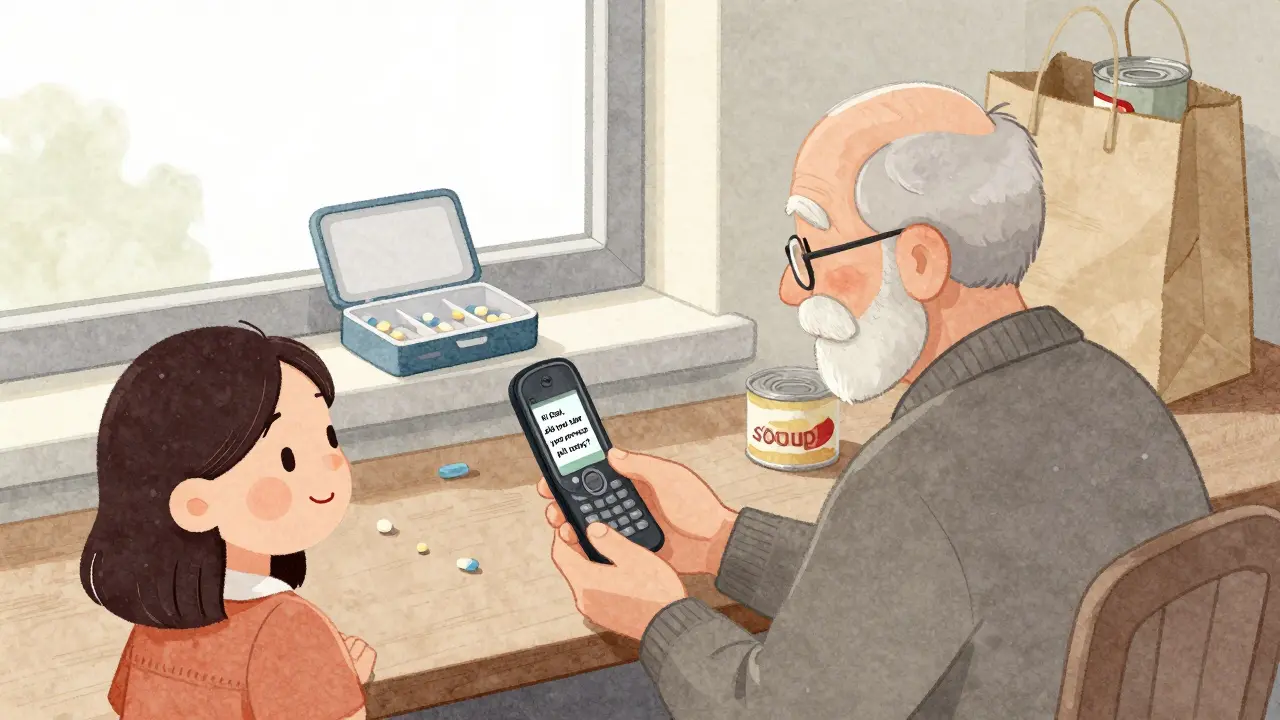
Start Small. Start Now.
You don’t need a perfect plan. You need one step. If you’re caring for an older adult:- Look at their pill bottles this week. Count how many they take daily.
- Ask: “Which one is hardest to remember?”
- Help them write down why each one matters-on a sticky note.
- Call the pharmacy and ask about blister packs or mail-order options.
- Check if they’re skipping doses because of cost.
- Don’t be afraid to ask your doctor: “Can we cut down on these?”
- Write down any side effects-even if you think it’s just “getting older.”
- Ask your pharmacist: “Is there a cheaper version?”
- Use a simple pillbox. Fill it with help.
Frequently Asked Questions
Why do older adults forget to take their meds?
Forgetting isn’t just about memory loss. It’s often because the regimen is too complex-multiple pills at different times, confusing instructions, or unclear reasons for taking them. Physical issues like poor vision or shaky hands also make it harder to handle pills. Many seniors don’t realize they’re forgetting because they think they’re doing fine. Simple tools like pill organizers and daily routines help more than alarms or apps.
Is polypharmacy always dangerous?
Not always-but it’s risky. Taking five or more medications increases the chance of harmful drug interactions and side effects like dizziness, falls, or confusion. Some meds may no longer be needed, especially if the patient’s health has changed. A medication review with a doctor or pharmacist can identify which drugs can be safely stopped, reducing risk without losing benefit.
Can I save money on senior prescriptions?
Yes. Ask for generic versions, which work the same as brand names but cost far less. Use mail-order pharmacies for 90-day supplies. Check if the drug manufacturer offers a patient assistance program. In the U.S., Medicare’s Extra Help program can reduce out-of-pocket costs to under $10 per prescription. Even if you think you earn too much, you might still qualify.
What should I do if my parent refuses to take their meds?
Don’t force it. Ask why. They might be scared of side effects, think the meds aren’t working, or can’t afford them. Write down their concerns and bring them to the doctor. Sometimes, switching to a different drug or adjusting the dose solves the problem. If cost is the issue, explore assistance programs. If they’re confused, simplify the regimen or use a pill organizer with clear labels.
Are pill dispensers with alarms worth it?
They can help-but only if the person is comfortable with technology. Many seniors find them confusing or overwhelming. A simple seven-day pillbox, filled weekly by a family member, often works better. Text message reminders from a loved one are low-tech, free, and surprisingly effective. The goal isn’t fancy gear-it’s reliability.
How often should a senior’s meds be reviewed?
At least once a year-but more often if there’s a hospital stay, new diagnosis, or change in health. Every time a new prescription is added, ask: “Is this absolutely necessary?” and “Can any other meds be stopped?” Many older adults are taking drugs prescribed years ago that no longer serve a purpose. A pharmacist-led review can safely reduce the pill count and improve safety.
Retha Dungga
January 2, 2026 AT 08:49Lawver Stanton
January 4, 2026 AT 06:13Sara Stinnett
January 4, 2026 AT 09:08linda permata sari
January 5, 2026 AT 17:37Branden Temew
January 6, 2026 AT 07:52Frank SSS
January 7, 2026 AT 13:42Paul Huppert
January 7, 2026 AT 16:22Hanna Spittel
January 9, 2026 AT 13:50Brady K.
January 10, 2026 AT 00:05Kayla Kliphardt
January 10, 2026 AT 08:27John Chapman
January 10, 2026 AT 11:35Urvi Patel
January 10, 2026 AT 19:29