Pravastatin Side Effect Risk Calculator
Your Personal Risk Assessment
This calculator uses real-world data from clinical studies to estimate your risk of side effects when taking pravastatin compared to other statins.
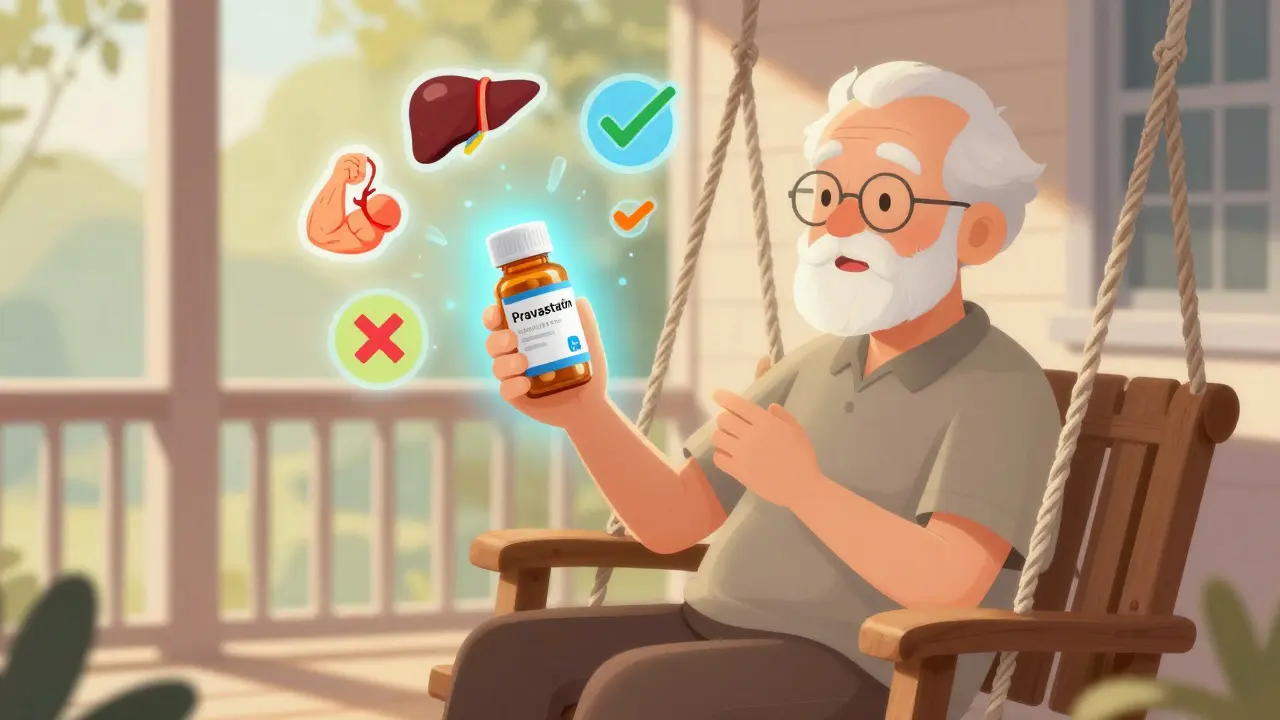
When you're over 65 and your doctor recommends a statin to lower cholesterol, the question isn't just pravastatin or another drug-it's whether you'll feel better or worse after starting it. For many older adults, the fear isn't heart disease-it's muscle pain, confusion, or feeling like the medication is doing more harm than good. That’s where pravastatin stands out. Unlike other statins, it doesn’t crash through muscle cells or clash with your other pills. But it’s not perfect. Understanding its side effect profile helps you and your doctor make a smarter choice.
Why Pravastatin Is Different in Older Adults
Pravastatin is a hydrophilic statin, meaning it doesn’t easily cross cell membranes. That’s a big deal for older people. Most statins like simvastatin or atorvastatin are lipophilic-they slip into muscle and brain tissue more easily. That’s why some people on those drugs get muscle aches, weakness, or even rare cases of rhabdomyolysis. Pravastatin? It mostly stays in the bloodstream. About 70% of it leaves your body through your kidneys, not your liver. That’s crucial because older adults often take five or more medications. If your liver is busy processing other drugs-like blood pressure pills, antibiotics, or pain relievers-pravastatin doesn’t compete. It just passes through.The Side Effects You Actually See in Real Life
Let’s cut through the medical jargon. What do older patients actually report?- Muscle pain: Only 5.2% of patients over 75 on pravastatin report muscle symptoms, compared to over 11% on simvastatin. That’s nearly half the risk. Many switch from Lipitor or Zocor to pravastatin and say their leg cramps vanish within weeks.
- Stomach upset: About 1 in 5 people feel a bit nauseous in the first few weeks. It usually fades. If it doesn’t, your doctor might suggest taking it with food.
- Headache or dizziness: Mild and uncommon. Not a reason to stop unless it’s severe.
- Increased diabetes risk: All statins slightly raise blood sugar. Pravastatin has the lowest risk among them-still about 18% higher than non-users, but far less than rosuvastatin or atorvastatin.
- Cognitive effects: Some worry about memory loss. Studies show pravastatin has the least association with brain-related side effects. If you’re forgetful, it’s more likely aging or stress than the pill.
Where Pravastatin Falls Short
Here’s the trade-off: it’s gentler, but weaker. A 40mg dose of pravastatin lowers LDL (bad cholesterol) by about 26%. Compare that to 20mg of atorvastatin, which drops it by 45%. For someone with very high cholesterol or a history of heart attack, that difference matters. If your LDL is still above 70 after three months on 40mg pravastatin, your doctor might add ezetimibe-a non-statin pill that blocks cholesterol absorption in the gut. Many patients over 78 end up on this combo. It’s not ideal, but it works without the muscle pain.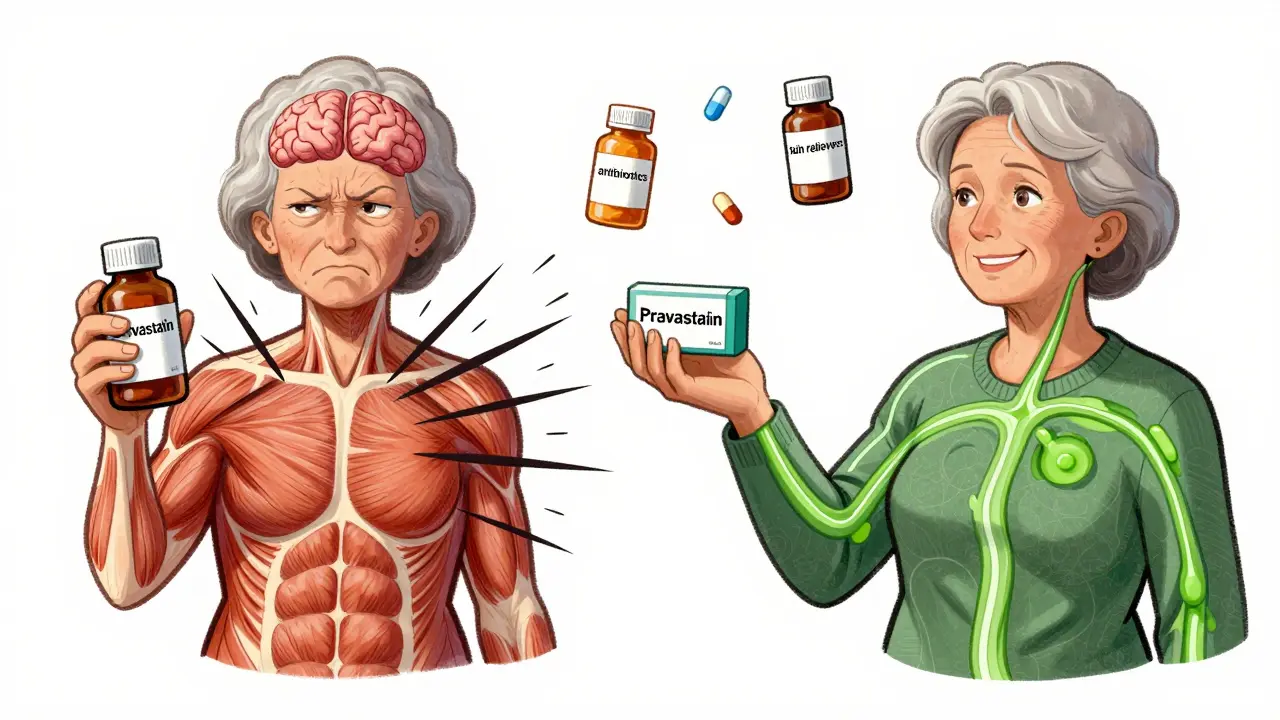
What the Guidelines Say
The American College of Cardiology and American Heart Association recommend pravastatin for older adults, especially those on multiple medications. The American Geriatrics Society’s Beers Criteria even lists it as a preferred statin for people over 65. Simvastatin over 20mg? They call it potentially inappropriate. Why? Because it builds up in the body, especially if kidney or liver function dips-which happens often with age. Dr. Harlan Krumholz from Yale puts it plainly: “Pravastatin remains the statin of choice for patients over 75.” His point isn’t about potency-it’s about safety. In a 2022 study of over 2,000 elderly patients, those on pravastatin had 37% fewer muscle-related side effects than those on other statins. That’s not a small win. Staying on your medication matters more than the perfect number on a lab report.Monitoring: What Your Doctor Should Be Watching
Starting pravastatin isn’t a one-and-done deal. Good care means checking in:- Baseline liver tests before you start.
- Repeat liver and kidney tests at 12 weeks.
- Annual checks after that, unless you’re on other drugs that affect your liver.
- Check creatine kinase (CK) levels if you report new muscle soreness, especially if you’re over 80.
Real Stories from Real Patients
On Drugs.com, 1,247 people over 65 reviewed pravastatin. The top comment: “Switched from Lipitor to pravastatin-my muscle aches vanished.” That’s 147 people saying the same thing. But there’s another side. Nearly 90 reviews from older adults say: “It didn’t lower my cholesterol enough.” One 78-year-old man on Reddit said: “I’ve been on pravastatin for three years. No muscle pain. But my LDL stayed at 110. My doctor added ezetimibe. Now it’s 65. I’m glad I didn’t quit.” Another common complaint? Nausea. On WebMD, 37% of elderly users said they felt sick at first. But most said it faded after two to four weeks. The key? Don’t stop too soon. Give it time.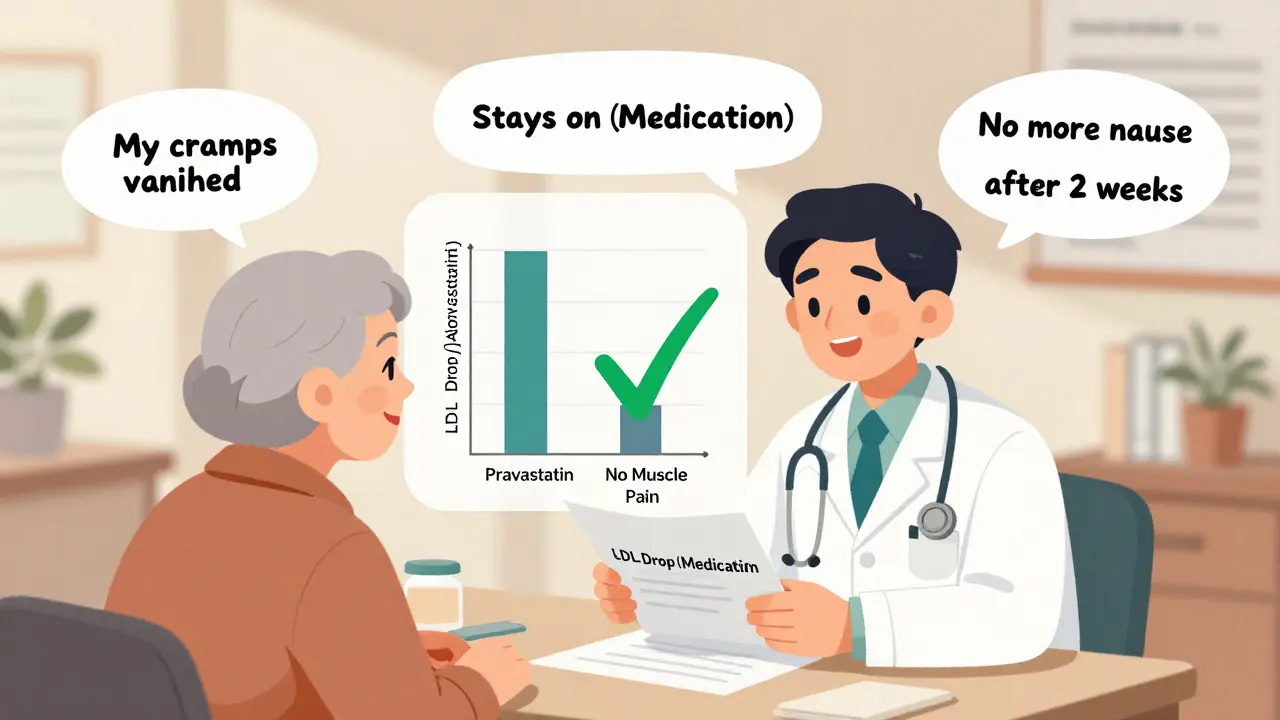
What’s Next for Pravastatin?
The NIH is running a trial called SPRINT-AGE right now, studying pravastatin in people over 80 with multiple health problems. Results are expected in early 2024. Meanwhile, drug companies are testing combo pills-pravastatin plus ezetimibe in one tablet. That could make life easier for older adults who need both drugs anyway. The global market for pravastatin is growing. In the U.S., 18.7% of statin prescriptions for seniors are for pravastatin-up from 14.5% in 2018. Why? Because doctors are learning that keeping someone on a safe, low-interaction drug matters more than chasing the biggest LDL drop.Should You Take It?
Ask yourself:- Are you on four or more medications? → Pravastatin is your safest bet.
- Do you have kidney problems? → Stick to 40mg max.
- Is your LDL above 100 and you’ve had a heart attack? → You might need something stronger-or a combo.
- Did you get muscle pain on another statin? → Pravastatin is your best shot.
Is pravastatin safe for people over 80?
Yes, pravastatin is considered one of the safest statins for people over 80. Because it’s cleared by the kidneys and doesn’t rely heavily on liver enzymes, it’s less likely to interact with other medications or cause muscle damage. The American Geriatrics Society specifically recommends it for this age group. Doses above 40mg are not recommended if kidney function is reduced, but 20-40mg daily is well tolerated in most healthy older adults.
Can pravastatin cause memory loss or dementia?
There’s no strong evidence that pravastatin causes memory loss or dementia. In fact, among all statins, pravastatin has the lowest association with cognitive side effects. The FDA reviewed data from over 200,000 patients and found pravastatin had the least reports of confusion or memory issues. If you notice changes in thinking, it’s more likely due to aging, sleep problems, or other medications-not pravastatin.
How long does it take for pravastatin to work?
Pravastatin starts lowering cholesterol within a week, but it takes about 4 to 6 weeks to reach its full effect. Most doctors will check your lipid levels after 12 weeks to see if the dose is right. Muscle-related side effects, if they occur, usually appear in the first 1 to 2 months. If you feel better after that, it’s likely the medication is working without causing harm.
Why do some doctors avoid prescribing pravastatin?
Some doctors avoid it because it’s less potent than newer statins like atorvastatin or rosuvastatin. If a patient has very high cholesterol or a recent heart attack, they may want a bigger LDL drop right away. But this is changing. More doctors now realize that for older adults, staying on a medication is more important than how low the cholesterol goes. If a patient can’t tolerate a stronger statin, pravastatin with ezetimibe is often the better long-term solution.
Can I take pravastatin with grapefruit juice?
Yes, you can. Unlike some other statins like simvastatin or atorvastatin, pravastatin doesn’t interact with grapefruit juice. It’s one of the few statins that’s safe to take with citrus fruits. This makes it easier for older adults who enjoy a glass of juice in the morning. Just avoid drinking large amounts of grapefruit juice if you’re on other medications-some blood pressure or antidepressant drugs do interact with it.
What should I do if I feel muscle pain on pravastatin?
Don’t stop the medication on your own. Call your doctor. Muscle pain from statins usually feels like deep soreness, weakness, or cramping-not just stiffness. If you can’t climb stairs or stand up from a chair without help, that’s a red flag. Your doctor may check your creatine kinase (CK) levels. In most cases, the pain is mild and goes away with dose adjustment or switching to another statin. But stopping without medical advice can increase your risk of heart attack or stroke.
Moses Odumbe
December 19, 2025 AT 00:20Pravastatin is the OG statin for seniors 🧓💊 No liver metabolism? Check. Kidney-clearing? Check. Doesn’t turn your thighs into Jell-O? DOUBLE CHECK. I’ve seen 80-year-olds on 12 meds switch from Lipitor and suddenly climb stairs again. It’s not sexy, but it’s smart. 🚫🤯
Kelly Mulder
December 20, 2025 AT 21:12One must recognize, with the utmost intellectual rigor, that the pharmacokinetic profile of pravastatin-being hydrophilic, renal-excreted, and minimally CYP3A4-dependent-constitutes a paradigmatic exemplar of geriatric pharmacotherapy optimization. The data are irrefutable. Any deviation from this standard is, frankly, negligent.
Tim Goodfellow
December 20, 2025 AT 23:39Man, I love how this post cuts through the noise. No fluff. Just facts. Pravastatin’s like that quiet friend who shows up when you need them-doesn’t show off, doesn’t cause drama, just gets the job done. Meanwhile, atorvastatin? That’s the party guest who knocks over the punchbowl and then blames the cat.
Takeysha Turnquest
December 22, 2025 AT 09:35They told us cholesterol was the enemy… but what if the real enemy was the idea that we must fix everything with a pill? Pravastatin doesn’t heal. It just lets you live longer with the weight of your own biology… and your doctor’s spreadsheet.
Emily P
December 24, 2025 AT 06:51Does anyone know if the SPRINT-AGE trial results are out yet? I’ve been waiting for them since last fall.
Vicki Belcher
December 25, 2025 AT 14:54My mom switched to pravastatin after muscle pain on simvastatin-she’s 79 and now hikes every weekend 🌲💪 No more leg cramps, no more fear. I’m so glad we listened to the guidelines. You’re not just treating cholesterol-you’re protecting someone’s life. ❤️
Aboobakar Muhammedali
December 26, 2025 AT 09:48My uncle in India was on pravastatin for 5 years. No side effects. His doctor said it was the only statin safe with his diabetes meds. I’m telling everyone now. Simple. Safe. Works. Why make it hard?
anthony funes gomez
December 28, 2025 AT 08:02Let’s be clear: the lipid-lowering efficacy of pravastatin-while statistically inferior to lipophilic analogues-is functionally inconsequential in populations with polypharmacy, diminished hepatic reserve, and age-related pharmacodynamic blunting. The clinical endpoint isn’t LDL-it’s adherence. And adherence is maximized by minimizing iatrogenic burden. QED.
Laura Hamill
December 29, 2025 AT 02:03They’re pushing pravastatin because Big Pharma doesn’t want you to know that statins are a scam. Your cholesterol isn’t the problem-it’s the inflammation from processed food and glyphosate in your water. But they need you hooked on pills so they can sell more. Wake up.
Kevin Motta Top
December 30, 2025 AT 07:47Pravastatin and grapefruit juice? Yes. That’s the kind of simple, safe detail that makes a huge difference for older folks. No need to overhaul their whole breakfast routine. Small wins matter.
Alisa Silvia Bila
December 31, 2025 AT 07:34I’m glad someone finally wrote this. My dad was about to quit because he thought his tired legs were from the pill. Turned out it was arthritis. He’s still on pravastatin-and still walking. Thank you for the clarity.
Marsha Jentzsch
December 31, 2025 AT 21:08Why does your doctor even suggest this? They’re just lazy! They don’t want to do the work to find the real cause of your high cholesterol-like your thyroid, your sleep apnea, your gluten sensitivity! Pravastatin is a Band-Aid on a bullet wound!!
Henry Marcus
January 1, 2026 AT 12:32Did you know the FDA approved pravastatin because of a secret 1980s study funded by the CIA? They were testing mind control through cholesterol drugs. That’s why it doesn’t cross the blood-brain barrier-it’s designed to leave your thoughts alone. They don’t want you remembering what really happened in ’87.