Why Vaccines Don’t Work the Same Way for Everyone
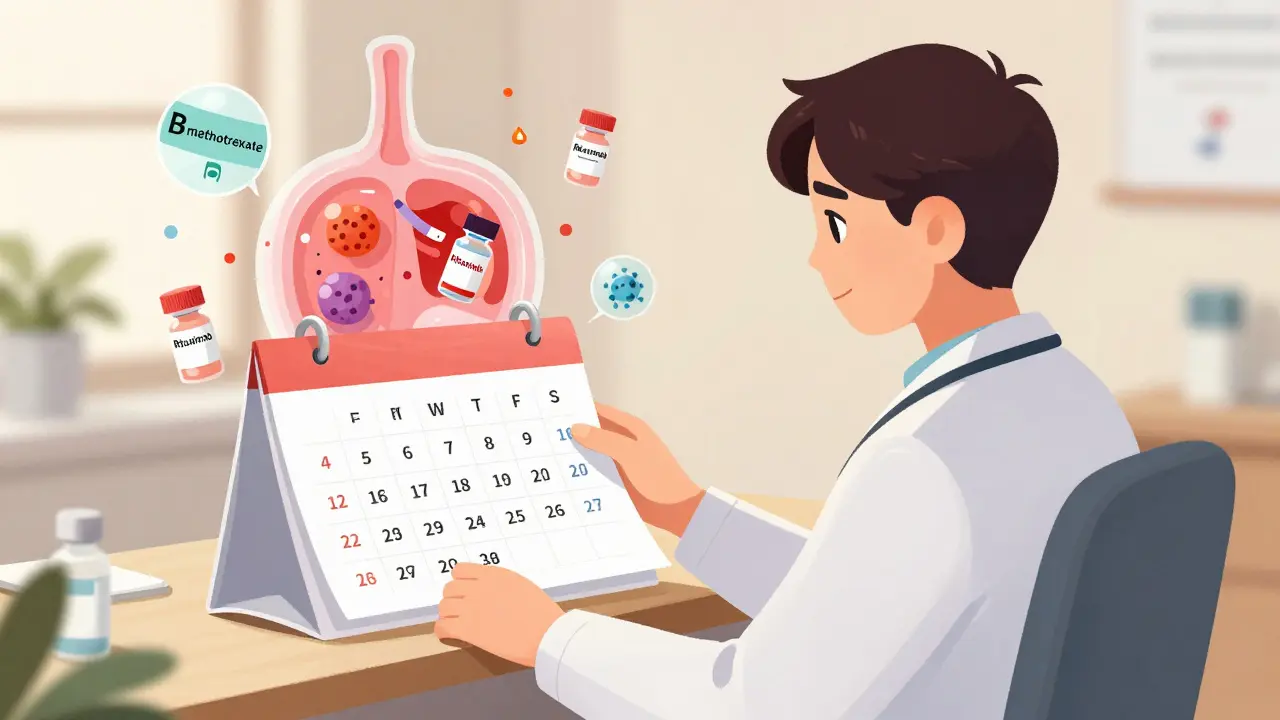
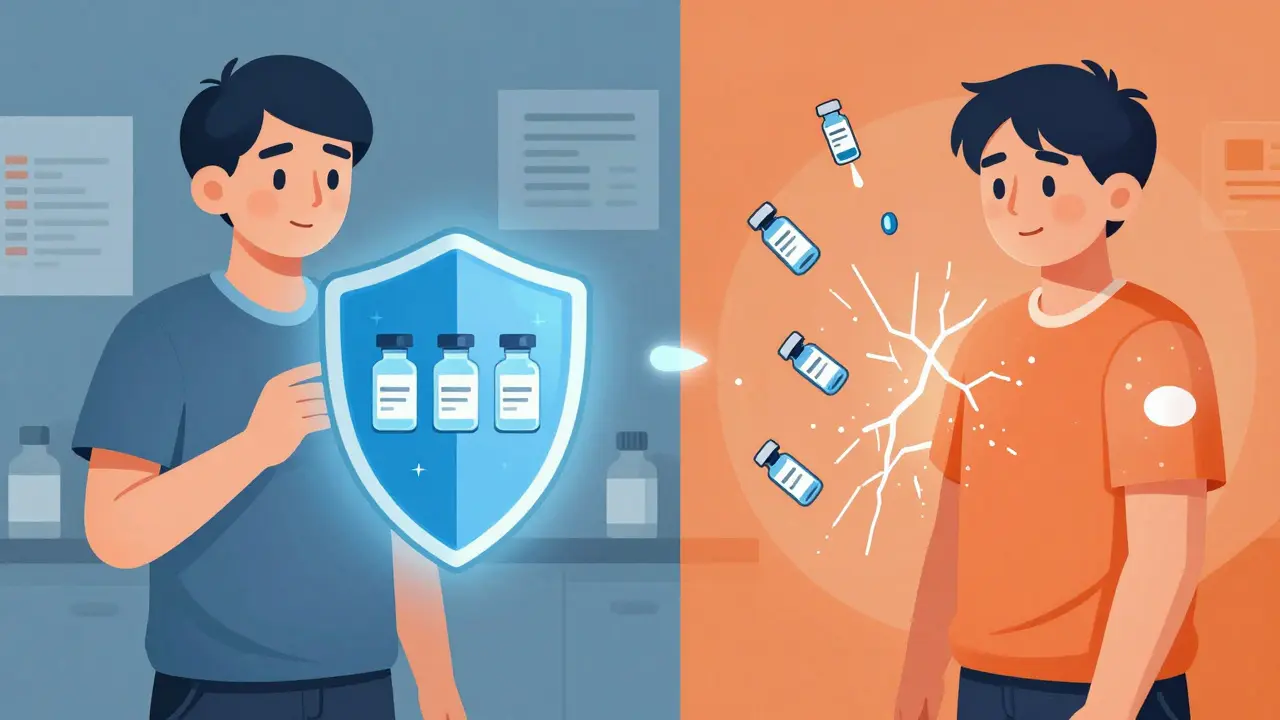
If you’re on medication for an autoimmune disease, organ transplant, or cancer, getting vaccinated isn’t as simple as walking into a clinic and getting a shot. Your immune system is intentionally slowed down - and that’s the whole point. But it also means your body might not respond to vaccines the way a healthy person’s does. Studies show that people on certain immunosuppressants can have vaccine efficacy as low as 20% compared to 90%+ in the general population. That’s not just a small difference - it’s the difference between being protected and being vulnerable.
Timing Matters More Than You Think
The best time to get vaccinated is before you start immunosuppressive treatment. The CDC and IDSA both recommend waiting at least 14 days before starting drugs like methotrexate, rituximab, or high-dose steroids. Why? Because your immune system still has its full strength then. Once you’re on these medications, your body’s ability to build a strong response drops fast.
But what if you’re already on treatment? Timing becomes a puzzle. For example, if you’re taking rituximab - a drug that wipes out B-cells - your doctor should aim to vaccinate you 4 to 5 months after your last infusion. That’s because B-cells need time to come back. Some experts, like those at Memorial Sloan Kettering, say waiting 9 to 12 months gives you the best shot. But waiting too long can be dangerous if you’re in a high-risk group.
What About Common Medications?
Not all drugs are the same. Here’s what the latest guidelines say about the most common ones:
- Methotrexate: Hold for two weeks after your flu shot. Don’t stop it for other vaccines unless your rheumatologist says so.
- Prednisone: If you’re taking more than 20mg daily, wait until your dose drops below that. High doses blunt the immune response across the board.
- Rituximab and other anti-B-cell drugs: Don’t vaccinate during the infusion cycle. Wait at least 6 months after the last dose. Some centers wait longer.
- Biologics like TNF inhibitors: These are less disruptive. You can usually get vaccines while on them, but timing around infusions still matters.
These aren’t arbitrary rules. A 2021 study from the Veterans Health Administration found that people with inflammatory bowel disease on immunosuppressants had only 80.4% protection from mRNA COVID vaccines - compared to 94.1% in healthy people. That gap closes a bit if you time the shot right.
Transplant Patients: A Special Case
If you’ve had a kidney, liver, or heart transplant, your vaccine schedule is even more complex. You’re on multiple drugs to stop rejection, and your immune system is basically on life support. The IDSA says to wait at least 3 months after transplant before vaccinating. The CDC says 1 month is okay. Why the difference? Because transplant teams don’t always agree on when the body is stable enough.
And here’s the catch: you should never get vaccinated if you’re in the middle of a rejection episode or getting high-dose steroids to treat it. Your body is already overwhelmed. Vaccines won’t work then - and could even make things worse.
COVID Vaccines Are Different Now
Early in the pandemic, we thought two doses were enough. Now we know better. The 2024 IDSA guidelines say everyone over 6 months old who’s immunosuppressed needs at least one dose of the current season’s COVID vaccine. Many will need two or three. Why? Because protection fades faster in this group. Antibody levels drop off after just a few months, even if they were high at first.
But here’s the twist: even if your antibody test comes back low, you might still have T-cell protection. That’s something labs don’t always check. The CDC updated its advice in late 2023 to reflect this. So don’t panic if your doctor says your antibodies are low - it doesn’t mean you’re unprotected.
What About Live Vaccines?
Live vaccines - like MMR, varicella, or the nasal flu spray - are off-limits for most immunosuppressed people. Why? Because they contain weakened viruses that could cause illness if your immune system can’t control them. The only exception is if you were already vaccinated before starting treatment. In that case, you’re usually fine.
If you need a live vaccine and haven’t had it, your doctor will likely wait until you’ve been off immunosuppressants for at least 3 to 6 months. And even then, they’ll check your blood counts first.
Community Risk Changes Everything
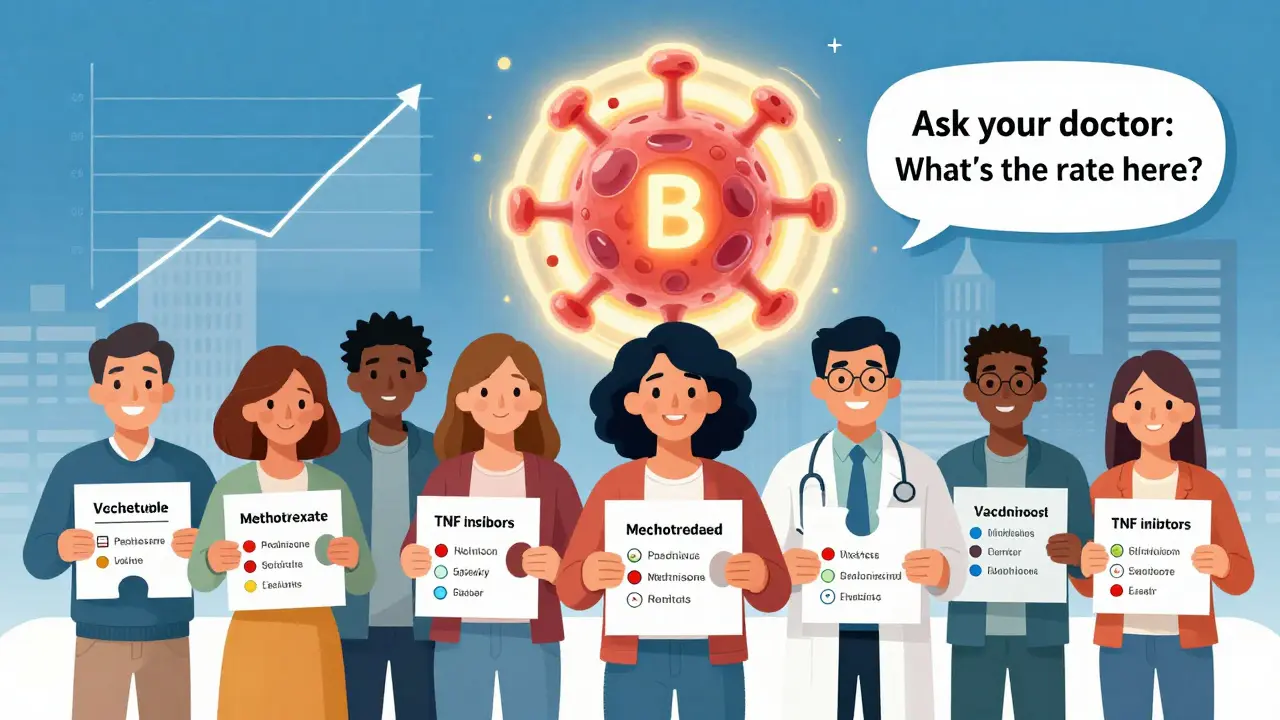
Here’s where things get practical. If your city is seeing over 100 COVID cases per 100,000 people, the IDSA says: vaccinate now, even if you’re not at the ideal time. Waiting for the perfect window isn’t worth it if the virus is spreading fast. This isn’t a loophole - it’s a safety net.
But most clinics don’t have real-time data on local transmission. That’s a big problem. You might be told to wait, while your neighbor gets the shot because their clinic knows the numbers. Ask your doctor: “What’s the current infection rate in our area?” If they don’t know, push for an answer.
Why So Many People Miss the Window
A 2022 study in the American Journal of Transplantation found that nearly half of transplant centers fail to vaccinate patients at the right time. Why? Because care is split between specialists, primary care, and pharmacies. Your rheumatologist might say to vaccinate now. Your pharmacist says to wait. Your primary care doctor doesn’t know your full meds list.
That’s why you need to be your own advocate. Keep a list of every drug you’re on - including doses and dates. Bring it to every appointment. Ask: “Is now the right time for my next vaccine?” Write it down. Don’t assume someone else is tracking it.
What’s Next? Personalized Vaccine Timing
Right now, we’re using fixed time windows - 6 months after rituximab, 2 weeks after methotrexate. But not everyone recovers at the same pace. Some people’s B-cells bounce back in 4 months. Others take a year. We’re still guessing.
That’s changing. In January 2024, the NIH launched a $12.5 million trial to test whether measuring CD19+ B-cell counts can tell us exactly when to vaccinate. If it works, we’ll move from “wait 6 months” to “get the shot when your B-cells hit 100 cells/µL.” That’s the future.
For now, the best advice is this: get vaccinated as close to the ideal window as you can. Don’t skip it because you’re worried it won’t work. Even partial protection is better than none. And if you’re unsure - ask your specialist. Don’t wait for them to bring it up.
Bottom Line: Don’t Wait for Perfect
There’s no perfect time to get vaccinated if you’re immunosuppressed. But there are better times. The goal isn’t to hit a magic number - it’s to get as much protection as you can, as soon as you can. Work with your team. Track your meds. Ask questions. And don’t let confusion or fear stop you from getting the shots that could keep you out of the hospital.
June Richards
February 2, 2026 AT 10:13Jaden Green
February 3, 2026 AT 09:32Lu Gao
February 4, 2026 AT 01:43Angel Fitzpatrick
February 5, 2026 AT 09:55Melissa Melville
February 6, 2026 AT 05:00Bryan Coleman
February 8, 2026 AT 04:59Naresh L
February 9, 2026 AT 19:07Sami Sahil
February 10, 2026 AT 23:26franklin hillary
February 12, 2026 AT 19:24Ishmael brown
February 12, 2026 AT 20:23