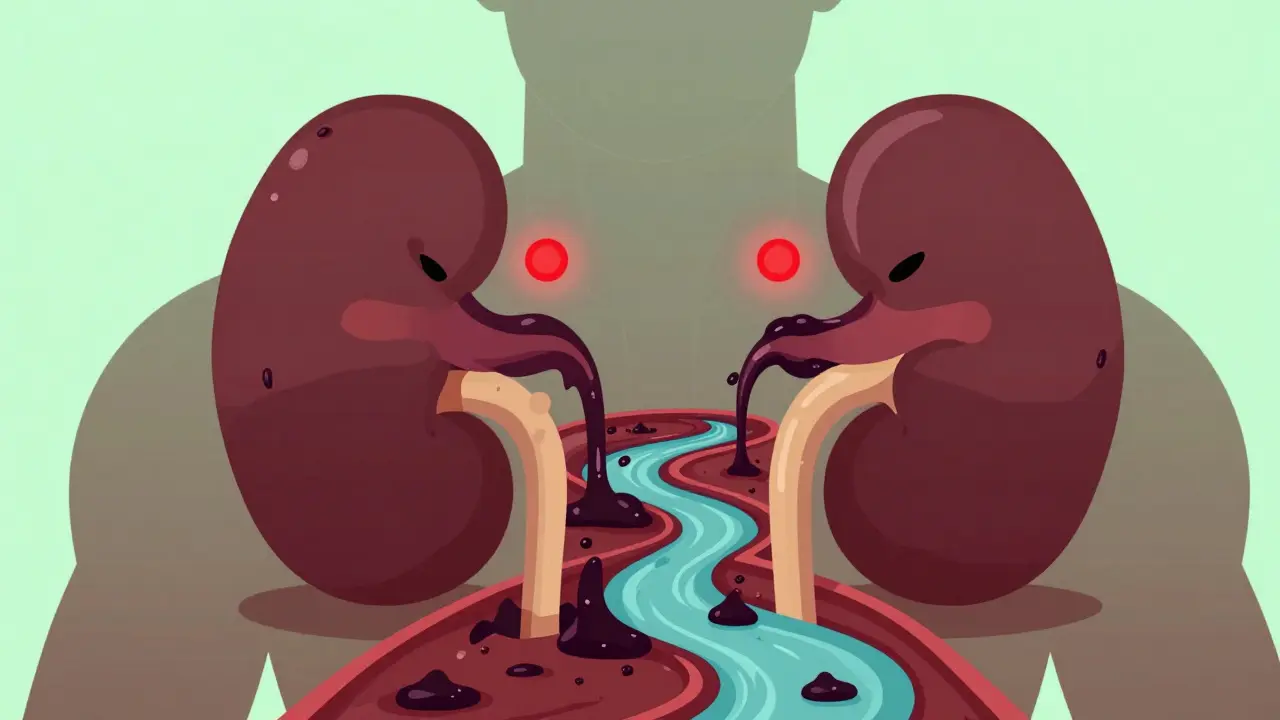
Imagine feeling like you’re swallowing sand every time you eat. Or picture an itch so deep it feels like it’s coming from inside your bones, keeping you awake night after night. These aren’t just minor annoyances. They are the body’s loud alarm bells ringing that your kidneys have stopped doing their job. This condition is called uremia, a multisystem syndrome where waste products build up in your blood because your kidneys can no longer filter them out.
If you or a loved one has advanced chronic kidney disease (CKD), recognizing these specific symptoms is critical. Waiting too long can lead to severe complications, but starting treatment too early isn't always better either. The goal is to find the right balance. In this guide, we’ll break down exactly what uremic symptoms feel like, why they happen, and most importantly, when doctors decide it’s time to begin dialysis.
What Is Uremia and Why Does It Happen?
To understand the symptoms, you first need to understand the machinery failing. Your kidneys act as a high-tech filtration plant for your body. Every day, they clean about 150 quarts of blood, removing waste and extra water. When kidney function drops below 15%-a stage known as End-Stage Kidney Disease (ESKD) or Stage 5 CKD-that filtration slows to a crawl.
The waste products that should be leaving your body through urine start stacking up in your bloodstream. The two main culprits are urea and creatinine. Think of urea as the leftover protein debris from your meals. When levels of Blood Urea Nitrogen (BUN) climb above 60 mg/dL, and often higher, those toxins start affecting other organs. This toxic buildup is uremia. It’s not just one symptom; it’s a whole system shutdown that affects your brain, skin, heart, and digestive tract.
Nausea: The Gut Reaction to Toxins
One of the earliest and most distressing signs of uremia is nausea. You might think this is just stomach flu, but if it persists without vomiting or diarrhea, it’s likely your kidneys talking.
Here is what happens inside your body: Uremic toxins, specifically molecules like p-cresyl sulfate and indoxyl sulfate, travel through your blood until they reach a part of your brain called the chemoreceptor trigger zone. This area is designed to detect poisons. When it senses these high toxin levels, it signals your stomach to reject food. Studies show that nearly 70% of patients with Stage 5 CKD experience this nausea.
How to spot uremic nausea:
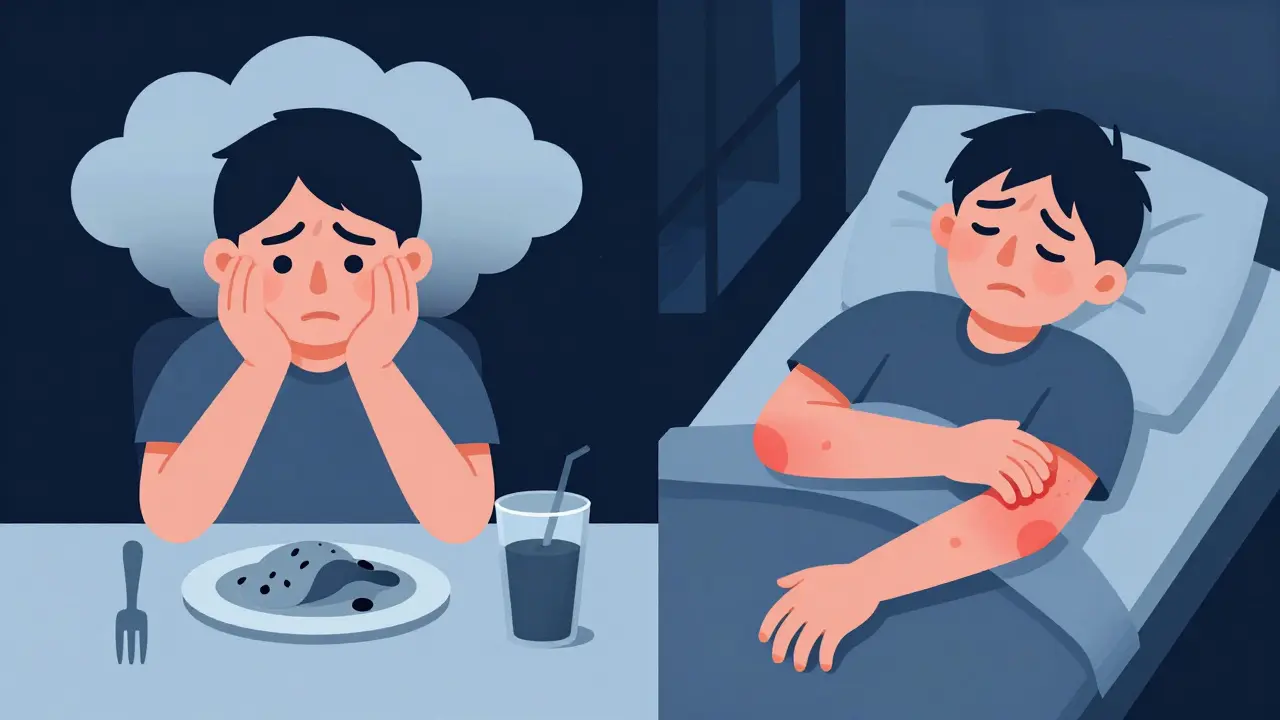
- Metallic taste: Food tastes like metal or ash. This is called dysgeusia.
- Loss of appetite: You simply don’t want to eat, even though you know you need nutrition.
- Persistent queasiness: It doesn’t come and go with meals; it’s a constant background feeling of sickness.
If you’ve lost more than 5% of your body weight over three months because eating feels impossible, this is a major red flag. It means your body is starving while being poisoned by its own waste.
Uremic Pruritus: The Unscratchable Itch
If nausea ruins your appetite, uremic pruritus (itching) ruins your sleep. This isn’t dry skin. Regular moisturizers won’t fix it. Uremic itch is caused by inflammation and nerve irritation triggered by the buildup of minerals and toxins.
Research indicates that nearly 70% of people on hemodialysis suffer from this. It often hits hardest at night. Patients describe it as burning, crawling, or stinging. The itch usually appears on large areas of the body-back, arms, and legs-and is often symmetrical (if it’s on your left arm, it’s on your right).
Why does it happen?
- High Phosphate: When kidneys fail, phosphate builds up. High serum phosphate levels (>5.5 mg/dL) bind with calcium and deposit in your skin, causing intense itching.
- Inflammation: Uremia creates a state of chronic inflammation. Markers like C-reactive protein (CRP) are significantly higher in patients who itch compared to those who don’t.
- Nerve Sensitivity: Toxins irritate the nerves under your skin, making normal sensations feel like torture.
If you find yourself scratching until you bleed, or if your sleep score has plummeted because you can’t stop moving, this is a sign that conservative management is no longer enough.
When to Start Dialysis: The Decision Criteria
This is the question that keeps nephrologists and patients up at night. Should we start now? Or wait? For decades, doctors waited until patients were critically ill. Today, the approach is more nuanced.
Historically, the rule was simple: wait until you are sick. But waiting too long leads to hospitalizations, malnutrition, and heart strain. Starting too early exposes patients to the risks of dialysis (infections, low blood pressure) without clear survival benefits. The landmark IDEAL trial showed that starting dialysis early (when eGFR is 10-14) didn’t help people live longer than starting late (eGFR 5-7). However, quality of life suffered greatly if symptoms weren’t managed.
So, when do you pull the trigger? Current guidelines from the National Kidney Foundation (KDOQI) suggest looking at three things together, not just one number.
| Indicator | Threshold / Sign | Action Required |
|---|---|---|
| eGFR Level | Below 10 mL/min/1.73m² | Prepare for dialysis; monitor closely. |
| Blood Urea Nitrogen (BUN) | Above 70-80 mg/dL | Correlate with symptoms like nausea. |
| Creatinine | Above 8-10 mg/dL | Indicates significant loss of filtering capacity. |
| Symptom Burden | Refractory nausea, severe itch, fluid overload | Start dialysis regardless of eGFR if unmanageable. |
| Complications | Uremic pericarditis, bleeding, confusion | Emergency dialysis initiation. |
The consensus among experts like Dr. Mark Unruh is that dialysis should start when symptoms become "refractory"-meaning they no longer respond to medication or diet changes. If you have persistent nausea that causes weight loss, or an itch score that disrupts daily life despite treatment, it’s time.
Managing Symptoms Before Dialysis Starts
While you prepare for dialysis, you don’t have to just suffer. There are medical interventions to help bridge the gap.
For Nausea: Doctors often prescribe ondansetron (Zofran) to block the nausea signal in the brain. If that doesn’t work, domperidone might be used, though it requires careful monitoring due to potential heart rhythm effects. Dietary changes also help: smaller, more frequent meals and avoiding strong odors can make eating less repulsive.
For Itching: The approach is stepped. First, doctors check your phosphate levels. If they are high, phosphate binders are prescribed. Second, optimizing dialysis adequacy (ensuring the machine is cleaning your blood effectively) helps. Third, medications like gabapentin are used to calm the nerves. Recently, newer drugs like difelikefalin (Korsuva) and nalfurafine have been approved specifically for uremic itch, offering relief where older treatments failed.

Red Flags: When to Go to the ER
Some uremic symptoms indicate immediate danger. Do not wait for your next doctor’s appointment if you experience:
- Confusion or difficulty concentrating: This is uremic encephalopathy. Toxins are affecting your brain.
- Chest pain or shortness of breath: This could be uremic pericarditis (inflammation around the heart) or fluid overload in the lungs.
- Bleeding gums or nosebleeds: Uremia interferes with platelet function, increasing bleeding risk.
- Seizures: A rare but serious sign of extreme toxin buildup.
These are emergencies. Call emergency services immediately.
Living with Uremic Symptoms: Patient Perspectives
Numbers and guidelines are important, but living with uremia is deeply personal. Many patients report that the psychological toll is as heavy as the physical one. The constant itch leads to isolation; people hide their arms or avoid social situations because they’re embarrassed by the scratches. The nausea leads to anxiety around family dinners.
However, many patients find relief once dialysis begins. While dialysis has its own challenges, the removal of toxins often clears the mental fog, reduces the metallic taste, and calms the skin. One patient described the change as "finally breathing again." Another noted that their sleep improved dramatically within weeks of starting treatment.
Communication is key. Tell your nephrologist exactly how bad the itch is. Use scales if available. Don’t say "it’s fine" if it’s ruining your life. Doctors treat symptoms based on what you tell them. Your voice is the most important diagnostic tool.
What is the difference between uremia and azotemia?
Azotemia is a laboratory finding where waste products like urea and creatinine are high in the blood. Uremia is the clinical syndrome-the actual symptoms (nausea, itch, confusion) caused by that high waste level. You can have azotemia without feeling sick, but uremia always involves symptoms.
Can diet alone control uremic symptoms?
In early stages of CKD, yes. Restricting protein, sodium, potassium, and phosphate can slow waste buildup. However, in Stage 5 CKD, diet alone is rarely enough to manage severe uremic symptoms like profound nausea or intense pruritus. Medication and eventually dialysis are usually required.
Is starting dialysis irreversible?
Generally, yes. Once you start dialysis, it means your kidneys have permanently lost most of their function. While some people may regain slight function after acute injury, ESKD is typically permanent. Transplant is the only way to stop dialysis long-term.
Why does itching get worse at night?
Several factors contribute. Cortisol, a natural anti-inflammatory hormone, drops at night. Body temperature rises slightly during sleep, which can intensify itch sensations. Additionally, distractions decrease at night, making the brain focus more on the itch signal.
What is the role of phosphate binders in treating itch?
Phosphate binders are pills taken with meals that trap dietary phosphate in the gut so it’s excreted in stool rather than absorbed into the blood. Since high phosphate levels directly cause uremic pruritus, keeping phosphate levels normal is a primary strategy to reduce itching.