Medication Travel Calculator
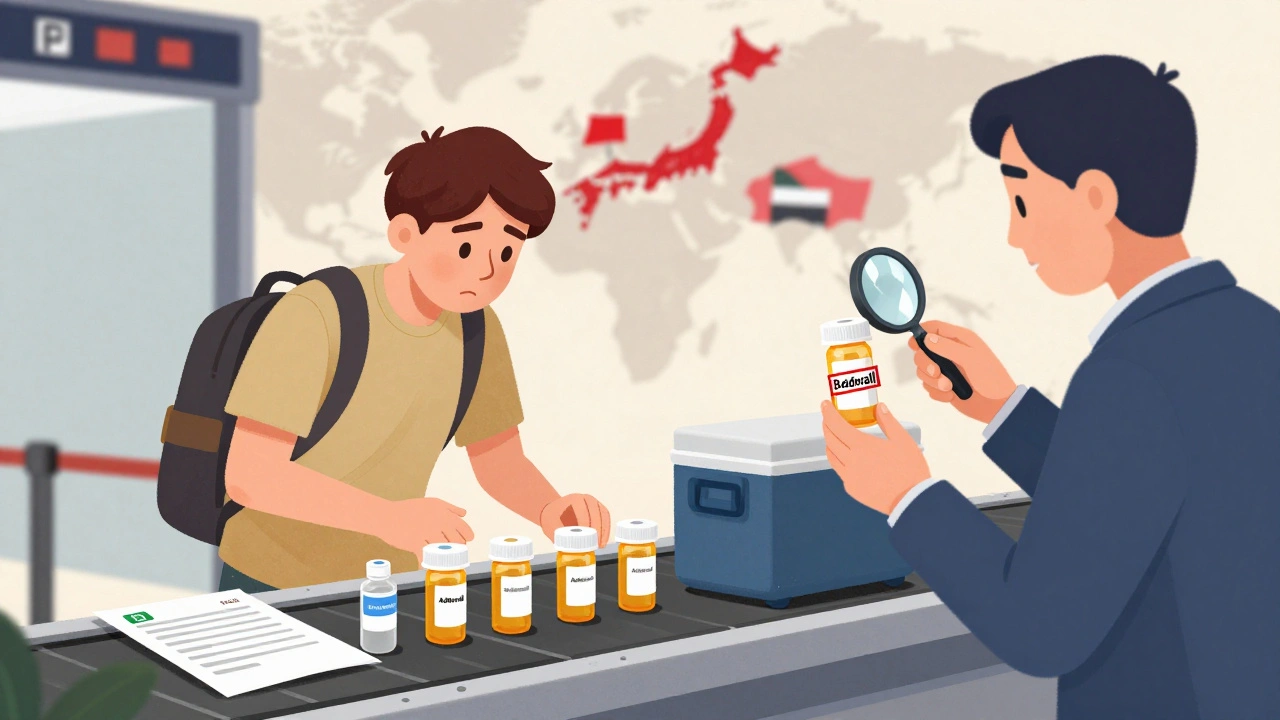
Going on a trip shouldn’t mean risking your health because your meds are in the wrong bag, melted in the heat, or banned in another country. If you take prescription or even over-the-counter medicines regularly, traveling can turn into a minefield if you don’t plan ahead. You’re not alone - about half of American adults take at least one prescription drug, and many of them travel every year. But here’s the scary part: in 2022, over 1,200 travelers faced legal trouble overseas just because they didn’t check if their meds were allowed. One executive spent 23 days in a Japanese jail after mailing herself a painkiller that’s illegal there. That’s not a movie plot. That’s real life.
Keep Your Meds in Original Containers
This isn’t just a suggestion. It’s a rule. Every major travel and health authority - from the TSA to the U.S. State Department - says your medications must stay in their original pharmacy bottles. No pill organizers, no ziplock bags, no empty bottles with labels taped on. Why? Because airport security and customs agents need to see the prescription label. It proves the medicine is yours and legally prescribed. If you’re flying domestically, TSA agents will ask you to take out your liquids, but they won’t question you if the bottles have your name, the pharmacy name, and the drug details clearly printed. Internationally? Same rule. A customs officer in Dubai, Tokyo, or Sydney won’t care if you’ve been taking the same pill for five years. If the label doesn’t match, they can confiscate it - or worse, detain you.Bring More Than You Think You’ll Need
Delays happen. Flights get canceled. Your hotel loses your luggage. Your rental car breaks down. That’s why you need extra pills. The standard advice is to pack enough for your whole trip plus 7 to 14 extra days. Northwestern University’s safety team specifically recommends a two-week buffer. That means if you’re going for 10 days, bring 24 days’ worth. Why so much? Because overseas pharmacies can’t refill your U.S. prescription. Even if you find a clinic abroad, they won’t know your medical history or have access to your doctor’s notes. And you can’t mail meds to yourself from home - it’s illegal in most countries and will get seized. If you’re on insulin, blood thinners, or something life-sustaining, this isn’t optional. Run out of your heart medication in Bali? You’re not getting a refill until you fly home.Check What’s Legal in Your Destination
This is where most people fail. Just because a drug is legal in the U.S. doesn’t mean it’s legal anywhere else. The U.S. State Department says 67% of countries restrict at least one common American medication. Adderall? Banned in Japan, Singapore, and the UAE. Sudafed? Illegal in Australia and the UK because it contains pseudoephedrine. Ambien? Prohibited in over 40 countries. Even common painkillers like codeine are controlled in places like Germany and Thailand. You can’t guess. You have to check. The U.S. State Department launched a free online tool in March 2023 where you can type in your medication name and see exactly which countries allow it. Don’t skip this step. If you’re flying to Japan, check for codeine, ADHD meds, and cough syrups with dextromethorphan - all of which are banned. If you’re going to the Middle East, avoid any meds with stimulants or sedatives. A quick 30-minute search can save you from a jail cell.Carry Documentation - Not Just Pills
Your original bottles are step one. Step two is paper proof. Always carry a copy of your prescription and a letter from your doctor. The letter should say your name, your condition, the names and dosages of your meds, and that they’re medically necessary. This is especially critical for injectables, controlled substances, or anything that looks suspicious - like large bottles of painkillers or psychiatric meds. Airlines like Emirates require this letter for any medication containing codeine. TSA doesn’t legally require it for domestic flights, but having it makes the screening process smoother. For international travel, some countries ask for it at the border. If you’re diabetic and carry needles, a doctor’s note prevents panic at security. If you’re on antidepressants and your pills look like party drugs? A letter clears it up. Print two copies. Keep one in your carry-on, and leave one with someone at home.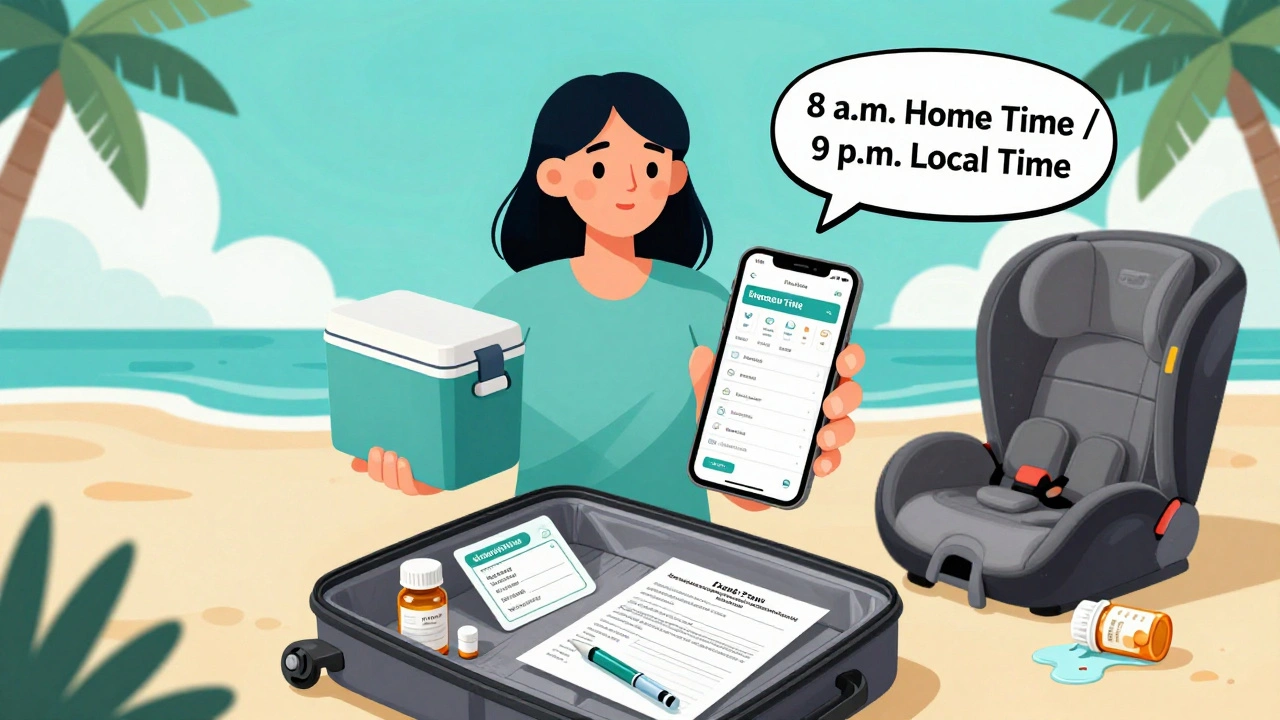
Temperature Matters - Especially for Insulin and Liquid Meds
Heat kills medicine. Cold can ruin it too. Most pills are fine at room temperature - under 86°F (30°C). But insulin? It needs to stay between 36°F and 46°F (2°C-8°C). If you’re flying to Thailand or Mexico in July, that pill pack in your checked luggage is going to melt. Use a small insulated travel cooler with a cold pack. Look for ones designed for insulin - they keep meds cold for over 48 hours. Don’t put insulin in the airplane’s overhead bin where it can freeze. Don’t leave it in a hot car. Same goes for liquid antibiotics, eye drops, or any med that says “refrigerate.” If you’re going somewhere tropical, bring a small cooler. It’s cheaper than a hospital visit. And if you’re on insulin, always carry a backup supply in your carry-on - never in checked luggage.Time Zones Are Your Enemy
Missing a dose because you forgot to adjust your schedule is a common mistake. Taking your blood pressure pill at 8 a.m. your time, then sleeping through 8 p.m. local time? That’s a 12-hour gap. That’s dangerous. The rule of thumb: it’s usually safe to take your medicine 1-2 hours early or late. But never double up. If you’re on a 12-hour time difference, start adjusting your schedule a day or two before you leave. Set multiple alarms on your phone - one for home time, one for local time. Apps like Medisafe can remind you based on your destination’s clock. If you take a pill every 12 hours, you might need to space them differently for a few days. Talk to your pharmacist about how to handle time shifts. They’ve seen this a thousand times.Always Keep Meds in Your Carry-On
Never, ever check your meds. Ever. The TSA, CDC, and every major travel safety group agree: your medications must stay with you. Checked bags get lost. Bags get delayed. Bags get stolen. If your insulin, heart meds, or seizure medicine is in a suitcase that never shows up, you’re in trouble. Carry-on is the only safe option. Keep your bottles, prescriptions, and doctor’s letter in a clear plastic bag so they’re easy to grab at security. TSA lets you bring more than 3.4 ounces of liquid meds - but you have to tell them. Declare them at the checkpoint. Put them in a separate bin. Don’t wait for them to ask. Say it upfront: “I have liquid medication.” Most agents have seen it before. They’ll thank you for being clear.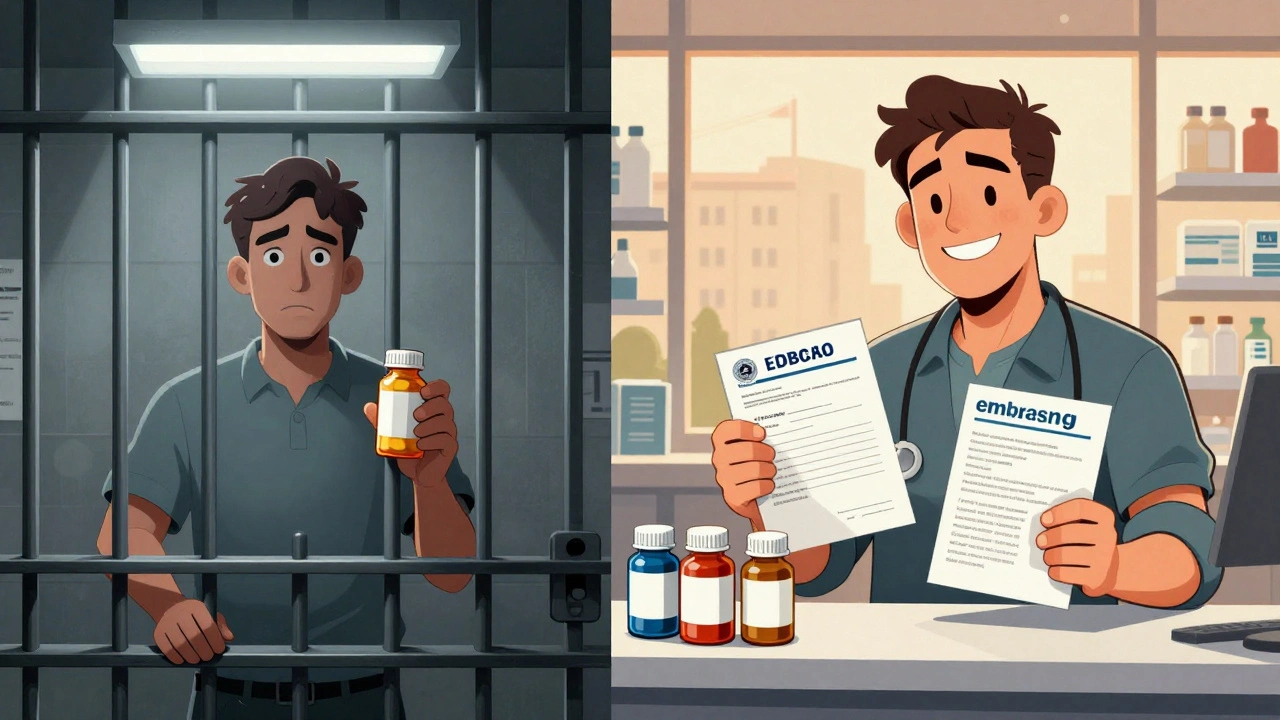
What to Do If Something Goes Wrong
Even with perfect planning, things can go sideways. Your meds get lost. You feel a side effect you didn’t expect. You have an allergic reaction. Here’s what to do: First, stay calm. Second, call your travel insurance provider. Most policies have 24/7 medical hotlines that can connect you to local doctors who speak English. Third, contact the nearest U.S. embassy or consulate. They can’t give you meds, but they can help you find a pharmacy or clinic. Fourth, if you’re in a country where you don’t speak the language, carry laminated cards with your meds listed in the local language. You can print these for free from embassy websites. Fifth, if you feel a side effect - dizziness, rash, nausea - stop the medicine and get help. Don’t power through it. Your health isn’t worth risking for a vacation.Real Stories, Real Lessons
One traveler on Reddit shared how she was denied entry to South Korea because her ADHD meds weren’t approved, even though she had her prescription. She spent 12 hours in customs. Another man in Bangkok lost his luggage - including his blood pressure pills. He had to pay $400 for emergency refills from a local clinic. But the success stories are everywhere too. A woman in her 60s traveled to Italy with her insulin, packed in a portable cooler, and never had an issue. She used a pharmacy that gave her a multi-dose organizer with labels in Italian. She set phone alarms for both U.S. and local time. She carried her doctor’s letter. She got through every airport without a problem. The difference? Preparation.What You Can Do Today
Start now. Don’t wait until the day before your flight. Here’s your checklist:- Call your doctor - ask for extra refills and a letter explaining your meds.
- Call your pharmacy - ask if they can fill your prescription early. Most insurance plans allow 5 days early.
- Go to the U.S. State Department’s Medication Check Tool - type in every drug you’re taking and see what’s allowed in your destination.
- Pack your meds in original bottles - no exceptions.
- Put all meds, prescriptions, and doctor’s letter in your carry-on.
- Buy a small insulated cooler if you need to keep meds cold.
- Set alarms on your phone for your medication schedule in local time.
- Print out your meds in the local language - keep it in your wallet.
Frequently Asked Questions
Can I bring my insulin on a plane?
Yes, you can bring insulin on a plane - in your carry-on. TSA allows all prescription medications, including insulin, in any quantity. You must declare it at security, and it should be in its original labeled container. Use a travel cooler to keep it between 36°F and 46°F. Never check insulin in your luggage.
What if my medication is banned in the country I’m visiting?
If your medication is banned, you cannot bring it. There are no exceptions. Some countries allow you to apply for a special permit in advance, but that can take weeks. Your best option is to talk to your doctor before you go. They may be able to prescribe an alternative that’s legal in your destination. Never try to sneak banned drugs across borders - you risk arrest, fines, or deportation.
Can I use a pill organizer for travel?
Only as a supplement, not as your main container. TSA and customs require medications to be in original pharmacy bottles with labels. You can transfer pills into a pill organizer for convenience, but always keep the original bottles in your carry-on. If asked, you must show the labeled bottles as proof.
Do I need a doctor’s note for over-the-counter meds?
Usually not - unless the OTC drug contains a restricted ingredient. For example, Sudafed (pseudoephedrine) is banned in many countries. If you’re carrying large quantities of any OTC medicine - especially sleep aids, painkillers, or cold meds - bring a note from your doctor explaining why you need them. It prevents misunderstandings at security or customs.
What if I lose my meds while traveling?
If you lose your meds, contact the nearest U.S. embassy or consulate immediately. They can help you find a local pharmacy or doctor. If you have travel insurance, call their 24/7 helpline. Always carry a copy of your prescription and a doctor’s letter - this helps foreign pharmacies understand what you need. Never buy meds from street vendors or unlicensed clinics. The risk of counterfeit drugs is high.
David Palmer
December 11, 2025 AT 10:16lol so now i gotta carry around a whole pharmacy in my carry-on? next they'll make me bring a signed affidavit from my grandma that i'm not a drug dealer.
Michaux Hyatt
December 11, 2025 AT 21:56Hey, this is actually super helpful - I used to just toss my pills in a ziplock and hope for the best. After reading this, I called my doc and got a letter, packed extra insulin, and even printed out a cheat sheet in Spanish for my trip to Mexico. No more panic at security. Seriously, do this stuff. It’s not just about avoiding trouble - it’s about staying alive out there.
Aileen Ferris
December 12, 2025 AT 20:37original bottles? pfft. i’ve flown 17 countries with a pillbox and no one ever cared. you guys are so paranoid. also, who even has a doctor’s letter for ibuprofen? 😂
Regan Mears
December 14, 2025 AT 13:22Thank you for writing this. Seriously. I had a friend get detained in Dubai because they had melatonin in a plastic bag - no label, no prescription. They were held for 18 hours. This isn’t ‘overcautious’ - it’s survival. If you’re on anything that affects your brain, heart, or mood - treat it like your passport. Original bottles. Extra supply. Doctor’s note. Always. Don’t gamble with your freedom.
Ben Greening
December 16, 2025 AT 10:25The information presented is accurate and well-structured. I appreciate the inclusion of specific examples and official guidelines. However, the tone occasionally borders on alarmist, which may discourage casual travelers from engaging with the material. A more neutral presentation could enhance accessibility.
Neelam Kumari
December 17, 2025 AT 09:58Wow. So you’re telling me that if I take Adderall to get through my 80-hour workweek, I shouldn’t take it to Thailand? What a shocker. Maybe if you didn’t need drugs to function, you wouldn’t need a 12-page travel manual just to breathe.
Queenie Chan
December 18, 2025 AT 03:10I love how this post turns medicine into a spy mission - original bottles, doctor’s letters, insulated coolers, translated cards… I feel like I’m packing for a covert op, not a beach vacation. But honestly? I’m glad someone’s mapping out this minefield. I once took my anxiety meds to Italy in a pill organizer and got stared down by a customs agent who looked like he’d seen too many bad movies. Never again. Now I carry my meds like they’re the Holy Grail - and I’ve got a little cooler with a dinosaur on it. It’s weird, but it works.
Stephanie Maillet
December 18, 2025 AT 04:45It’s fascinating how we treat our bodies as fragile ecosystems - and yet, we’re so willing to risk them for convenience. The fact that a simple pill, meant to sustain life, becomes a potential crime in another country… it says something about how disconnected our systems are. We have global travel, but local laws that treat medicine like contraband. Maybe the real issue isn’t the traveler - it’s the lack of international medical harmony. Still… I’ll bring the cooler, the letter, the extra pills. Because even if the system’s broken, my life isn’t negotiable.
Doris Lee
December 19, 2025 AT 14:01You got this. Just pack smart, stay calm, and you’ll be fine. I’ve flown with insulin, antidepressants, and heart meds across five continents - no drama. You’re not alone, and you’re not a burden. Just do the prep, trust your plan, and go enjoy the trip. You deserve it.