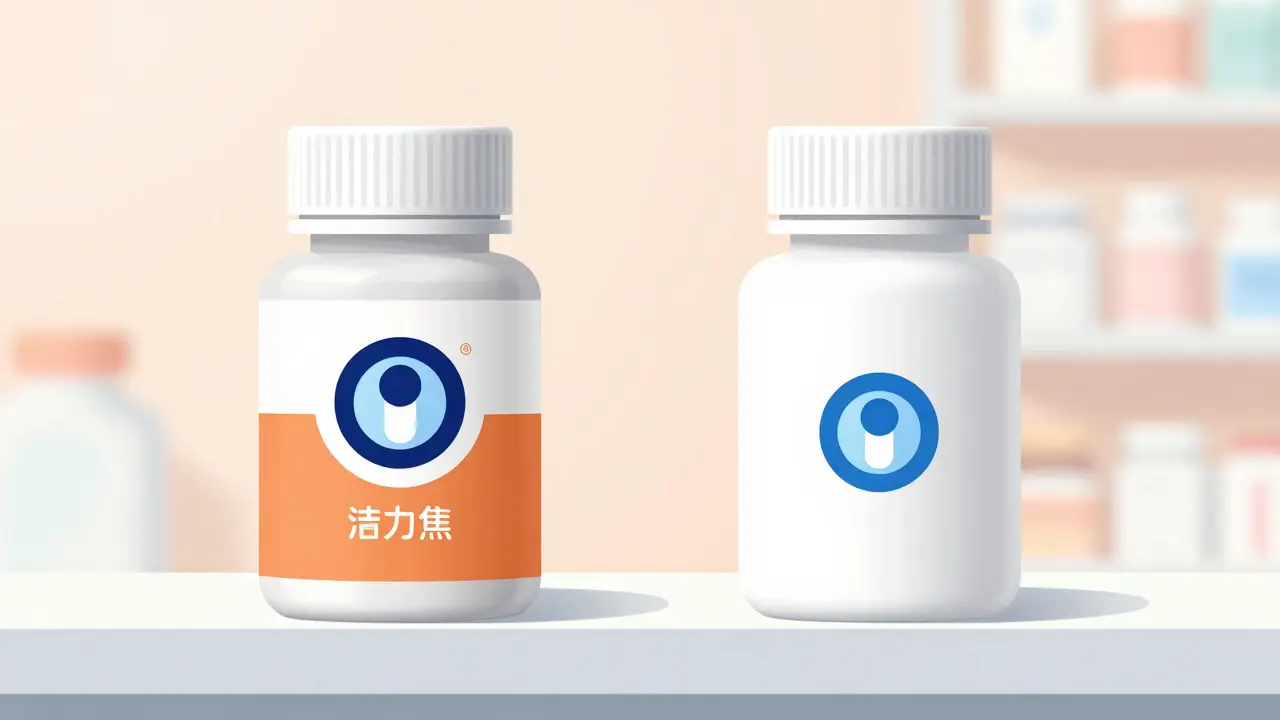
Imagine taking your regular medication, but the pill looks different. For many patients, this is a common experience when switching to generics. But what if the generic was actually made by the same company as the brand-name drug? That's the reality of Authorized generics are exact copies of brand-name drugs made by the same manufacturer but sold without the brand name. They use identical active and inactive ingredients and are produced in the same facility as the brand. The U.S. Food and Drug Administration (FDA) defines them under the Drug Price Competition and Patent Term Restoration Act of 1984 (Hatch-Waxman Act), which established the regulatory framework for generic drugs..
What Makes Authorized Generics Different?
Unlike regular generics, which must meet FDA bioequivalence standards but can have different inactive ingredients, authorized generics are made by the brand company itself or a licensed manufacturer. This means they share the exact same recipe as the brand-name drug. The FDA confirms this: authorized generics have identical active and inactive ingredients, dosage form, strength, and route of administration. For patients sensitive to excipients like lactose or dyes, this matters. A GoodRx study found only 2.3% of patients switching to authorized generics reported issues with inactive ingredients, compared to 12.7% with regular generics.
Let's compare the two types side by side:
| Feature | Authorized Generics | Regular Generics |
|---|---|---|
| Manufacturer | Same as brand or licensed partner | Independent generic drugmaker |
| Inactive Ingredients | Identical to brand-name drug | May differ |
| Switchback Rate | 7.2% | 18.4% |
| Price Reduction | 4-8% retail, 7-14% wholesale | Varies, typically 30-80% lower than brand |
| Therapeutic Consistency | Perfect match to brand | Bioequivalent but may have formulation differences |
Why Authorized Generics Matter for High-Risk Medications
For medications with a narrow therapeutic index-where small changes in dosage can cause serious side effects-authorized generics are a game-changer. Drugs like warfarin (blood thinner), digoxin (heart medication), and phenytoin (seizure control) fall into this category. The FDA estimates these represent 5.3% of all prescriptions. A 2023 study showed switching to authorized generics reduced therapeutic failures by 28% compared to regular generics in these cases. This is critical: a single inconsistent dose could mean the difference between effective treatment and dangerous complications.
Insurance and Cost: What You Need to Know
While authorized generics often cost less than brand-name drugs, insurance coverage can be tricky. The FTC reports authorized generics reduce retail prices by 4-8% and wholesale prices by 7-14%. But here's the catch: 28% of commercial insurance plans charge higher copays for authorized generics than regular generics. A patient in Texas shared: "My insurance covered the brand but not the authorized generic version, costing me $45 more monthly despite identical medication." Always check your plan's formulary before switching. The Orange Book database from the FDA helps identify authorized generics available for your medication.
Your Step-by-Step Transition Plan
Switching safely requires a few simple steps:
- Verify availability: Check the FDA's Orange Book or manufacturer websites for authorized generic versions.
- Check insurance coverage: Call your pharmacy or insurer to confirm copay differences.
- Ask your doctor: Ensure the switch is appropriate for your condition, especially for narrow therapeutic index drugs.
- Communicate with your pharmacist: Let them know you want the authorized generic to avoid accidental substitutions.
- Monitor for changes: Track symptoms for 30 days post-switch and report any issues to your healthcare team.
Real Patient Experiences
Patients who've switched to authorized generics report consistent results. One asthma patient wrote: "Switched to the authorized generic of my blood thinner and haven't had the bruising issues I experienced with the regular generic." On the Asthma and Allergy Foundation of America's platform, 73% of users rated authorized generic transitions positively versus 58% for regular generics. However, access remains a challenge-68% of negative reviews cite difficulty finding authorized generic availability. The FDA's 2023 launch of the Authorized Generic Finder tool in Drugs@FDA now helps patients and providers quickly identify available options.
Common Pitfalls to Avoid
Many patients face unexpected hurdles during transitions. Electronic health records often fail to distinguish between authorized and regular generics, leading to confusion during care handoffs. A 2022 survey found 63% of EHR systems don't properly label authorized generics in medication lists. Also, some pharmacies automatically substitute regular generics unless specified otherwise. Always ask for the authorized generic by name when filling prescriptions. The FTC warns that while authorized generics provide immediate savings, they may reduce long-term generic competition if brand companies use them to delay generic entry.
Frequently Asked Questions
What's the difference between authorized generics and regular generics?
Authorized generics are made by the brand-name company or its licensee using the exact same ingredients and manufacturing process. Regular generics are made by other companies and must meet bioequivalence standards but can have different inactive ingredients. This makes authorized generics safer for patients sensitive to excipients like lactose or dyes.
Why would my insurance not cover the authorized generic?
Some insurance plans place authorized generics on a higher cost tier than regular generics, even though they're identical to the brand. This often happens because insurers treat them as brand-name drugs for pricing purposes. Always check your plan's formulary before switching and ask your pharmacist to confirm coverage details.
Can authorized generics be used for all medications?
No-only 37.5% of brand-name drugs with generic alternatives have authorized generic versions available as of 2023. Check the FDA's Orange Book or contact the manufacturer directly to confirm availability for your specific medication.
How do I know if I'm taking an authorized generic?
Look for the brand name on the label followed by "authorized generic" or the manufacturer's name. For example, "Lipitor (authorized generic)" or "Pfizer's generic version of Lipitor". The FDA requires clear labeling by 2025 to reduce confusion. If unsure, ask your pharmacist to verify.
Are authorized generics as safe as brand-name drugs?
Yes. Authorized generics are identical to brand-name drugs in every way-active ingredients, dosage, and manufacturing process. The FDA requires them to meet the same quality standards. For patients with narrow therapeutic index drugs, authorized generics eliminate the risk of formulation differences that could cause adverse effects.
Lana Younis
February 6, 2026 AT 01:43Authorized generics are a game changer for many patients.
They're made by the same company as the brand-name drug, so same exact ingredients.
The FDA confirms this.
For people sensitive to excipents like lactose or dyes, this is crucial.
A GoodRx study found only 2.3% had issues with authorized generics vs 12.7% with regular.
But insurance coverage can be a pain.
Some plans charge more for authorized than regular generics.
Like my cousin had to pay $45 more monthly.
Always check your formulary before switching.
The Orange Book database helps find authorized versions.
For high-risk meds like warfarin or digoxin, authorized generics reduce therapeutic failures by 28%.
EHR systems often fail to label them properly.
Pharmacies might substitute regular generics unless specified.
Always ask for the authorized version by name.
It's all about staying informed and proactive.
Small steps can prevent big problems.
Samantha Beye
February 7, 2026 AT 15:44Always check your insurance coverage before switching.
Rene Krikhaar
February 8, 2026 AT 03:04For blood thinners like warfarin authorized generics are way better because same formula.
But you need to ask your doc first.
Also check with pharmacy to make sure they give the right one.
Some places just switch automatically.
Be proactive.
Diana Phe
February 9, 2026 AT 04:39Authorized generics are a complete scam by Big Pharma and the FDA.
They say it's the same as brand-name but it's not.
The inactive ingredients are different but they hide it.
Insurance companies are in on it too.
They make you pay more for authorized generics.
It's all a scam.
They don't want you to know the truth.
The government is controlled by drug companies.
You should be worried.
This is how they control the masses.
Wake up people!
This is not safe.
They're lying to us.
The real issue is that they're using this to keep profits high.
The FDA is corrupt.
They're all in cahoots.
You need to fight this system.
Andre Shaw
February 11, 2026 AT 00:11Actually, authorized generics aren't better.
Regular generics meet FDA standards.
This whole 'authorized' thing is just marketing.
Big pharma is trying to scare people into paying more.
The FDA says generics are bioequivalent which means they work the same.
So this guide is misleading.
You should trust regular generics.
The 'authorized' label is a scam to keep brand prices high.
It's all nonsense.
The study mentioned is cherry-picked.
Real data shows no difference.
Insurance coverage is the real issue.
People should demand transparency.
This is all a ploy to sell more brand-name drugs.
The FDA is doing its job.
Stop spreading misinformation.
Dr. Sara Harowitz
February 12, 2026 AT 21:23Authorized generics are NOT safe!
The FDA's standards are insufficient.
Many patients experience adverse effects due to inactive ingredients.
Insurance companies should cover them properly-but they don't!
This is a failure of our healthcare system!
You must be vigilant!
The government is not protecting citizens.
Big Pharma controls everything.
Wake up!
This is a national crisis.
The FDA is corrupt.
They're letting dangerous drugs slip through.
People are dying because of this.
You need to take action now!
Stop trusting the system!
Jennifer Aronson
February 14, 2026 AT 00:39Authorized generics provide a consistent alternative for patients requiring precise medication.
The FDA's guidelines ensure equivalence.
However, insurance policies may vary, so verification is recommended.
A thoughtful approach ensures safe transitions.
It's important to communicate with healthcare providers.
Checking the Orange Book database can help identify available options.
For high-risk medications, this can prevent therapeutic failures.
Pharmacies should be informed of preferences.
Patient education is key to successful transitions.
The healthcare system needs better labeling of generics.
Collaboration between providers and patients is essential.
This guide offers valuable insights.
Awareness of these details can improve outcomes.
Proactive steps are necessary for safety.
It's a small change with big benefits.
Kate Gile
February 15, 2026 AT 06:02Great guide! Switching to authorized generics can really help with consistency, especially for sensitive medications.
Always double-check with your healthcare team and pharmacist to avoid any issues.
It's all about working together for the best outcome.
Small changes can make a big difference.
Communication is key.
Stay informed and proactive.
Your health is worth the effort.
Let's support each other in making safe choices.
This information is really helpful.
Thank you for sharing.
We can all benefit from being informed.
It's important to advocate for ourselves.
Let's keep the conversation going.
Together we can navigate this safely.
Gregory Rodriguez
February 16, 2026 AT 12:50Oh sure, let's just trust the pharma companies completely. They're soooo helpful. /s
Seriously though, authorized generics are a good option but you gotta be vigilant.
Insurance companies play games with coverage.
Always ask for the authorized version specifically.
It's all about staying informed.
Don't let them pull the wool over your eyes.
But hey, at least there's some progress.
Small steps forward.
We just need to keep pushing for transparency.
It's not perfect but it's better than nothing.
Let's not get discouraged.
There's hope if we stay engaged.
Keep fighting the good fight.
It's all about taking control of your health.
Johanna Pan
February 18, 2026 AT 08:46Authorized generics are a solid choice for many patients.
The FDA's oversight ensures they're safe.
But insurance can be tricky-always check your plan.
It's important to stay informed and ask questions.
Small steps make a big difference.
Communication with your doctor is key.
Checking the Orange Book helps find available options.
For high-risk meds, this can prevent issues.
Pharmacies should be clear about what they're giving.
We need better labeling in EHR systems.
It's all about working together.
Patient advocacy is crucial.
Let's push for transparency.
Small changes can lead to big improvements.
Stay proactive and safe.