REMS Scenario Explorer
How Does Your Medication's REMS Work?
Select a scenario to see the specific requirements and impacts.
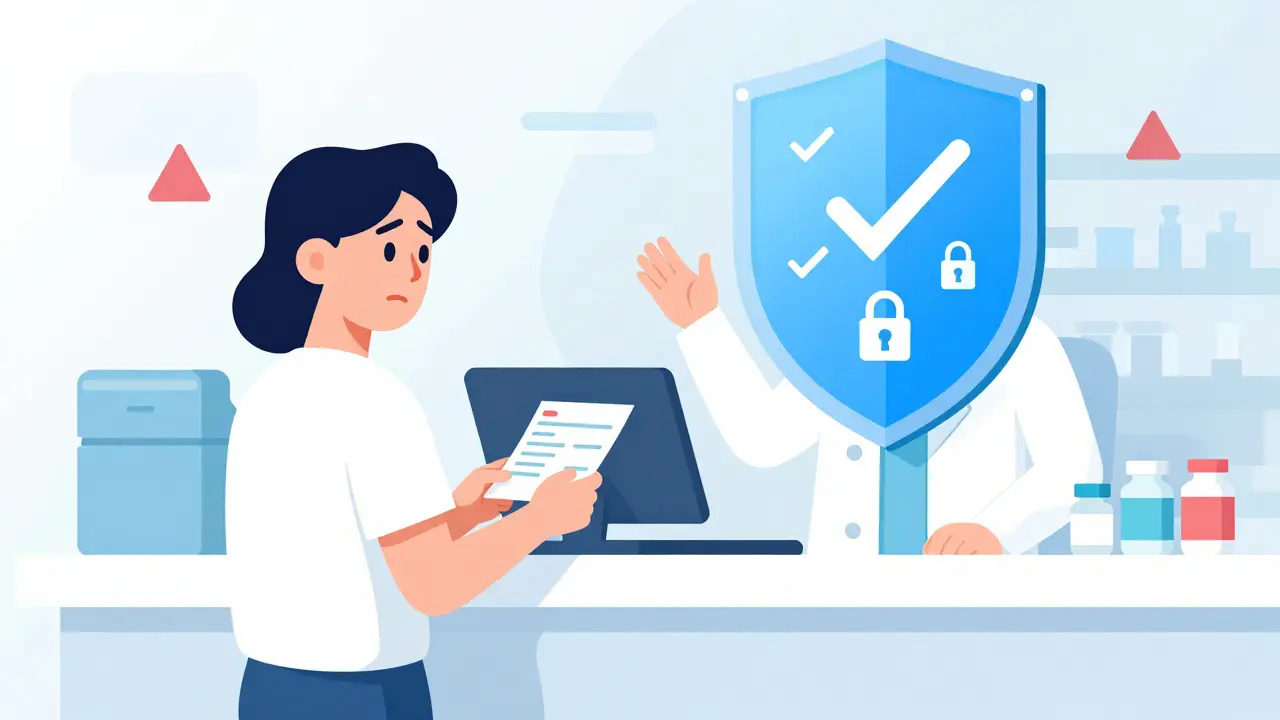
Have you ever tried to pick up a new prescription only to be told you can't get it yet? You might need to register on a specific website, complete a training module, or have your doctor send special paperwork. If this sounds familiar, you’ve likely encountered a REMS program. It’s not just red tape; it’s a strict safety protocol designed by the U.S. Food and Drug Administration (FDA) to keep patients safe from drugs that carry serious risks.
These programs are known as Risk Evaluation and Mitigation Strategies. They aren’t for every pill you pop. In fact, about 95% of approved medications don’t require them. REMS is reserved for drugs where the potential benefits outweigh the risks, but only if those risks are managed with extra care beyond standard labeling. Understanding how these systems work can help you navigate the healthcare system faster, avoid delays in treatment, and understand why certain safeguards exist.
What Exactly Is a REMS Program?
A Risk Evaluation and Mitigation Strategy (REMS) is a formal FDA program required for certain prescription drugs to ensure their benefits outweigh their risks through additional safety measures. The concept wasn’t always this structured. Before 2007, the FDA used various ad-hoc risk management plans for high-risk drugs like isotretinoin (for acne) and clozapine (for schizophrenia). These early efforts were inconsistent. That changed with the Food and Drug Administration Amendments Act (FDAAA) of 2007, which created section 505-1 of the Federal Food, Drug, and Cosmetic Act. This law gave the FDA the legal authority to mandate these strategies uniformly.
The core idea is simple: some drugs are powerful enough to save lives or treat severe conditions, but they come with dangers that could be fatal or cause permanent harm if misused. Standard warning labels on a bottle aren’t enough to stop someone from taking a dangerous dose or using a drug when it’s contraindicated. A REMS program adds layers of protection-like mandatory education, restricted distribution channels, or regular lab testing-to bridge that gap between knowing the risk and avoiding it.
It’s important to note that a REMS doesn’t mean a drug is "unsafe." It means the drug has a narrow therapeutic window or specific severe side effects that require active management. For example, chemotherapy agents often have REMS because they can cause organ damage or birth defects, but they are essential for treating cancer. The goal isn’t to eliminate risk entirely-that’s impossible for many life-saving treatments-but to mitigate it so patients can safely benefit from the therapy.
Key Components of a REMS Program
Not all REMS programs look the same. The FDA tailors each one to the specific risks of the medication. However, most programs include a combination of three main elements. Knowing which element applies to your medication helps you understand what actions you need to take.
- Medication Guides: These are printed documents given to patients at the time of dispensing. They explain the drug’s purpose, major risks, and how to use it safely. Almost every REMS includes this, but it alone rarely constitutes a full REMS unless paired with other elements.
- Communication Plans: These are strategies pharmaceutical companies use to educate healthcare providers about the drug’s risks. This might involve detailed letters, webinars, or specialized training modules for doctors and pharmacists.
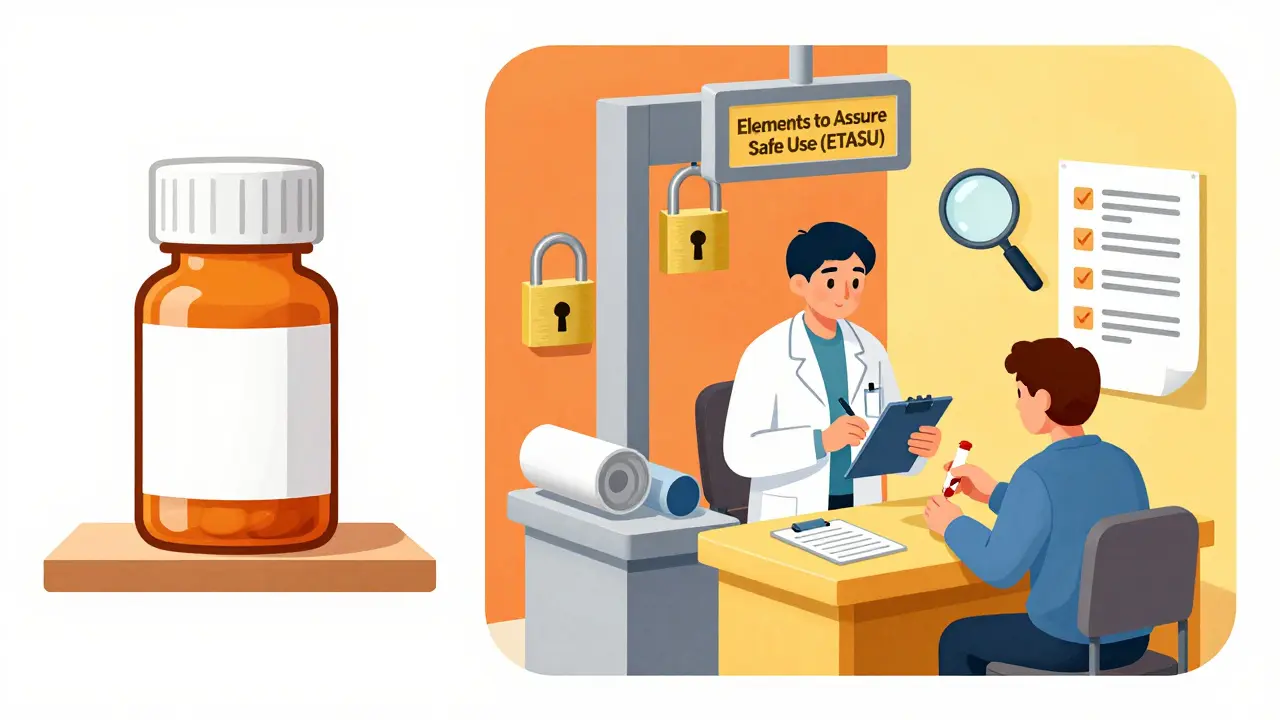
- Elements to Assure Safe Use (ETASU): This is the heavy lifting. An ETASU is required when the FDA determines that less restrictive measures won’t adequately control the risk. This is where things get complex for patients and providers.
ETASU requirements vary widely. Some might require prescribers to complete certification courses before they can write the prescription. Others mandate that patients enroll in registries, undergo frequent blood tests, or receive the drug only in certified hospitals. For instance, Zyprexa Relprevv, an injectable antipsychotic, requires administration in facilities equipped to monitor patients for three hours post-injection due to the risk of sudden sedation. Without these strict controls, the drug would never have been approved.
How REMS Differs from Standard Drug Safety Measures
You might wonder why we need REMS when we already have black box warnings and adverse event reporting. The difference lies in enforcement and specificity. Standard labeling informs everyone about risks, but it relies on individual responsibility to act on that information. REMS imposes structural barriers that make it harder to ignore safety protocols.
| Feature | Standard Drug Labeling | REMS Program |
|---|---|---|
| Scope | Applies to all FDA-approved drugs | Applied selectively to ~5% of high-risk drugs |
| Enforcement | Informational; relies on patient/provider compliance | Mandatory; requires verification steps before dispensing |
| Responsibility | FDA monitors post-market data | Sponsor (pharma company) implements and maintains the program |
| Patient Impact | Minimal delay in access | Can cause delays of days to weeks due to registration/training |
| Flexibility | Static text on packaging | Dynamic; can be modified, tightened, or removed based on new data |
Another key distinction is international context. In the European Union, Risk Management Plans (RMPs) are required for all new medicines. In the U.S., REMS is much more targeted. This selectivity means that if a drug has a REMS, the risks involved are significant enough to warrant federal intervention beyond normal market surveillance. The FDA can also impose a REMS after a drug is already on the market if new safety concerns emerge, giving regulators a powerful tool to respond to real-world data quickly.
Common Challenges for Patients and Providers
While the intent behind REMS is noble, the execution often creates friction. A 2022 survey by the American Medical Association found that 68% of physicians reported delays in starting REMS-required medications. For patients with chronic or acute conditions, even a few days of delay can worsen outcomes. Why does this happen?
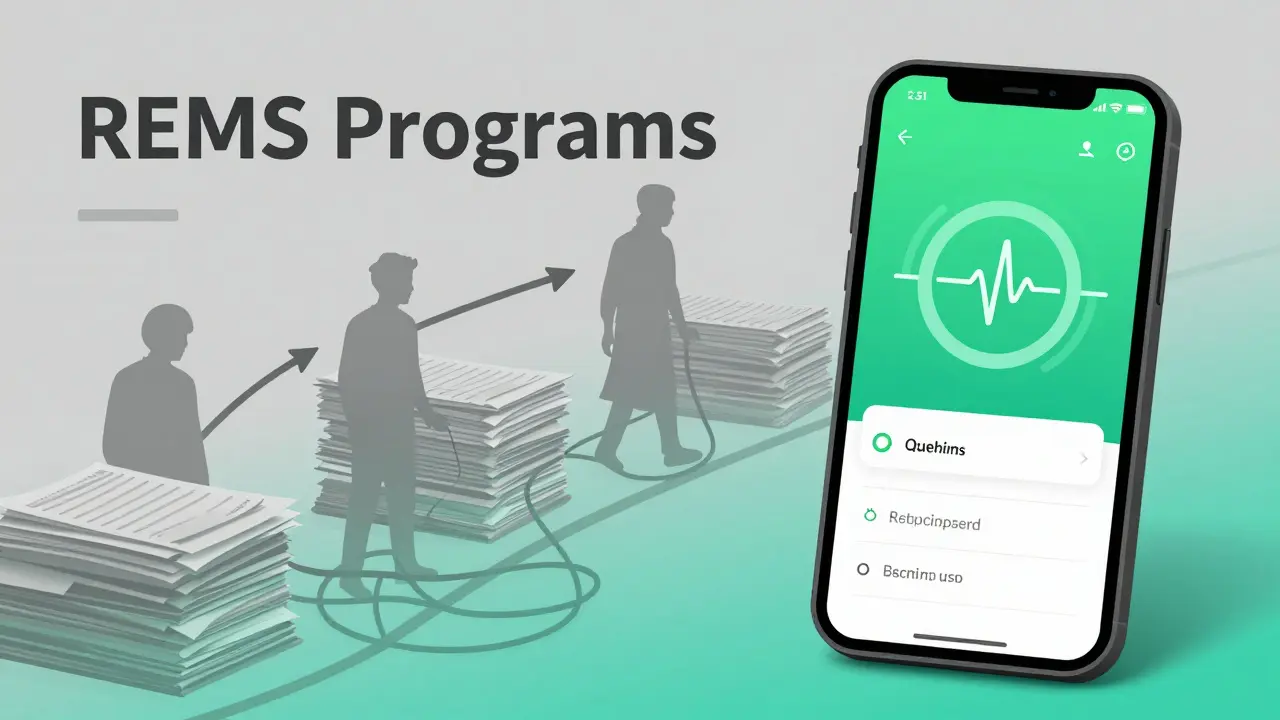
The primary culprit is administrative burden. Prescribers often need to complete online training modules that can take an hour or more. Pharmacies must verify patient eligibility through secure portals, which can add 15-20 minutes per prescription. If the portal is down or the prescriber hasn’t completed the training, the prescription gets stuck. For rare disease patients who may live far from specialized centers, these logistical hurdles are even more daunting. The National Organization for Rare Disorders (NORD) has highlighted that current REMS implementations often fail to account for transportation and scheduling challenges faced by these vulnerable populations.
Interoperability is another major issue. As of 2023, only 35% of REMS programs had direct integration with electronic health records (EHRs). This means doctors and pharmacists often have to log into separate systems, re-enter data, and manually cross-check information. This fragmentation leads to errors and frustration. The FDA has recognized this problem and launched the REMS Integration Initiative to consolidate platforms, but progress is slow. Until then, patients should expect some level of bureaucratic hassle when dealing with high-risk medications.
Recent Changes and Future Outlook
The landscape of REMS is evolving. The FDA is increasingly aware that overly burdensome programs can deny patients access to critical therapies. In October 2023, the agency updated its assessment template to explicitly require sponsors to evaluate whether REMS requirements create unnecessary barriers, particularly for underserved groups. This shift reflects a broader trend toward balancing safety with accessibility.
We’re also seeing the first instances of REMS "sunsets." In August 2023, the FDA removed the REMS requirement for thalidomide after 20 years. Decades of data showed that improved understanding of the risks and better alternative monitoring methods made the strict program obsolete. This proves that REMS is not a permanent label; it’s a dynamic tool that adapts as evidence grows.
Looking ahead, digital health technologies will play a bigger role. Pilot programs are already testing smartphone apps for real-time patient monitoring of anticoagulants. By 2027, industry analysts predict that 45% of novel oncology drugs will require REMS, driven by highly targeted but potent therapies. The challenge will be making these programs smarter and less intrusive. The goal is to move from manual checklists to automated, seamless safety checks that protect patients without slowing down care.
Does my medication require a REMS program?
You can check the FDA’s official REMS dashboard online or ask your pharmacist. Most REMS programs have specific names, such as iPLEDGE for isotretinoin. If your prescription requires special registration or training before dispensing, it likely falls under a REMS.
Can a REMS program be removed from a drug?
Yes. The FDA periodically reviews REMS programs. If new data shows that the risks are manageable with standard labeling or if the program creates unnecessary access barriers, the FDA can modify or remove the REMS requirement, as seen with thalidomide in 2023.
Why do I need to complete training to get my prescription?
Training ensures that both you and your healthcare provider understand the serious risks associated with the medication. For drugs with Elements to Assure Safe Use (ETASU), certification is mandatory to verify that proper safety protocols are being followed, reducing the chance of harmful errors.
Do generic drugs have REMS programs?
Yes. Generic versions of drugs that have a REMS must adhere to the same risk mitigation strategies as the brand-name version. The FDA requires generic manufacturers to implement the existing REMS to ensure consistent safety standards across all products containing the same active ingredient.
How long does it usually take to fulfill REMS requirements?
It varies by program. Simple medication guides take no extra time. More complex ETASU programs can add several days to weeks due to prescriber training, patient registration, and pharmacy verification. Planning ahead and completing training early can help minimize delays.