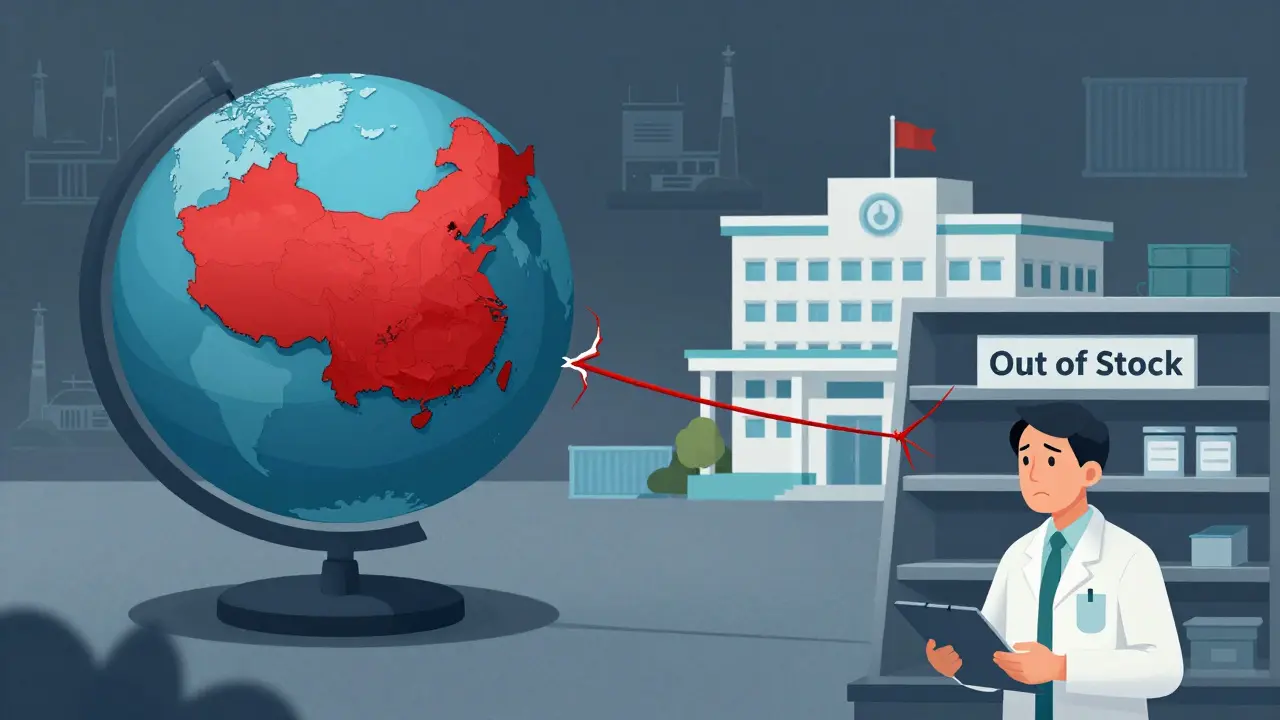
Have you ever walked into a pharmacy, asked for your regular medication, and been told it’s out of stock? It happens more often than you might think. In recent years, drug shortages have shifted from rare glitches to a persistent headache for patients, doctors, and healthcare systems worldwide. The pandemic exposed just how fragile our global medicine networks really are. But here is the good news: the industry isn’t just reacting anymore. We are actively building stronger, smarter, and more resilient supply chains to keep critical medicines flowing, no matter what chaos hits the world.
The Reality Behind Global Medicine Dependencies
To understand why we need change, we first have to look at where our medicines actually come from. For decades, the strategy was simple: make drugs as cheaply as possible. This led to a massive shift in production overseas. According to data from the U.S. Food and Drug Administration (FDA), about 80% of active pharmaceutical ingredients (APIs)-the actual chemical compounds that cure or treat diseases-are manufactured outside the United States. China and India alone account for roughly 68% of this global API production.
This concentration creates a single point of failure. If a factory in one region shuts down due to a natural disaster, political tension, or a labor strike, the ripple effects hit hospitals thousands of miles away almost instantly. The U.S. Department of Defense even flagged these vulnerabilities as "critical national security risks" in their 2023 report. It’s not just about business continuity; it’s about public health safety. When we rely too heavily on distant sources for essential items like sterile injectables (only 12% produced domestically in the U.S.) and antibiotics (17% domestic), we leave ourselves exposed.
Redefining Resilience: From Lean to Robust
In the past, supply chains aimed to be "lean," meaning they kept inventory low to save money. That model worked when everything ran smoothly. Today, experts argue that era is over. Dr. Jane Smith, Director of Supply Chain Innovation at MIT, notes that we are entering an age of "resilient, regionally balanced networks." This means accepting slightly higher operational costs-perhaps 10-15% more-to cut disruption risk by up to 70%.
Resilience isn’t a buzzword; it has a specific definition now. A 2023 report by Mathematica Inc., commissioned by the U.S. Department of Health and Human Services, defines supply chain resilience as the ability to anticipate, prepare for, respond to, and recover from disruptions while keeping critical products moving. It breaks this down into three core capabilities:
- Preparedness: Proactively monitoring risks and planning scenarios before they happen.
- Response: Having protocols in place to function during a crisis.
- Recovery: Getting back to normal operations quickly after the dust settles.
Companies that adopt this comprehensive approach see real results. ZS Associates found that firms with strong resilience strategies maintained 23% higher operational continuity during disruptions, saving an average of $14.7 million per major event for large pharmaceutical companies.
Technology as a Shield Against Disruption
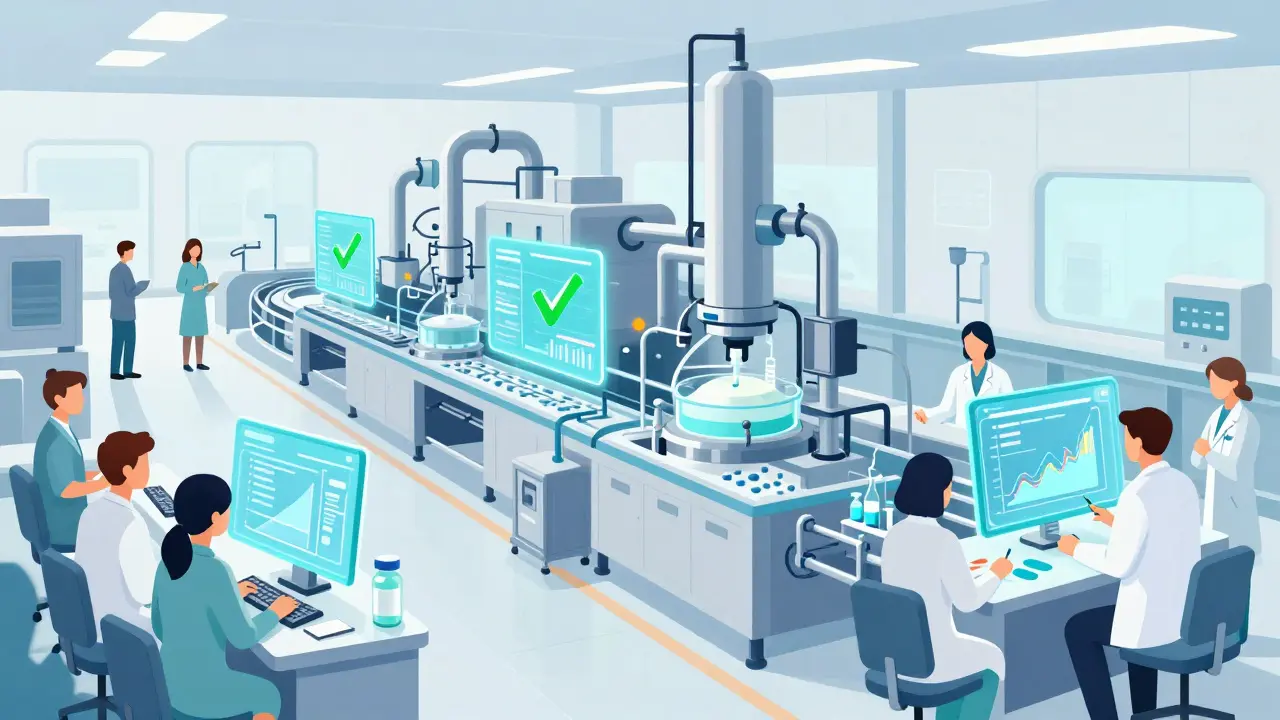
You can’t build a modern shield with medieval tools. Technology is playing a huge role in fortifying pharmaceutical supply chains. One major shift is the move toward continuous manufacturing. Unlike traditional batch processing, which makes drugs in discrete lots, continuous manufacturing runs the process non-stop. This method reduces facility footprint by 30-40%, cuts energy use by 20-25%, and lowers material waste significantly.
Artificial Intelligence (AI) is another game-changer. AI-enabled optimization tools are helping manufacturers improve yield rates by 18-22% and reduce quality deviations by up to 30%. More importantly, predictive analytics powered by AI can forecast supply chain disruptions with 85-90% accuracy, giving companies 60-90 days of warning to adjust their plans. Imagine knowing a port strike or a raw material shortage is coming two months before it hits your warehouse. That kind of foresight changes everything.
However, technology comes with hurdles. Setting up continuous manufacturing facilities requires heavy upfront investment, ranging from $50 million to $150 million per site. Regulatory approval also lags behind innovation. As of mid-2025, the FDA had granted only 12 approvals for continuous manufacturing processes compared to over 10,000 for traditional batch methods. But things are changing. New FDA guidance in 2025 aims to slash approval timelines from 24-36 months down to 12-18 months for qualified facilities, encouraging faster adoption.
Strategic Sourcing and Regional Networks
Diversification is the old adage "don’t put all your eggs in one basket" applied to global trade. Leading pharmaceutical companies are now mapping their supplier dependencies across 12-15 tiers, looking far beyond their immediate vendors to identify hidden risks. They are actively reducing reliance on any single geographic zone.
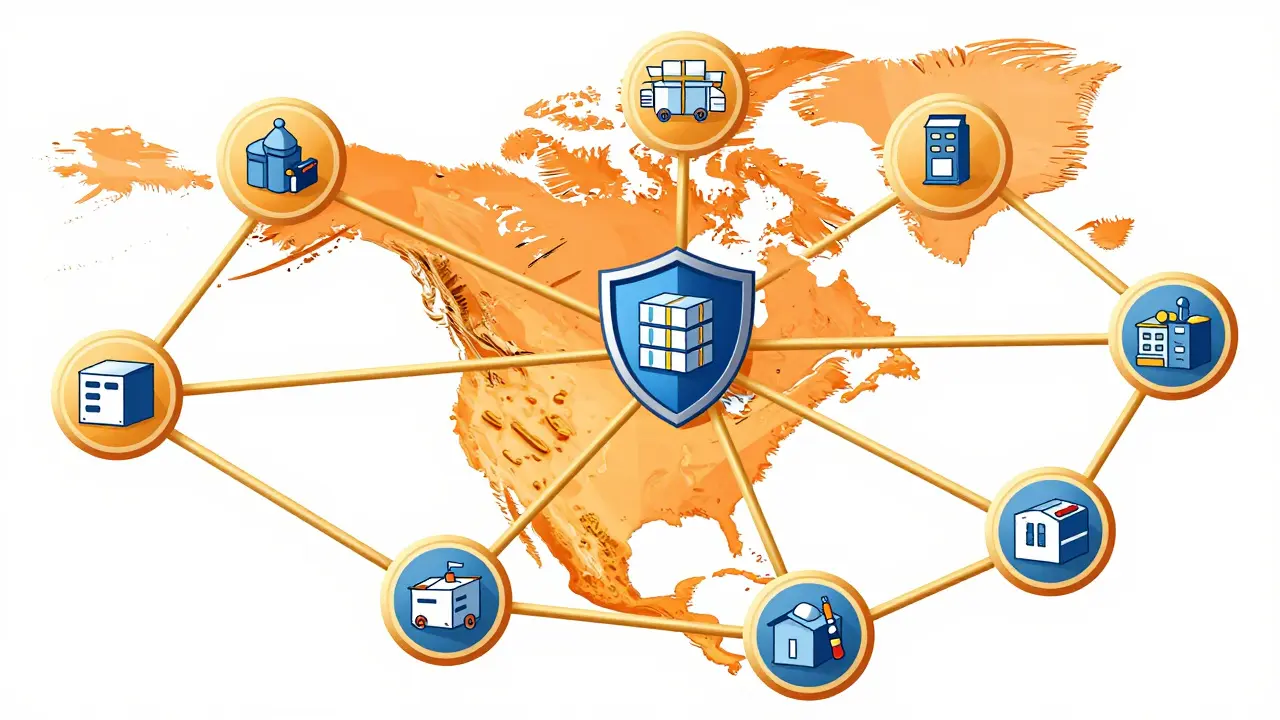
We are seeing a trend toward regionalization. North American companies have already reduced their dependency on Chinese-sourced APIs from 38% in 2022 to 29% in 2025. At the same time, domestic production in the U.S. has ticked up from 22% to 28%. The goal isn’t necessarily to produce everything locally-which would drive costs up by 20-30% according to National Academies experts-but to create regional hubs. By 2030, McKinsey forecasts that regional networks will supply 65-70% of U.S. pharmaceutical needs, ensuring that if one part of the world goes offline, another can step up.
Dual-sourcing is becoming standard practice for critical components. Maintaining backup suppliers for 70-80% of key materials ensures that if one partner fails, production doesn’t halt. Combined with buffer stocks of 60-90 days for essential medicines, these strategies create a cushion against sudden shocks.
| Feature | Traditional Model | Resilient Model |
|---|---|---|
| Primary Goal | Cost Minimization | Continuity & Risk Reduction |
| Inventory Strategy | Just-in-Time (Low Stock) | Buffer Stock (60-90 Days) |
| Sourcing Approach | Single/Regional Source | Dual/Multi-Regional Sources |
| Manufacturing Tech | Batch Processing | Continuous Manufacturing & AI |
| Operational Cost Impact | Lower Base Costs | 8-12% Higher COGS, but Lower Disruption Losses |
Policy Shifts and Government Action
Private sector efforts are being bolstered by significant government action. Recognizing the strategic importance of medicine supply, the U.S. government has rolled out several initiatives. In August 2025, an executive order focused on filling a Strategic Active Pharmaceutical Ingredients Reserve was issued. The target is ambitious: securing a 90-day supply coverage for 150 essential medicines by 2027.
Funding is also flowing into infrastructure. Through the CHIPS and Science Act and subsequent budget proposals, billions have been committed to boosting domestic pharmaceutical manufacturing capacity. While tariffs were discussed as a tool to encourage onshoring, experts warn that relying solely on trade barriers is ineffective. As the CSIS 2025 report points out, trying to onshore every aspect of the supply chain is infeasible given global interdependencies. Instead, a balanced approach that leverages global networks while building strategic domestic capacity for high-risk items proves most sustainable.
Implementing Resilience: A Step-by-Step Guide
If you are a leader in the pharmaceutical or healthcare sector, how do you start? PwC’s 2024 framework suggests a four-phase implementation process that has proven effective for many organizations:
- Vulnerability Assessment (3-6 months): Map your entire supply network. Identify where your APIs come from, who supplies your packaging, and where your bottlenecks are. Look deep-up to 15 tiers if necessary.
- Strategic Scenario Planning (2-4 months): Run simulations. What happens if a key port closes? What if a primary supplier goes bankrupt? Plan for the worst-case scenarios.
- Investment Prioritization (1-3 months): Decide where to spend. Should you invest in dual-sourcing contracts? Buy new tech? Increase inventory levels? Top performers allocate 8-10% of their annual supply chain budget to resilience.
- Cross-Functional Execution (Ongoing): Break down silos. Supply chain teams must work closely with procurement, R&D, and regulatory affairs. Integrated data platforms can reduce vulnerability identification time from 45 days to just 7 days.
Executive sponsorship is crucial here. Projects with strong leadership backing are 3.2 times more likely to succeed. Don’t treat resilience as an IT project or a logistics tweak; it’s a core business strategy.
The Road Ahead: Challenges and Opportunities
Building resilience is expensive and complex. The global market for pharmaceutical supply chain resilience solutions is expected to grow from $4.2 billion in 2023 to $9.7 billion by 2027. Yet, challenges remain. There is a projected shortage of 250,000 skilled manufacturing positions by 2027. Regulatory standards are still fragmented, with only 35% alignment across major markets. And the total investment needed globally to achieve desired resilience levels by 2030 is estimated at $120-150 billion.
Despite these hurdles, the direction is clear. Companies that wait until the next shortage hits will pay the price-in lost revenue, damaged reputation, and, most importantly, patient harm. Those who act now, embracing technology, diversification, and strategic planning, will not only survive but thrive in an unpredictable world. The goal isn’t perfection; it’s preparedness. And in the fight against drug shortages, preparedness saves lives.
Why are drug shortages becoming more common?
Drug shortages are increasingly common due to the high concentration of active pharmaceutical ingredient (API) manufacturing in a few countries, primarily China and India. Geopolitical tensions, natural disasters, and logistical bottlenecks can disrupt these centralized supply lines. Additionally, the historical focus on cost-cutting over redundancy left little buffer for unexpected events.
What is continuous manufacturing in pharmaceuticals?
Continuous manufacturing is a production method where drugs are made in a non-stop flow rather than in discrete batches. It offers significant advantages, including smaller facility footprints, lower energy consumption, reduced waste, and faster response times to demand changes, making supply chains more agile and resilient.
How much does it cost to build a resilient supply chain?
Implementing resilience measures typically adds 8-12% to the cost of goods sold. However, this investment is offset by avoided losses during disruptions. For large firms, avoiding just one major disruption can save millions. Top companies allocate 8-10% of their annual supply chain budgets specifically to resilience initiatives.
Is bringing all manufacturing back to the US the solution?
Not entirely. Experts warn that fully onshoring all production is infeasible and could raise costs by 20-30% without guaranteeing better resilience. A balanced approach is preferred: maintaining global diverse networks for efficiency while building strategic domestic capacity for critical, high-risk medicines to ensure national security.
What role does AI play in preventing drug shortages?
AI helps predict disruptions before they happen. Advanced analytics can forecast supply chain risks with 85-90% accuracy up to 90 days in advance. This early warning allows companies to reroute shipments, activate backup suppliers, or adjust production schedules, effectively preventing shortages from reaching patients.