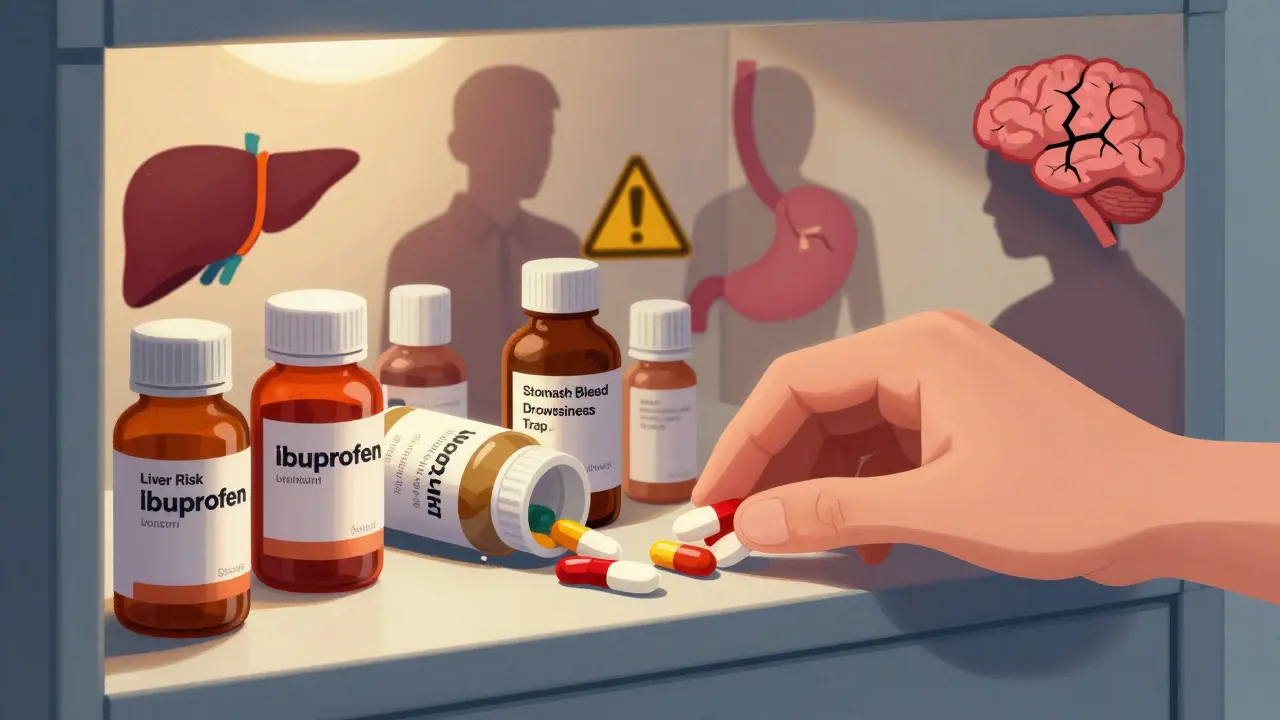
What You’re Really Taking When You Grab an OTC Pill
Every day, millions of people reach for an OTC painkiller or allergy pill without thinking twice. But here’s the thing: acetaminophen isn’t just a "mild" pain reliever. NSAIDs like ibuprofen aren’t harmless anti-inflammatories. And antihistamines? They’re not just "sleep aids"-they can mess with your balance, your memory, and your heart if used wrong.
These aren’t candy. They’re powerful drugs with real risks. In the U.S. alone, acetaminophen overdoses send over 56,000 people to the ER every year. NSAIDs cause stomach bleeds in tens of thousands. Antihistamines increase fall risk in older adults by half. And most people have no idea they’re doubling up on the same drug because it’s hiding in their cold medicine, sleep aid, or headache tablet.
NSAIDs: More Than Just Pain Relief
NSAIDs-like ibuprofen (Advil, Motrin IB), naproxen (Aleve), and aspirin-work by blocking enzymes that cause inflammation, pain, and fever. That’s why they’re the go-to for sprains, arthritis, and menstrual cramps. A 2021 meta-analysis found ibuprofen is 50% more effective than acetaminophen for inflammatory pain.
But here’s what no one tells you: Regular use of more than 1,200mg of ibuprofen a day raises your risk of stomach bleeding by 2.5 times. That’s not a myth. That’s data from the FDA and major medical journals. And if you have high blood pressure, heart disease, or kidney issues, NSAIDs can make it worse.
Also, 10-20% of people with asthma react badly to NSAIDs. Their airways tighten up. It’s called aspirin-exacerbated respiratory disease. If you’ve ever had trouble breathing after taking ibuprofen, don’t ignore it. That’s not a coincidence-it’s a warning.
Topical gels like Voltaren (1% diclofenac) are safer for localized pain like knee arthritis, because less of the drug gets into your bloodstream. But even then, don’t use them for more than 21 days without checking with a pharmacist.
Acetaminophen: The Silent Liver Killer
Acetaminophen (Tylenol) is the most popular OTC painkiller in the U.S., with 72% of headache sufferers choosing it. Why? Because it doesn’t upset your stomach like NSAIDs do. It’s also safer for people with bleeding disorders or kidney disease.
But here’s the catch: It has almost no anti-inflammatory power. So if you’re taking it for a swollen joint or a pulled muscle, you’re not getting the full benefit.
Its real danger? Liver damage. The maximum daily dose is 4,000mg-but many manufacturers now recommend 3,000mg as a safety buffer. Why? Because 56,000 ER visits a year are linked to accidental overdoses. Most of them? People didn’t realize they were taking acetaminophen in three different products: a cold pill, a sleep aid, and a pain reliever.
And here’s the kicker: Toxicity can happen at doses over 7.5g in adults. That’s less than 15 regular-strength tablets. One night of heavy drinking? That lowers your liver’s ability to process it. Combine that with a few extra Tylenol tablets? You’re playing Russian roulette with your liver.
For kids, the dosing is even trickier. The FDA now requires all liquid acetaminophen to be 160mg/5mL to reduce errors. But many older bottles still say 160mg/5mL or 80mg/0.8mL. Always check the label. Use the measuring cup that comes with it-not a kitchen spoon.
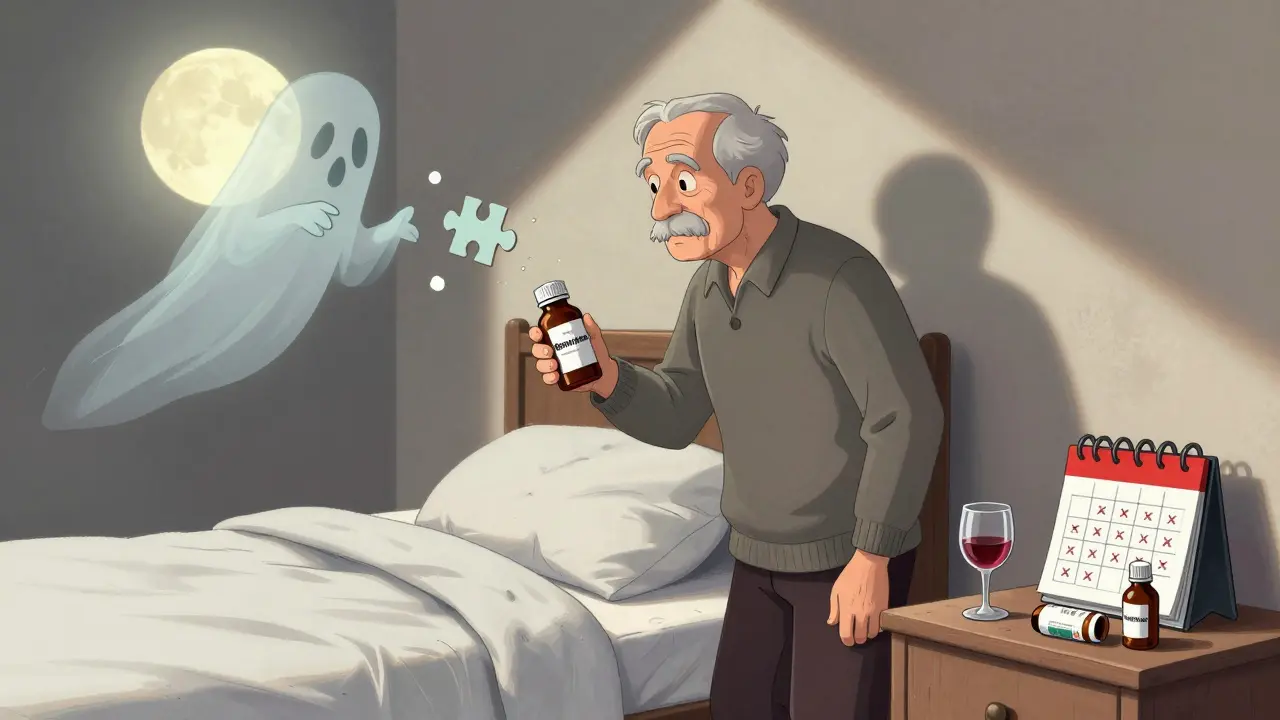
Antihistamines: The Sedation Trap
Antihistamines fight allergies by blocking histamine, the chemical that makes your nose run and your eyes itch. But not all are created equal.
First-generation ones-like diphenhydramine (Benadryl) and chlorpheniramine-are cheap and fast-acting. They kick in within 15-30 minutes. But they cross into your brain. That’s why 50% of users report drowsiness. In older adults, that drowsiness increases fall risk by 50%. A 2021 JAMA study found these drugs are linked to confusion, memory loss, and even dementia with long-term use.
Second-generation antihistamines-loratadine (Claritin), cetirizine (Zyrtec), and fexofenadine (Allegra)-don’t cross the blood-brain barrier as much. Only 8% of users report sleepiness. They last 24 hours. And they’re safer for driving, working, or caring for kids.
But here’s the surprise: Not everyone responds the same. A Reddit thread with 1,800 upvotes featured a doctor explaining that 20% of people respond better to one antihistamine than another because of genetic differences in histamine receptors. So if Claritin doesn’t work for you, try Zyrtec. Don’t assume you’re allergic to all of them.
And don’t use them as sleep aids. Diphenhydramine is in many nighttime pills. But using it nightly? That can lead to tolerance. Your body stops responding. And you’re still risking cognitive decline.
How to Avoid the Most Common Mistakes
Most OTC medication errors aren’t from ignorance. They’re from habit. Here’s what you’re probably doing wrong:
- You’re taking two products with acetaminophen. Check the "Active Ingredients" section on every bottle. If it says "acetaminophen," you’re doubling up.
- You’re using NSAIDs for more than 10 days straight. That’s not safe. If pain lasts longer, see a doctor.
- You’re using a kitchen spoon to measure liquid medicine. A tablespoon is not a teaspoon. The FDA says 20% of pediatric overdoses come from this.
- You’re taking antihistamines with alcohol. That combo multiplies drowsiness and slows your reflexes.
- You’re ignoring the "Behind-the-Counter" label. Pseudoephedrine (in Sudafed) requires ID and is tracked. That’s not bureaucracy-it’s to stop meth labs.
Always read the Drug Facts label. It’s not fine print. It’s your safety manual. If you can’t find the dose for your weight or age, don’t guess. Ask a pharmacist. They’re trained to catch these mistakes.
Who Should Be Extra Careful?
Some people need to think twice before grabbing any OTC pill:
- People over 65: Your liver and kidneys process drugs slower. Acetaminophen and antihistamines are riskier. Stick to lower doses.
- People with liver disease: Acetaminophen is dangerous. Ask your doctor for alternatives.
- People with asthma: Avoid NSAIDs. Use acetaminophen or second-gen antihistamines instead.
- Pregnant women: NSAIDs after 20 weeks can affect fetal kidney development. Acetaminophen is preferred, but still use the lowest dose for the shortest time.
- People on blood thinners: NSAIDs increase bleeding risk. Talk to your doctor before using them.
And if you’re on multiple prescriptions? Always check for interactions. A 2023 study found 15% of OTC users unknowingly combined meds that clashed with their prescriptions.
What’s Changing in 2026?
The FDA is proposing to lower the maximum daily acetaminophen dose from 4,000mg to 3,250mg. That’s not a suggestion-it’s a response to real harm. Topical diclofenac (3% gel) is now available OTC for arthritis pain, giving people a safer option than pills.
And the next big shift? Low-dose atorvastatin (for cholesterol) might become OTC, just like omeprazole (Prilosec) did. That’s a sign of how much trust we’re placing in consumers to manage their own health.
But that also means we need to be smarter. The OTC market is a $121.7 billion industry. Companies want you to buy. But your body doesn’t care about the brand. It only cares about the dose.
When to Stop Self-Treating and See a Doctor
OTC meds are great for short-term relief. But they’re not for long-term fixes.
See a doctor if:
- Pain lasts more than 10 days
- You need more than the maximum daily dose
- You have stomach pain, black stools, or vomiting after taking NSAIDs
- Your liver feels tender or your skin/eyes turn yellow
- You’re using antihistamines daily for more than a month
- You’re taking more than three different OTC products at once
There’s no shame in asking for help. Pharmacists see this every day. They know which drug is safe for your condition, your age, and your other meds. Walk in. Ask. Save yourself a trip to the ER.
Final Thought: Your Body Doesn’t Know the Difference Between "OTC" and "Prescription"
Just because you can buy it without a prescription doesn’t mean it’s safe to use without knowledge. OTC meds are powerful tools. But like any tool, they can hurt you if you don’t use them right.
Know your dose. Know your limits. Know what’s in your medicine. And when in doubt-ask someone who’s trained to know.
Kathy Scaman
January 29, 2026 AT 05:19Anna Lou Chen
January 31, 2026 AT 02:00Mindee Coulter
January 31, 2026 AT 02:22Colin Pierce
February 1, 2026 AT 02:04Mark Alan
February 2, 2026 AT 10:18Ambrose Curtis
February 3, 2026 AT 03:55Chris Urdilas
February 4, 2026 AT 08:29Mel MJPS
February 5, 2026 AT 17:39Amber Daugs
February 7, 2026 AT 00:02Robert Cardoso
February 8, 2026 AT 02:27matthew martin
February 8, 2026 AT 11:54Jeffrey Carroll
February 9, 2026 AT 09:59doug b
February 9, 2026 AT 11:10Lance Long
February 10, 2026 AT 14:35