Oral Thrush Treatment Decision Tool
Patient Profile
Select the options that best describe the current situation.
Please select your symptoms and click "Get Recommendation" to view analysis.
It starts as a strange chalky taste or a mild soreness in your mouth. Before you know it, white patches appear on your tongue or inner cheeks, making swallowing painful. If you are taking certain medications, this isn't just bad luck-it is likely oral thrush, a fungal infection caused by the overgrowth of Candida albicans in the mouth. While many people associate thrush with infants or severe immune disorders, it is actually a common side effect for millions of adults using everyday prescription drugs.
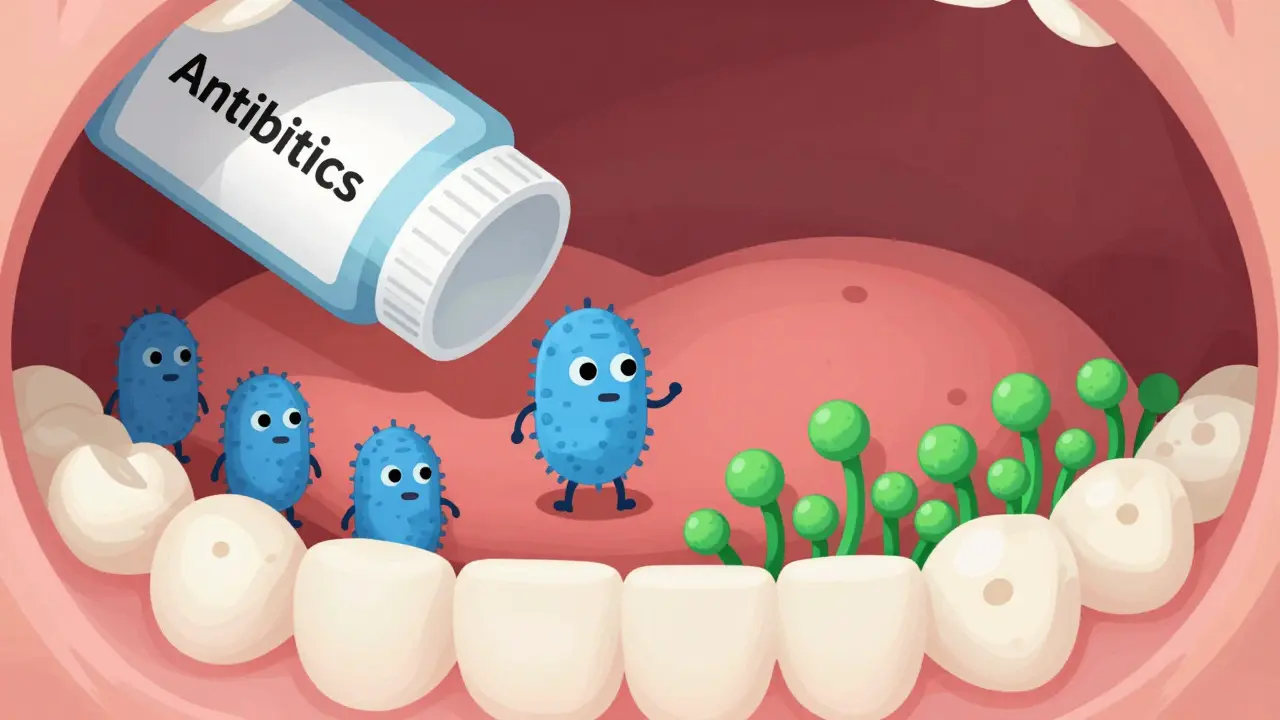
You might be wondering how a simple pill or inhaler can cause an infection. The answer lies in balance. Your mouth hosts a delicate ecosystem of bacteria and fungi. When you introduce powerful medications like antibiotics or steroids, you disrupt this balance, allowing Candida to take over. According to the National Health Service (NHS), about 5% of the general population experiences this condition, but that number jumps to 20% for people using inhaled corticosteroids for asthma or COPD. Understanding why this happens and how to treat it effectively is crucial for getting back to normal quickly.
Why Medications Trigger Oral Thrush
To understand the treatment, you first need to understand the trigger. Oral thrush is not usually caused by catching a bug from someone else; it is an opportunistic infection. The fungus Candida albicans lives in your mouth naturally, kept in check by healthy bacteria. Certain medications remove those protective guards.
The most common culprits include:
- Inhaled Corticosteroids: Used by millions for asthma and COPD, these steroids suppress local immunity in the mouth. The CDC notes that 12.9 million Americans use these daily, creating a massive pool of potential cases.
- Broad-Spectrum Antibiotics: These kill bad bacteria causing infections, but they also wipe out the good bacteria that keep Candida in check.
- Immunosuppressants: Essential for organ transplant recipients and autoimmune patients, these drugs lower the body's overall defense system.
- Cancer Therapies: Chemotherapy and radiation can damage oral tissues and weaken immune responses.
When these protective mechanisms fail, Candida multiplies rapidly, forming the creamy white lesions characteristic of thrush. Recognizing these triggers helps you identify if your current medication regimen is the root cause, which is the first step in effective prevention.
First-Line Treatment: Nystatin Suspension
If you have mild to moderate oral thrush and a generally healthy immune system, doctors typically start with Nystatin, a topical antifungal medication available as an oral suspension or lozenge. Marketed under names like Mycostatin and Nilstat, Nystatin has been a staple since its approval by the FDA in 1954. It works by binding to ergosterol in the fungal cell membranes, essentially poking holes in the fungus until it leaks and dies.
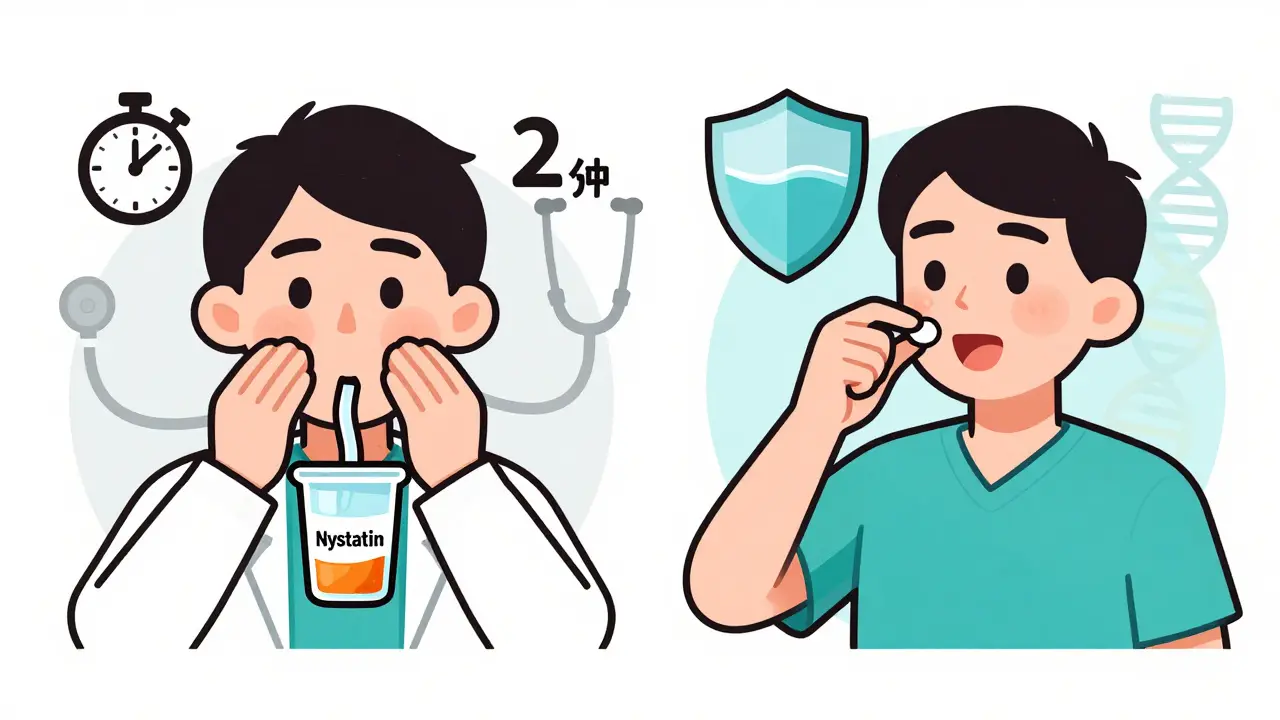
The standard protocol involves swishing 4-6 mL of the liquid (containing 100,000 units per mL) in your mouth four times a day for 7-14 days. Here is the catch: you must hold the liquid in your mouth for at least two minutes before spitting it out. Swallowing it immediately renders it useless because Nystatin is not absorbed well by the gut. Clinical studies from Memorial Sloan Kettering Cancer Center show a 92% cure rate for mild cases when used correctly.
Why do experts prefer Nystatin for initial treatment? Safety. Because less than 5% of the drug enters your bloodstream, it has minimal systemic side effects. This makes it safe for pregnant women, children, and elderly patients who may be taking other complex medications. However, patient compliance is often low due to the unpleasant chalky taste and the inconvenience of dosing four times daily. Despite this, it remains the gold standard for uncomplicated cases.
Systemic Treatment: Fluconazole
If Nystatin fails, or if you have a weakened immune system, doctors will likely prescribe Fluconazole, a potent systemic antifungal medication taken orally as a tablet. Sold widely as Diflucan, Fluconazole was approved by the FDA in 1990 and works differently. Instead of staying on the surface, it is absorbed into your bloodstream, attacking the fungus throughout your body, including deeper tissues like the esophagus.
The typical adult dosage is 100-200 mg once daily for 7-14 days. Its effectiveness is higher, with meta-analyses showing 95% efficacy compared to Nystatin's 89%. It also boasts 98% bioavailability, meaning your body absorbs almost all of the drug within 1-2 hours. For immunocompromised patients, such as those with HIV or undergoing chemotherapy, Fluconazole is often the only viable option.
However, greater power comes with greater risk. Because Fluconazole circulates in your blood, it interacts with other medications. The FDA lists 32 common drug interactions, particularly with warfarin (blood thinner), phenytoin (seizure medication), and sulfonylureas (diabetes drugs). It can also stress the liver, requiring dosage adjustments for patients with kidney issues (creatinine clearance below 50 mL/min). You should never self-medicate with Fluconazole without a doctor's oversight.
Comparing Treatment Options
Choosing between Nystatin and Fluconazole depends on severity, health status, and cost. Here is a breakdown to help you discuss options with your healthcare provider.
| Feature | Nystatin (Mycostatin) | Fluconazole (Diflucan) |
|---|---|---|
| Efficacy | 89% (mild/moderate) | 95% (severe/recurrent) |
| Administration | Swish and spit, 4x daily | One pill daily |
| Systemic Absorption | Minimal (<5%) | High (98%) |
| Safety Profile | Very safe, few interactions | Liver/kidney risks, drug interactions |
| Cost (Generic) | ~$15.79 / 30 days | ~$23.49 / 30 days |
| Best For | Healthy adults, children, pregnancy | Immunocompromised, severe cases |
Note that brand-name Diflucan can cost upwards of $347, so generic versions are significantly more economical. Always check with your pharmacist about insurance coverage and generic availability.
Prevention Strategies That Actually Work
Treating thrush is uncomfortable; preventing it is far better. If you are on medications that increase your risk, proactive steps can reduce your chances of developing an infection by up to 65%, according to NHS clinical audits.
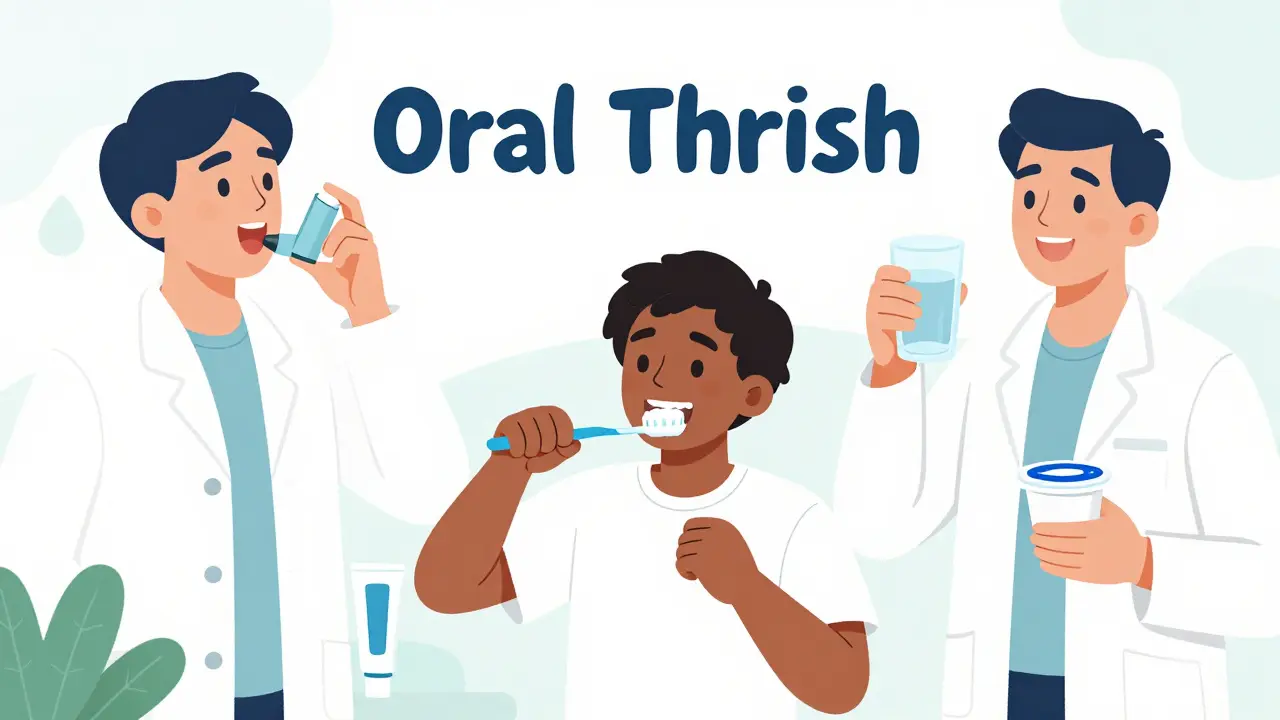
Rinse After Inhalers The single most effective step for asthma and COPD patients is rinsing your mouth with water immediately after using an inhaled corticosteroid. Spit the water out; do not swallow it. This physically washes away residual steroid particles that suppress local immunity. Using a spacer device with your inhaler also reduces the amount of medication deposited in the mouth.
Maintain Oral Hygiene Candida thrives in dirty environments. Brush twice daily and floss regularly. Consider using toothpaste containing xylitol, a sugar alcohol shown in Journal of Dental Research studies to reduce Candida colonization by 40%. Avoid mouthwashes with alcohol, as they dry out the mouth, creating a favorable environment for fungi.
Manage Blood Sugar If you have diabetes, high blood sugar feeds Candida. Keeping your HbA1c below 7.0% creates a hostile environment for the fungus. Uncontrolled diabetes is one of the biggest risk factors for recurrent thrush.
Probiotics Recent research published in Nature Microbiology suggests that probiotic strains like Lactobacillus reuteri can reduce recurrence by 57% when used alongside antifungal treatment. Eating yogurt with live cultures or taking specific probiotic supplements may help restore the bacterial balance disrupted by antibiotics.
When to See a Doctor
You should seek medical attention if:
- White patches persist for more than a week despite home care.
- You experience difficulty swallowing or pain when eating.
- You have a weakened immune system due to HIV, cancer treatment, or organ transplant.
- Over-the-counter remedies do not resolve the symptoms.
Do not ignore persistent thrush. In rare cases, it can spread to the esophagus (esophageal candidiasis), which requires systemic treatment and urgent medical intervention. Additionally, recurrent thrush can sometimes signal underlying health issues like undiagnosed diabetes or vitamin deficiencies.
How long does it take for oral thrush to go away with medication?
With proper treatment using Nystatin or Fluconazole, symptoms typically improve within 3-5 days, and the infection resolves completely in 7-14 days. Success rates are 85-90% when the full course of medication is completed as prescribed.
Can I stop my asthma medication if I get thrush?
No, never stop prescribed asthma or COPD medication without consulting your doctor. Instead, ask your doctor about adjusting the dose, switching to a different type of inhaler, or adding a preventive rinse routine. Stopping your medication could lead to dangerous breathing difficulties.
Is oral thrush contagious?
Generally, no. Since Candida already lives in your mouth, thrush is an overgrowth issue rather than an infectious disease you catch from others. However, in rare cases, it can be transmitted through deep kissing or sharing utensils with someone who has active thrush, especially if you have a compromised immune system.
What foods should I avoid during treatment?
Avoid sugary foods and drinks, as sugar feeds Candida. Also limit yeast-containing foods like bread, beer, and wine. Focus on a diet rich in vegetables, lean proteins, and non-sugary fruits. Acidic foods like citrus may irritate sore patches, so choose softer, milder options until healed.
Why does Nystatin taste so bad?
Nystatin has a naturally chalky, bitter taste that many patients find unpleasant. To manage this, some dentists recommend mixing it with a small amount of sugar-free syrup or eating a bland food like applesauce immediately after spitting out the dose to neutralize the flavor.