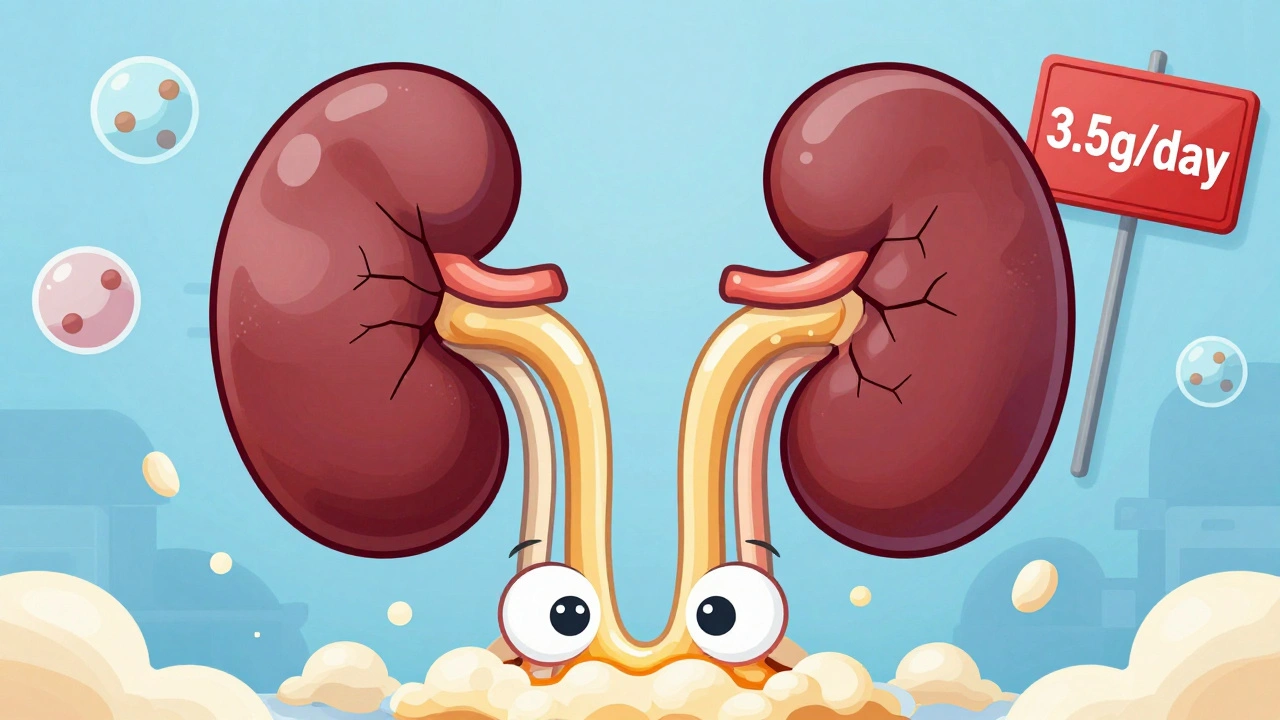
Nephrotic syndrome isn’t a disease on its own-it’s your body’s way of screaming that something’s seriously wrong with your kidneys. Imagine your kidneys’ filtering system, the glomeruli, suddenly developing giant holes. Instead of keeping protein safely inside your blood, they leak it out by the gram. That’s when you start seeing the signs: foamy urine, puffy eyes in the morning, ankles swelling like balloons, and a sudden weight gain of 10 pounds or more in just days. This isn’t just water retention. It’s a breakdown in one of your body’s most vital filters.
What’s Actually Happening Inside Your Kidneys?
Your kidneys contain millions of tiny filters called glomeruli. Each one is lined with special cells called podocytes, which act like a fine mesh net. These cells have tiny foot-like projections that wrap around blood vessels, leaving slits just big enough for water and waste to pass through-but too small for proteins like albumin to escape. In nephrotic syndrome, this mesh gets damaged. The proteins nephrin and podocin, which hold the structure together, either break down or get mutated. When that happens, albumin pours into the urine-sometimes more than 3.5 grams a day. That’s the equivalent of dumping a tablespoon of salt into a glass of water. Your blood loses its ability to hold onto fluid, so it leaks into your tissues. That’s the edema-the swelling around your eyes, legs, belly, or even lungs.Heavy Proteinuria: The First Red Flag
Most people don’t notice proteinuria until it’s severe. But if you’ve ever looked at your urine and seen bubbles that won’t go away-like a beer that’s been shaken too hard-that’s a classic sign. In adults, proteinuria over 3.5 grams per day defines nephrotic syndrome. In kids, it’s measured differently: more than 40 mg per square meter of body surface per hour. The bigger the leak, the worse the symptoms. A child with over 10 grams of protein in their urine every day might have a rare genetic form, like congenital nephrotic syndrome, which shows up in the first few months of life. Most adults, though, don’t realize their proteinuria is this bad until they’re swollen, tired, and their socks leave deep marks on their ankles.Why Do You Swell So Badly?
It’s not just about losing protein. When albumin drops below 3.0 g/dL in your blood, your body tries to compensate. Your liver starts making more cholesterol and fats, which is why many patients have cholesterol levels over 300 mg/dL-higher than most people on statins. But the real problem is fluid. Albumin is like a sponge that pulls water into your blood vessels. When it’s gone, water spills out into your skin, belly, and lungs. That’s why people with nephrotic syndrome can have ascites (fluid in the belly), pleural effusions (fluid around the lungs), and even difficulty breathing. The swelling doesn’t go away with diet or exercise. It only improves when the kidney leak is fixed.Children vs. Adults: Two Different Diseases
Nephrotic syndrome looks completely different depending on your age. In kids under 6, about 85% of cases are caused by minimal change disease. That means the kidney looks normal under a microscope-but the filter is still broken. These kids respond incredibly well to steroids. Most are in remission within 4 weeks. But here’s the catch: 60 to 70% of them will have at least one relapse, often after a cold or the flu. Parents often mistake the puffy eyes for allergies. One mother in Bristol told me her son was misdiagnosed three times before someone checked his urine. By then, he’d gained 12 pounds in two weeks. In adults, it’s a different story. The most common causes are focal segmental glomerulosclerosis (FSGS), membranous nephropathy, and diabetes. FSGS scars parts of the glomeruli. Membranous nephropathy is often linked to autoimmune issues or hepatitis. Diabetes? That’s the silent killer-30 to 40% of nephrotic syndrome in adults over 65 comes from long-term high blood sugar. Unlike kids, adults rarely respond fully to steroids. Many need stronger drugs, and some will eventually need dialysis.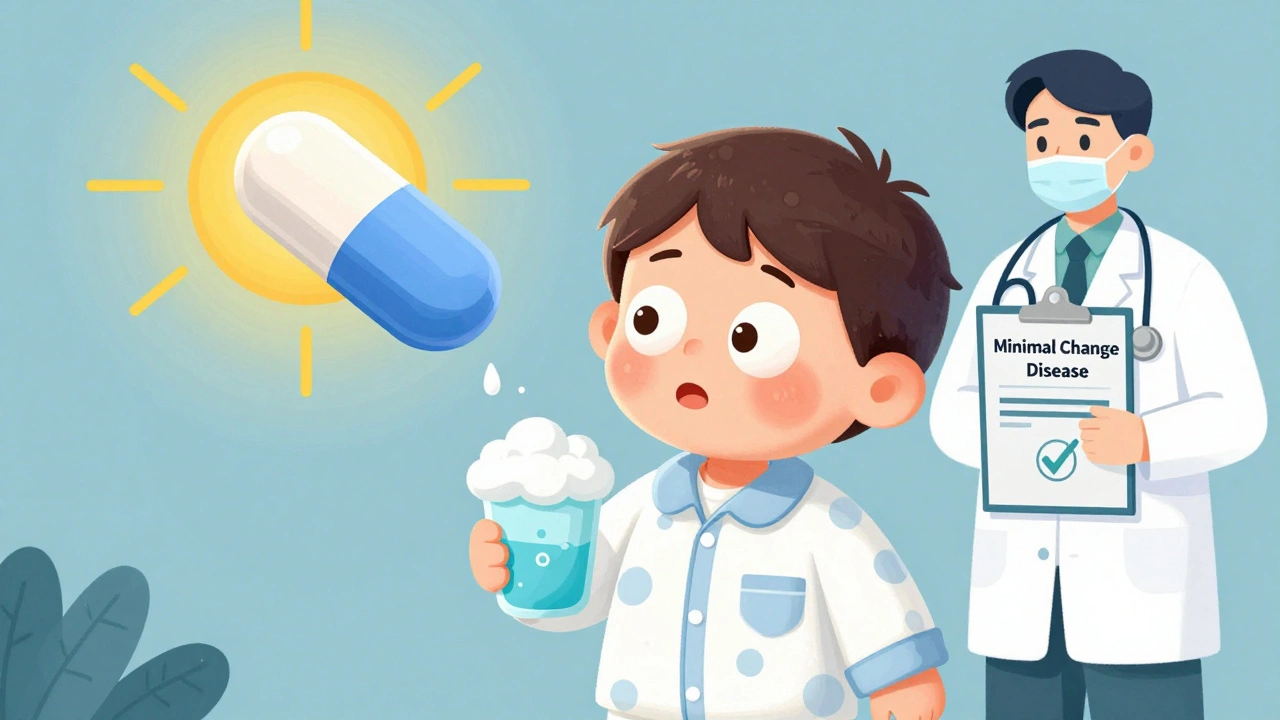
How Do Doctors Diagnose It?
It starts with a urine test. A dipstick that shows 3+ or 4+ protein is a red flag. But to confirm nephrotic syndrome, you need a 24-hour urine collection. That’s when you collect every drop of urine for a full day. If it shows more than 3.5 grams of protein, you’re in the nephrotic range. Blood tests follow: low albumin (under 3.0 g/dL), high cholesterol, and sometimes high triglycerides. In kids with minimal change disease, a biopsy is usually skipped-steroids are tried first. But in adults, or if the kid doesn’t respond to steroids, a kidney biopsy is necessary. It tells you whether it’s FSGS, membranous, or something rarer. Without it, you’re guessing.First-Line Treatment: Steroids and Timing
For children with minimal change disease, prednisone is the gold standard. They get 60 mg per square meter of body surface each day-up to 80 mg max-for 4 to 6 weeks. Then, the dose is slowly lowered over 2 to 5 months. About 90% of kids go into remission. But steroids aren’t gentle. Kids gain weight fast. Their faces round out (moon face). They get hungrier, sleepier, or more irritable. One dad in Bristol said his daughter went from a quiet child to a screaming toddler within weeks. But the trade-off? Her swelling disappeared. Her urine turned clear. She was back to school in a month. Adults get a similar dose-1 mg per kg of body weight per day-but for longer: 8 to 16 weeks. Response rates are lower-only 60 to 70% improve. And relapses are common. If steroids don’t work, doctors turn to calcineurin inhibitors like tacrolimus or cyclosporine. These are stronger, with more side effects: shaky hands, high blood pressure, kidney damage. But for some, they’re the only thing that works.Other Essential Treatments
Steroids don’t fix everything. You also need to protect your kidneys from further damage. ACE inhibitors or ARBs (like lisinopril or losartan) are given to everyone. These drugs don’t just lower blood pressure-they directly reduce protein leakage by 30 to 50%. The goal? Keep blood pressure under 130/80. That’s tighter than what most healthy people aim for. Diet matters too. Sodium restriction-under 2,000 mg a day-is crucial. That means no processed food, no canned soups, no chips. Even one salty meal can undo weeks of progress. Protein intake? Don’t cut it. Eat 0.8 to 1.0 grams per kilogram of body weight. Too little protein makes your body break down muscle. Too much stresses your kidneys. It’s a tight balance.The Hidden Danger: Blood Clots
Most people don’t know this, but nephrotic syndrome makes you 2 to 4 times more likely to get a blood clot. Why? You lose anticoagulant proteins in your urine. Your blood thickens. The most dangerous clot? Renal vein thrombosis-when a clot forms in the vein that drains your kidney. It’s rare but deadly. If you’re an adult with albumin under 2.0 g/dL, your doctor should consider blood thinners. I’ve seen patients with sudden, severe back pain and high fever-turns out, it was a clot, not an infection.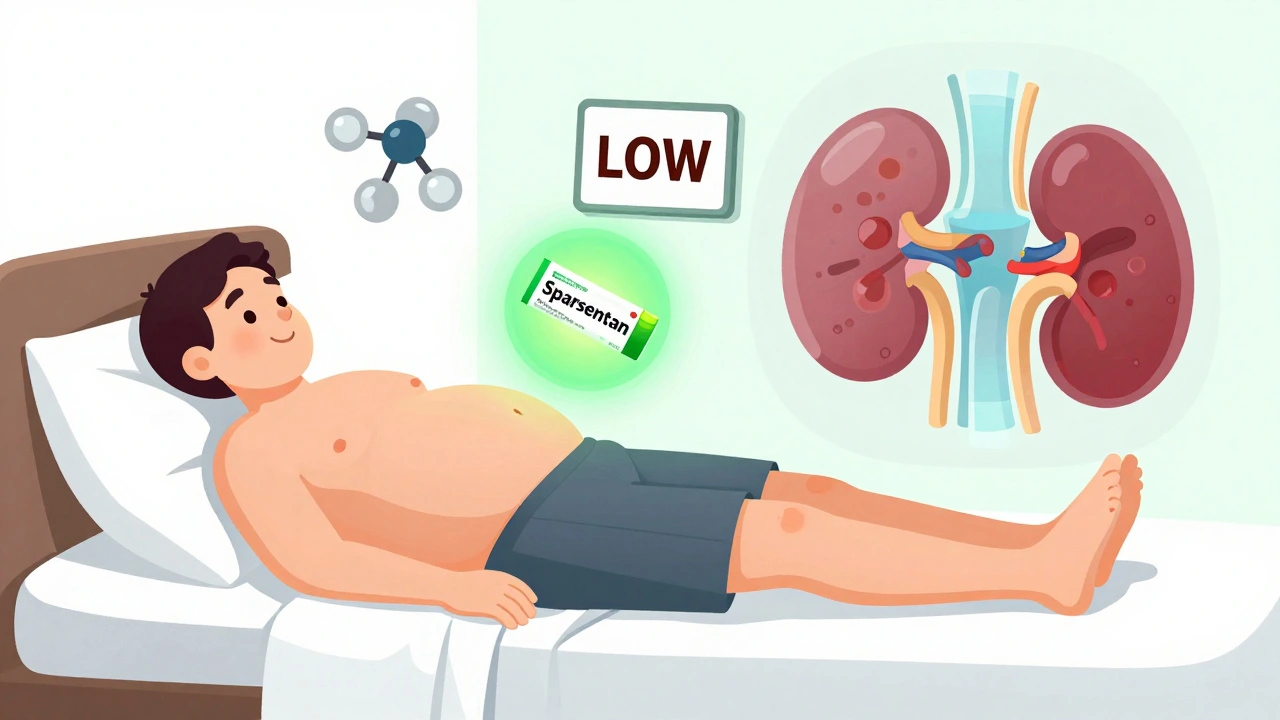
When to Worry: Steroid Resistance and Relapse
About 10 to 15% of children are steroid-resistant. That means after 8 weeks of treatment, their proteinuria hasn’t dropped. These kids need biopsy-proven diagnoses and stronger drugs. Rituximab, a drug used in lymphoma, is now being used off-label with surprising success. It targets B-cells that may be attacking the kidney. In some studies, it cuts relapse rates by half. Relapses happen. Most often, they’re triggered by infections. A cold. The flu. Even a mild sinus infection. That’s why vaccines are so important. Inactivated vaccines (flu shot, pneumococcal) are safe during treatment. Live vaccines (MMR, chickenpox) are not. You must wait until you’re off steroids for at least 3 months.What’s New in Treatment?
The field is changing fast. In 2023, the FDA approved budesonide (Tarpeyo) for IgA nephropathy-but it’s showing promise in some FSGS cases too. It delivers steroids directly to the kidney, reducing side effects. Then there’s sparsentan, a new drug that blocks two pathways at once. In a 2022 trial, it cut proteinuria by nearly 50%, while the standard drug only did 15%. It’s not approved everywhere yet, but it’s coming. Genetic testing is now recommended for kids under 1 with nephrotic syndrome. If they have a mutation in the NPHS1 gene, they have congenital nephrotic syndrome. Steroids won’t help. They need different care-maybe even a kidney transplant by age 3. Testing early saves years of unnecessary treatment.Long-Term Outlook: Survival and Prognosis
Your prognosis depends entirely on the cause. If it’s minimal change disease? 95% of kids keep their kidneys for at least 10 years. If it’s FSGS? Only 50 to 70% do. Diabetes-related nephrotic syndrome? Just 40 to 50%. The biggest predictor of kidney failure? Persistent proteinuria over 1 gram per day after treatment. That increases your risk of needing dialysis by 4.2 times. That’s why doctors push so hard for complete remission-even if it takes years.What Patients Say: Real Stories
On patient forums, the same themes come up. Parents describe the terror of seeing their child’s face swell shut. Adults talk about the shame of wearing baggy clothes to hide the bloating. One woman in her 50s said she stopped going to the beach because she looked like she was 6 months pregnant. But then she got on sparsentan. Within 3 months, her urine was clear. Her legs didn’t hurt anymore. She wore shorts again. The emotional toll is real. But so is the hope. With the right treatment, many people live full lives. They work. They travel. They raise kids. The key? Catch it early. Treat it aggressively. And don’t give up when relapses happen.What causes nephrotic syndrome?
Nephrotic syndrome is caused by damage to the glomeruli in the kidneys, which allows protein to leak into the urine. In children, it’s most often due to minimal change disease. In adults, common causes include focal segmental glomerulosclerosis (FSGS), membranous nephropathy, and diabetes. Less common causes include lupus, hepatitis, certain medications, and rare genetic mutations like NPHS1.
Is nephrotic syndrome curable?
In children with minimal change disease, yes-most achieve long-term remission with steroids. In adults, it’s harder to cure, but many can control it with medication. Some forms, like genetic nephrotic syndrome, aren’t curable but can be managed. The goal is to reduce proteinuria, prevent complications, and protect kidney function for as long as possible.
Can nephrotic syndrome come back after treatment?
Yes, relapses are common, especially in children. Up to 70% of kids with minimal change disease will have at least one relapse, often after a viral infection. Adults with FSGS or membranous nephropathy may also relapse if treatment is stopped too soon. Regular urine testing and avoiding triggers like infections are key to preventing relapses.
How does diet affect nephrotic syndrome?
Diet plays a major role. Reducing sodium to under 2,000 mg per day helps control swelling. Eating enough protein (0.8-1.0 g per kg of body weight) prevents muscle loss without overloading the kidneys. Avoiding processed foods, canned soups, and salty snacks is essential. High cholesterol is common, so limiting saturated fats helps too.
Are there new treatments for nephrotic syndrome?
Yes. Drugs like sparsentan and budesonide (Tarpeyo) are showing strong results in reducing proteinuria with fewer side effects than traditional steroids. Rituximab is being used successfully for steroid-resistant cases. Genetic testing is now standard for young children to avoid unnecessary treatments. Research into podocyte-protecting drugs is ongoing and promising.
What are the risks of not treating nephrotic syndrome?
Untreated nephrotic syndrome leads to worsening kidney damage, severe infections due to low immune proteins, blood clots (including in the kidneys), and eventually kidney failure. Persistent proteinuria over 1 gram per day increases the risk of needing dialysis by more than four times. Early treatment is critical to protect long-term kidney health.
vinoth kumar
December 3, 2025 AT 15:58Man, I never realized how much protein loss could wreck your body like this. My cousin had this in college and they thought it was just water retention till he collapsed. The foamy urine thing? That’s the red flag no one talks about. Glad the article laid it out so clear.
bobby chandra
December 3, 2025 AT 20:26Let me tell you-this isn’t just medical jargon, it’s a biological earthquake. When podocytes start falling apart like a house of cards in a hurricane, your blood turns into a leaky sieve. And that albumin? It’s not just a protein-it’s the glue holding your entire fluid balance together. Lose it, and your body starts drowning in its own plasma. The fact that steroids can flip the switch in kids? Pure medical magic. But adults? We’re stuck playing whack-a-mole with FSGS and diabetes. We need better tools.
Francine Phillips
December 4, 2025 AT 17:04Wow. So much info. I’m just glad I don’t have this.
Katherine Gianelli
December 6, 2025 AT 11:49Reading this made me think of my neighbor’s son-he was diagnosed at 4 and now he’s 12, running track. Steroids wrecked his appetite and gave him moon face but he never stopped being himself. That’s the real win. And the part about vaccines? So important. Parents need to know: it’s not the meds that make them weak, it’s the infection they’re avoiding. Stay vigilant, stay hopeful.
Joykrishna Banerjee
December 7, 2025 AT 08:51Ugh. Another ‘miracle cure’ narrative. Steroids? Please. You’re just suppressing the immune system like a toddler with a tantrum. And don’t get me started on ‘sparsentan’-it’s just another pharma cash grab disguised as innovation. Real medicine is about root causes, not band-aids. And why no mention of gut microbiome dysbiosis? Probably because Big Pharma doesn’t patent probiotics. 😏
Myson Jones
December 7, 2025 AT 16:29It’s worth noting that while the science here is solid, the emotional toll on families is often overlooked. I’ve seen parents lose sleep over urine dipsticks and weight charts. The quiet moments-when a child finally sleeps without swollen eyelids-that’s the real victory. Treatment isn’t just about numbers. It’s about bedtime stories again.
parth pandya
December 8, 2025 AT 10:27Hey just read this and wow. I think u missed one thing-some ppl with nephrotic syndrome also get vitamin D deficiency because albumin carries it. So don't forget to check levels. Also, omega-3 might help reduce inflammation a bit. Not a cure but helps. My uncle had it and his doc said the same.
Albert Essel
December 9, 2025 AT 23:29This is one of the clearest explanations of nephrotic syndrome I’ve ever seen. The way you linked podocyte structure to clinical symptoms? Brilliant. I’ve worked in nephrology for over a decade and even I learned something new about the 24-hour urine protocol. Thank you for taking the time to write this with such precision.
Charles Moore
December 11, 2025 AT 13:48I’m from Ireland and we don’t talk enough about kidney health here. This post reminded me of a young patient I met last year-16, steroid-resistant, on rituximab. She’s now in remission and studying art. It’s not just about survival. It’s about getting back to being a kid. Thank you for highlighting the human side.
Gavin Boyne
December 11, 2025 AT 17:02So let me get this straight-you’re telling me we’ve got a drug that blocks two pathways at once and it cuts proteinuria by 50%? And the FDA approved it for IgA… but not FSGS? Welcome to American medicine, folks. Where innovation is a footnote until the patent expires. Meanwhile, kids in India are getting treated with generic steroids and still beating this thing. Maybe the real breakthrough isn’t in the lab-it’s in the lack of corporate greed.
Rashi Taliyan
December 11, 2025 AT 18:25I cried reading this. My daughter was diagnosed at 2. We thought it was allergies. Then she stopped walking because her legs were so swollen. The day she peed clear for the first time after steroids? I held her like she’d been born again. This article didn’t just explain the disease-it explained my soul.