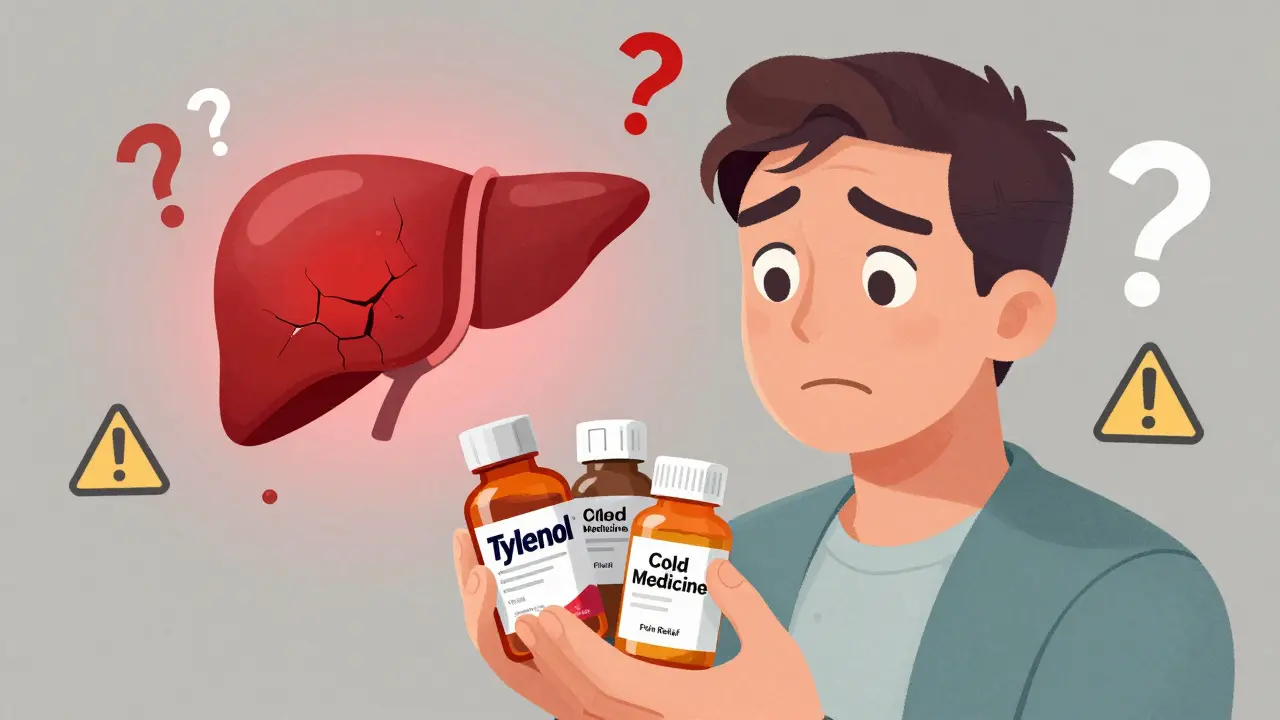
Every year, millions of people take medications the wrong way-not because they’re careless, but because they believe something that isn’t true. You’ve probably heard it: "If one pill helps, two will help more." Or "Herbal supplements are natural, so they’re safe." These aren’t just harmless rumors. They’re dangerous myths that land people in the emergency room-and sometimes worse.
Myth: Over-the-Counter Medications Are Completely Safe
It’s easy to think that because you don’t need a prescription, an OTC drug is harmless. But acetaminophen, the active ingredient in Tylenol and hundreds of other pain relievers, is one of the most common causes of liver failure in the U.S. The FDA lowered the daily maximum from 4,000mg to 3,000mg in 2011 because so many people were accidentally overdosing. How? By taking multiple products that all contain acetaminophen-like a cold medicine plus a painkiller-without realizing it. That’s just 8 extra-strength tablets. One extra tablet can push you over the limit. Each year, acetaminophen overdose sends 56,000 people to the ER, hospitalizes 26,000, and kills 500. That’s not a rare accident. It’s a predictable result of misinformation.
Myth: Taking More Will Make It Work Better
When a painkiller doesn’t seem to do enough, it’s tempting to take another pill-or two. But that’s not how most medications work. Ibuprofen, found in Advil and Motrin, is a classic example. The recommended maximum is 1,200mg per day for over-the-counter use. Go beyond that, and your risk of internal bleeding jumps by 4.5 times, according to a 2017 study in JAMA Internal Medicine. The same goes for naproxen, aspirin, and other NSAIDs. Your body doesn’t respond to higher doses with better results. It responds with damage-to your stomach, kidneys, and heart. The dose on the label isn’t a suggestion. It’s the result of years of clinical testing to find the safest and most effective amount.
Myth: You Can Stop Taking Antibiotics When You Feel Better
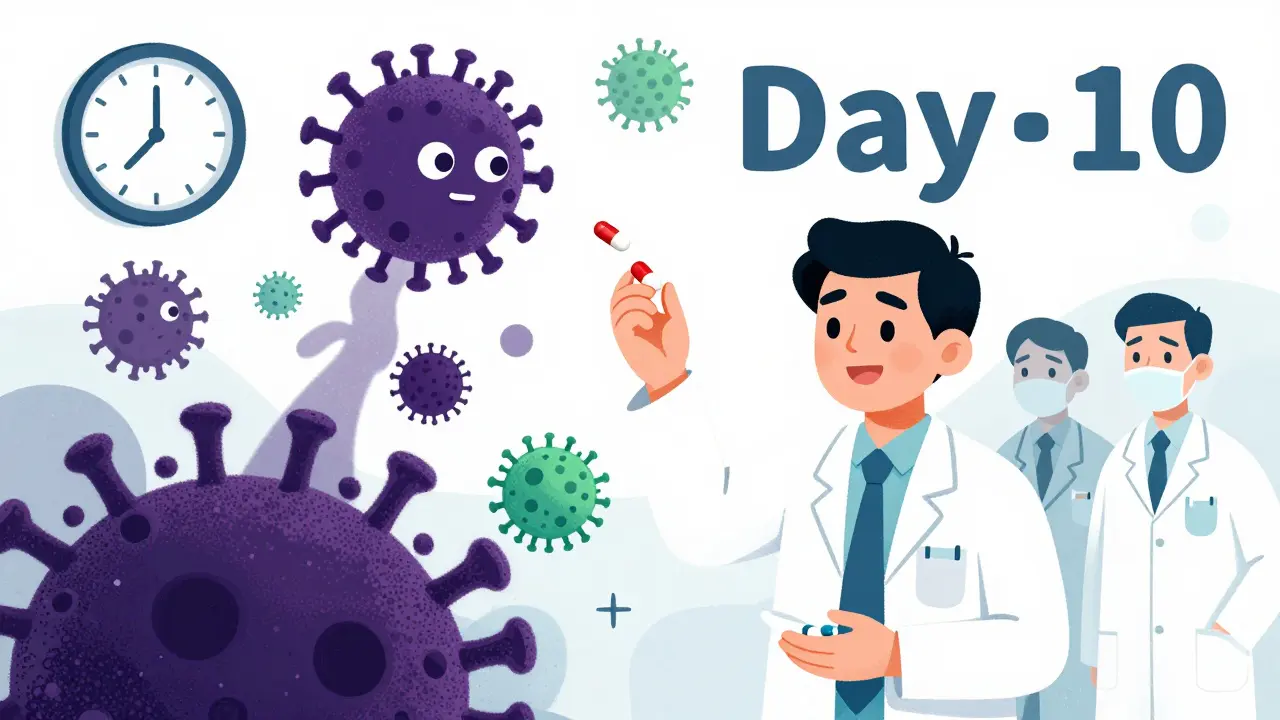
This is one of the most dangerous myths in modern medicine. You’ve got a cold, take antibiotics for a sinus infection, start feeling better after three days, and decide to toss the rest. That’s not smart. It’s risky. The CDC reports that 30% of antibiotic courses are stopped early. Why does that matter? Bacteria that survive partial treatment become stronger. They evolve. And those resistant strains don’t just affect you-they spread. In the U.S. alone, antibiotic-resistant infections cause 35,000 deaths every year. Completing your full course isn’t about being obedient-it’s about stopping superbugs before they start. If your doctor says take it for 10 days, take it for 10 days-even if you feel fine on day five.
Myth: Natural or Herbal Products Are Always Safe
"Natural" doesn’t mean harmless. St. John’s Wort, often taken for mild depression, can cut the effectiveness of birth control pills by up to one-third. That’s not a small risk-it’s a pregnancy risk. Ginkgo biloba, used for memory support, increases bleeding risk by 50% when taken with warfarin, a common blood thinner. Even garlic supplements can interfere with HIV medications. The National Center for Complementary and Integrative Health found that 65% of supplement users believe herbal products are inherently safe. But herbs are powerful chemicals. They interact with prescription drugs, affect liver enzymes, and can cause serious side effects. Always tell your pharmacist or doctor what supplements you’re taking-even if you think they’re "just herbs."
Myth: It’s Fine to Drink Alcohol with Prescription Medications
"I only have one glass of wine." That’s what people say. But mixing alcohol with certain medications can be deadly. Opioids like oxycodone, hydrocodone, or codeine already slow your breathing. Add alcohol, and that effect increases by up to 800%, according to a 2020 study in Addiction Biology. Benzodiazepines like Xanax or Valium? Same thing. Even common medications like certain antidepressants or blood pressure pills can cause dizziness, fainting, or liver damage when combined with alcohol. The myth that "responsible drinking" makes it safe is just that-a myth. If your medication label says "avoid alcohol," it’s not a suggestion. It’s a warning.
Facts That Save Lives
Now that we’ve cleared up the myths, here’s what actually works:
- Generic drugs are just as effective as brand names. The FDA requires generics to have the same active ingredient, strength, and absorption rate as the brand version-within 80-125% bioequivalence. If your doctor prescribes Lipitor, and you get atorvastatin, you’re getting the same medicine at a fraction of the cost.
- Statins don’t harm your liver in most people. Only about 1% of patients on statins show signs of liver injury, according to FDA data. The benefits of reducing heart attacks far outweigh this tiny risk.
- Antibiotics don’t work on viruses. Colds, flu, and most sore throats are caused by viruses. Antibiotics won’t help-and taking them anyway fuels resistance.
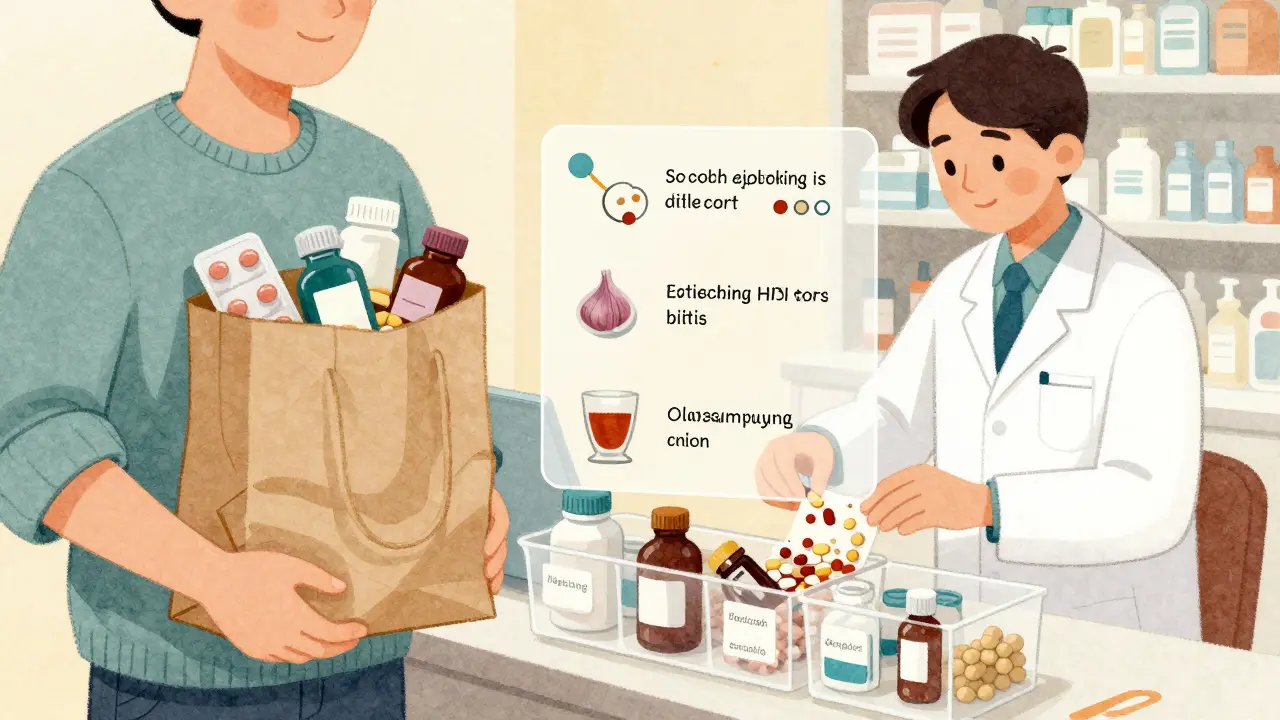
- Medication errors are preventable. A simple "brown bag review"-where you bring all your pills, supplements, and OTC meds to your doctor or pharmacist-reduces medication mistakes by 63%.
- Using the "Teach-Back Method" improves understanding. Ask your pharmacist: "Can you explain how I’m supposed to take this?" Then repeat it back in your own words. Studies show this boosts patient understanding from 42% to 89%.
What You Can Do Today
Don’t wait for a crisis. Start practicing medication safety now:
- Do a brown bag review. Gather every pill, capsule, patch, and supplement in your home. Take them to your next doctor or pharmacist visit. They’ll spot duplicates, interactions, and expired meds.
- Use one pharmacy. If you use multiple pharmacies, your medication history gets split. One pharmacy can check for dangerous interactions across all your prescriptions.
- Set reminders. Use a pill organizer or a free app like Medisafe. AI-powered tools have cut dosing errors by 37% among users.
- Ask the 3 questions. Before taking any new medication, ask: "What is this for?" "What are the side effects?" "What should I avoid while taking it?"
- Read the label. Check the active ingredients. Avoid taking more than one product with the same ingredient. Look for overdose warnings-especially on acetaminophen.
Why This Matters
Medication errors aren’t just personal mistakes-they’re a public health crisis. The U.S. spends $42 billion a year treating preventable adverse drug events. Nearly 200 million medication-related problems are avoided each year just by pharmacists giving patients clear advice. That’s not magic. That’s education. When patients understand their meds, hospital readmissions drop by 23%. Adherence rates jump from 50% to 78%. That’s the difference between managing a condition-and thriving.
The FDA is now requiring clearer warning labels on OTC painkillers. Pharmacies are syncing refills so you don’t miss doses. AI chatbots answer millions of medication questions every year. But none of these systems work if you believe the myths. Your safety doesn’t depend on technology. It depends on what you believe-and what you ask.
Can I crush my pills if I have trouble swallowing them?
Some pills can be crushed safely, but many cannot. Extended-release tablets, capsules with enteric coatings, and certain blood pressure or psychiatric medications are designed to release slowly. Crushing them can cause a dangerous overdose. Always check with your pharmacist before crushing or opening any pill.
Is it okay to take expired medication?
Most expired medications aren’t harmful, but they may not work as well. Antibiotics, insulin, and nitroglycerin lose effectiveness quickly and can be dangerous if used past their date. For other drugs like pain relievers or antihistamines, potency may drop after expiration. When in doubt, dispose of them properly at a pharmacy take-back program.
Do I need to tell my pharmacist about vitamins and supplements?
Yes. Supplements can interact with prescription drugs just like other medications. St. John’s Wort, fish oil, ginkgo, and even high-dose vitamin E can affect how your drugs work. Pharmacists need the full picture to keep you safe.
Why does my doctor keep changing my medication dose?
Doses are often adjusted based on how your body responds, your age, kidney or liver function, and other medications you take. What works for one person might be too much-or too little-for another. Regular check-ins aren’t a sign something’s wrong-they’re part of good care.
Can I share my prescription with a family member who has similar symptoms?
Never. Medications are prescribed for your specific condition, weight, allergies, and medical history. What helps you could harm someone else. Sharing prescriptions is illegal and dangerous.
What should I do if I miss a dose?
It depends on the medication. For most, take it as soon as you remember-if it’s not close to the next dose. For others, like antibiotics or blood thinners, skipping or doubling up can be risky. Always check the label or call your pharmacist. Don’t guess.
Next Steps for Better Medication Safety
If you’re managing multiple medications, start with one small step today: gather all your pills into a bag and bring them to your next appointment. Ask your pharmacist to walk you through each one. Write down what you’re supposed to take, when, and why. Then, ask someone in your household to check in with you once a week. Medication safety isn’t about perfection-it’s about awareness. The more you know, the safer you are.
roger dalomba
December 26, 2025 AT 13:56So let me get this straight-we’re supposed to trust a 3,000mg limit on Tylenol but not the guy who says ‘two pills help more’? I’ve been taking four since 2015 and my liver’s still typing emails. 🤷♂️
Brittany Fuhs
December 27, 2025 AT 05:55It's appalling how many Americans treat medicine like a buffet. If you can't follow basic instructions, maybe you shouldn't be allowed to buy ibuprofen without a background check. This isn't just ignorance-it's negligence dressed up as convenience.
Sumler Luu
December 28, 2025 AT 13:11I appreciate this breakdown. I work in home care and see this every day-people combining OTC meds without realizing they’re doubling up on acetaminophen. A simple brown bag review could save so many lives. Thank you for making it clear.
sakshi nagpal
December 29, 2025 AT 23:53In India, we often rely on pharmacists for advice, but even they get overwhelmed. This post is a wake-up call. I’ve started asking my pharmacist to explain every pill I take-even the ‘harmless’ ones. It’s changed how I think about health.
Sandeep Jain
December 30, 2025 AT 14:36my grandma took st johns wort for sleep and her blood thinners stopped workin. she almost had a stroke. never thought herbs could do that. now i keep a list of everything she takes. thank u for this.
Sophia Daniels
December 30, 2025 AT 15:07Oh wow, someone actually wrote a 2,000-word essay on why people shouldn’t be dumb? Groundbreaking. The FDA’s doing their job, but the real problem? People who think ‘natural’ means ‘no consequences.’ Also, if you’re crushing pills because you’re lazy, maybe try a liquid form instead of pretending you’re a rebel.
Nikki Brown
December 31, 2025 AT 17:35And yet... people still buy those ‘detox’ teas with 1,000mg of laxatives. I swear, if I had a dollar for every time someone said ‘but it’s organic!’ while holding a bottle of miracle pills… I’d buy a private island. 😔
Peter sullen
January 1, 2026 AT 06:41It is imperative to underscore that the pharmacokinetic profiles of generic medications are rigorously validated by the FDA under 21 CFR 314.94, ensuring therapeutic equivalence within the 80–125% bioequivalence range. Adherence to labeled dosing protocols is non-negotiable, as deviations precipitate iatrogenic harm with statistically significant morbidity and mortality risk.
Steven Destiny
January 2, 2026 AT 06:05Stop being passive. If you don’t know what you’re taking, go to the pharmacy TODAY. Don’t wait for your liver to fail. Don’t wait for your kid to get sick because you shared your antibiotics. This isn’t advice-it’s a survival checklist. Do it now.
Fabio Raphael
January 4, 2026 AT 05:17I’ve been on statins for 8 years. My doctor checked my liver enzymes every 3 months, and we adjusted the dose based on my kidney function. It’s not magic-it’s care. I wish more people understood that meds aren’t one-size-fits-all. Thanks for highlighting this.
Amy Lesleighter (Wales)
January 4, 2026 AT 15:39Just ask. Just check. Just don’t guess. That’s it. Your body isn’t a lab experiment. You don’t need a degree to be safe-just a little curiosity.