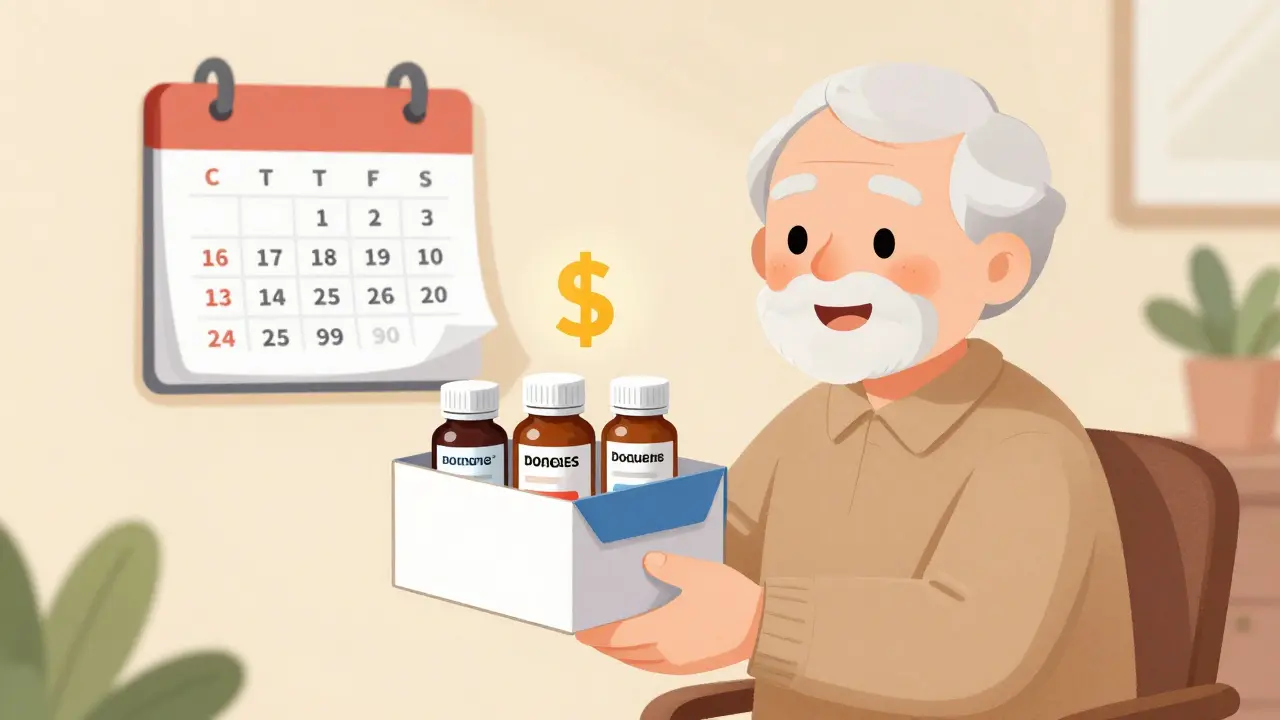
Buying your monthly pills through the mail might sound old-school, but it’s one of the quietest ways to save hundreds of dollars a year on chronic medications. If you’re on long-term drugs for high blood pressure, diabetes, or cholesterol, switching to a mail-order pharmacy isn’t just convenient-it could cut your out-of-pocket costs in half. But it’s not perfect. Sometimes your pills get lost. Sometimes you need them now. Here’s what actually happens when you switch from your local pharmacy to mail-order-and whether it’s worth it for you.
How Mail-Order Pharmacies Save You Money
Most mail-order pharmacies give you a 90-day supply of your maintenance meds for the price of two 30-day supplies. That’s not a trick. It’s a standard discount built into your health plan. If your 30-day prescription costs $15 at CVS, the 90-day version through Express Scripts or OptumRx will cost $30-not $45. That’s $15 saved every three months. Do the math: $60 a year per medication. If you take three maintenance drugs, that’s $180 saved annually-just by changing where you get your pills. These savings aren’t random. Mail-order pharmacies operate at scale. They use automated systems to fill thousands of prescriptions a day, cutting labor and overhead. They also push generic versions of brand-name drugs more aggressively than retail pharmacies. According to the Pharmaceutical Care Management Association, mail-order fills 12% of all maintenance prescriptions in the U.S., but those prescriptions account for a much bigger chunk of total savings because of volume and efficiency. Major pharmacy benefit managers (PBMs) like Express Scripts, CVS Caremark, and OptumRx handle the bulk of this. They’re not just delivery services-they’re negotiating power. These companies contract directly with drug manufacturers and get bulk discounts. Those savings get passed down to you, the patient, through lower copays. In fact, studies show mail-order pharmacies offer median discounts on brand-name drugs that are 4 to 7 percentage points better than retail pharmacies.Why People Love It (Besides the Savings)
It’s not just about money. For people with mobility issues, busy schedules, or those living in rural areas where pharmacies are far away, mail-order removes a daily burden. No more driving across town, waiting in line, or forgetting to refill because you’re tired after work. Many users report synchronized refills. If you take three different pills, the mail-order pharmacy can send them all in one box, on the same day, every three months. No more juggling three different refill dates. It’s a small thing, but it reduces mistakes and makes sticking to your regimen easier. Adherence rates are higher too. A 2011 study in PubMed Central found people using mail-order were 5 to 15% more likely to keep taking their heart and diabetes meds consistently. Why? Because they don’t have to think about it. The pills arrive before they run out. No trips. No reminders. Just delivery. Pharmacist support is still there-just different. Mail-order pharmacies offer 24/7 phone access to pharmacists. You can call anytime with questions about side effects, interactions, or how to take your meds. Some even send you written medication guides and refill alerts by email or text.The Real Downsides
The biggest problem? Timing. Mail-order isn’t for emergencies. If your doctor gives you a new antibiotic or painkiller and you need it tonight, you’re out of luck. Mail-order takes 5 to 7 business days to deliver. That’s fine for blood pressure pills. Not fine if you’re in pain or fighting an infection. Delivery issues happen. About 0.5% of shipments get lost, damaged, or delayed. One Reddit user shared how their blood pressure meds vanished in transit. They had to pay full price at Walgreens for an emergency refill. That’s not common, but when it happens, it’s stressful-and expensive. Another issue: switching. Transferring your prescriptions from your local pharmacy to mail-order can be messy. About a third of new users say it takes multiple calls to get everything moved over. Some pharmacies won’t release your records unless you sign a form. Others take weeks. If you’re not patient, you might run out of meds mid-transition. And not everyone saves. If your health plan has a high deductible or your meds are already cheap at retail, mail-order might not help. Some plans charge the same copay whether you get 30 or 90 days. Others don’t offer mail-order at all. Always check your plan details before switching.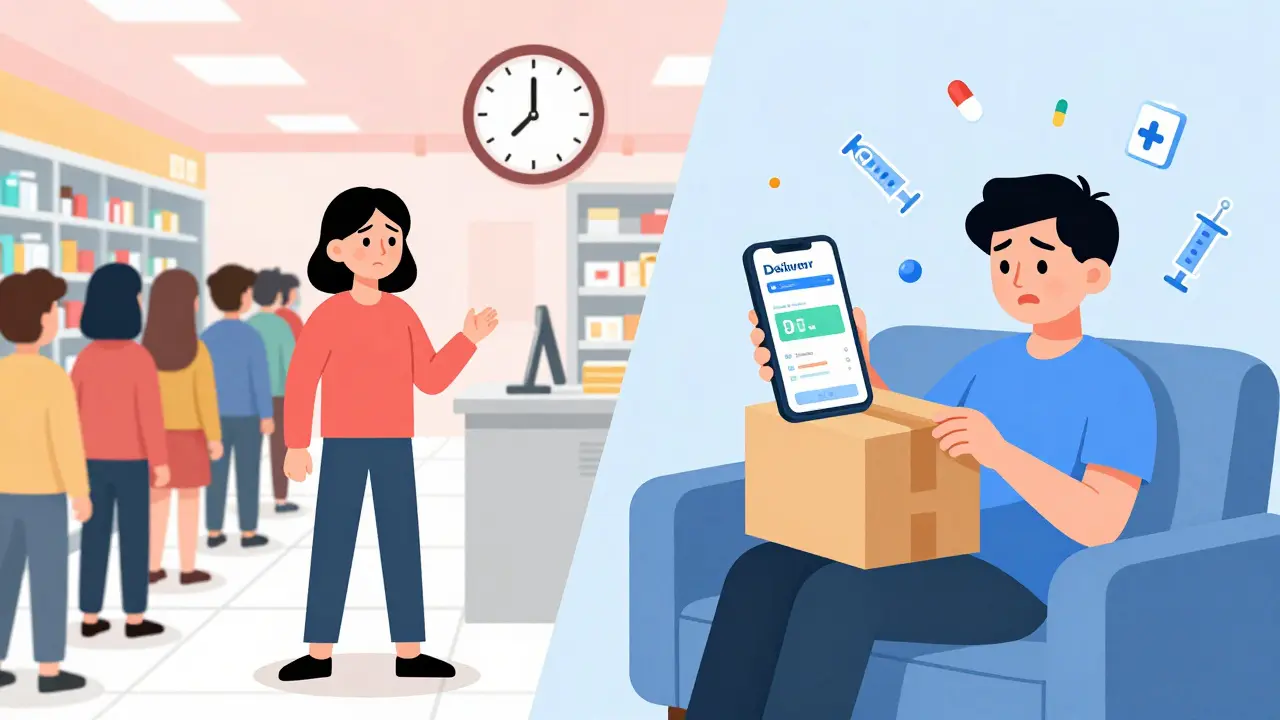
Who Benefits the Most?
Mail-order pharmacy works best for people who:- Take three or more maintenance medications daily
- Have chronic conditions like diabetes, hypertension, or high cholesterol
- Live in areas with few pharmacies (rural or underserved communities)
- Have trouble getting to the pharmacy due to mobility, transportation, or time
- Prefer fewer trips and more predictability
- Need new prescriptions filled quickly
- Only take one or two meds a year
- Prefer face-to-face advice from your pharmacist
- Have a plan that doesn’t offer discounts for mail-order
How to Get Started
It’s easier than you think. Here’s how:- Check your health plan’s website or call customer service. Ask if they offer mail-order pharmacy and which PBM they use (Express Scripts, CVS Caremark, or OptumRx).
- Log into your plan’s online portal. Look for "Mail-Order Pharmacy" or "Home Delivery" under prescriptions.
- Find your current prescriptions. Select which ones you want to switch to mail-order. Only maintenance meds qualify-antibiotics, painkillers, and as-needed drugs don’t count.
- Authorize the transfer. Your plan will contact your doctor to get a new 90-day prescription. This usually takes 1-3 days.
- Set up automatic refills. Once you get your first shipment, turn on auto-renewal. You’ll never run out again.
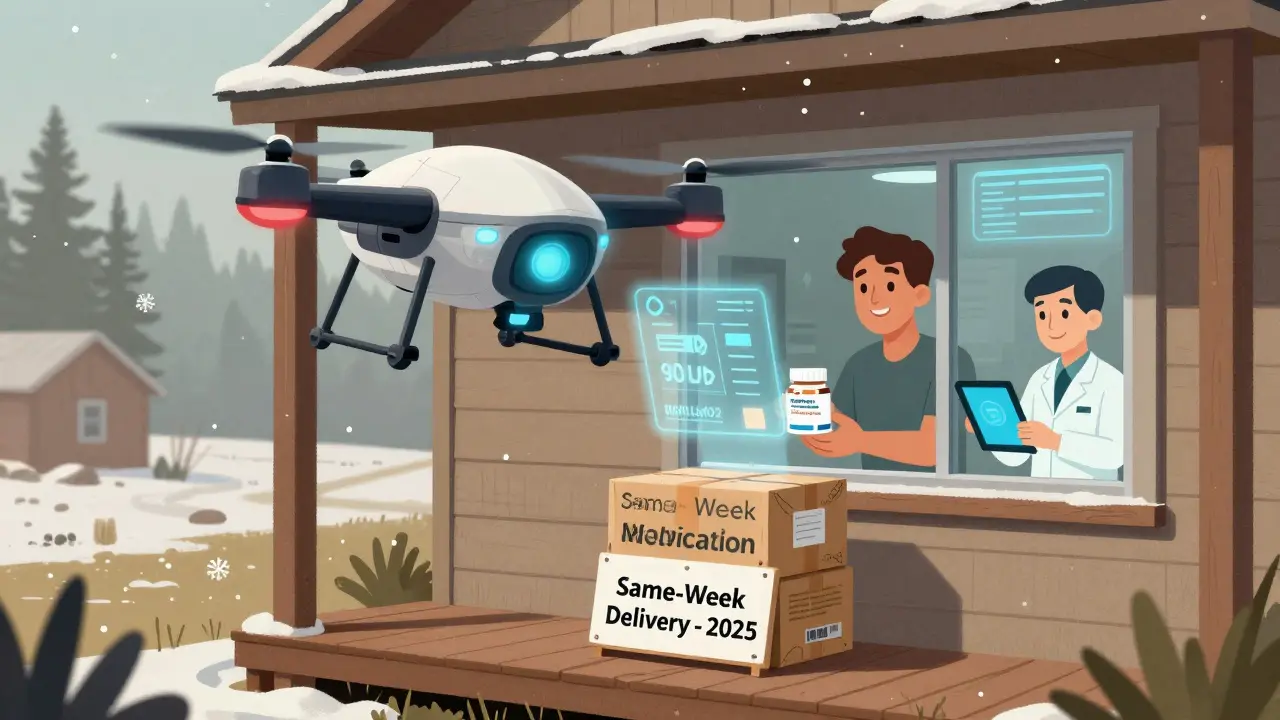
What’s Changing in 2025
The mail-order industry is evolving fast. In early 2024, Express Scripts started offering real-time GPS tracking for every shipment. You can now see where your pills are on a map-just like your Uber. CVS Caremark announced in March 2025 that they’ll offer same-week delivery to 85% of U.S. addresses. That’s a big shift. It means you won’t have to wait a full week anymore. For urgent refills, you might get your meds in 3-4 days. Cold-chain delivery is also expanding. Biologic drugs for arthritis, MS, and cancer need to stay cold. Now, mail-order pharmacies are shipping those safely too-something they couldn’t do reliably just two years ago. But there’s a cloud on the horizon. The 2023 Lower Drug Costs Now Act (H.R.3) could limit how much insurers can charge for 30-day vs. 90-day prescriptions. If passed, it might erase the 33% savings you currently get. PCMA estimates that could cut patient savings by up to 40%.Final Verdict
If you’re on long-term meds, mail-order pharmacy is almost always worth trying. The savings are real. The convenience is undeniable. And the safety record? Better than retail. Dispensing errors are 60% lower, according to the Academy of Managed Care Pharmacy. It’s not a magic fix. It won’t help if you need a new prescription today. It won’t save you if your plan doesn’t offer discounts. But for the millions of Americans taking daily pills for chronic conditions, it’s one of the simplest, most effective ways to reduce costs without changing your health. Start with one medication. Try it for three months. See how much you save. See how easy it is. If it works, switch the rest. If not, you can always go back to your local pharmacy. No penalty. No fuss. The bottom line: if you’re paying for maintenance meds every month, you’re leaving money on the table if you’re not using mail-order.Can I use mail-order pharmacy for all my medications?
No. Mail-order pharmacies only handle maintenance medications-drugs you take daily or regularly for chronic conditions like high blood pressure, diabetes, cholesterol, or thyroid issues. They don’t fill prescriptions for antibiotics, painkillers, or medications you only need occasionally. Those still need to be picked up at a local pharmacy.
How long does it take to get my first mail-order prescription?
It usually takes 5 to 7 business days from the time your doctor approves the 90-day prescription. If you’re switching from a retail pharmacy, allow an extra 2-3 days for the transfer process. Plan ahead-don’t wait until you’re out of pills to start.
What if my medication arrives damaged or lost?
Contact the mail-order pharmacy’s customer service immediately. Most major providers like Express Scripts and OptumRx will replace lost or damaged shipments at no cost. You’ll need to report the issue within 7 days. Keep the packaging and tracking number handy. In rare cases, you may need to get a temporary refill at a local pharmacy and submit a receipt for reimbursement.
Do I need a special prescription for mail-order?
Yes. Your doctor must write a new prescription for a 90-day supply. You can’t just take your 30-day script to the mail-order pharmacy. Most plans require a specific authorization code or electronic request through their system. Your doctor’s office can usually send this over in a day or two.
Are mail-order pharmacies safe?
Yes-often safer than retail. Mail-order pharmacies use automated dispensing systems with error rates of just 0.016%, compared to 0.04% at retail pharmacies. They also run automated checks for drug interactions across all your prescriptions, even if you use multiple pharmacies. Plus, you have 24/7 access to pharmacists for questions.
Can I still use my local pharmacy if I sign up for mail-order?
Absolutely. You can keep using your local pharmacy for acute medications, emergencies, or if you forget to order in time. Many people use both: mail-order for their regular meds, and retail for anything unexpected. Your health plan doesn’t require you to switch everything.
Will my insurance cover mail-order pharmacy?
Most commercial health plans and Medicare Part D plans include mail-order pharmacy as a standard benefit. If you’re unsure, check your plan’s website or call customer service. Look for terms like "home delivery," "mail-order pharmacy," or "90-day supply option." If it’s not listed, ask if it’s available as an optional add-on.
Sarah Williams
December 20, 2025 AT 20:23Stacey Smith
December 22, 2025 AT 18:09Peggy Adams
December 23, 2025 AT 15:21Grace Rehman
December 25, 2025 AT 12:48It’s not just about cost-it’s about the ritual of care. The pharmacist asking how you’re doing. The human moment. Now it’s just a barcode and a tracking number. We’ve outsourced empathy.
Sandy Crux
December 27, 2025 AT 11:27Ben Warren
December 27, 2025 AT 19:57Jerry Peterson
December 27, 2025 AT 23:40mukesh matav
December 29, 2025 AT 08:06Jay lawch
December 30, 2025 AT 06:12Cara C
December 30, 2025 AT 18:06Theo Newbold
December 30, 2025 AT 23:31Michael Ochieng
December 31, 2025 AT 08:01Hannah Taylor
January 2, 2026 AT 03:20