The Hidden Danger in Medicine Cabinets
You walk into any pharmacy and grab a box for stomach cramps or diarrhea. It seems harmless. It has been on shelves since 1988. But for many people trying to cope with addiction, this common pill becomes a lethal shortcut. Between 2011 and 2014, reports of abusing this medication jumped by 71%. That is not just a statistic; it represents real people ending up in emergency rooms with heart failures that could have been prevented.
Understanding What Loperamide Is
Loperamide is an over-the-counter medication originally designed to treat acute diarrhea. It works by slowing down movement in the gut to help your body absorb more water. You probably know it better by its brand name, Imodium A-D, Lomotil alternative . It was developed by Janssen Pharmaceuticals, a subsidiary of Johnson & Johnson. in the 1970s as a non-addictive option compared to stronger opioids. For decades, doctors prescribed it safely. Patients took the recommended dose of 4 mg initially, followed by 2 mg after loose stools, never exceeding 8 mg per day for over-the-counter use.
The trouble starts when someone treats it differently. It does not work like typical painkillers because it stays mostly in your digestive tract. Your body has pumps called P-glycoprotein transporters that push the drug back out before it reaches your brain. This makes it safe when used correctly. However, science shows that flooding your system changes the rules entirely. When you take massive amounts, those pumps get overwhelmed. Suddenly, the drug crosses into your brain and mimics opioids.
Why People Misuse This Medication
The rise in misuse tracks closely with the broader opioid crisis. Many individuals suffering from Opioid Withdrawal, symptoms experienced when stopping opioid drugs. look for ways to ease the nausea, cramping, and anxiety. Since prescription treatments like methadone require strict medical supervision, some turn to what they can buy themselves. They believe they can stop their withdrawal symptoms without seeing a doctor.
This creates a dangerous cycle. Because therapeutic doses produce no euphoria, abusers often take between 100 to 400 mg daily. That is 25 to 50 times the normal dose. They might even mix it with other substances like quinidine or diphenhydramine to force it past the body's defenses. Reports from the National Poison Data System, monitors exposures to toxins. show a sharp increase in these incidents. In 2017 alone, there were over 5,000 documented cases of exposure. By 2020, nearly half of all exposures involved intentional abuse.
How It Attacks Your Heart
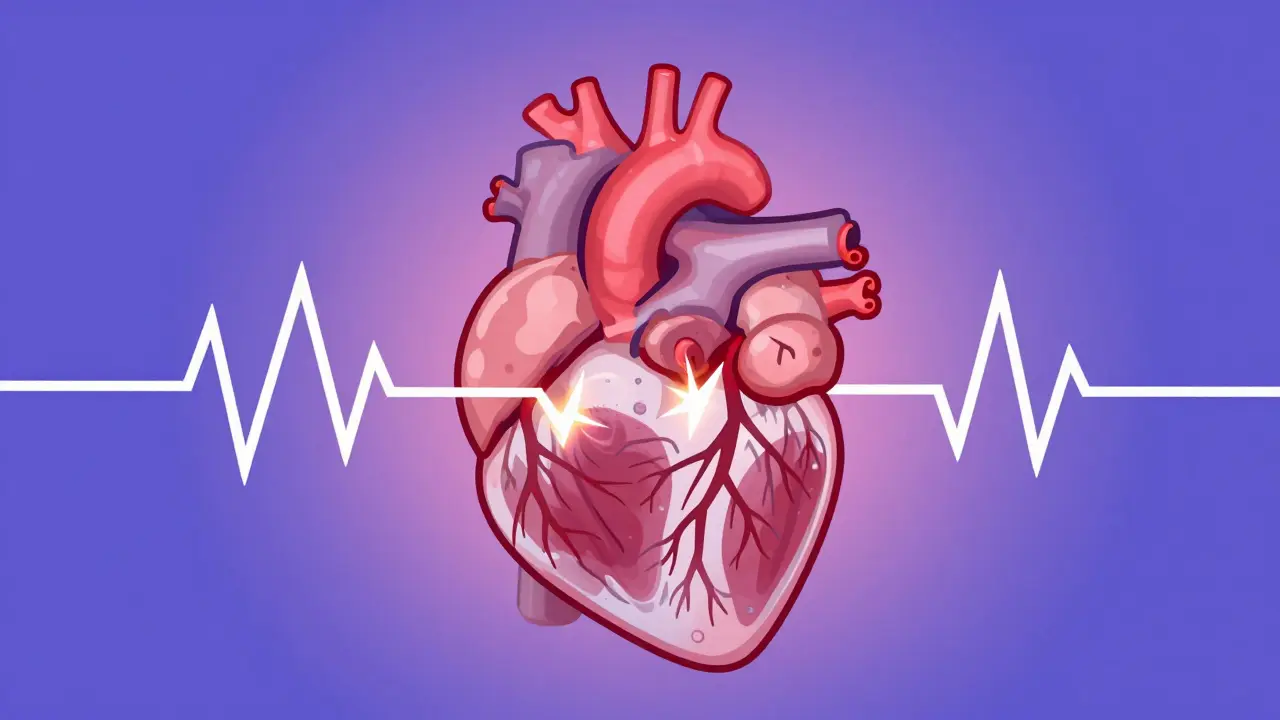
The biggest risk is not the sedative effect people seek; it is how it ruins heart function. QT Prolongation, a delay in electrical recharging of the heart. is the technical term for what happens. Your heart beats because electricity flows through it in a specific rhythm. Loperamide blocks potassium channels in heart cells. When these channels fail, the heart's electrical reset gets stuck.
If the delay is bad enough, it leads to Torsades de Pointes, a life-threatening ventricular arrhythmia. . This rapid, chaotic heartbeat stops blood flow effectively. Dr. Scott Gottlieb, former FDA Commissioner, explicitly warned that these events include sudden cardiac arrest and death. Some patients wake up with chest pain or feel dizzy before collapsing. The tragedy is that standard drug tests do not catch this substance easily, so doctors might miss the diagnosis until it is too late.
Comparing Safe Use Against Abuse
| Metric | Therapeutic Use | Abusive Use |
|---|---|---|
| Daily Limit | 8 mg max (OTC) | 100-400 mg+ |
| Goal | Treat Diarrhea | Ease Withdrawal / Get High |
| CNS Effects | None (Stays in Gut) | Mild Opioid Effect |
| Heart Risk | Negligible | High (Arrhythmia Risk) |
Recognizing the Warning Signs
If you suspect someone is misusing this drug, look beyond the medicine cabinet. Physical symptoms appear before the heart fails. Severe constipation is the most obvious sign because the drug slows bowel movement aggressively. Users might complain of nausea or vomiting even when they haven't eaten anything. If they seem unusually groggy or unresponsive, their mental state might be affected.
Cardiac symptoms are the red flag. Palpitations are common. The person might describe their heart pounding in their ears. Fainting spells (syncope) are particularly concerning. According to the American Academy of Family Physicians, family doctors should remain vigilant for these signs in patients with a history of opioid use disorder. A patient presenting with sudden fainting and a history of diarrhea medication use needs immediate evaluation for toxicity.
Medical Response and Recovery
Treating an overdose is complex. You cannot simply wait it out because the toxic effects persist longer than expected due to tissue accumulation. Doctors often need to monitor the heart rhythm continuously using an ECG. Magnesium sulfate might be given intravenously to stabilize the heart rhythm during torsades de pointes. While naloxone is famous for reversing opioid overdoses, studies suggest it may help with central nervous system effects but does little to fix the cardiac damage caused by high doses.
Recovery also involves addressing the root cause. The Substance Abuse and Mental Health Services Administration warns that this behavior is linked to substance use disorder. Long-term solutions require medication-assisted treatment (MAT) rather than self-managing withdrawal with risky over-the-counter meds. Programs now incorporate education about these specific risks into their prevention materials.
Regulatory Changes and Industry Action
The pharmaceutical industry did react to the crisis. After years of investigation, the Food and Drug Administration, US regulatory agency. mandated stronger warning labels in 2016. They required manufacturers to highlight the cardiac risks clearly on the packaging. Later, in 2019, companies voluntarily changed how they sold the product. Many packages were reformatted to single-dose packs to prevent someone from accessing a large supply at once. These steps aim to reduce access without banning a useful tool for legitimate diarrhea treatment.
Despite these measures, sales data showed a slight drop in unit sales between 2016 and 2020, yet online purchasing patterns shifted to allow larger bulk buys. The challenge remains ensuring people understand that more pills do not equal better relief. Public health experts continue to argue that the benefit of having an affordable antidiarrheal outweighs the risks, provided users respect the dosage limits.
Frequently Asked Questions
Can loperamide kill you?
Yes, when taken in very high doses, it can cause fatal heart rhythm problems called arrhythmias.
Why do people abuse loperamide?
People often use it to stop opioid withdrawal symptoms or to achieve a mild high, though it rarely provides euphoria.
What is the maximum safe dose?
For OTC use, the limit is generally 8 mg per day. Exceeding this significantly increases cardiac risks.
Does naloxone reverse loperamide overdose?
Naloxone may help with drowsiness or breathing issues but does not fix the dangerous heart rate changes caused by loperamide.
What are the symptoms of toxicity?
Signs include severe constipation, confusion, fainting, rapid heartbeat, and chest pain. Immediate medical help is needed.
sophia alex
April 2, 2026 AT 04:08😭 It is absolutely tragic how society allows this access! The pharmaceutical giants know exactly what they are doing with these pumps and blockers. 💔 We need stricter regulations immediately or our loved ones keep dying in silence! 🚨 No one is stopping the bulk buying online despite clear warnings! 😤😡
The Charlotte Moms Blog
April 3, 2026 AT 02:37!!!! This information is vital for every parent!!! The symptoms are subtle until the heart stops!!! We must check cabinets!!!
Rob Newton
April 3, 2026 AT 11:24Stop treating diarrhea medicine as a free opioid substitute.
Mark Zhang
April 4, 2026 AT 02:15It really hurts to see people suffering withdrawal and turning to dangerous alternatives.
The pain of addiction drives desperate choices that often end in tragedy.
Supporting recovery requires more than just removing the drugs from the shelf.
Families need better resources to help their members through the hardest days of detoxification.
Education saves lives when people understand the cardiac risks involved.
Aysha Hind
April 6, 2026 AT 00:43Big Pharma designed these pills knowing the gut barrier would fail under pressure!
They hide behind safety data while profits rise from accidental overdoses.
The timing of those packaging changes looks suspiciously convenient for stock prices.
Do not trust the voluntary industry changes without federal mandates in place.
Real protection comes from total transparency on adverse event reporting systems.
Hudson Nascimento Santos
April 6, 2026 AT 04:10The duality of modern medicine creates strange paradoxes in human behavior.
What heals one system destroys another when boundaries are crossed by desperation.
We exist in an age where convenience battles safety on every pharmacy shelf.
Understanding the mechanism of P-glycoprotein transporters changes perspective on bodily integrity.
True health involves respecting limits rather than pushing past chemical walls.
Society learns hard lessons about dependency through these medical tragedies.
Hope Azzaratta-Rubyhawk
April 7, 2026 AT 23:34We must take immediate action to prevent these preventable deaths in our communities.
Ignoring the data regarding arrhythmias is negligence that cannot stand unchecked.
Recovery programs need to integrate cardiac screening as standard protocol for intake.
Families must speak up and demand education materials from local clinics right now.
Progress depends on relentless advocacy for safer medication access policies everywhere.
Dipankar Das
April 8, 2026 AT 20:16This topic demands serious attention regarding public health safety protocols.
Many individuals remain unaware of the lethal potential contained within standard antidiarrheals.
Medical professionals must prioritize patient counseling on dosage limits during consultations.
The electrical pathways in the heart are delicate and easily disrupted by excess compounds.
Potassium channel blockade leads directly to fatal outcomes without intervention.
Magnesium sulfate remains a critical intervention during emergency presentations.
Naloxone cannot address the structural damage caused by sustained toxicity.
Withdrawal management strategies require comprehensive oversight beyond simple substitution therapies.
Regulatory bodies continue to monitor sales patterns to mitigate misuse potential.
Single-dose packaging represents a necessary step toward harm reduction efforts.
Bulk purchasing loopholes require closing before further incidents occur.
Public awareness campaigns should highlight the distinction between therapeutic and abusive quantities.
Early detection of palpitations can save a life before collapse happens.
Doctors must screen for history of opioid disorders proactively.
Patient education needs to cover the specific risks of transporter saturation.
Community support groups provide essential guidance for those struggling with cravings.
Family vigilance plays a key role in identifying physical warning signs early.
Trust medical advice completely when discussing safe medication usage limits.
The cost of ignoring these guidelines far exceeds the price of prevention.
Lives depend on collective responsibility regarding over-the-counter substances.