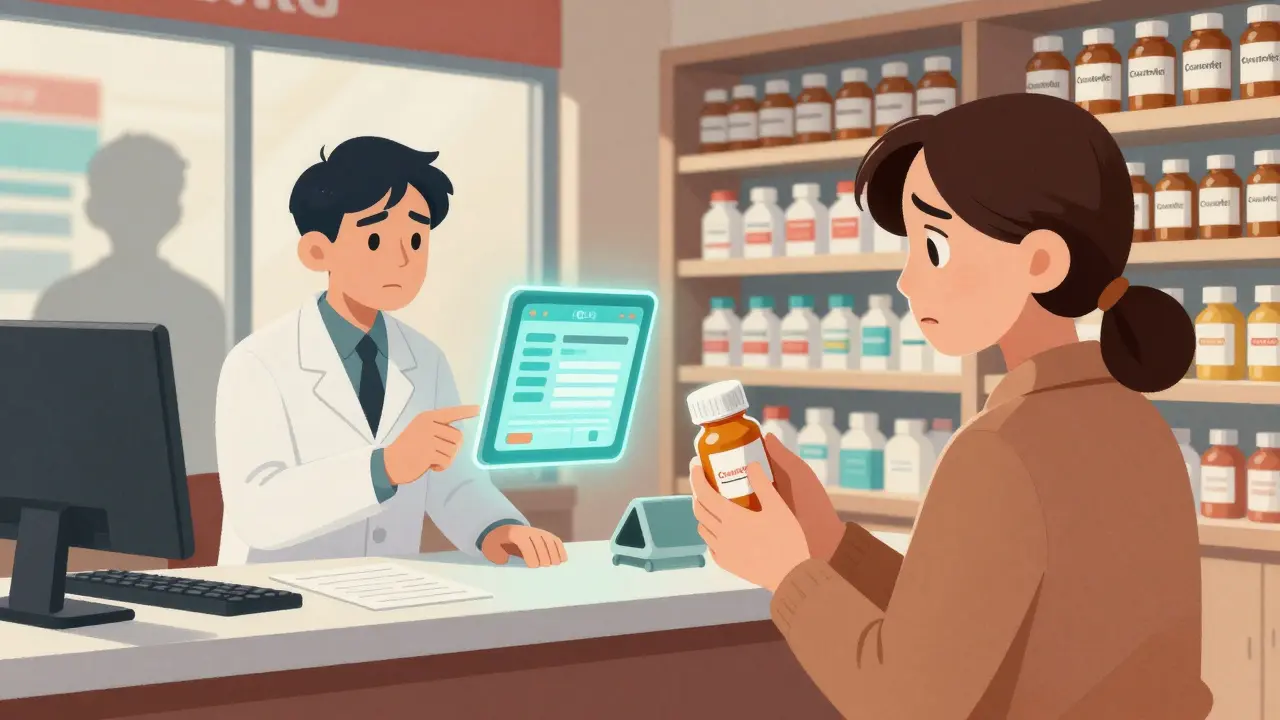
When you walk into a pharmacy, you expect the person behind the counter to be licensed, trained, and legally allowed to dispense your medication. But what if they’re not? In 2023, 47% of disciplinary actions against pharmacists involved practicing with an invalid or expired license-many of these cases tied to counterfeit drugs entering the supply chain. State pharmacy boards are the frontline defense against this. They don’t just issue licenses. They track who’s qualified, who’s been suspended, and who’s no longer allowed to touch prescriptions. If you’re hiring a pharmacist, running a clinic, or even just picking up a prescription, knowing how to verify a license isn’t optional-it’s life-saving.
What State Pharmacy Boards Actually Do
Every U.S. state, plus D.C., Puerto Rico, Guam, and the U.S. Virgin Islands, has its own pharmacy board. These aren’t bureaucratic footnotes-they’re legal authorities with real power. They decide who gets licensed, renew licenses, investigate complaints, and can suspend or revoke a pharmacist’s ability to practice overnight. Their job isn’t to make money. It’s to keep people safe.There are about 350,000 licensed pharmacists and 300,000 pharmacy technicians in the U.S. as of 2023. Every single one of them is regulated by one of these 56 boards. And each board runs its own system. Maryland’s board might require your middle initial. D.C. might ask for your exact license number. One wrong letter can mean no results. That’s not a flaw-it’s intentional. These systems are designed to prevent impersonation, especially when fake pharmacies and counterfeit drugs are on the rise.
How to Verify a License: Step-by-Step
Verifying a license takes less than five minutes-if you know where to look. Here’s how to do it right:- Go to the official website of the state’s pharmacy board. For example: maryland.gov/boards/pharmacy or dc.gov/health/pharmacy. Don’t use Google results-always type the URL yourself.
- Find the “License Verification” or “Verify a License” link. It’s usually under “For the Public” or “Licensure.”
- Enter at least the pharmacist’s full first and last name. Some states require the license number too. Avoid partial names or nicknames.
- Check the results. Look for: full name, license number, license type (Pharmacist or Pharmacy Technician), issue date, expiration date, and current status.
- Pay attention to the status. “Active” means they’re good to go. “Suspended,” “Revoked,” or “Probation” means they’re not. “Retired” or “Deceased” means they shouldn’t be dispensing anything.
Some states, like Maryland, let you search by city or zip code. Others, like D.C., warn you that incomplete info gives false results. Always use the full name. If you’re verifying a pharmacist who changed their name after marriage, try both versions.
Why You Can’t Trust Third-Party Sites
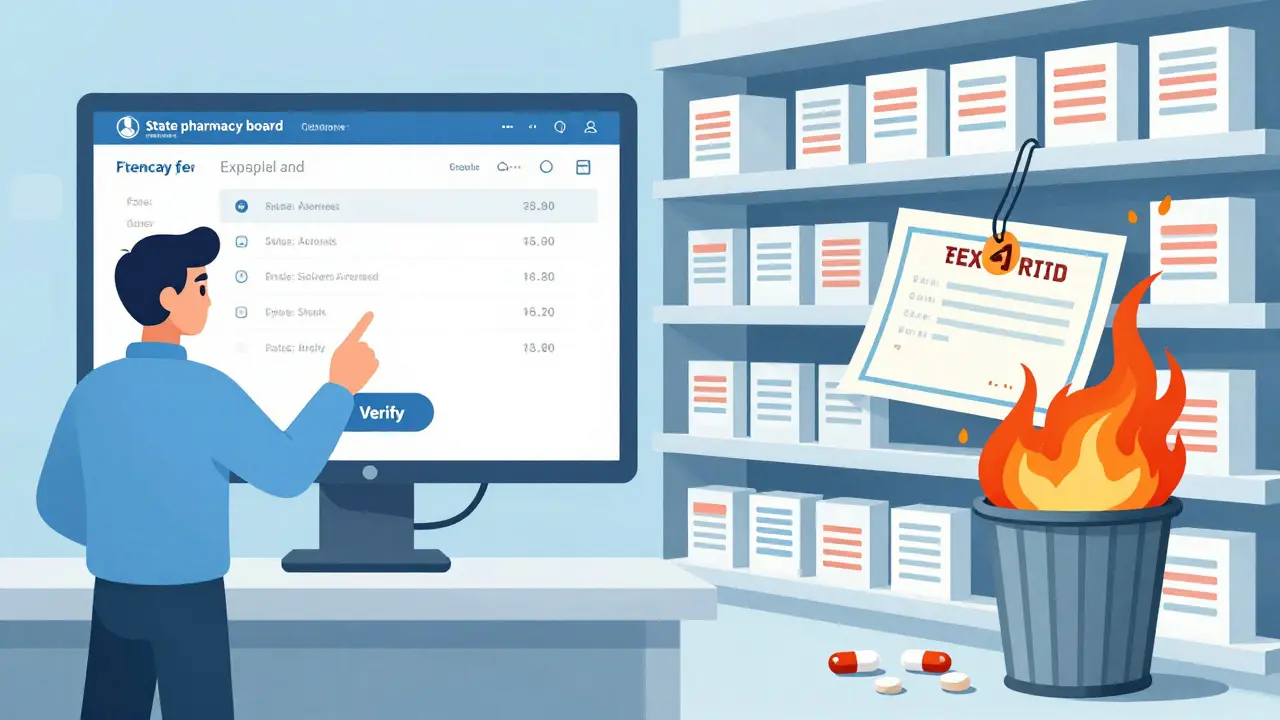
You might see websites that say they verify licenses. They look official. They even have logos. But they’re not the source. Only the state board is.Third-party services can be outdated by weeks-or months. A pharmacist might have been suspended last Tuesday. Their profile on a job board or LinkedIn might still say “licensed.” But the state board? That’s updated in real time-or close to it.
Employers who skip direct verification risk hiring someone with a revoked license. Hospitals and retail chains now require primary source verification-meaning they must go straight to the state board. The American Society of Health-System Pharmacists found that 78% of hospitals now enforce this rule. Why? Because in 2022, a pharmacy in Ohio dispensed opioids from a technician whose license had been revoked six months earlier. The patient died.
NABP Verify: The National Alternative
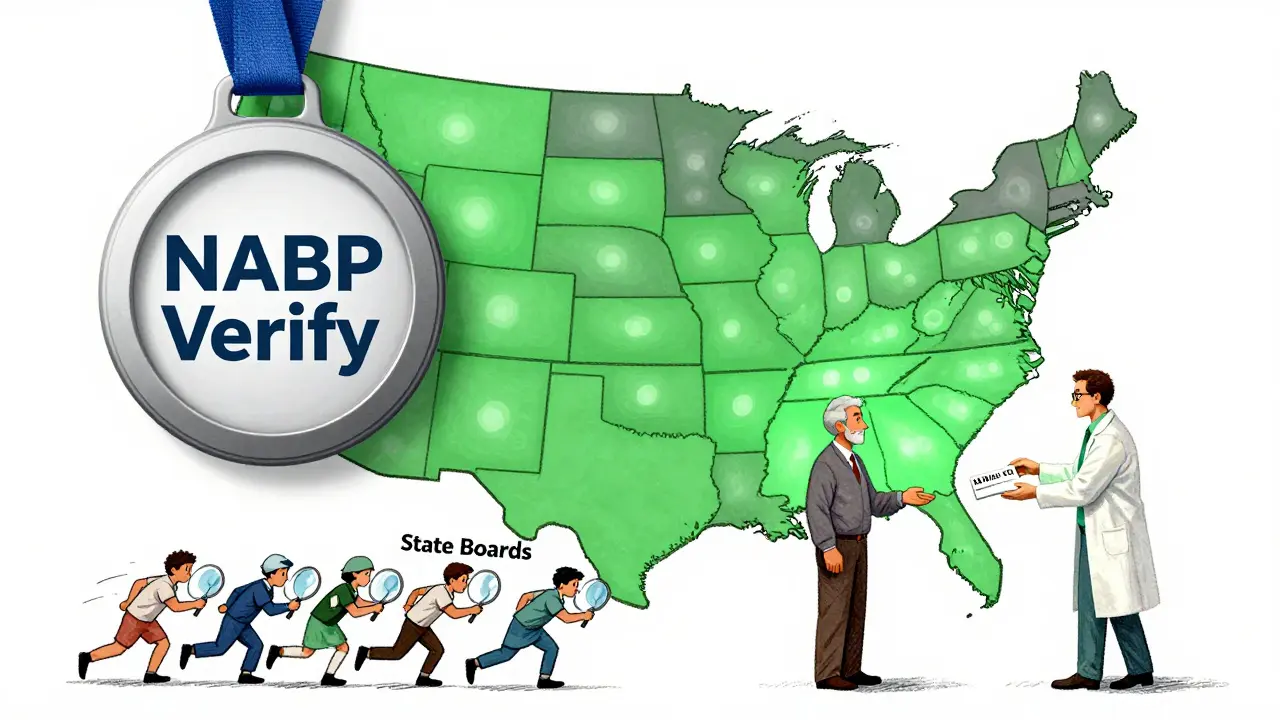
If a pharmacist works in multiple states, checking each board separately is a nightmare. That’s where NABP Verify comes in. Launched in 2020, it’s a centralized system that pulls data from 48 of the 56 state boards. It costs $59 a year for the pharmacist to subscribe, but the public can’t use it directly. Employers and institutions can sign up to monitor multiple licenses at once.It’s not a replacement for state boards-it’s a shortcut. NABP Verify gives you a digital badge that shows a pharmacist’s compliance status across states. It’s fast. It’s reliable. But it only works if the pharmacist has enrolled. And not all do. So even if you see a badge, always cross-check with the state where the pharmacist is currently practicing.
What the Status Codes Really Mean
A license status isn’t just a label. It’s a warning sign.- Active - Legally practicing. No restrictions.
- Suspended - Temporarily banned. Could return after a hearing.
- Revoked - Permanent loss of license. Cannot practice again without reapplying from scratch.
- Probation - Practicing under strict rules. May need supervision, drug tests, or extra training.
- Retired - No longer practicing. Can’t legally dispense meds.
- Deceased - License is inactive because the person has passed away.
Some states, like Maryland, have a “Grace Period” status. That means the license expired, but the pharmacist hasn’t renewed yet. They’re still technically allowed to practice for up to 30 days. After that? No more. If you see “Grace Period,” call the board. Don’t assume they’ll renew.
Delays and Glitches: What to Do When the System Fails
Here’s the truth: state systems aren’t perfect. In Maryland, a pharmacist passed their exam in January 2023. Their license didn’t show as “Active” until March. That’s three weeks of potential risk.If the website says “No Results” but you know the person is licensed, try these fixes:
- Check for typos in the name. Try omitting middle names or initials.
- Search by license number instead of name.
- Wait 48 hours-updates can lag.
- Call the board. Maryland’s hotline is (410) 764-4755. D.C.’s is (202) 442-4450.
Don’t rely on email or online forms. Phone calls get faster responses. And if you’re an employer, keep a record of your verification attempt-including the date, time, and what you saw. That’s your legal protection.
Why This Matters for Counterfeit Drugs
Counterfeit drugs don’t just show up in shady online pharmacies. They’re often sold through legitimate-looking storefronts staffed by unlicensed people. A 2023 FDA report found that 1 in 10 counterfeit prescriptions traced back to a pharmacy where the pharmacist had an invalid license.Unlicensed staff might not know how to spot fake pills. They might not recognize a counterfeit version of metformin or insulin. They might not know the difference between a real and fake barcode. But a licensed pharmacist? They’re trained to catch those things. If you’re verifying a license, you’re not just checking paperwork. You’re stopping a potential overdose, a deadly reaction, or a silent killer.
What’s Changing in 2026
By 2025, 90% of state boards plan to have real-time license updates. That means if someone gets suspended today, the website will reflect it by tomorrow. That’s a huge step forward. Right now, the average delay is 14 days-long enough for someone to dispense hundreds of pills.NABP is also rolling out technician verification in Q2 2024. That’s important. Technicians handle 70% of the actual dispensing in most pharmacies. If they’re unlicensed, the pharmacist might not even know what’s being handed out.
The Interstate Pharmacy Licensure Compact (IPLC) now includes 23 states. That means pharmacists can practice across those states with one license. But verification still needs to happen through the home state board. Don’t assume a compact license means automatic approval everywhere.
What You Should Do Today
If you’re a patient: Always check your pharmacist’s license before filling a new prescription. It takes 2 minutes. You can do it on your phone while waiting.If you’re an employer: Never hire a pharmacist without verifying their license directly through the state board. Don’t accept resumes, LinkedIn profiles, or third-party reports. Go to the source.
If you’re a pharmacist: Enroll in NABP Verify if you work in more than one state. It saves you time and protects your reputation.
If you’re a regulator or hospital administrator: Push for real-time updates. Demand integration with the License Verification Exchange. Your community depends on it.
Counterfeit drugs are growing. Fake licenses are the gateway. State pharmacy boards are the only thing standing between you and danger. Verify. Always.
Can I verify a pharmacy license for free?
Yes. Every state pharmacy board offers free online license verification. You don’t pay to search. Some states charge a small fee if you need an official letter sent to another state, but the basic lookup is always free.
What if the state board website is down?
Call the board directly. Most have a phone line for license verification. Maryland’s number is (410) 764-4755. D.C.’s is (202) 442-4450. If you can’t reach them, wait 24 hours and try again. Never rely on a third-party site as your only source.
How often do state boards update license statuses?
Most boards update within 3-7 business days after a disciplinary action or renewal. But delays of up to 14 days are common. By 2025, 90% of states plan to move to real-time updates. Until then, assume there’s a lag.
Can I verify a pharmacy technician’s license the same way?
Yes. All state boards license pharmacy technicians. The search process is identical. You’ll just select “Pharmacy Technician” instead of “Pharmacist” in the dropdown. NABP Verify will include technicians starting in Q2 2024.
What’s the difference between a revoked and suspended license?
A suspended license is temporary. The person can apply to get it back after a set time or after completing requirements. A revoked license is permanent. The person must reapply as a new applicant, go through all training and exams again, and prove they’re fit to practice-often after years.
Do all states use the same license verification system?
No. Each state runs its own system with different search fields, layouts, and requirements. Maryland lets you search by zip code. D.C. requires full names. Some ask for birth year. There’s no standard. That’s why it’s important to always go to the official state board site, not a generic search engine result.
Kathy McDaniel
January 28, 2026 AT 05:04Kirstin Santiago
January 30, 2026 AT 03:37Anjula Jyala
January 31, 2026 AT 15:07Andrew Clausen
February 1, 2026 AT 01:57John O'Brien
February 1, 2026 AT 15:10Candice Hartley
February 2, 2026 AT 16:14astrid cook
February 3, 2026 AT 20:25Paul Taylor
February 5, 2026 AT 01:04Desaundrea Morton-Pusey
February 5, 2026 AT 08:08