Drug safety isn't just about what’s on the label anymore. It’s about what happens in real life-when a patient takes their medication, when they mix it with another drug, when they develop a strange rash or dizziness days later. Traditional reporting systems, where doctors mailed in paper forms or entered data weeks after a patient visit, were too slow. By the time a pattern emerged, dozens or even hundreds of people might have been harmed. That’s why modern healthcare relies on clinician portals and apps for drug safety monitoring. These aren’t fancy dashboards for IT staff. They’re tools built into the daily workflow of doctors, pharmacists, and nurses to catch problems before they spread.
What These Tools Actually Do
Clinician portals for drug safety aren’t just about submitting reports. They’re designed to turn scattered, messy clinical data into clear safety signals. When a patient reports nausea after starting a new blood pressure pill, the system doesn’t just log it as a note. It links that symptom to the drug, checks if others on the same medication had similar reactions, and flags it if the pattern is unusual. These systems use real-time data from electronic health records (EHRs), lab results, pharmacy fills, and even patient-reported outcomes to spot trends you’d miss otherwise.
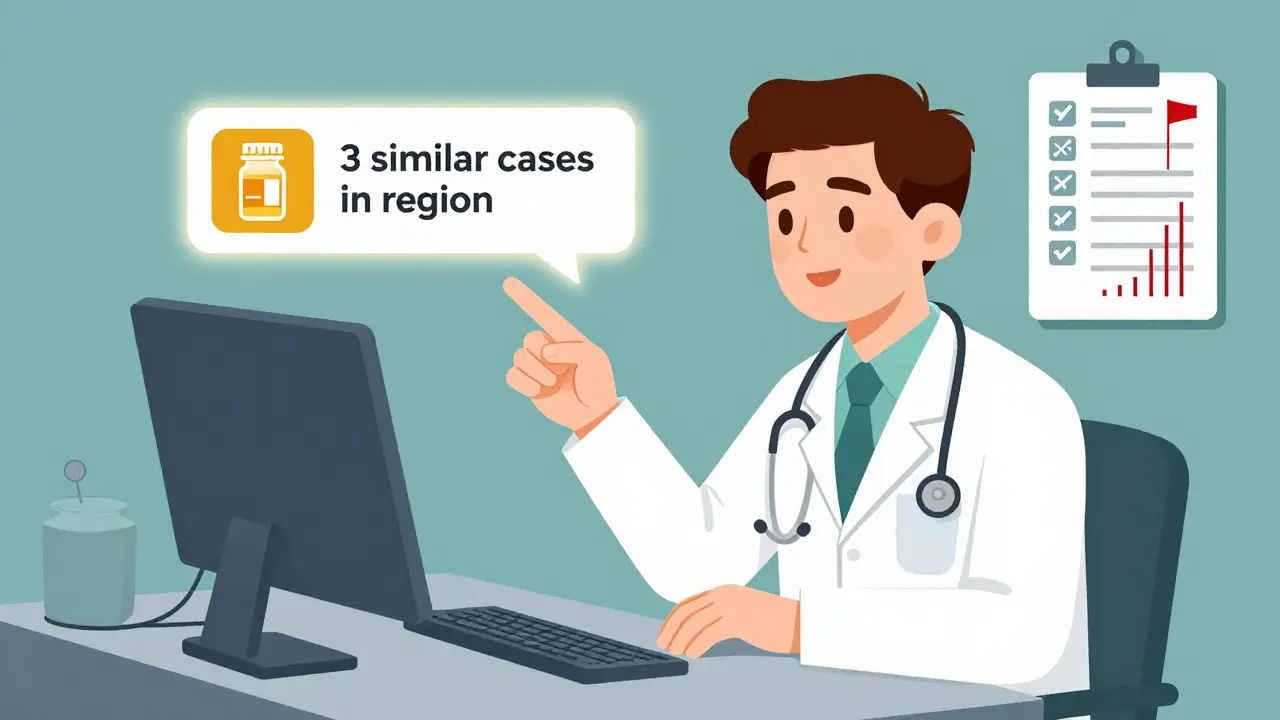
Take the example of a new diabetes drug. In a traditional system, a single case of severe low blood sugar might be dismissed as an outlier. But with a clinician portal, if five patients on the same drug in the same region show the same reaction within two weeks, the system automatically raises a red flag. That’s not magic-it’s data analysis built into the workflow. The goal? Detect signals 70% faster than paper-based methods, according to real-world case studies from platforms like Cloudbyz.
How Clinician Portals Fit Into Daily Practice
You don’t need to be a data scientist to use these tools. Most are designed to pop up at the exact moment you need them. When you’re prescribing a drug, the portal might show a pop-up: “3 patients in this region reported liver enzyme spikes within 30 days of starting this drug.” When you’re reviewing a patient’s chart, it might highlight a past reaction you forgot about. The best systems don’t interrupt your workflow-they enhance it.
For example, Wolters Kluwer’s Medi-Span module, integrated into EHRs like Epic and Cerner, gives clinicians instant access to drug interaction alerts. One hospital reported it prevented 187 potential adverse events in just six months. That’s not theoretical. That’s real patients avoiding hospitalization because a tool reminded the doctor that the patient was also on a blood thinner.
But it’s not just about alerts. These portals also make reporting easier. Instead of filling out a 12-page form, you click a button in the EHR, select the drug, the symptom, and the patient’s age. The system auto-fills what it can and sends a standardized report to regulatory agencies like the FDA or EMA. This isn’t just convenient-it’s required under the EU’s Clinical Trial Regulation, which kicks in fully in 2025.
Key Platforms and What They Offer
Not all drug safety portals are built the same. Depending on your setting, you’ll need different tools.
Cloudbyz is the go-to for clinical trials. It integrates directly with trial data systems, pulling in lab results, dosing schedules, and patient diaries. It cuts the time to detect a safety signal by 40% compared to older systems. But it’s not for small clinics. Setting it up takes 6-8 weeks and costs around $185,000 a year. It’s built for big pharma and large trial networks.
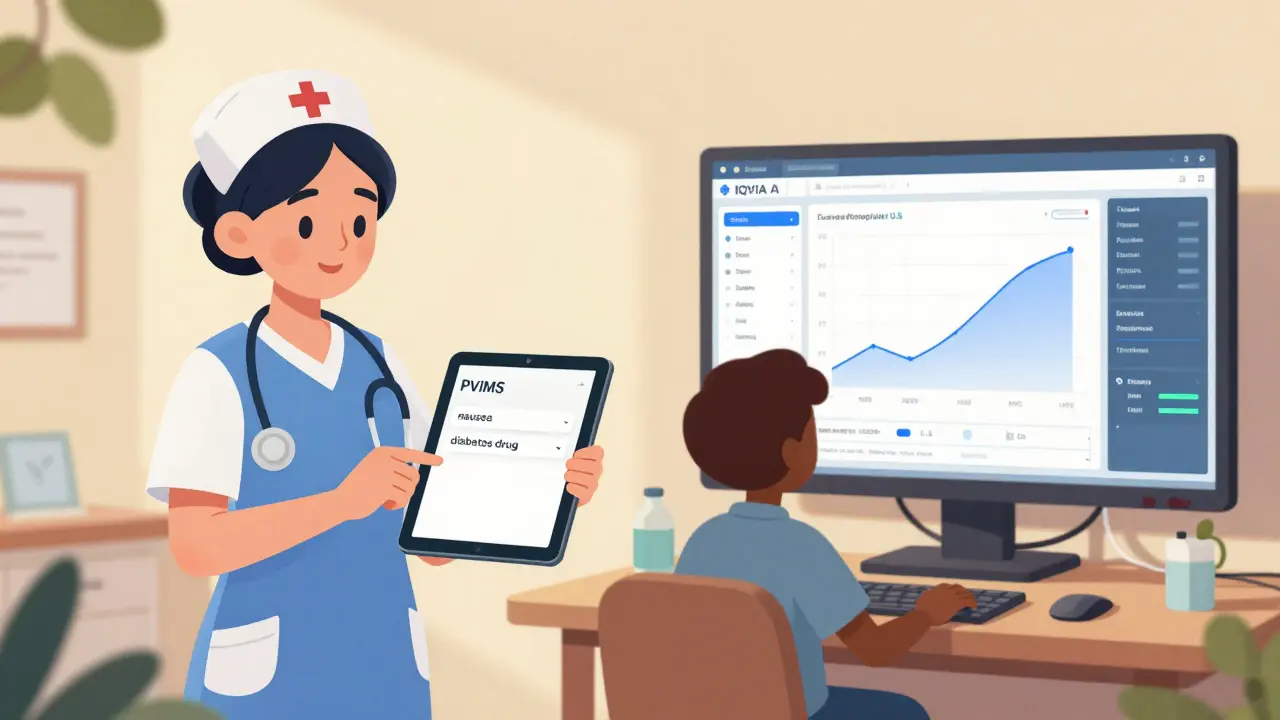
PViMS, developed by MSH, is the opposite. It’s free, web-based, and works on any browser-even on a tablet with spotty internet. It’s used in 28 low- and middle-income countries. Its strength? Simplicity. It has pre-filled menus for common reactions using MedDRA terminology. A clinician in Kenya said it cut their data entry time by 60% compared to paper. But it doesn’t have AI or advanced analytics. It’s a lifeline where tech infrastructure is weak.
IQVIA’s AI tools use machine learning to predict risks before they happen. They’ve cut false positive alerts by 85% compared to older rule-based systems. But they need a lot of data-50,000+ patient records-to work well. If you’re a small clinic, this tool won’t help. It’s designed for large health systems with deep data archives.
clinDataReview is open-source and used by researchers and regulators. It generates interactive reports that meet FDA 21 CFR Part 11 standards for data integrity. It’s perfect for audits and publishing findings. But you need to know R programming to tweak it. It’s not for frontline clinicians-it’s for the people analyzing the data behind the scenes.
What You Need to Make It Work
Having the software isn’t enough. Success depends on three things: training, integration, and trust.
Training isn’t a one-time webinar. Staff need 80-120 hours of hands-on learning to use these tools effectively. That includes understanding drug mechanisms, interpreting safety signals, and knowing when to override an alert. A survey by the DIA found that 87% of advanced users rely on data literacy-not just clinical knowledge-to make decisions.
Integration is where most projects fail. If the portal doesn’t talk to your EHR, pharmacy system, or lab results, it’s useless. Hospitals using Epic report 30% smoother adoption than those on older systems. Cloudbyz’s biggest delay? Mapping data from different sources to CDISC standards. That alone accounts for 65% of implementation problems.
Trust is the quietest challenge. Clinicians hate alert fatigue. If your system flags 20 false alarms for every real one, people start ignoring it. Medi-Span users complain about this. The key is tuning the system. Reduce noise. Prioritize signals that match real-world harm. A 2024 FDA workshop found that 22% of false signals came from automated tools that didn’t consider clinical context-like a patient’s kidney function or other meds they were taking.
The Future: AI, Real-Time, and Human Oversight
The next wave is AI that doesn’t just detect signals-it explains them. IQVIA is testing an “AI co-pilot” that synthesizes evidence during a safety review, cutting validation time by 35%. Cloudbyz’s new version 5.0 uses machine learning to predict risks by combining lab data with patient history. But here’s the catch: regulators are pushing back. The FDA’s 2026 guidance will require AI models to be explainable. You can’t just say “the algorithm said so.” You have to show how it got there.
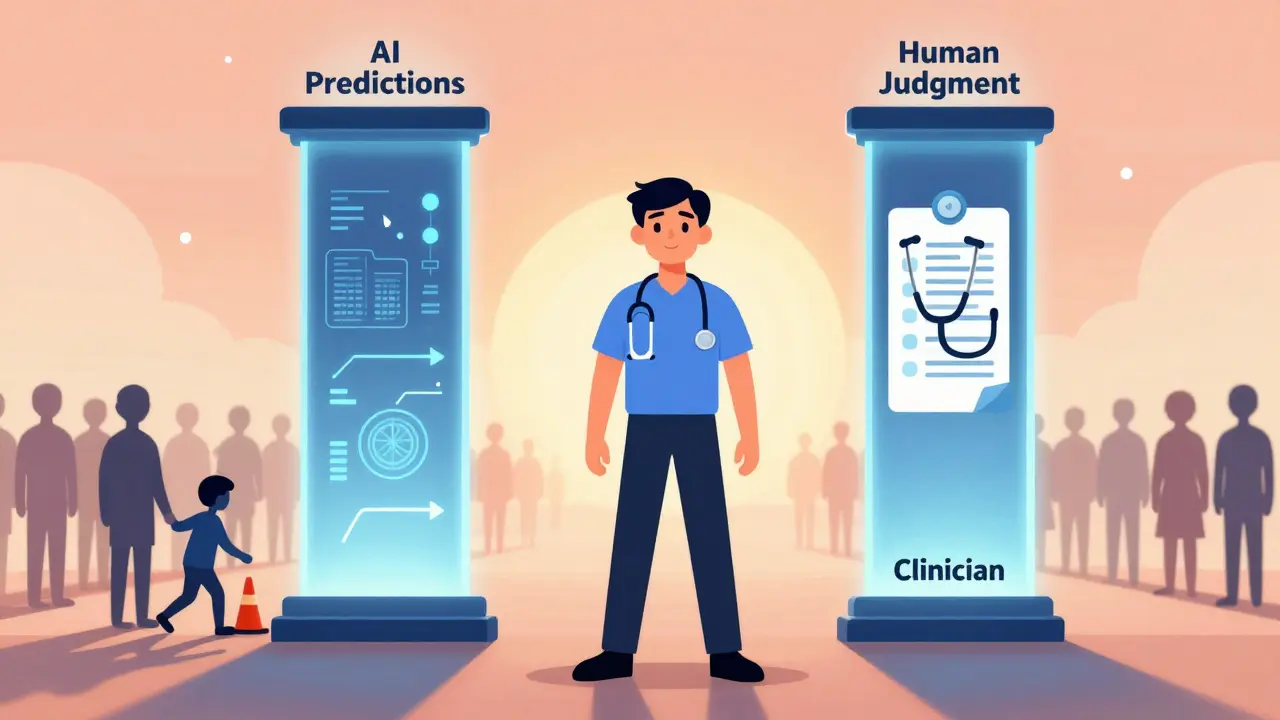
That’s why human oversight remains mandatory. Dr. Elena Rodriguez from IQVIA puts it plainly: “LQPPVs-Qualified Persons for Pharmacovigilance-are still the stewards of safety. Tools help, but people decide.”
And that’s the real value of these portals. They don’t replace judgment. They give you better data to make it.
What Happens If You Don’t Use Them?
Ignoring these tools isn’t an option anymore. Regulatory bodies are tightening rules. The EU requires integrated safety data by 2025. The FDA is expanding its Sentinel Initiative to include more EHRs. If you’re still using paper reports or disconnected systems, you’re at risk-not just for missed safety signals, but for non-compliance.
Smaller organizations are falling behind. Only 32% of mid-sized companies have adopted integrated platforms. That’s a gap. If a safety issue emerges and you can’t prove you’re monitoring it properly, you could face delays, fines, or worse-loss of trust.
Meanwhile, hospitals using Medi-Span or similar tools are already seeing fewer adverse events. Clinics using PViMS are reporting faster responses to outbreaks. The tools work-if you use them right.
Getting Started
Here’s how to begin:
- Identify your biggest safety blind spot. Is it drug interactions? Unreported side effects? Post-market surveillance?
- Match your needs to a platform. Large trials? Cloudbyz. Hospital use? Medi-Span. Resource-limited setting? PViMS.
- Check integration. Does it connect to your EHR? If not, can it? Don’t skip this step.
- Train your team. Start with safety officers, then expand to prescribers. Use real case examples.
- Pilot it. Run the system for 60 days. Measure how many signals you catch that you missed before.
- Adjust. Turn off noisy alerts. Add context. Make it fit your workflow.
It’s not about technology. It’s about making safety part of every prescription, every note, every decision.
Can I use a clinician portal if I work in a small clinic?
Yes, but not all platforms are designed for small settings. If you’re in a low-resource area, PViMS is free and works on basic computers with internet. For clinics in the U.S. or Europe, tools like Wolters Kluwer’s Medi-Span integrate directly into EHRs like Epic or Cerner and are built for frontline use. Avoid enterprise platforms like Cloudbyz unless you’re part of a larger network or clinical trial.
Do I need special training to use these portals?
You don’t need to be a programmer, but you do need training. Most users require 80-120 hours of hands-on learning. This includes understanding how the system flags risks, how to interpret alerts, and how to report accurately. Training should focus on real cases, not just software buttons. Many organizations report that staff become proficient only after using the tool for several weeks in daily practice.
Are these systems only for reporting adverse events?
No. While reporting is part of it, modern portals do much more. They detect patterns in real time, alert you to potential drug interactions before prescribing, highlight past reactions in patient history, and even predict risks using AI. For example, some systems will warn you if a patient’s lab results suggest early liver damage from a new medication-before they even report symptoms.
What if the system gives me too many false alerts?
Alert fatigue is a real problem. If you’re getting 20 false alerts for every real one, you’ll start ignoring them. Talk to your vendor about tuning the system. Adjust thresholds based on your patient population. For example, if your clinic sees mostly elderly patients, make sure the system accounts for kidney function and polypharmacy. The goal isn’t to catch every possible signal-it’s to catch the dangerous ones without overwhelming staff.
How do these systems handle patient privacy?
All reputable platforms comply with HIPAA, GDPR, and other regional privacy laws. Data is encrypted, access is role-based, and audit trails track who viewed or reported what. Systems like clinDataReview and Cloudbyz are built with FDA 21 CFR Part 11 compliance, meaning every action is logged and cannot be altered. Patient identifiers are typically removed or anonymized before analysis, unless explicit consent is given for research use.
Can these tools detect drug safety issues before a drug is widely used?
Yes. This is one of their biggest strengths. In clinical trials, platforms like Cloudbyz monitor safety signals as patients enroll. If a pattern emerges-say, a rare heart rhythm issue in patients over 70-the sponsor can pause the trial or adjust dosing before the drug hits the market. This kind of early detection has prevented several high-risk drugs from being approved without proper safeguards.
Melissa Starks
March 19, 2026 AT 20:21Man, I’ve been using these portals for years now and honestly? They’re the reason I don’t lose sleep over drug interactions anymore. I had a patient last month on warfarin who started a new OTC supplement - the portal flagged it before I even finished the note. Didn’t even have to think twice. Just clicked ‘alert override’ with a quick comment about renal function, and boom - no ER visit. It’s not magic, it’s just smart design. The system learns from what you ignore and what you act on. Over time, it gets better. I used to think these tools were just bureaucratic nonsense, but now? I’d be lost without them. Seriously, if your clinic still uses paper forms, you’re basically flying blind with a compass made of duct tape.
Lauren Volpi
March 21, 2026 AT 10:25Yeah right. Another corporate tool to make doctors do more work for free. These portals? They’re just another way for Big Pharma to collect your data and sell it to insurers. I’ve seen alerts pop up for things like ‘patient took aspirin’ - like, are you kidding me? We’re drowning in noise. And don’t get me started on the ‘training’ - 120 hours? That’s not training, that’s indentured servitude. If this is the future of medicine, I’m retiring early.
Melissa Stansbury
March 23, 2026 AT 04:07Can we talk about how insane it is that we still have to choose between platforms? Like, why can’t we just have one unified system? I work in a hospital that uses Epic, but my colleague in the rural clinic uses PViMS on her phone. We’re literally speaking different languages. And the data doesn’t talk to each other. It’s like having ten different weather apps and none of them agree. Someone needs to build a federal standard - not another vendor product. We’re all doing the same job. Why are we stuck with ten different versions of the same tool?
Amadi Kenneth
March 24, 2026 AT 15:04These portals? They’re not for safety - they’re for surveillance. The FDA doesn’t want to protect patients. They want to track every pill you take. I read somewhere that IQVIA’s AI connects to facial recognition in pharmacies. Is that true? Why does my prescription history need to be fed into some algorithm that predicts my ‘risk profile’? I’m not a data point. I’m a human. And if you think this is about safety, you’re being played. The real goal? Control. Always control. The ‘alerts’? They’re just the bait. The trap is in the backend. I’ve seen the logs - they’re not anonymized. They’re tagged. And they’re sold. Don’t believe the hype.
Shameer Ahammad
March 25, 2026 AT 20:54It is imperative to note that the adoption of these digital pharmacovigilance tools is not merely a technological advancement; it is a moral imperative. The ethical obligation of healthcare providers to ensure patient safety transcends convenience. The fact that some clinicians still rely on paper-based reporting is not only archaic - it is indefensible. Moreover, the assertion that these systems generate excessive false positives is a red herring. The burden of proof lies not with the system, but with the clinician who fails to calibrate it appropriately. One must ask: Is the cost of a single preventable death not worth 80 hours of training? The answer is unequivocally yes.
Robin Hall
March 27, 2026 AT 04:05There’s a reason why these systems are mandatory in the EU by 2025. It’s not because they’re convenient. It’s because they’re legally binding. The FDA’s Sentinel Initiative isn’t optional. If your clinic can’t integrate with EHRs, you’re not just behind - you’re in violation. And don’t think the regulators are blind. They’re auditing. They’re cross-referencing. They’re watching. You think they care if you’re ‘too busy’? They care about liability. And if you’re not using these tools, you’re exposing your institution to massive legal risk. This isn’t tech. It’s compliance. And compliance isn’t optional.
Michelle Jackson
March 28, 2026 AT 07:57Let’s be real - no one actually reads these alerts. I’ve seen nurses ignore them so hard they’ll click ‘dismiss’ without even looking. And then they wonder why the same patient ends up in the hospital. It’s not the system’s fault. It’s the culture. We’ve trained ourselves to tune out. The tools are fine. The people? Not so much. I’ve been in this game 15 years. The tech keeps getting smarter. We keep getting dumber. And the worst part? We’re proud of it.
Suchi G.
March 28, 2026 AT 19:45I remember when I first saw PViMS in a clinic in Kerala - the doctor was using it on a tablet with a cracked screen, no charger, and a Wi-Fi signal that dropped every 30 seconds. And yet, she caught a drug interaction that had killed two people in the next village. That’s power. Not because it’s fancy. Because it’s simple. I cried when I saw it. Not because I was moved - because I realized how much we’ve lost by chasing complexity. We built these portals to be perfect. But the ones that save lives? They’re the ugly, broken, free ones. Why do we keep pretending otherwise?
becca roberts
March 29, 2026 AT 08:25Oh wow, so now we’re supposed to be grateful that our job is being turned into a video game with pop-up notifications? ‘Click here to report dizziness!’ ‘You’ve earned 5 safety badges!’ What’s next - a leaderboard for who caught the most adverse events? I’m all for tech, but this feels like someone in marketing got hold of a clinical workflow and said, ‘Let’s make it fun.’ It’s not fun. It’s exhausting. And if you think a 120-hour training course is going to fix that, you’ve never met a nurse on 12-hour shift with no lunch break.
Andrew Muchmore
March 30, 2026 AT 21:08Used Cloudbyz on a trial last year. Took 6 weeks to set up. Worth it. Cut signal detection time by half. No fluff. Just data. If your system doesn’t integrate, fix it. Training isn’t optional. It’s the difference between catching a problem and missing it. Simple.
Paul Ratliff
March 31, 2026 AT 14:56big pharma loves these portals. they love it. they’re the reason we don’t hear about the bad stuff until it’s too late. but hey, at least we get a cool dashboard.
SNEHA GUPTA
April 2, 2026 AT 00:52What if the real issue isn’t the technology, but our relationship with uncertainty? We built these portals to eliminate risk - but medicine is not a science of certainty. It’s a practice of judgment. The algorithm can tell us that 5 patients had nausea - but it can’t tell us if it was the drug, the food, the stress, or the weather. We’ve outsourced intuition to code. And now we’re surprised when the code fails to understand that a 78-year-old with kidney disease isn’t just a data point. The tool doesn’t replace wisdom. It reveals how little of it we have left.