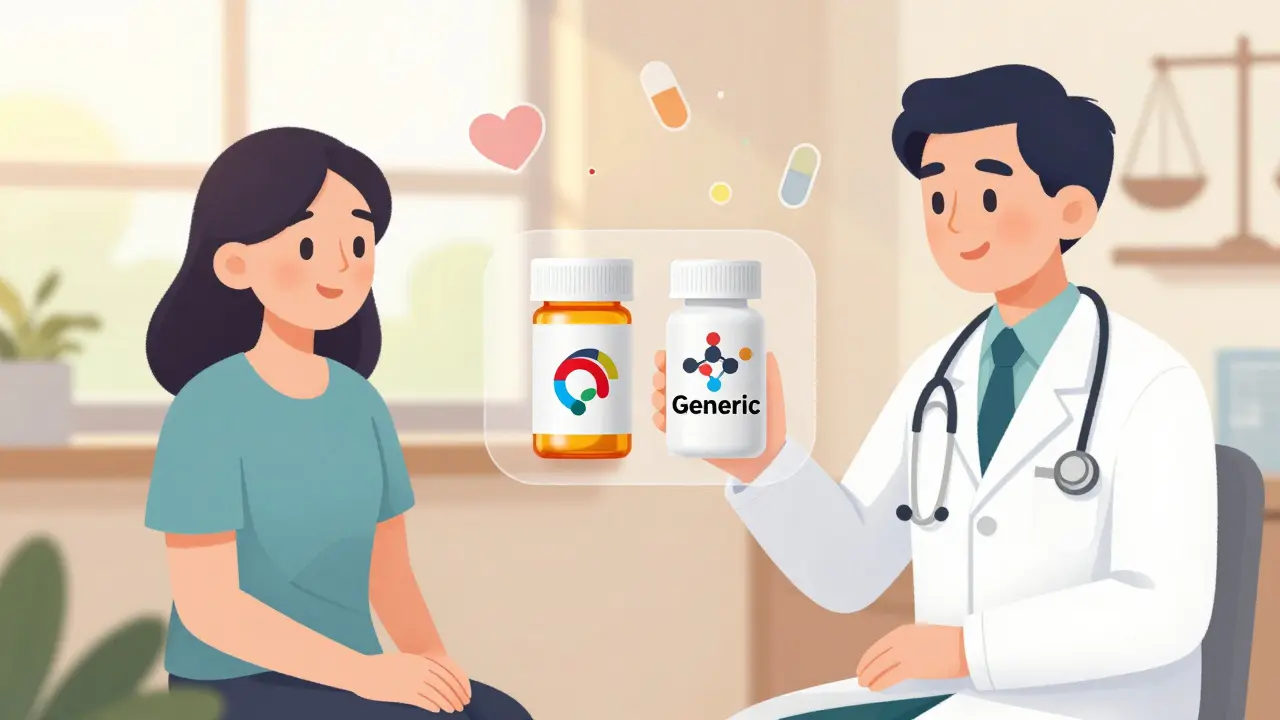
When your doctor hands you a prescription, do you ever wonder why the pill looks different from the one you’ve taken before? Maybe it’s a smaller white tablet instead of a big blue capsule. Or maybe the name on the bottle is unfamiliar. If you’ve ever felt unsure-maybe even suspicious-you’re not alone. Many people assume that if a drug is cheaper, it must be weaker. But here’s the truth: generic medications work just as well as brand-name drugs. The real question isn’t whether they’re effective-it’s whether you’re comfortable asking your doctor about them.
Why do generics cost so much less?
Brand-name drugs are expensive because the company that invented them spent years and millions developing them. They hold a patent that lets them be the only one selling it for a while. Once that patent expires, other companies can make the same drug using the same active ingredient. These are called generics. The U.S. Food and Drug Administration (FDA) requires that generic drugs meet the same strict standards as brand-name ones. They must have the same active ingredient, strength, dosage form, and how they’re taken-whether it’s a pill, injection, or inhaler. The only differences are in the inactive ingredients: things like color, flavor, or filler. These don’t affect how the drug works. They just make the pill look different. Because generic manufacturers don’t have to repeat expensive clinical trials, they can sell the drug for 80-85% less. In 2023, the average cost of a generic prescription was $15.78. The same brand-name drug? Around $675. That’s not a small difference, especially if you’re paying out of pocket or managing a chronic condition like high blood pressure or diabetes.Are generics really as good as brand-name drugs?
Yes. And the science backs it up. A 2020 study in JAMA Internal Medicine looked at 47 clinical trials comparing generic and brand-name cardiovascular drugs. The results? No meaningful difference in effectiveness. Patients got the same results whether they took the brand or the generic. The FDA doesn’t just trust manufacturers’ claims. Every generic must prove it’s bioequivalent-meaning it releases the same amount of medicine into your bloodstream at the same rate as the brand-name version. The standard? The drug’s absorption must fall between 80% and 125% of the brand’s levels. That’s a tight window. And it’s tested in real people, not just labs. Even drugs with narrow therapeutic indexes-where small changes can matter, like warfarin or levothyroxine-undergo extra scrutiny. The FDA requires tighter bioequivalence ranges for these, and pharmacists are trained to monitor patients closely when switching. Still, skepticism lingers. One reason? The “cheaper is inferior” myth. A 2022 survey found 68% of patients believed lower price meant lower quality. Another 52% worried about manufacturing standards. But here’s what most people don’t know: the same factories often make both brand and generic versions. The FDA inspects all of them using the same rules. In 2023, 98.7% of generic drug facilities passed inspection.What do patients really worry about?
You might have heard stories. “My cousin switched to generic and felt worse.” “The generic made me dizzy.” “The pill looks different, so it must not be the same.” These concerns aren’t imaginary. But they’re usually not about the medicine itself. They’re about perception. When people expect a drug to work differently, their bodies can respond that way-even if the drug is identical. This is called the nocebo effect. It’s the opposite of the placebo effect. And it’s real. The FDA estimates that this kind of thinking contributes to $290 billion in avoidable healthcare costs every year because people stop taking their meds. Some patients do report minor side effects after switching. That’s often because the inactive ingredients changed. For example, someone allergic to a dye in the brand-name version might react to the same dye in a different generic. Or a person with sensitive digestion might react to a new filler. These cases are rare-only about 0.8% of patients report issues, according to the American Society of Health-System Pharmacists. If you notice a change after switching, tell your doctor or pharmacist. Don’t assume it’s the drug’s fault. It could be something simple, like a different coating or binder. In most cases, switching to another generic brand fixes it.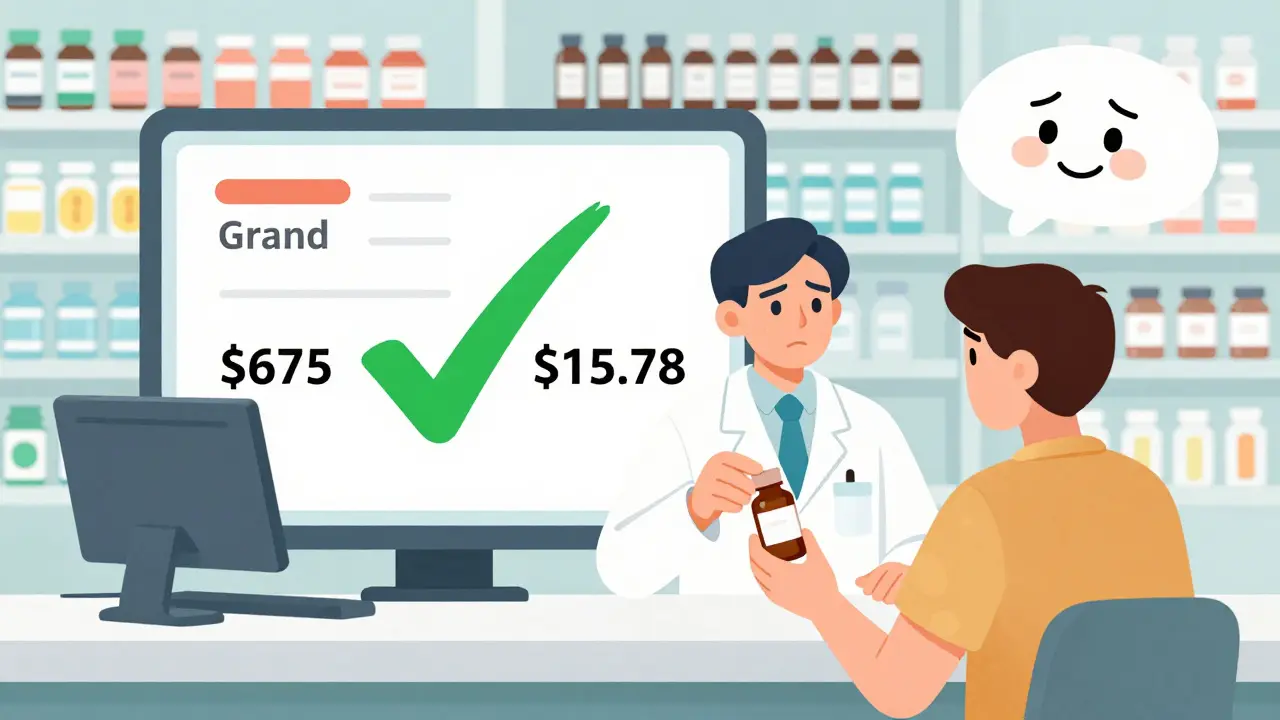
How to start the conversation with your doctor
Talking to your doctor about generics can feel awkward. You might worry they’ll think you’re trying to save money instead of getting the best care. But here’s the thing: doctors want you to take your medicine. And if a generic works just as well and costs less, they’re likely to support it. Use the “Ask-Tell-Ask” method. It’s simple, effective, and used by top healthcare providers.- Ask: “I’ve heard about generic versions of this medication. Can you tell me if there’s one available?”
- Tell: “I’m concerned about cost, and I want to make sure it’s safe.”
- Ask again: “Can you explain how it’s the same as the brand-name version? And what should I watch for if I switch?”
What to do if you’re already on a brand-name drug
You don’t have to wait for your next appointment to consider switching. Talk to your pharmacist. They’re trained to help you understand your meds-and they often know more about generics than your doctor does. Pharmacists see hundreds of patients every week. They know which generics work best for certain conditions. They can tell you if your current brand has a generic equivalent. They can also check if switching might affect you based on your health history. If you’re on a chronic medication-like for cholesterol, diabetes, or thyroid disease-ask your pharmacist: “Is there a generic version? Would it be safe for me to switch?” Many pharmacies offer generic substitution automatically unless the doctor says “dispense as written.” But you can always ask for the generic version. You’re entitled to it.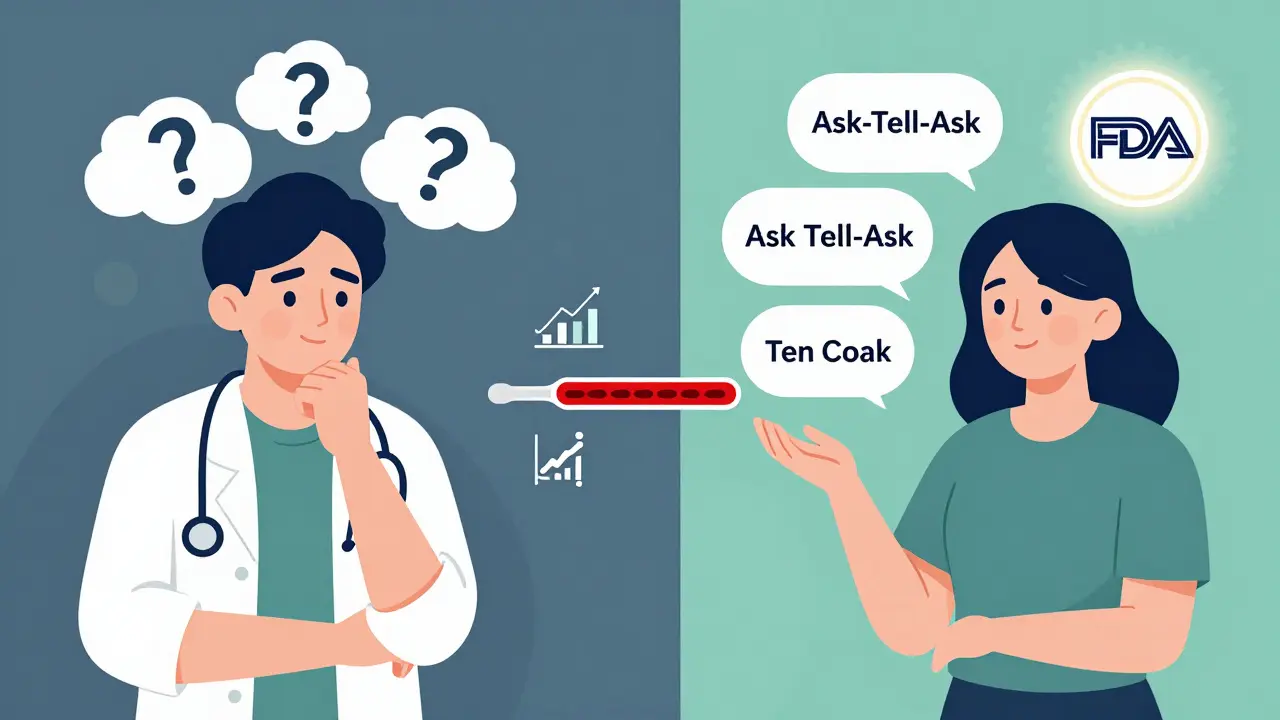
When generics might not be the best choice
Most of the time, generics are the smart choice. But there are exceptions. Some complex drugs-like inhalers, injectables, or topical creams-are harder to copy exactly. The FDA requires additional testing for these. Even then, generics are still approved only if they’re proven to work the same way. In rare cases, a patient may respond better to one brand over another-even if both are generic. This happens with thyroid medications, epilepsy drugs, or blood thinners. If you’ve been stable on a brand and feel worse after switching, tell your doctor. They may need to stick with the same formulation. But here’s the key: don’t assume it’s the generic’s fault. Try switching to a different generic brand first. Many times, the issue isn’t the active ingredient-it’s a filler or coating that doesn’t agree with your body.What you can do right now
You don’t need to wait for your next doctor visit to take control of your care. Here’s what you can do today:- Check your last prescription. Look up the drug name on GoodRx or the FDA’s website. See if a generic is available.
- Call your pharmacy. Ask: “Is there a generic version of this? How much would it cost?”
- Write down your questions. Bring them to your next appointment: “I’ve been taking this for six months. Is there a cheaper option that works the same?”
- Ask your pharmacist for a Medication Guide. If your drug is high-risk, the FDA requires one. It explains risks and benefits in plain language.
Why this matters more than you think
Generic drugs save the U.S. healthcare system $1.7 trillion every year. That’s money that goes back into hospitals, research, and care for others. But if patients refuse generics because of myths, those savings disappear. The 2023 Inflation Reduction Act is making generics even more accessible. By 2025, Medicare Part D will cover them with $0 out-of-pocket cost. That means millions of older adults will be able to afford their meds without choosing between food and medicine. And it’s not just about money. It’s about health. Studies show patients who take their generics have 8-12% higher adherence rates than those who stick with brand-name drugs. That means fewer hospital visits, fewer complications, and longer, healthier lives. You deserve to feel confident in your treatment. You also deserve to save money without sacrificing care. The two aren’t mutually exclusive. Start the conversation. Ask the questions. Get the facts. Your body-and your wallet-will thank you.Are generic medications as safe as brand-name drugs?
Yes. The FDA requires generics to have the same active ingredient, strength, dosage form, and route of administration as the brand-name drug. They must also prove bioequivalence-meaning they deliver the same amount of medicine into your bloodstream at the same rate. Generics are held to the same manufacturing standards (cGMP) and undergo the same inspections. Over 90% of prescriptions in the U.S. are generics, and they’ve been safely used for decades.
Why do generic pills look different from brand-name ones?
The difference in color, shape, or size comes from inactive ingredients-like dyes, fillers, or coatings. These don’t affect how the medicine works. Federal law doesn’t allow generics to look exactly like brand-name drugs, so manufacturers change the appearance to avoid confusion. The active ingredient, which does the healing, is identical.
Can inactive ingredients in generics cause side effects?
Rarely. Inactive ingredients are generally safe, but some people may have sensitivities-like to a specific dye or gluten-based filler. If you notice new symptoms after switching, talk to your doctor or pharmacist. They can check if the filler or coating changed and suggest a different generic brand. Only about 0.8% of patients report issues related to inactive ingredients, according to the American Society of Health-System Pharmacists.
Are generics made in the same places as brand-name drugs?
Yes. Many brand-name and generic drugs are made in the same factories. The FDA inspects all facilities-whether they produce brand or generic drugs-using the same rules. In 2023, 98.7% of generic drug manufacturing sites passed FDA inspections. The location doesn’t determine quality; the inspection process does.
What if my doctor says no to a generic?
Ask why. In most cases, a generic is available and appropriate. But for drugs with a narrow therapeutic index-like warfarin, levothyroxine, or seizure medications-your doctor may prefer you stay on the same formulation to avoid small variations in absorption. If they say no, ask if switching to a different generic brand could work. You can also ask your pharmacist to check if the brand has a generic alternative you haven’t tried yet.
Will my insurance cover generics?
Almost always-and at a much lower cost. Most insurance plans have lower copays for generics. Some even require you to try a generic first before covering the brand-name version. Starting in 2025, Medicare Part D will cover all generics with $0 out-of-pocket cost. Check your plan’s formulary or ask your pharmacist to compare costs.
How do I know if a generic is right for me?
Talk to your doctor and pharmacist. Ask if a generic is available and whether it’s appropriate for your condition. If you’re on a chronic medication, monitor how you feel after switching. Most people notice no difference. If you do feel worse, don’t stop the drug-call your provider. You might just need to try a different generic brand. The FDA and American Medical Association both recommend using the “Ask-Tell-Ask” method to make informed decisions.
Sara Stinnett
December 31, 2025 AT 09:47Let me be perfectly clear: the FDA’s bioequivalence standards are a joke. 80% to 125%? That’s not precision-that’s a casino. I’ve seen patients crash after switching generics. Not because of ‘nocebo’-because the inactive ingredients are a chemical cocktail designed to look harmless. And don’t get me started on the factories in India and China that FDA ‘inspects’ once every seven years. You think your blood pressure pill is safe? It’s a gamble with your life.
linda permata sari
December 31, 2025 AT 19:14OH MY HEAVENS. I switched my levothyroxine to generic and felt like I was drowning in slow motion. My hands shook. My brain turned to fog. I cried in the pharmacy aisle. I thought I was dying. Turns out? The new filler gave me a silent allergy. I switched back. And then I switched to a DIFFERENT generic. And now? I’m fine. But please-don’t treat this like it’s just ‘color and flavor.’ It’s your body. It talks. You just have to listen.
Brandon Boyd
January 2, 2026 AT 16:15Listen. I used to think generics were cheap junk too. Then I got laid off. Then I got diabetes. Then I realized I had to choose between insulin and groceries. I switched. I tracked my numbers for six months. Same. Exactly. Same. My A1C didn’t budge. My bank account? Breathed. So yeah-this isn’t about saving money. It’s about survival. And if your doctor won’t talk to you about it? Find a new one. You deserve care that doesn’t bankrupt you.
Branden Temew
January 4, 2026 AT 14:16So we’re told generics are ‘just as good.’ But who defines ‘good’? Is it the FDA? The pharmaceutical conglomerates? Or the patient who wakes up feeling like a ghost because their thyroid pill now has a different binder? We treat medicine like a spreadsheet, not a living system. The body doesn’t care about bioequivalence percentages. It cares about rhythm. Consistency. Trust. And when you swap a pill you’ve known for years for a stranger in a different shade of white-you’re not just changing chemistry. You’re breaking a pact with your own biology.
Frank SSS
January 5, 2026 AT 22:25Ugh. I’m so tired of this ‘generics are fine’ propaganda. I’ve been on the same brand for 12 years. My body knows it. I switch? I get headaches. I get nausea. I get that weird metallic taste. I don’t care if it’s ‘the same active ingredient.’ My body says otherwise. And guess what? My doctor doesn’t care either. They just want to cut costs. So now I pay out of pocket. Because my health isn’t a line item on some corporate balance sheet.
Paul Huppert
January 7, 2026 AT 21:29My pharmacist told me the generic for my blood thinner was fine. I asked if it was made in the same place as the brand. She said yes. I asked if she’d take it herself. She paused. Then said, ‘I do.’ So I did. No issues. Just saved $600 a year. Sometimes the simplest answer is the right one.
Hanna Spittel
January 9, 2026 AT 02:57🚨 ALERT 🚨 Generics are controlled by Big Pharma to make you dependent! The FDA is in their pocket. That ‘80-125%’ window? It’s a backdoor to let bad stuff in. And the ‘same factories’? LIES. Most generics are made in underground labs. You’re being dosed with microplastics and rat poison. Check your pill’s batch number. I bet it’s from a facility with 3 stars on the FDA site. 💀
Brady K.
January 9, 2026 AT 12:52Let’s be real: the entire generic system is a glorified loophole. Brand-name companies spend billions on R&D, then get slapped with a patent cliff. So they outsource the ‘generic’ version to their own subsidiary and charge the same price under a different label. The FDA calls it ‘competition.’ I call it corporate theater. And we’re the audience paying for the tickets.
John Chapman
January 9, 2026 AT 14:26YOU GOT THIS. 🙌 I used to be scared of generics too-until I started asking questions. My doc said yes. My pharmacist said ‘here’s the guide.’ I switched. Felt nothing. Saved $700. Now I’m helping my mom do the same. You’re not being cheap-you’re being smart. And that’s powerful. 💪 Let’s flip the script: asking about generics isn’t a sign of weakness. It’s the ultimate act of self-advocacy.
Marilyn Ferrera
January 10, 2026 AT 06:47One sentence: If your doctor refuses a generic without a clear, evidence-based reason-ask for a second opinion. Period.
Robb Rice
January 11, 2026 AT 15:12Interesting piece. I appreciate the data. Though I must note: the FDA’s 98.7% inspection pass rate doesn’t account for post-market surveillance gaps. And while the majority of patients experience no issues, the 0.8% who do? They’re often dismissed as ‘anecdotal.’ But anecdotes are data points with names. And those names? They’re people. I’ve seen it firsthand. So yes-generics are generally safe. But safety isn’t binary. It’s a spectrum. And we owe it to every patient to treat it as such.