
You might think that because a vitamin or a herbal tea is "natural," it doesn't need to be mentioned during your ten-minute doctor's visit. However, a simple mistake in communication can lead to serious health risks. Many people assume their healthcare provider only cares about prescriptions, but over-the-counter medications and supplements can fundamentally change how your body processes those prescriptions. In fact, research shows that while nearly 90% of patients disclose their prescriptions, only about 36% mention the supplements they take. This gap isn't just a clerical error; it's a safety risk that can lead to severe liver damage or life-threatening bleeding.
Why the "Natural" Label Is Misleading
One of the biggest hurdles in patient-provider communication is the belief that "natural" equals "safe." The Food and Drug Administration (FDA) regulates dietary supplements differently than conventional drugs. Under the Dietary Supplement Health and Education Act of 1994, supplements don't require the same pre-market approval as prescription meds. This means the ingredients might not be as standardized as you'd expect.
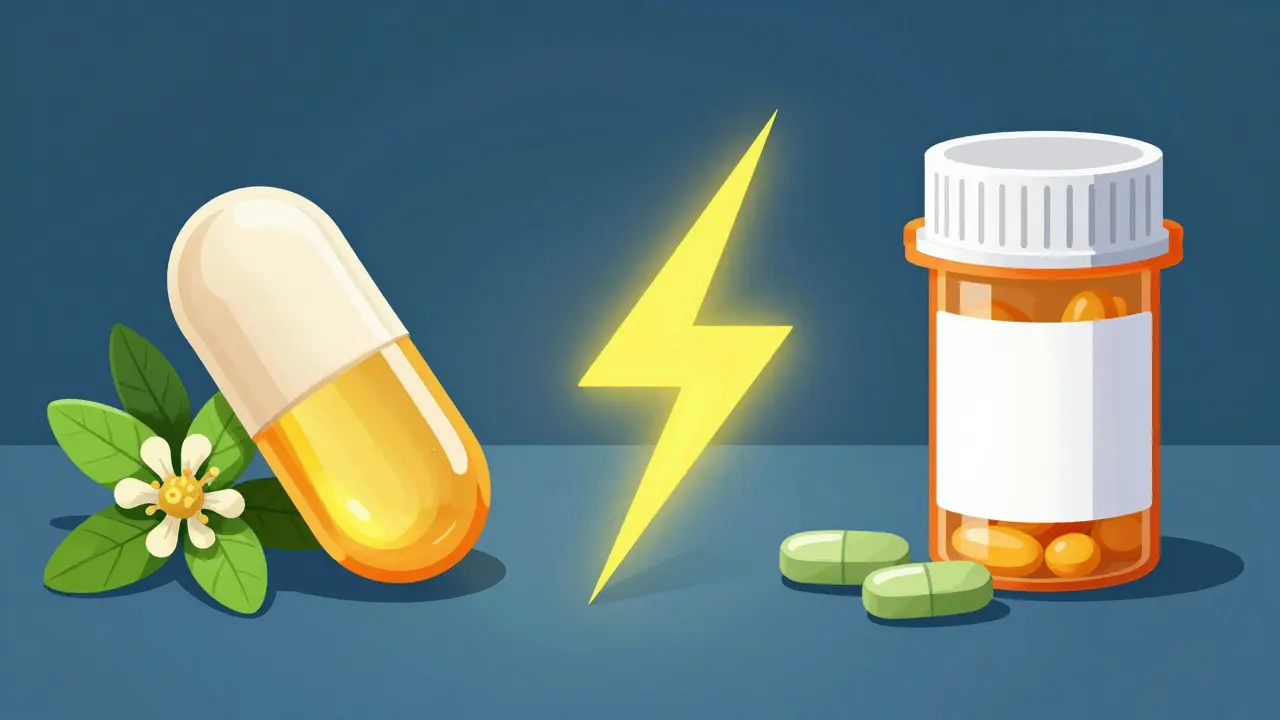
Consider St. John's Wort. It's a plant-derived supplement, yet it can reduce the effectiveness of 37 different prescription medications by altering how your liver metabolizes them. Similarly, taking high doses of fish oil (like 1,000mg daily) while on blood thinners like warfarin can significantly increase your risk of bleeding. These aren't rare anomalies; the FDA has documented over a thousand supplement-related adverse event reports in a single year, including deaths linked to improper interactions.
The Danger of the "Silent" Supplement
Why do so many of us stay silent about our vitamin regimens? Many patients report that their doctor simply didn't ask, or they felt the practitioner didn't need to know. But silence is dangerous. A study in the Journal of the American Medical Association found that nearly a quarter of hospital patients experienced potential medication-supplement interactions, with some classified as severe.
The risk is compounded by the fact that different providers see different things. Pharmacists are often much better at spotting these conflicts-identifying over three times as many interactions as physicians during reviews. If you're only talking to your primary doctor and not your pharmacist, you're missing a critical safety net. Whether it's kava causing liver failure when paired with antipsychotics or green tea extract reacting poorly with acetaminophen, the stakes are too high to leave to chance.
How to Document Your Use for Total Accuracy
Vague descriptions like "I take a multivitamin" aren't helpful for a doctor. To provide an accurate picture, you need a concrete record. The National Institutes of Health Office of Dietary Supplements (NIH ODS) recommends a standardized approach to tracking everything you put in your body.
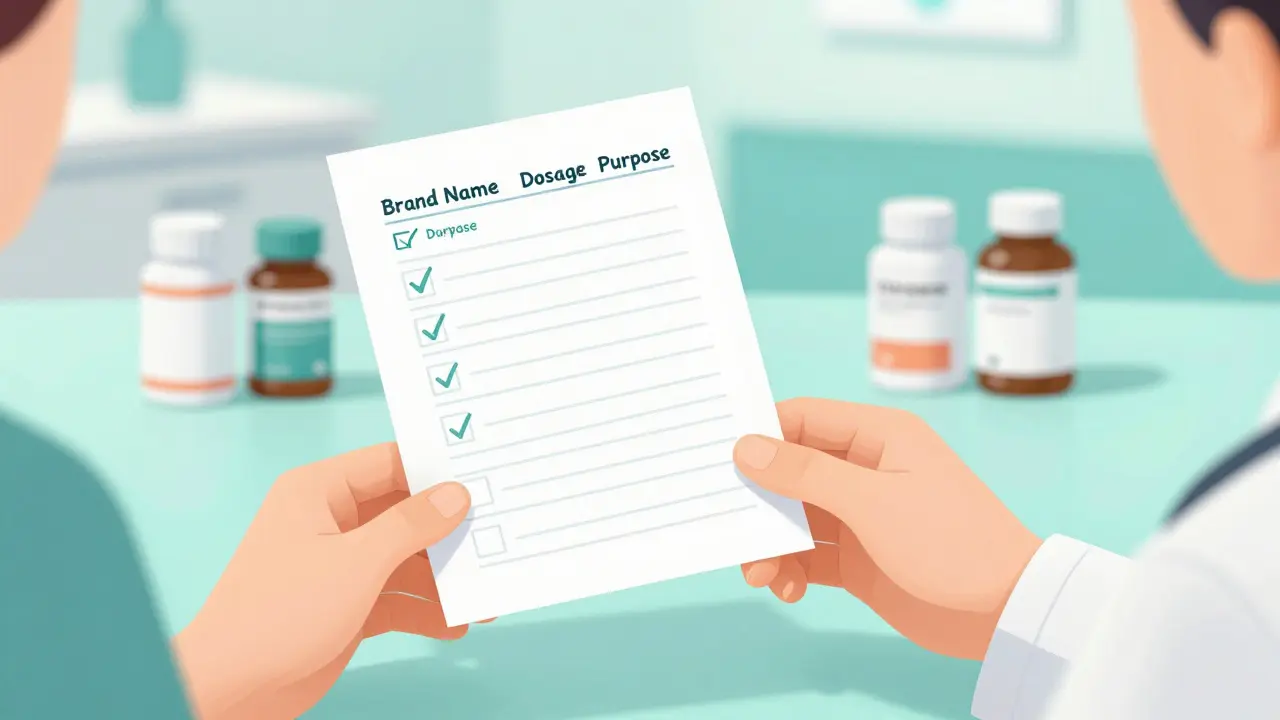
Instead of relying on memory, create a written list. Studies show that written records reduce documentation errors by 64% compared to just telling your doctor from memory. When you build your list, include these four specific data points for every single item:
- Exact Product Name: Don't just write "Vitamin C." Write the brand and the specific product name found on the bottle.
- Precise Dosage: Avoid "one tablet." Use the actual measurement, such as "500mg."
- Frequency: Note exactly when and how often you take it (e.g., "twice daily with meals").
- Purpose: Explain why you're taking it, such as "for joint pain" or "to help with sleep."
| Feature | OTC Medicines | Dietary Supplements |
|---|---|---|
| Label Type | Drug Facts Label | Supplement Facts Label |
| FDA Approval | Required for safety/efficacy | No pre-market approval required |
| Dosing Rules | Standardized therapeutic dose | No legally mandated serving size limits |
| Regulatory Focus | Active ingredients | Ingredients by weight |
Navigating Your Appointment
Communication is a two-way street. While it's your responsibility to share, the environment of the clinic often makes it difficult. Many Electronic Health Records (EHR) systems-the digital files your doctor uses-don't have dedicated fields for supplements, meaning your vitamin use might be buried in a generic "notes" section or missed entirely.
To fix this, take a proactive approach. Spend 10 to 15 minutes before your appointment finalizing your list. When you sit down with your provider, don't wait for them to ask. Lead with: "I've prepared a list of all my prescriptions, OTC meds, and supplements. Can we review them together to make sure there are no interactions?" This shifts the dynamic from a quick check-box exercise to a collaborative safety review.
Common Pitfalls to Avoid
Many patients fail to disclose items because they don't perceive them as "medicine." You should always report the following, even if they seem harmless:
- Herbal Teas and Tinctures: Concentrated herbs can have powerful pharmacological effects.
- "Natural" Weight Loss Aids: These often contain stimulants that can interfere with blood pressure or heart medications.
- High-Dose Vitamins: While a standard multi is usually fine, "mega-doses" of vitamins (like Vitamin E or K) can interfere with clotting.
- Probiotics and Enzymes: These can occasionally alter the absorption of certain antibiotics.
Remember that the supplement market is massive-reaching nearly 60 billion dollars-but regulatory oversight is fragmented. The FDA handles labeling, while the FTC handles advertising. This gap can lead to inaccurate ingredient lists on the bottle itself. By sharing your use with a doctor, you're adding a layer of professional scrutiny that the label alone doesn't provide.
Do I really need to tell my doctor about a simple vitamin?
Yes. Even common vitamins can interact with medications. For example, high doses of Vitamin K can counteract the effects of blood thinners, while certain minerals can prevent the absorption of antibiotics if taken at the same time. Your doctor needs the full picture to ensure your treatment is effective and safe.
What is the difference between a "Drug Facts" and a "Supplement Facts" label?
A "Drug Facts" label is found on OTC medicines and lists active ingredients based on their therapeutic dose. A "Supplement Facts" label is for dietary supplements and lists ingredients by weight. The most critical difference is that products with "Drug Facts" have undergone more rigorous FDA scrutiny for safety and efficacy before hitting the shelf.
Should I bring the actual bottles to my appointment?
If possible, yes. Bringing the bottles allows the provider to see the exact brand, dosage, and ingredient list, which eliminates any guesswork or memory errors. If you can't bring the bottles, a detailed written list including the brand name is the next best option.
Can "natural" supplements cause liver damage?
Absolutely. Botanical products like kava and comfrey have been linked to severe liver damage, especially when combined with certain medications. This is why it is vital to disclose all herbal products, as "natural" does not mean "non-toxic."
How often should I update my medication and supplement list?
You should update your list every time you start a new product, change a dose, or stop taking something. It is best to review this list with your provider at every single visit, even if nothing has changed, to ensure that new prescriptions don't conflict with your existing supplement routine.
Nikki Grote
April 17, 2026 AT 21:40The pharmacokinetic interactions mentioned here are critical especially regarding cytochrome P450 enzyme induction or inhibition which can lead to suboptimal therapeutic levels of life-saving medications
Rob Schlautman
April 19, 2026 AT 20:53honestly it is just so typical of the medical system to expect us to do all the heavy lifting by making detailed lists while they just stare at a screen for ten minutes and barely acknowledge we exist in the room which is just a total tragedy of modern care and a complete joke
Anmol Garg
April 20, 2026 AT 23:11it's a good reminder that we're all just trying to heal in our own way and having a bridge of honest communication with a doctor helps us find that balance between traditional and natural paths
Sophia Rice
April 21, 2026 AT 20:47I always bring my botles just in case lol its way easier than writing things down and the doc usualy likes it too!
Nathan Berlin
April 22, 2026 AT 09:12Imagine thinking the US health system is the gold standard when we have such ancient perspectives on holistic wellness 🙄🇮🇳 our traditional knowledge is far superior to these clumsy FDA labels 💅✨
Colleen Tankard
April 23, 2026 AT 16:32Super helpful tip! 🌟 Always feels better being transparent with the doc 🌸
Theresa Griffin MEP
April 24, 2026 AT 15:45Precise documentation is mandatory for patient safety. Please implement these steps immediately.