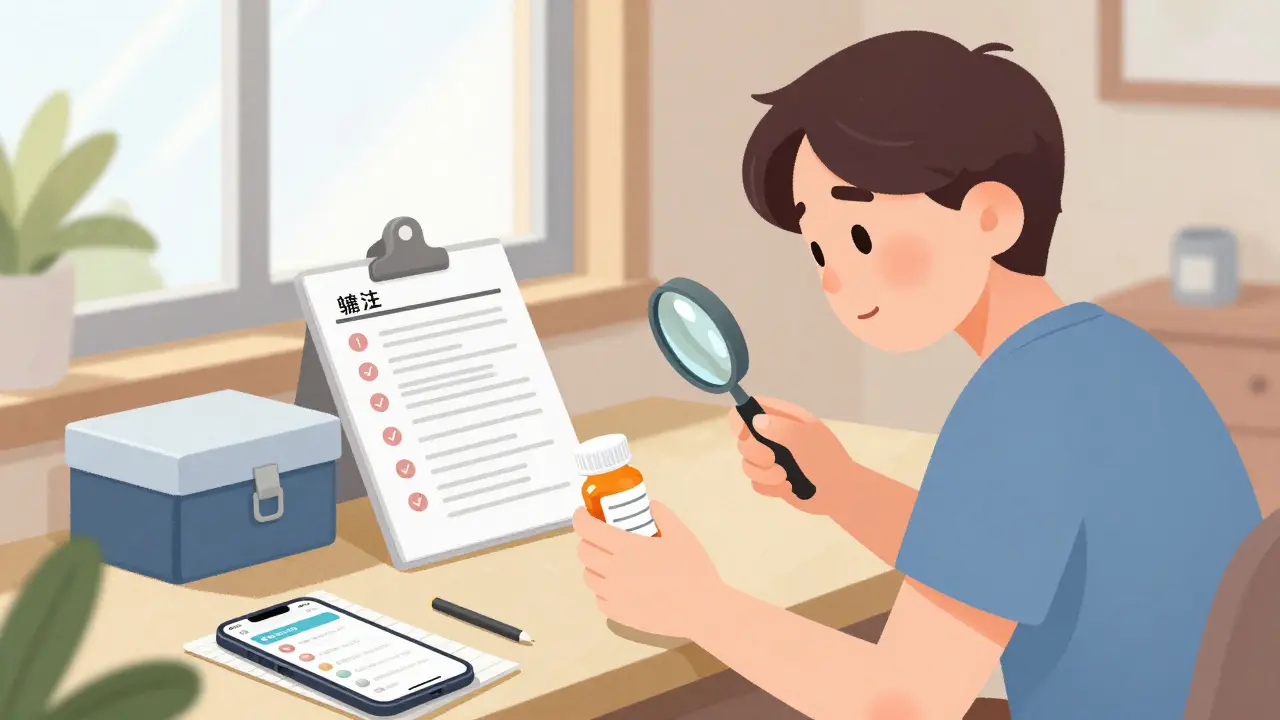
Why Medication Safety After Surgery Matters More Than You Think
After surgery, you’re not out of the woods just because the incision is closed. The next few days-sometimes weeks-are when most medication errors happen. It’s not about being careless. It’s about how messy things get in recovery. One wrong pill, one misread label, one delayed dose-and you could be facing serious harm. The CDC reports that unsafe injection practices alone caused over 44 outbreaks between 2001 and 2011, affecting 14,000 people. Most of those errors weren’t due to bad intent. They happened because labels were missing, syringes were reused, or someone assumed the drug was right because it looked familiar.
What Counts as a Short-Term Medication After Surgery?
Short-term meds after surgery aren’t your daily blood pressure pill or thyroid medicine. These are the drugs you get for a few hours to a few weeks to manage pain, prevent infection, stop clots, or calm nerves. Common ones include:
- Opioids like oxycodone or hydromorphone for pain
- Antibiotics like cefazolin or vancomycin to prevent infection
- Anticoagulants like heparin to reduce clot risk
- Anti-nausea drugs like ondansetron
- Sedatives or muscle relaxants for specific procedures
These aren’t meant to be taken long-term. But they’re powerful. A single wrong dose of heparin can cause internal bleeding. Too much opioid can stop your breathing. That’s why every step-from the hospital to your kitchen counter-needs strict rules.
The Golden Rules: What You Must Do Every Time
There’s no room for guesswork. Follow these non-negotiable steps every single time you handle a post-op med:
- Check the label twice-once when you pick it up, once before you take it. Look at the drug name, dose, and expiration time. If it’s handwritten, ask for clarification.
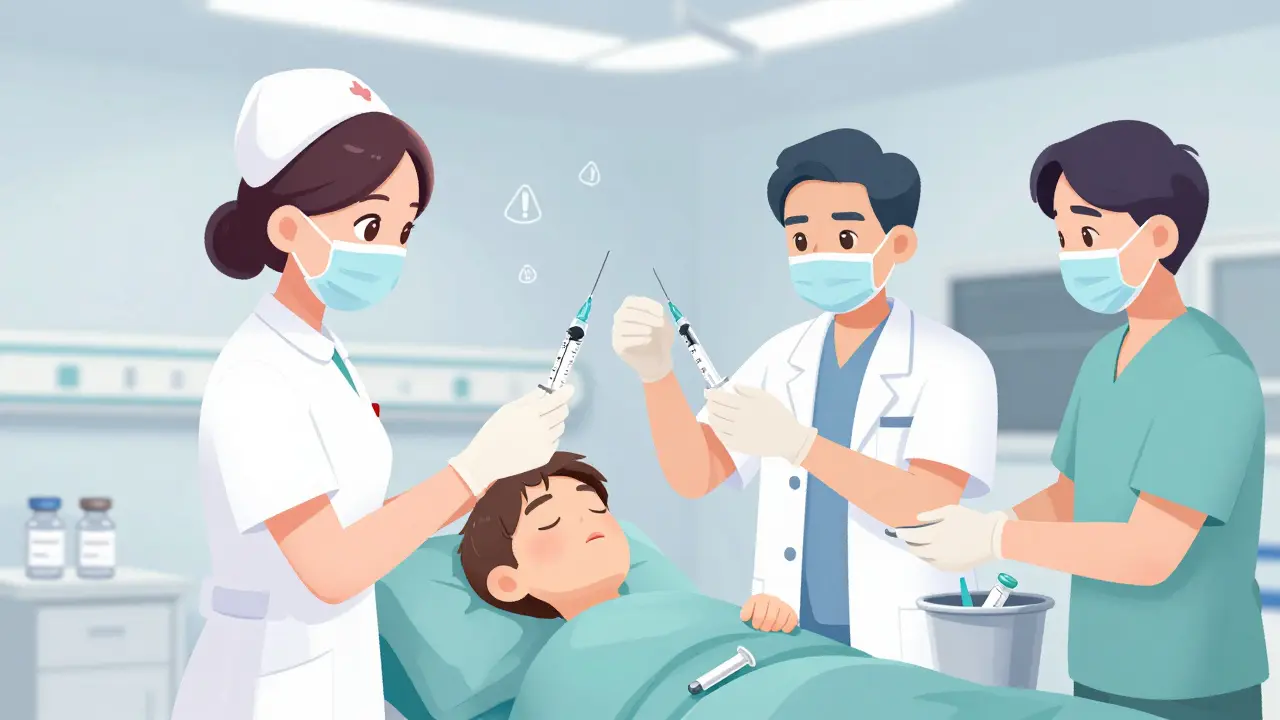
- Never use unlabeled syringes. If a nurse hands you a syringe without a clear label, say no. The Joint Commission requires all meds on the sterile field to be labeled immediately. This isn’t bureaucracy-it’s survival.
- Use a new needle and syringe every time. Even if it’s for the same person. Reusing-even for a single patient-increases infection risk. The CDC updated this rule in November 2023. No exceptions.
- Know your high-alert drugs. Opioids, insulin, heparin, and neuromuscular blockers are the most dangerous. If you’re given one, ask: “Is this the right dose for my weight?” “Was this checked by two people?”
- Do a read-back. If a nurse says, “I’m giving you 5 mg of morphine,” repeat it back: “You’re giving me 5 mg of morphine.” Then wait for confirmation. This cuts verbal errors by over half, according to ACOG.
What Happens in the Hospital? (And What You Should Watch For)
Most errors happen in the operating room or recovery bay, not at home. Here’s what’s supposed to happen-and what might go wrong:
- Labeling: Every vial, syringe, and bag must be labeled with the drug name, concentration, and time it was prepared. If you see an unlabeled syringe on the table, speak up. A 2022 study showed hospitals that enforced this rule cut errors by 63%.
- Verification: Two trained staff should check high-risk meds before giving them. This isn’t optional. The ISMP says 35% of serious medication errors in surgery lead to patient harm.
- Storage: Meds should be locked away when not in use. Opioids aren’t left on carts. Insulin isn’t sitting on a counter. If you see meds unsecured, report it.
- Time pressure: Emergency surgeries are chaotic. In 2023, anesthesiologists on Reddit reported that 15-20% of meds are given without full checks during urgent cases. Don’t assume it’s safe just because it’s fast.
Bringing Medications Home: Your New Responsibility
When you get home, the hospital’s safety net disappears. Now it’s all on you.
- Keep meds in original containers. Don’t dump pills into a pill organizer unless you’ve confirmed the dose and name with your pharmacist. Many opioid pills look identical.
- Store safely. Lock opioids away from kids, pets, or visitors. The ECRI Institute found that 19% of medication errors after discharge happen because someone else took the drug by accident.
- Use a pill tracker. Even a simple notebook with date, time, and dose helps. Paper records are still used in 40% of homes. Electronic apps like Medisafe or MyTherapy reduce missed doses by 32%.
- Don’t mix meds without asking. A common mistake? Taking ibuprofen with your opioid because “it helps with pain.” But mixing NSAIDs with opioids can increase bleeding risk. Always check with your doctor or pharmacist first.
When to Call for Help
You don’t have to tough it out. These signs mean you need help right away:
- Feeling unusually drowsy, confused, or hard to wake up
- Slowed or shallow breathing
- Nausea or vomiting that won’t stop
- Redness, swelling, or pus at the injection site
- Unexplained bruising or bleeding
If you’re unsure, call your surgeon’s office. If it’s after hours, go to urgent care or call 999. Don’t wait. The World Health Organization says medication reconciliation at discharge reduces adverse events by up to 67%. That means asking: “What meds am I on now? What should I stop? What’s next?”
What’s Changing in 2026? (And What It Means for You)
Things are getting better-but slowly. New tech is rolling out:
- Smart syringes that beep if you try to give the wrong dose. Pilot programs show a 39% drop in errors.
- Barcode scanning at the bedside. Nurses scan your wristband and the med before giving it. It’s standard in big hospitals, but still rare in small clinics.
- Specialized guidelines for orthopedic and cardiac surgery are coming in 2024. That means clearer rules for joint replacements and heart procedures.
But the biggest change isn’t tech-it’s culture. More hospitals are training staff to speak up. If you see something wrong, say it. You’re not being difficult. You’re saving lives-including your own.
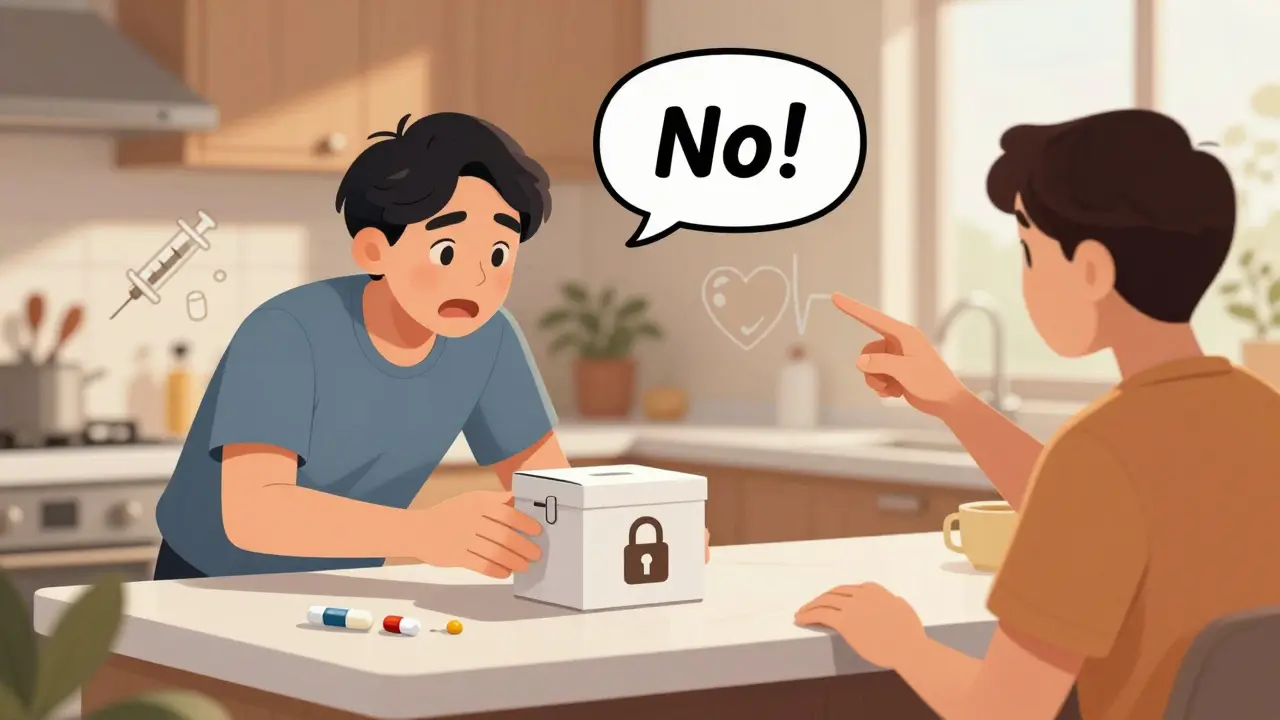
Common Mistakes (And How to Avoid Them)
Here’s what goes wrong-and how to stop it:
- Mistake: Taking leftover opioids “just in case.” Solution: Return unused pills to the pharmacy. Don’t keep them.
- Mistake: Assuming a nurse knows your allergies. Solution: Say them out loud every time. “I’m allergic to penicillin.” Don’t rely on charts.
- Mistake: Skipping doses because you feel fine. Solution: Antibiotics need full courses. Stopping early causes resistant infections.
- Mistake: Not telling your doctor about herbal supplements. Solution: Even garlic or ginkgo can interfere with blood thinners. List everything.
Final Thought: You’re the Last Line of Defense
No system is perfect. Nurses get tired. Doctors get busy. Pharmacies make mistakes. But you? You’re the one who knows your body best. You’re the one who sees the label, feels the side effect, remembers the dose. Your job isn’t to be a medical expert. It’s to be a careful, confident advocate. Ask questions. Double-check. Say no if something feels off. That’s not being difficult. That’s how you stay safe.
Can I reuse a syringe if I’m the only one using it?
No. Even if it’s for the same person, reusing a syringe-even during one procedure-increases the risk of infection. The CDC mandates a new sterile syringe and needle for every injection, regardless of who it’s for. This rule was updated in November 2023 and applies to all settings, including at-home care if you’re administering injections yourself.
What should I do if I think I took the wrong dose?
Call your surgeon or pharmacist immediately. Don’t wait for symptoms. If it’s an opioid or blood thinner, go to the nearest emergency department. Bring the medication bottle with you. Even a small overdose can be dangerous-especially if you’re still recovering from surgery. It’s better to be checked than to risk complications.
Are over-the-counter painkillers safe after surgery?
Not always. Medications like ibuprofen or naproxen can interfere with healing and increase bleeding risk, especially after orthopedic or cardiovascular surgery. Always ask your doctor before taking any OTC pain reliever. Sometimes acetaminophen (paracetamol) is safer, but even that needs dosing guidance based on your liver function and other meds.
How long should I take antibiotics after surgery?
Follow your doctor’s instructions exactly. Most surgical antibiotics are given for 24 to 72 hours, but some procedures-like joint replacements-require up to 7 days. Stopping early can lead to resistant infections, which are harder to treat and more dangerous. Never guess. If you’re unsure, call your provider.
Why are labels so important on syringes?
Labels prevent deadly mix-ups. For example, a syringe labeled “epinephrine 1:1000” is for emergencies; “epinephrine 1:10,000” is for IV drips. Confusing them can kill. The Joint Commission requires all meds on the sterile field to be labeled immediately after preparation. Unlabeled syringes must be thrown away. This rule exists because 32% of perioperative errors involve the wrong drug being given.
What if I forget to take my medication?
Don’t double up. Call your doctor or pharmacist for instructions. For antibiotics, missing one dose can reduce effectiveness. For pain meds, skipping a dose might make pain harder to control later. But doubling up on opioids or blood thinners can be life-threatening. Always ask before adjusting your dose.
Next Steps: Make Your Recovery Safe
Start today. Write down every medication you’re taking-name, dose, time, reason. Keep the list with you at all times. Show it to every new provider. Ask: “Is this safe with my other meds?” Set phone alarms for doses. Store opioids in a locked box. Return unused pills to the pharmacy. Talk to your nurse before you leave the hospital. Say: “Can you walk me through my meds?” You’re not being a burden. You’re doing your part to stay alive.
Alex Danner
January 7, 2026 AT 12:19Man, I had a cousin who got sent home with 30 oxycodone pills after knee surgery. Three weeks later, his roommate took two and ended up in the ER. This post? Absolute gospel. Never assume the bottle says what you think it says. Always read it twice. And if it’s handwritten? Say something. Your life isn’t worth the risk.
Rachel Steward
January 7, 2026 AT 23:17Let’s be real-this whole system is a circus. Hospitals don’t care until someone dies. The CDC stats? They’re just numbers until it’s your kid on a ventilator because a nurse grabbed the wrong vial. I’ve seen it. Labeling? Verification? Those are just checkboxes on a form. Real safety? It’s you, awake at 3 AM, staring at a pill bottle, wondering if the script was even right. You’re not paranoid. The system is broken.
steve rumsford
January 9, 2026 AT 10:41so i got my antibiotics after my appendectomy and i just tossed em in a tupperware cause why not? i mean its just pills right? also i took ibuprofen with em cause my knee was sore. no big deal. 🤷♂️
Jessie Ann Lambrecht
January 10, 2026 AT 14:58THIS. This is the kind of post that deserves to be printed and taped to every fridge, bathroom mirror, and hospital door. I’m a nurse, and I’ve watched people try to ‘wing it’ with meds after surgery-and it’s terrifying. You don’t need to be a doctor to save your own life. Just be loud. Be annoying. Ask the same question three times. Say ‘I need to hear it from you again.’ That’s not being difficult. That’s being a hero.
LALITA KUDIYA
January 10, 2026 AT 18:56Mina Murray
January 11, 2026 AT 09:01Did you know that 89% of medication errors happen because patients don’t speak up? No? Because the CDC doesn’t track that. They track outbreaks, not negligence. And who’s to blame? The nurses? The pharmacists? No. It’s you. You didn’t double-check. You didn’t read the label. You trusted the system. And now you’re dead. This isn’t advice. It’s a warning.
Kyle King
January 12, 2026 AT 05:00Smart syringes? Barcode scanning? Please. That’s just corporate theater. The real problem? The FDA lets drug companies design labels so confusing even pharmacists get them wrong. And they call it ‘standardization.’ Meanwhile, your grandma’s insulin pen looks like a pen. That’s not safety. That’s a death trap with a logo.
Vince Nairn
January 13, 2026 AT 10:24So you’re telling me I can’t just use the same needle for my post-op shot because ‘CDC says so’? Cool. So I’m supposed to buy a whole new kit every time? How much is that gonna cost me? I’m not rich. I’m not even middle class. You want me to be safe? Give me free supplies. Don’t just lecture me.
Katrina Morris
January 15, 2026 AT 09:33i just got home from my hip surgery and i was so tired i forgot to check the label on my pain med but then i remembered this post and i called my sister to read it with me and we laughed and cried and i felt so much better just knowing i wasnt alone in this
Jonathan Larson
January 16, 2026 AT 09:46It is imperative to recognize that the burden of medication safety does not rest solely upon the shoulders of the patient, nor is it exclusively the domain of the healthcare provider. Rather, it is a symbiotic, interdependent construct requiring vigilance, communication, and institutional accountability. The principles outlined herein are not merely procedural-they are ethical imperatives. To neglect them is to abdicate one’s moral responsibility to preserve human dignity in the face of systemic fragility.
Poppy Newman
January 17, 2026 AT 14:12so i took my opioid at 8pm and then i took a nap and woke up at 3am and thought ‘wait did i take it?’ so i took another one 😅 i’m fine tho
Kamlesh Chauhan
January 18, 2026 AT 06:30why are we even talking about this like its a big deal? i mean its just a pill right? if you cant handle your meds dont get surgery. stop being so dramatic. also why are there so many rules? i just want to feel better
Andrew N
January 18, 2026 AT 08:29the CDC stats are misleading. they count every near-miss as an outbreak. most people who get the wrong med don’t die. they just feel weird for a day. also, why are we assuming the patient is the problem? maybe the pharmacy printed the label wrong. maybe the nurse misread the script. maybe the system is broken, not the person.
Anthony Capunong
January 18, 2026 AT 21:53in america we’re too soft. back in my country we just took the pills and didn’t ask questions. if you died, you were weak. if you lived, you were strong. stop coddling people with all this labeling and read-back nonsense. just take the damn pill and move on.