Every year, millions of people in the U.S. take prescription and over-the-counter medicines without issue. But for some, a drug that’s meant to help ends up causing harm. That’s called an adverse drug reaction - and if you suspect one, reporting it to the FDA isn’t just a good idea. It’s how new safety risks get found and fixed.
You don’t have to be a doctor to report. If you’re a patient, a caregiver, a pharmacist, or even a family member who noticed something unusual after someone took a medication, your report matters. The FDA doesn’t know about every bad reaction - studies show only about 6% of serious ones are reported. That means most signals go unnoticed until someone like you speaks up.
What Counts as a Reportable Adverse Reaction?
Not every side effect needs to be reported. The FDA defines a serious adverse drug reaction as one that results in death, is life-threatening, causes permanent disability, requires hospitalization, leads to a birth defect, or needs medical intervention to prevent lasting damage. Common side effects like mild nausea or drowsiness usually don’t qualify - unless they’re severe or unexpected.
For example, if someone starts taking a new blood pressure medication and ends up in the ER with dangerously low blood pressure, that’s reportable. If a diabetic develops severe, recurring low blood sugar after switching to a new insulin - even if they’ve never had it before - that’s also reportable. The key is: Did the drug cause something serious that wasn’t expected based on the label?
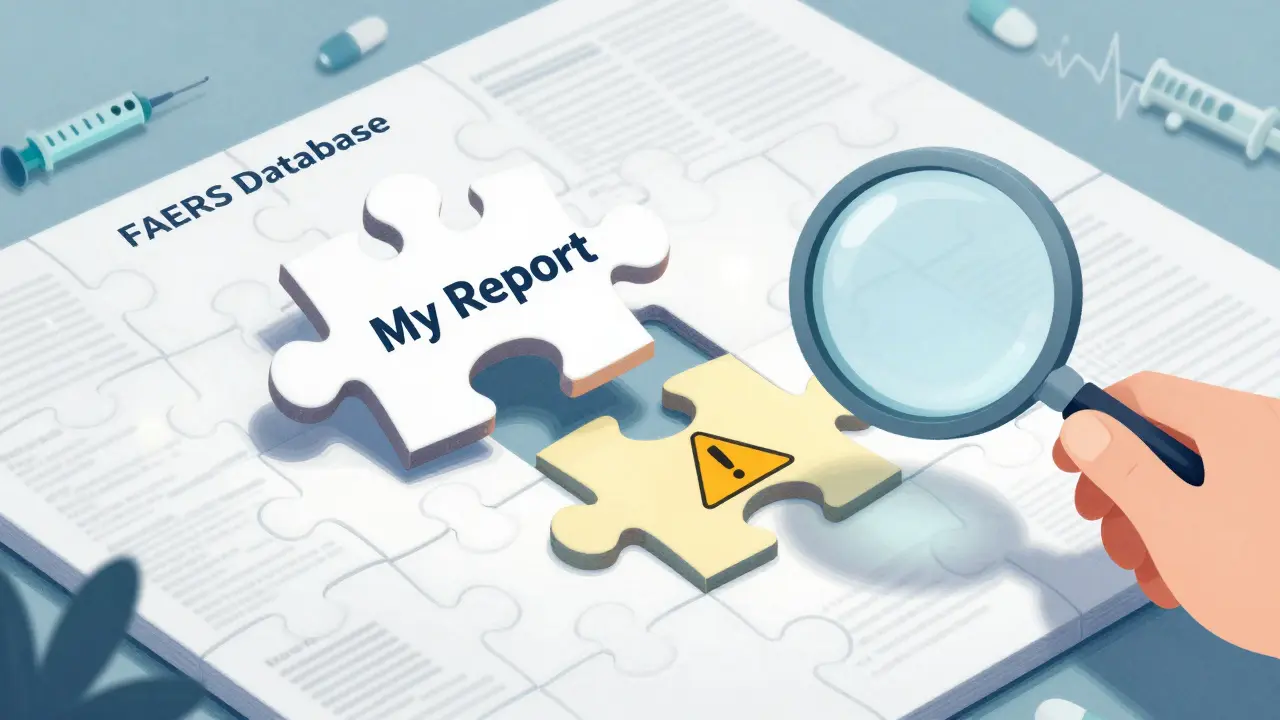
The FDA uses a system called FAERS (the FDA Adverse Event Reporting System) to collect these reports. Since 2014, all reports must follow international standards (ICH E2B), meaning they include detailed info like the patient’s age and sex, the drug name and dose, when the reaction started, how long it lasted, and the outcome. These details help the FDA spot patterns across thousands of reports.
Who Can Report?
Anyone can report. You don’t need permission. You don’t need to prove causation. You just need to describe what happened.
- Patients and caregivers: If you or someone you care for had a bad reaction, you can report it directly.
- Healthcare providers: Doctors, nurses, pharmacists, and other clinicians are encouraged to report - especially for serious cases. Many hospitals have safety officers who handle this.
- Pharmaceutical companies: Manufacturers are legally required to report serious reactions they hear about, often within 15 days.
Most reports come from healthcare professionals, but patient reports are growing. In fact, the FDA says nearly 40% of all reports now come from consumers and caregivers - up from just 15% a decade ago.
How to Report: Three Simple Ways
There are three easy ways to report an adverse reaction. All are free and confidential.
1. Report Online via MedWatch (Fastest and Recommended)
The fastest and most reliable way is through the FDA’s MedWatch portal: www.accessdata.fda.gov/scripts/medwatch.
On the site, you’ll find Form 3500 - the official reporting form. It asks for:
- Patient info (age, sex, weight - no name required)
- Drug details (brand name, generic name, dose, how often taken, start and stop dates)
- Adverse event description (what happened, when it started, how long it lasted)
- Outcome (did the person recover? Was there hospitalization? Death?)
- Your contact info (optional, but helpful if they need to follow up)
It takes about 20 to 25 minutes to complete. The system saves your progress if you need to pause. Once submitted, you’ll get an automatic confirmation email. The FDA processes over 1.8 million electronic reports each year - and your report joins that pool.
2. Call the FDA Hotline
If you’d rather talk to someone, call 1-800-FDA-1088. This is the FDA’s MedWatch Safety Information hotline.
You’ll speak with a trained representative who will ask you the same questions as the online form. They’ll fill out the report for you. This is especially helpful if you’re not comfortable typing or if the situation is urgent. Average wait time is under 10 minutes.
Don’t wait for business hours - the line is staffed 24/7. You can call even if it’s midnight and you’re worried about a loved one.
3. Mail a Paper Form
If you don’t have internet access, you can download Form 3500 from the FDA website, print it, fill it out, and mail it to:
FDA MedWatch
5600 Fishers Lane
Rockville, MD 20857-9787
This method takes longer - mail can take weeks to arrive and be processed. Use this only if you have no other option.
What Happens After You Report?
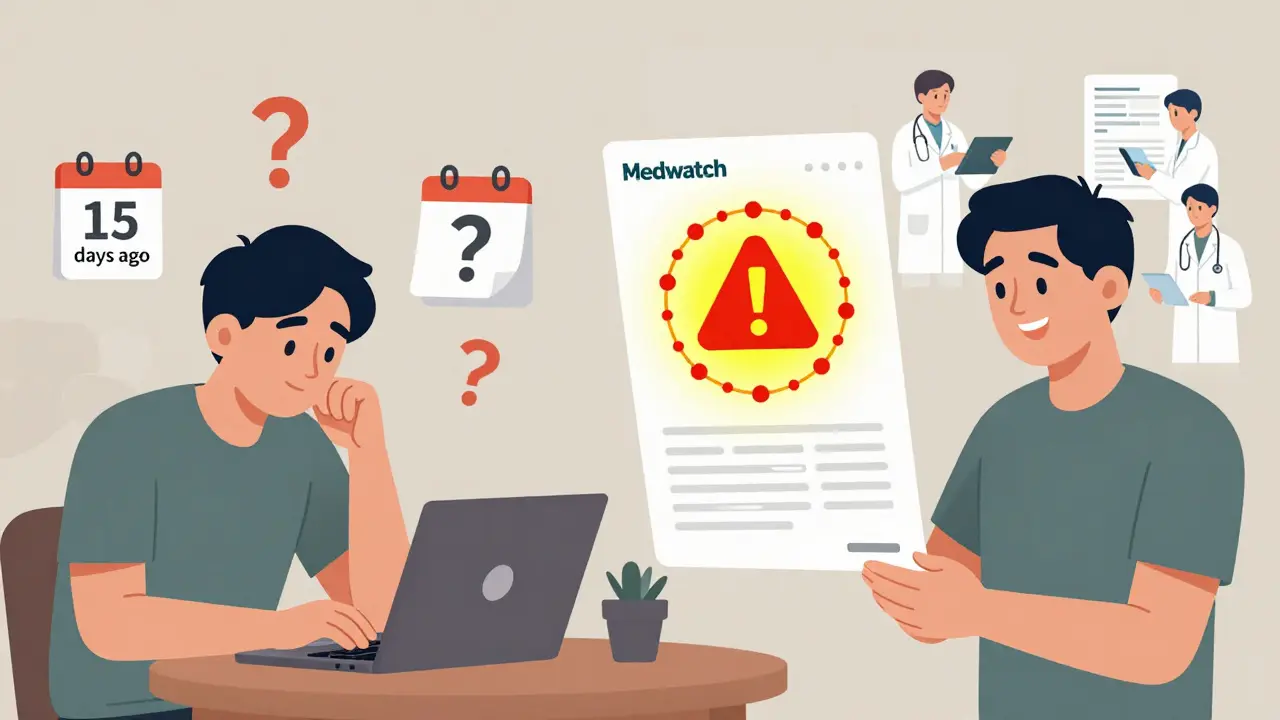
Once the FDA receives your report, it goes into FAERS. The system doesn’t confirm whether the drug caused the reaction - it just collects the data. Then, FDA scientists look for patterns. If 10, 20, or 50 other people report the same reaction with the same drug, it triggers a deeper review.
Here’s how it works in real life: In 2022, a nurse reported that a new diabetes drug was causing severe low blood sugar in elderly patients. That single report, combined with 14 others over the next month, led the FDA to investigate. Within 47 days, the drug’s label was updated to warn doctors about this risk.
Most reports don’t lead to immediate changes - but they add to the evidence. One report might seem small. But 1,000 reports? That’s a red flag.
The FDA also checks for false reports. If someone accidentally reports the wrong drug or mixes up symptoms, the system flags inconsistencies. That’s why details matter. The more accurate your report, the more useful it is.
Common Mistakes to Avoid
Even well-meaning reporters make errors. Here’s what to watch out for:
- Not listing all medications: People often forget over-the-counter drugs, supplements, or herbal products. If someone took ibuprofen or fish oil along with their prescription, include it. Interactions matter.
- Vague descriptions: Saying “I felt bad” doesn’t help. Instead, write: “Started dizziness and blurred vision 3 hours after taking the pill. Felt like I might faint. Lasted 6 hours.”
- Waiting too long: For serious reactions, the FDA urges reporting within 15 days. The sooner you report, the faster the FDA can act.
- Assuming someone else already reported it: Even if your doctor reported it, you should still report it yourself. Multiple reports strengthen the signal.
And remember: you’re not responsible for proving the drug caused the reaction. The FDA’s job is to analyze the data - yours is to provide the facts.
Why This Matters: The Bigger Picture
Before a drug hits the market, it’s tested on a few thousand people. That’s not enough to catch rare side effects. Maybe one in 10,000 people get liver damage. That won’t show up in trials. But once millions start taking the drug, that one-in-10,000 becomes hundreds of cases.
That’s why post-market surveillance is critical. The FDA’s ability to protect public health depends on reports like yours. In 2023, the agency updated safety labels for over 80 drugs based on FAERS data - everything from statins to antidepressants.
And it’s not just about drugs. The same system tracks reactions to vaccines, medical devices, and even cosmetics. Your report could help prevent a future tragedy.
What If You’re Not Sure?
Uncertainty is normal. If you’re wondering whether something counts, report it anyway. The FDA’s experts will sort it out. Better to report and have it dismissed than to stay silent and miss a warning sign.
Still unsure? Call the MedWatch hotline. Ask: “Is this something I should report?” They’ll guide you. No judgment. No pressure. Just help.
Next Steps: What You Can Do Today
- If you’ve had a bad reaction to a drug - report it now. Go to www.accessdata.fda.gov/scripts/medwatch.
- If you’re a caregiver, help the person you’re looking after file a report. Many older adults need assistance with tech.
- If you’re a healthcare worker, make reporting part of your routine. Don’t wait for a formal policy - do it after every serious case.
- Share this info. Tell friends, family, your pharmacist. Most people don’t know they can report.
Drug safety isn’t just the FDA’s job. It’s ours too. One report might not change the world. But thousands? That’s how we make medicine safer for everyone.
Do I need to give my name when reporting an adverse drug reaction to the FDA?
No, you don’t have to give your name. The FDA accepts anonymous reports. But if you include your contact information, they may reach out if they need more details. This doesn’t affect your privacy - your name is never made public in the FAERS database.
Can I report a reaction to a supplement or over-the-counter medicine?
Yes. The FDA’s MedWatch system accepts reports for prescription drugs, over-the-counter medicines, vitamins, herbal supplements, and even cosmetics. If you believe a product caused harm, report it. Supplements aren’t tested the same way as drugs, so your report helps fill critical safety gaps.
How long does it take for the FDA to act on a report?
There’s no set timeline. Some reports lead to quick updates - like a label change in under two months - if there’s a clear pattern. Others may sit in the system for years until enough similar reports accumulate. The FDA doesn’t respond individually to every report, but every one contributes to the bigger picture.
Is reporting mandatory for patients?
No, it’s voluntary for patients and the public. But for drug manufacturers and healthcare providers, reporting serious reactions is legally required. Your report, even if voluntary, is just as valuable in helping the FDA detect risks.
What if I report and nothing happens? Was it a waste of time?
No. The FDA receives over two million reports a year. Most don’t lead to immediate action - but they’re all part of the puzzle. One report might be the missing piece that helps connect a pattern. Safety changes often come from dozens or hundreds of similar reports over time. Your report could be the one that saves someone else’s life.
Can I report a reaction that happened years ago?
Yes. The FDA accepts reports for reactions that happened at any time in the past. While recent reports are more useful for detecting new risks, older reports still help track long-term effects or rare reactions that appear only after years of use.
Meenakshi Jaiswal
December 20, 2025 AT 23:04I reported my mom's reaction to her new blood pressure med last year after she nearly passed out. Took me 20 minutes on MedWatch. No name needed. Just facts. She's fine now, but that report? Might save someone else's life.
Monte Pareek
December 21, 2025 AT 20:53Look I've been in pharma for 22 years and let me tell you the FDA system is a joke. Most reports get buried. I've seen 300+ reports on the same damn drug and they still don't act until someone dies. You think your report matters? It does if you're one of the 1000 that finally triggers a review. But don't expect a thank you note. The system's broken but it's all we got so report anyway. I do it every time. Even if it's just a weird rash. You never know.
Lynsey Tyson
December 22, 2025 AT 06:48My aunt took that new diabetes pill and started having crazy dizzy spells. We didn't know what to do until I found this post. We reported it the same day. She's okay now. Just wanted to say thanks for making this so clear. I showed my whole family. People need to know this stuff.
Edington Renwick
December 23, 2025 AT 23:19Wow. Another feel-good PSA. How many of you actually believe the FDA isn't just covering for Big Pharma? I've seen the data. They ignore 90% of serious reports. You think your little form is going to change anything? Wake up. The system is rigged. You're just giving them more data to bury. But hey, keep reporting. It's cute.
Allison Pannabekcer
December 24, 2025 AT 16:39Just wanted to add - if you're reporting for someone elderly or disabled, don't feel bad if you need help filling out the form. My dad needed me to do it for him. The hotline is amazing. The lady on the phone walked me through every part. She even asked if I wanted to add his herbal supplements. I didn't even think of those. She said they matter. So I added them. And she said thank you. That meant a lot.
Sarah McQuillan
December 26, 2025 AT 14:30So you're telling me I should report my kid's mild headache after Tylenol? That's what this is? The FDA doesn't care about Tylenol. They care about the drugs that cost $10,000 a month. This is just fearmongering. My neighbor reported a rash from fish oil and got a letter saying 'no action taken.' So why bother? Save your time. The government's not your mom.
Kitt Eliz
December 27, 2025 AT 11:01OMG YES!! 🙌 I just reported my sister's anaphylaxis to that new statin - and I used the MedWatch portal with the ICH E2B template. It's so streamlined now! 🚀 Pro tip: Always list EVERYTHING - even that turmeric capsule she took. Interactions are everything. And don't wait - 48 hours is the sweet spot. The FDA's AI picks up patterns faster than ever. Your report = lifesaver. 💉❤️ #DrugSafety #FAERS
Gloria Parraz
December 27, 2025 AT 13:34I work in ER. We see it all. One guy came in with liver failure after taking a 'natural' weight loss pill. No one reported it. He almost died. We filled out the form for him. He didn't even know he could. That's why this post matters. Not because it's perfect - but because it's clear. If you're reading this, you're already doing better than 90% of the population. Keep going.
Sahil jassy
December 27, 2025 AT 20:32My uncle in Delhi had a bad reaction to a generic blood thinner. We didn't know where to report. Found this. Used the phone number. Took 8 minutes. No English? No problem. They had Hindi speakers. I cried after. I didn't know people like this existed in the FDA. Thank you.
Kathryn Featherstone
December 29, 2025 AT 15:54Just wanted to say - I reported my reaction to a new antidepressant last month. It was just dizziness and nausea. Not life-threatening. But it was new and weird. I didn't think it counted. But I did it anyway. I didn't hear back. But I feel better knowing I tried. Sometimes that's enough.
Chris Clark
December 31, 2025 AT 00:30so i reported my weird heart palpitations after that new migraine med and they asked me if i took creatine too. i forgot. so i called back. they were chill. told me to send the label. turns out creatine + the med = bad combo. now it's on the warning label. my bad report helped fix it. crazy right? you never know what matters.
Dorine Anthony
December 31, 2025 AT 05:49I read this and just thought - wow. This is the kind of info that should be in every doctor's office. Not just online. My grandma doesn't use the internet. I printed this out and left it on her fridge. She's 78. She doesn't know she can report. Now she does. Small thing. Big deal.
Nancy Kou
January 1, 2026 AT 18:20My daughter had a seizure after taking a new ADHD med. We reported it. Three months later, the FDA added a black box warning. We didn't do anything heroic. We just did the thing. If you're scared, scared is okay. But do it anyway. That's what courage looks like. Not loud. Just quiet. And consistent.
Janelle Moore
January 2, 2026 AT 13:49Why are you all trusting the FDA? They're in bed with Pfizer. This whole system is a trap. They want you to report so they can say 'we're listening' while they keep selling dangerous drugs. I found a leak in their database. They delete reports from drugs that make too much money. Don't report. Don't give them data. Burn your pill bottles and take vitamin C instead.