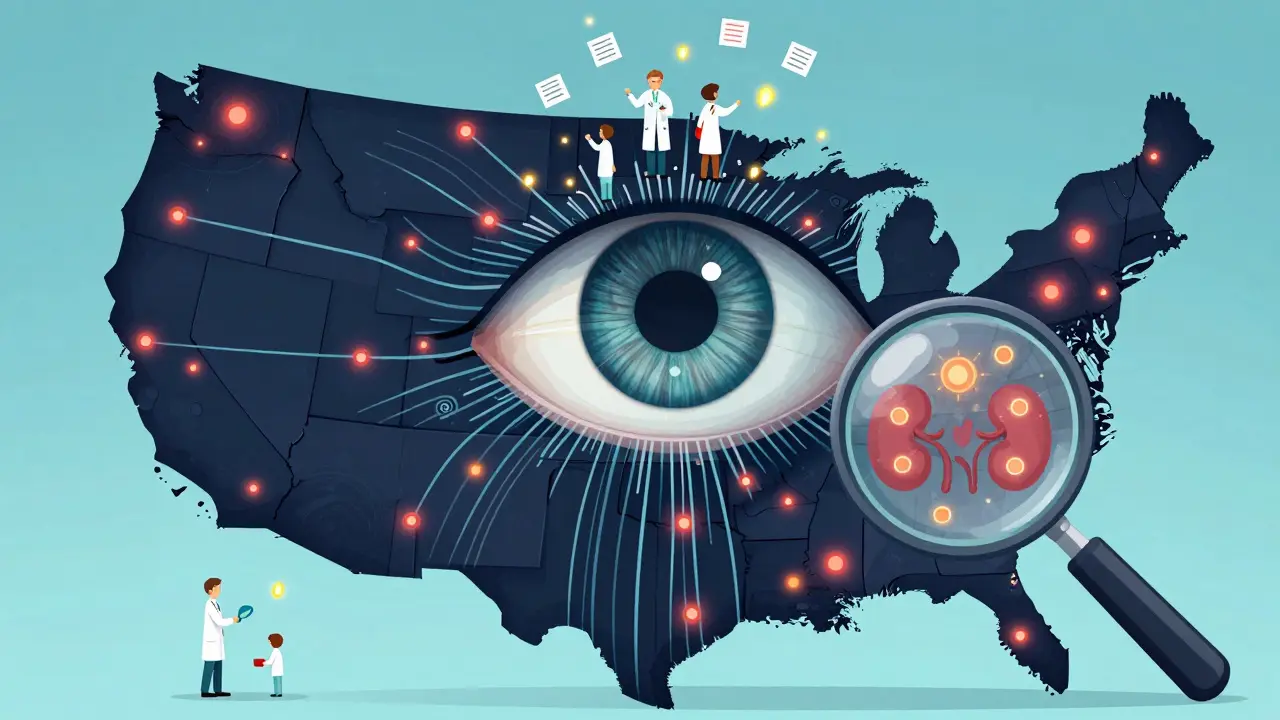
The FDA doesn’t stop watching a drug once it’s approved. In fact, that’s when the real safety work begins. Around 10,000 prescription and over-the-counter drugs are on the U.S. market at any time, and not every side effect shows up in clinical trials. Too few people were studied. Too little time passed. Some reactions only appear when millions of people take the drug for years. That’s why the FDA runs one of the most complex drug safety systems in the world - a system that’s constantly listening, analyzing, and acting.
Spontaneous Reports: The Foundation of Drug Safety Monitoring
The backbone of the FDA’s postmarket safety program is the FDA Adverse Event Reporting System (FAERS). It’s a massive database with over 30 million reports of side effects, medication errors, and product quality issues since 1969. These reports come from doctors, pharmacists, patients, and drug manufacturers. Healthcare providers are encouraged to report anything unusual - a strange rash, liver damage, heart rhythm changes - even if they’re not 100% sure the drug caused it.
Manufacturers are legally required to send serious adverse event reports to the FDA within 15 days. That’s faster than many countries. But here’s the catch: experts estimate FAERS captures only 1% to 10% of actual adverse events. Why? Because reporting is voluntary for patients and many clinicians don’t have time. A 2023 survey found that patients submitted just 6% of all FAERS reports. Most come from providers (63%) and drug companies (31%).
Active Surveillance: The Sentinel Initiative
To fix the gaps in passive reporting, the FDA launched the Sentinel Initiative in 2008. It’s not just a database - it’s a live network. Sentinel pulls real-time data from electronic health records, insurance claims, and pharmacy databases covering over 300 million Americans. That’s more than the entire population of the United States.
Instead of waiting for someone to report a problem, Sentinel can actively search for patterns. For example, if a new diabetes drug suddenly shows a spike in kidney failure cases across multiple hospitals in Texas and Florida, Sentinel flags it within weeks. Before Sentinel, this could take years. Now, the FDA can detect signals in about 6.2 months on average - down from 14 months in 2018.
In February 2024, the FDA upgraded to Sentinel 2.0, adding genomic data from 10 million people through partnerships with major biobanks. This means they can now look for genetic links to side effects - like why some people get severe reactions to certain drugs while others don’t.
Tools That Make Sense of the Noise
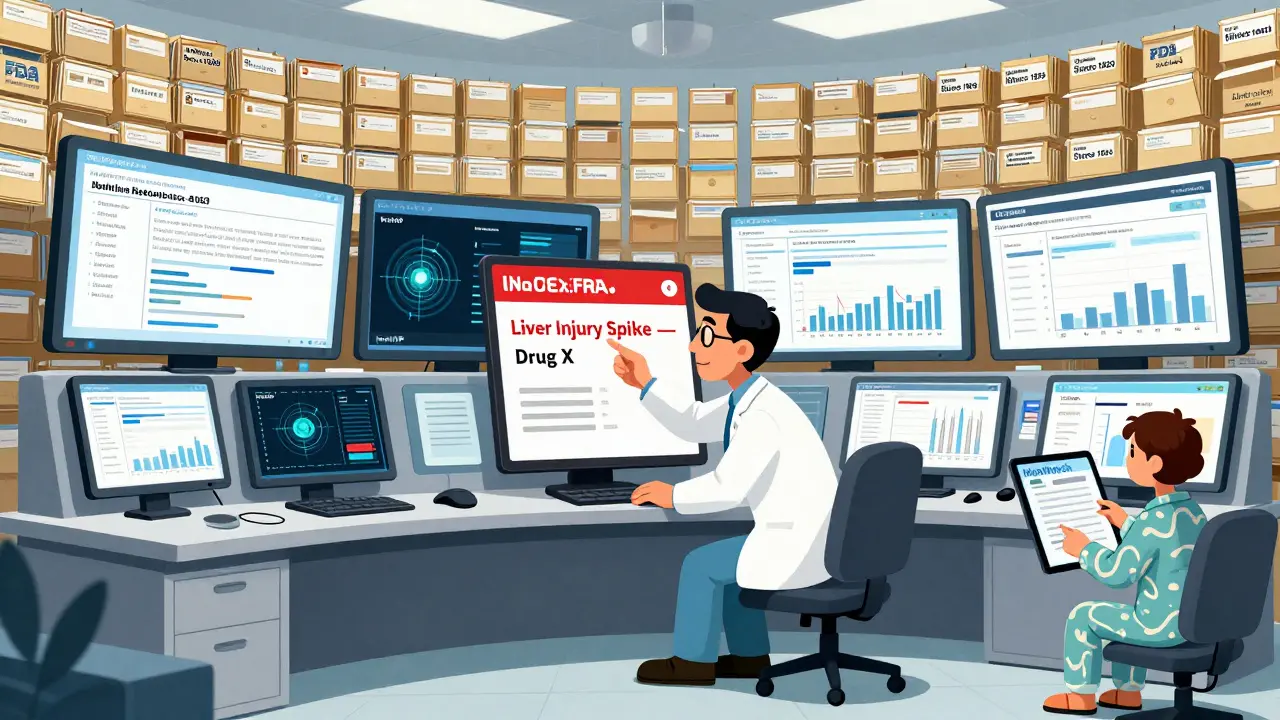
All that data means noise. Thousands of reports come in every week. Most are unrelated. The FDA uses advanced tools to separate real dangers from random events. One key tool is InfoViP, a machine learning platform introduced in 2019. It reads free-text reports - doctor’s notes, patient descriptions - and picks out patterns humans might miss. It’s helped boost true signal detection by 27% since 2018 and cut false alarms by 19%.
The FDA also uses statistical methods like Empirical Bayes Screening (EBS) and Proportional Reporting Ratio (PRR). These aren’t magic. They compare how often a side effect shows up with a specific drug versus how often it shows up with all other drugs. If a rare liver injury appears 10 times more often with Drug X than with everything else, that’s a red flag.
When the FDA Acts: REMS and Regulatory Moves
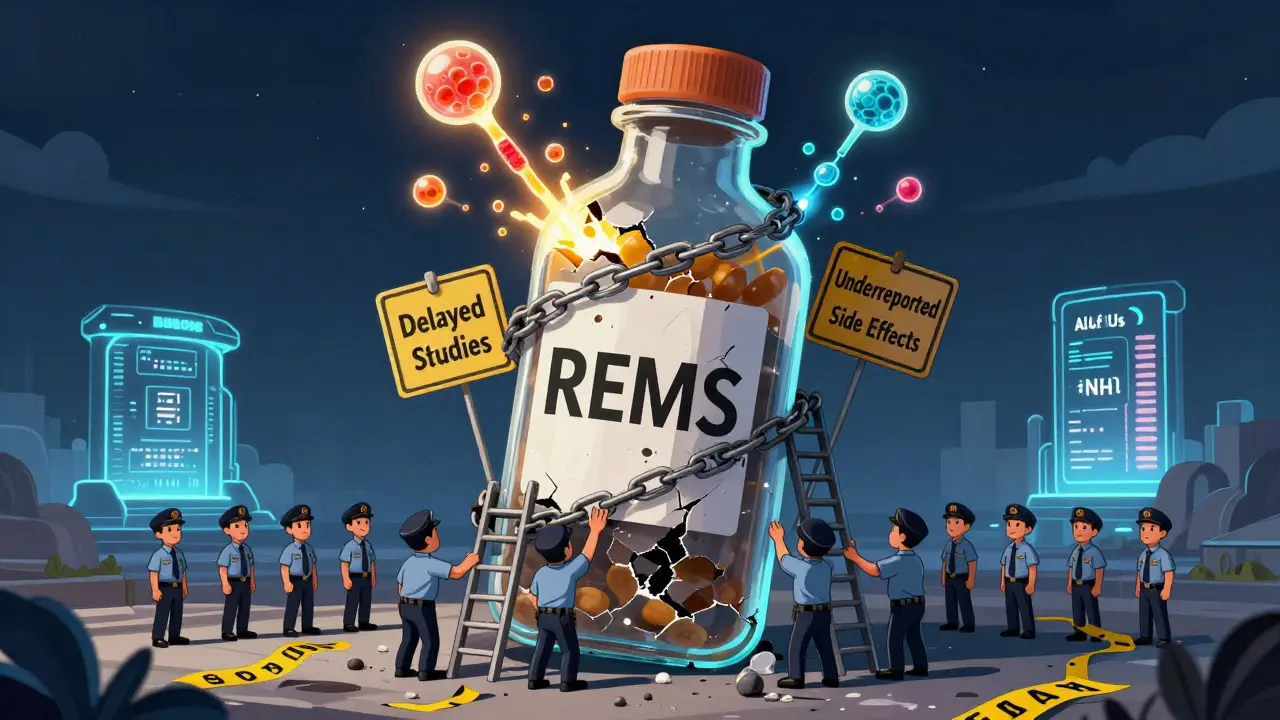
Detecting a signal is only the first step. The FDA has to decide what to do. For high-risk drugs, they require a Risk Evaluation and Mitigation Strategy (REMS). As of January 2024, 78 drugs had active REMS programs. These can mean anything from mandatory patient education to restricted distribution. For example, the blood thinner warfarin has a REMS program that requires doctors to complete special training before prescribing it.
Other actions include updating drug labels to warn about new risks, requiring new studies, or even pulling a drug off the market. In 2023, the FDA added a black box warning to a popular antidepressant after Sentinel data showed increased suicidal thoughts in young adults after long-term use. That warning reached millions of prescribers within days.
But here’s the problem: not all required studies get done. A 2021 JAMA study found that only 58% of postmarketing studies mandated by the FDA were completed on time. The average delay? Over three years. The Government Accountability Office found that for nearly 4 in 10 drugs approved between 2013 and 2017, the FDA never even required the necessary safety studies.
Who’s Reporting - and Who’s Not
Patients are the weakest link. Most don’t know how to report a side effect. The National Organization for Rare Disorders found that 72% of rare disease patients felt uninformed about reporting. The MedWatch portal exists, but it’s not intuitive. A Reddit thread from 2023 featured an oncologist who said she’d only submitted three reports in five years - not because she didn’t see problems, but because the process felt disconnected from her workflow.
Meanwhile, the FDA’s MedSun program, which recruits 350 healthcare providers to report medical device injuries, is unknown to 41% of providers. That’s a huge gap. If you’re a patient and you think a drug caused harm, you can report it yourself at fda.gov/medwatch. But most won’t. That’s why the FDA is pushing for better integration with electronic health records - so reporting happens automatically during normal clinical care.
The Bigger Picture: Costs, Growth, and Future Challenges
The global market for drug safety monitoring hit $5.8 billion in 2023 and is expected to grow to $12.3 billion by 2028. Large pharmaceutical companies spend an average of $2.8 million per drug each year just on safety reporting and analysis. Small biotech firms struggle to keep up - only 37% have AI-driven safety systems, compared to 92% of big pharma.
The biggest threat isn’t technology. It’s volume. New therapies - gene therapies, cell therapies, complex biologics - are exploding. The FDA estimates novel therapies are growing 40% year over year. The Office of Surveillance and Epidemiology is operating at just 82% staffing. Experts warn that without more funding and staff, the system could be overwhelmed.
Future plans include integrating data from the NIH’s All of Us Research Program by late 2025, which will add data from 1 million diverse participants. A blockchain-based reporting pilot is also in the works for mid-2025. The goal? A system that’s faster, more accurate, and more inclusive.
For now, the FDA’s system isn’t perfect. But it’s the most advanced in the world. It’s not just about catching bad drugs - it’s about understanding how drugs behave in the real world, with real people, over real time. And that’s the only way to keep medicines safe for everyone.
How does the FDA know if a drug is unsafe after it’s on the market?
The FDA uses two main methods: passive reporting through the FAERS database, where doctors, patients, and drug companies submit adverse event reports, and active surveillance through the Sentinel Initiative, which analyzes real-time health data from over 300 million Americans. Advanced tools like machine learning and statistical models help identify patterns that suggest a drug may be causing unexpected harm.
What is FAERS and how does it work?
FAERS stands for the FDA Adverse Event Reporting System. It’s a database that collects reports of side effects, medication errors, and product quality issues from healthcare professionals, patients, and pharmaceutical companies. The FDA analyzes these reports using statistical tools to detect unusual patterns. While it’s the largest source of safety data, it’s estimated to capture only 1% to 10% of actual adverse events due to underreporting.
What’s the difference between passive and active surveillance?
Passive surveillance relies on people to voluntarily report problems - like FAERS. Active surveillance, like the Sentinel Initiative, uses automated systems to scan electronic health records and insurance claims for signs of harm without waiting for reports. Active methods are faster and more comprehensive, but they require access to large, linked health databases.
Can patients report side effects to the FDA?
Yes. Patients can report adverse events directly through the FDA’s MedWatch portal at fda.gov/medwatch. While healthcare providers and drug companies submit most reports, patient reports are valuable - especially for rare or long-term side effects that doctors might not recognize. The FDA encourages all users to report any unexpected or serious reaction.
What are REMS programs and why do they exist?
REMS stands for Risk Evaluation and Mitigation Strategy. These are special safety plans the FDA requires for certain high-risk drugs to ensure their benefits outweigh their risks. REMS can include mandatory training for prescribers, patient education materials, restricted distribution, or monitoring requirements. As of 2024, 78 drugs in the U.S. have active REMS programs, affecting about 20 million patients annually.
Why do some drug safety issues take years to be detected?
Some side effects only appear after long-term use, in specific populations, or when combined with other medications - all things not seen in clinical trials. Drugs with low usage (fewer than 100,000 patients) take an average of 4.7 years to trigger a safety signal in FAERS. The FDA is improving detection speed with active surveillance and AI, but rare events still take time to become statistically noticeable.
Kevin Lopez
December 29, 2025 AT 14:39FAERS is a glorified suggestion box. 30M reports? Most are noise. Sentinel’s the only thing keeping this from collapsing. Still, 1% capture rate? That’s not monitoring-it’s archaeology.
Duncan Careless
December 29, 2025 AT 17:01interesting read, though i’m still not sure how patients are supposed to know what counts as ‘unusual’ when they’re not med pros. maybe simpler reporting forms would help? not sure.
Samar Khan
December 30, 2025 AT 11:08THIS IS WHY WE’RE ALL DYING 😭💊
They’re using AI but still can’t catch the 90% of cases that don’t get reported?
My cousin took that antidepressant and woke up crying at 3am for 3 months before they admitted it was the drug.
Why is this so broken???
Russell Thomas
January 1, 2026 AT 08:51Oh wow, the FDA’s got AI now? Next they’ll be using ChatGPT to write the black box warnings. ‘Dear Patient, Your Liver Might Explode (But Only If You’re Genetically Unlucky).’
Meanwhile, Big Pharma’s laughing all the way to the bank with their $2.8M/year safety budgets.
Real ‘safety system’.
Joe Kwon
January 2, 2026 AT 07:37Really appreciate the breakdown on Sentinel 2.0 + genomic integration - that’s the future. The PRR and EBS models are underused in clinical practice though. If we could push those into EHR alerts, even a little, we’d catch way more signals before they become crises. Also, kudos on mentioning MedWatch - patients *can* help, we just need better UX.
Nicole K.
January 3, 2026 AT 02:01This whole system is a joke. People die every day because the FDA is too slow and too cozy with drug companies. Why aren’t they forcing ALL manufacturers to report everything in real time? Why do patients have to beg to be heard? This isn’t science-it’s corruption.
Fabian Riewe
January 4, 2026 AT 19:18Big picture: this is actually kind of amazing. We’ve got real-time monitoring on 300M+ people using health data. That’s wild. Yeah, underreporting sucks, and staffing’s low, but compared to 20 years ago? We’re lightyears ahead. Just needs more funding, not more panic.
Amy Cannon
January 4, 2026 AT 21:46While the technological infrastructure of the FDA’s postmarketing surveillance apparatus is undeniably sophisticated-particularly with the integration of genomic data via the Sentinel Initiative and the deployment of machine learning platforms such as InfoViP-it remains critically hamstrung by systemic under-resourcing and a profound disconnect between regulatory mandates and frontline clinical workflows. The voluntary nature of patient reporting, coupled with the administrative burden imposed upon healthcare providers, creates a structural blind spot that no algorithm can fully compensate for. Moreover, the disparity in resource allocation between multinational pharmaceutical conglomerates and small biotech firms-where only 37% maintain AI-driven safety systems-exacerbates inequities in pharmacovigilance capacity. Without a paradigm shift toward mandatory, interoperable, and automated adverse event capture embedded within electronic health records, we are merely optimizing the symptoms rather than curing the disease.
Jasmine Yule
January 4, 2026 AT 22:05Why is no one talking about how the FDA doesn’t even require half the post-market studies? That’s not negligence-that’s betrayal. I’ve seen patients get crushed because a drug got approved with a ‘we’ll study it later’ promise… and then nothing. 4 in 10 drugs? No studies? 😡
Stop pretending this is safe. It’s not.