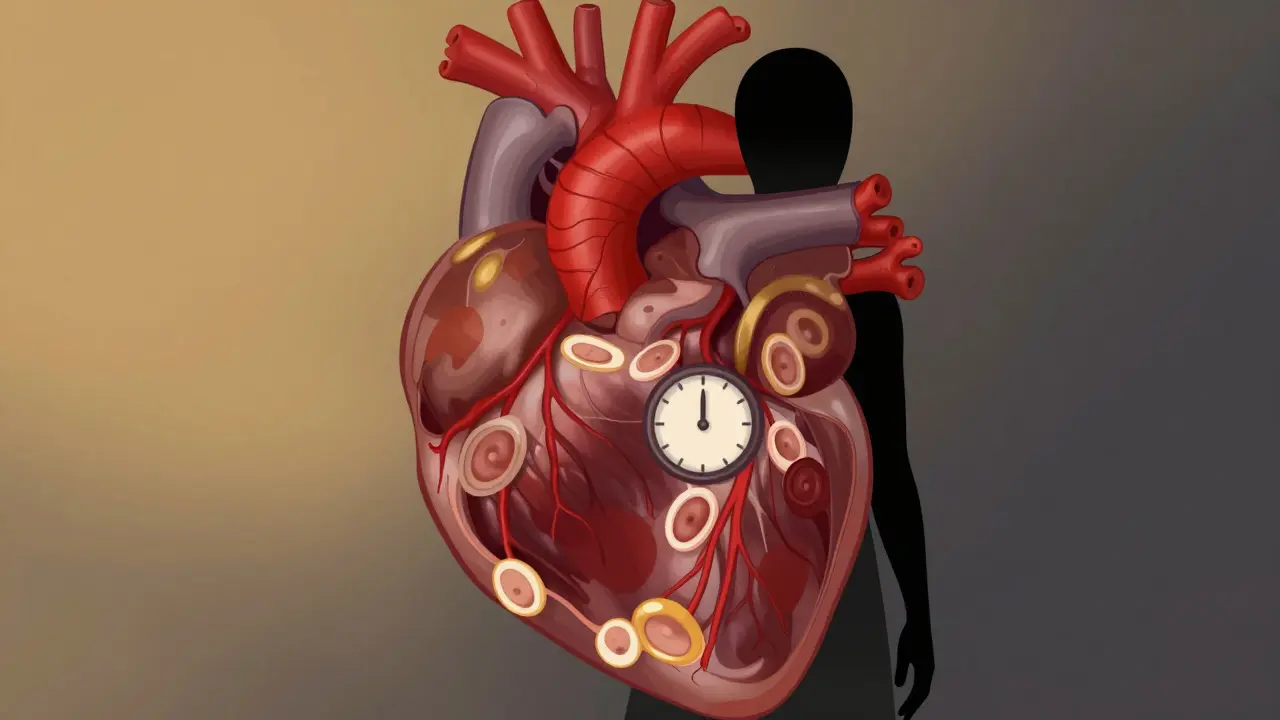
Most people don’t feel high cholesterol. No pain. No warning signs. Just silent buildup in your arteries-until it’s too late. That’s the quiet danger of hypercholesterolemia. It doesn’t shout. It doesn’t flinch. It just waits. And by the time you notice something’s wrong, the damage might already be done.
What Exactly Is Hypercholesterolemia?
Hypercholesterolemia is just the medical term for having too much cholesterol in your blood. Cholesterol isn’t all bad-it’s needed to build cells, make hormones, and digest food. But when levels get too high, especially the bad kind (LDL), it sticks to artery walls. Over time, that builds up into plaque. Narrowing your arteries. Slowing blood flow. Raising your risk of heart attack and stroke.
The numbers matter. According to the American Heart Association, about 93 million American adults have total cholesterol above 200 mg/dL. In the UK, the NHS estimates over half of adults have elevated cholesterol. The real concern? LDL cholesterol-the kind that clogs arteries. Levels above 190 mg/dL are considered severe. And if you have other risk factors like high blood pressure or smoking, even 130 mg/dL can be dangerous.
Two Types: Genetics vs. Lifestyle
Not all high cholesterol is the same. There are two main types: familial (genetic) and acquired (lifestyle-driven).
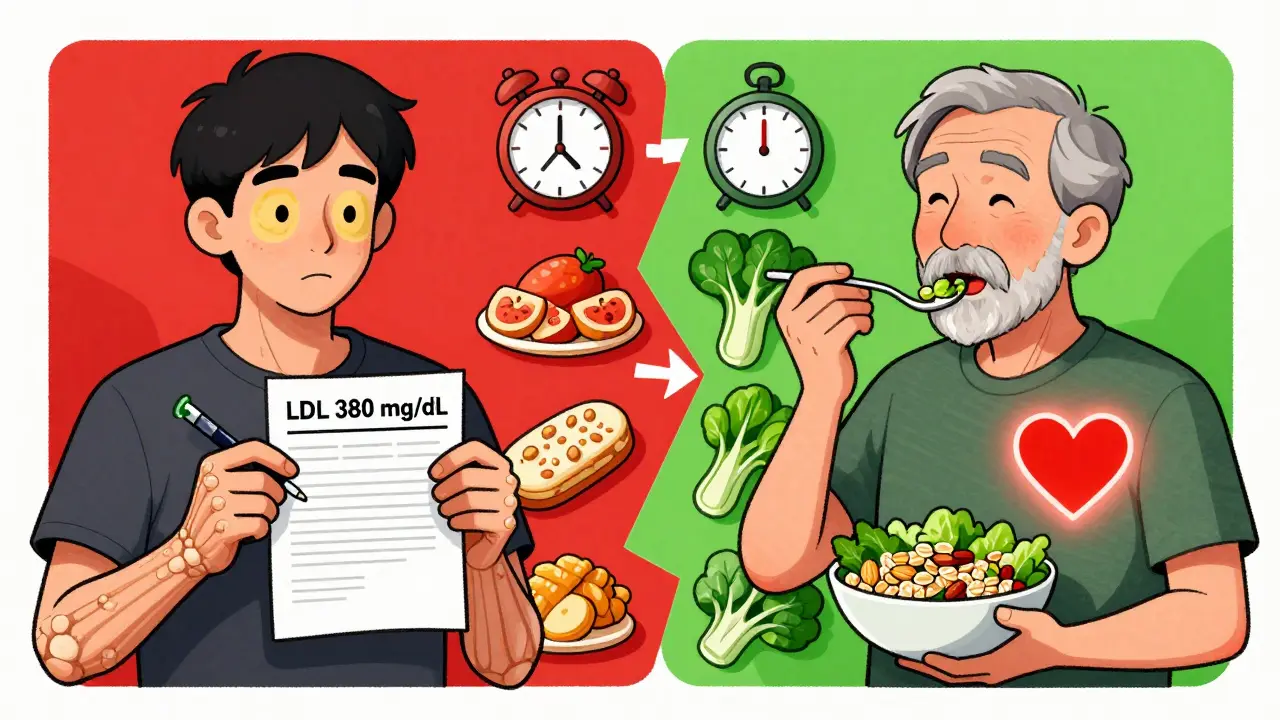
Familial hypercholesterolemia (FH) is inherited. One faulty gene from a parent can send LDL levels soaring from birth. About 1 in 250 people have this condition, but most don’t know it. People with heterozygous FH often have LDL levels between 190 and 400 mg/dL. Homozygous FH? Even worse-levels can hit 450 mg/dL or higher. These people often develop heart disease in their 20s or 30s if untreated. Physical signs like yellowish lumps around the eyelids (xanthelasmas) or thickened tendons in the heels (tendon xanthomas) can be clues.
Acquired hypercholesterolemia comes from what you eat, how much you move, and other health issues. Eating too much saturated fat-found in butter, fatty meats, and processed snacks-raises LDL. Being overweight, having diabetes, or an underactive thyroid also pushes cholesterol up. Unlike FH, this type often responds to diet and exercise. A good diet can lower LDL by 10-15% on its own.
Why It’s Silent-and Deadly
Dr. Roger Blumenthal from Johns Hopkins says it best: "High cholesterol is a silent killer." You won’t feel it until your artery is 70% blocked. No chest pain. No dizziness. Just a sudden heart attack or stroke.
Untreated heterozygous FH cuts life expectancy by about 30 years. Men with FH have their first heart event around age 53. Women, around 60. That’s decades earlier than the average person. And here’s the kicker: most people with FH are never diagnosed. The British Heart Foundation says only 1 in 10 people with FH know they have it.
Even without FH, high cholesterol is the #1 driver of heart disease worldwide. The Global Burden of Disease Study found it contributes to more than 1 in 3 deaths. That’s not a statistic. That’s your neighbor. Your parent. Maybe even you.
How Do You Know If You Have It?
The only way to know is a blood test. A lipid panel measures total cholesterol, LDL, HDL (the "good" kind), and triglycerides. The good news? You don’t need to fast anymore. Most labs now accept non-fasting samples. It’s easier. Faster. Less hassle.
The U.S. Preventive Services Task Force recommends screening for everyone between 40 and 75. But if you have a family history of early heart disease-or if you’re overweight, diabetic, or smoke-you should get tested earlier. Even in your 20s.
Don’t wait for symptoms. Wait for a test.
How Is It Treated?
Treatment depends on your risk level and type of hypercholesterolemia.
For everyone: Start with lifestyle changes. Eat more vegetables, beans, oats, nuts, and fatty fish. Cut back on fried foods, sugary drinks, and processed snacks. Move more-even a daily 30-minute walk helps. The Portfolio Diet, which combines plant sterols, soluble fiber, nuts, and soy protein, has been shown to lower LDL by up to 30% in clinical trials.
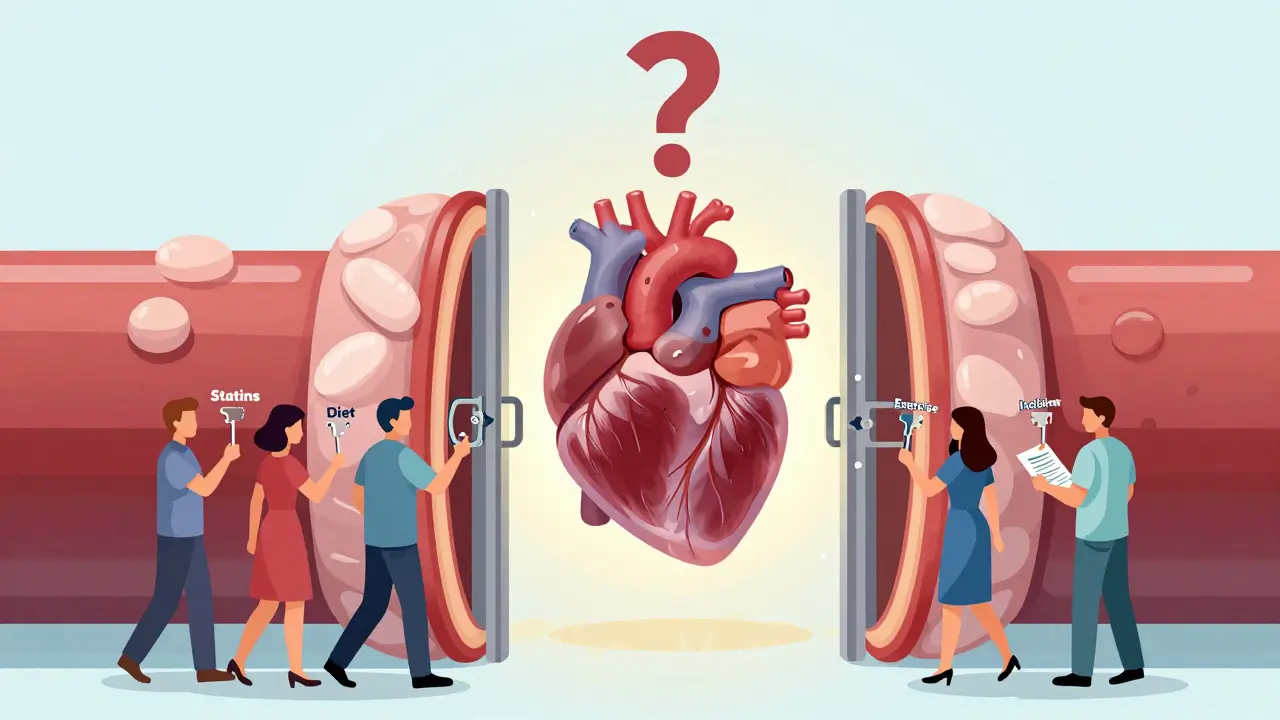
For most people: Statins are the first-line treatment. Drugs like atorvastatin and rosuvastatin can slash LDL by 50% or more. They’re cheap, well-studied, and proven to save lives. The IMPROVE-IT trial showed that lowering LDL with statins reduces heart attacks and strokes by 22% for every 39 mg/dL drop.
For FH or high-risk patients: Often need more. Ezetimibe adds another 18% LDL reduction. PCSK9 inhibitors (alirocumab, evolocumab) can knock down LDL by 50-60% more. These are injectables, given every two weeks or monthly. They’re expensive, but for those with FH, they’re life-saving.
Newer drugs like inclisiran (Leqvio) are changing the game. One injection, twice a year. It works like a genetic switch to block LDL production. It’s not for everyone yet-but for those who struggle with daily pills, it’s a breakthrough.
Why So Many People Don’t Get Treated
Here’s the frustrating part: we have the tools. We know what works. But only about half of people who need statins actually take them long-term. CVS Health found that after one year, only half of patients are still on their meds.
Why? Side effects. Muscle aches. Fatigue. Fear. Some people stop because they feel fine. Others can’t afford them. Others don’t get follow-up care.
And the gaps are worse for women and minority groups. In the U.S., only 42% of Black adults on statins are consistently taking them. In the UK, just 48% of high-risk patients hit their LDL targets-even though statins are free on the NHS.
It’s not about willpower. It’s about access, education, and support.
What About Diet? Do Eggs and Butter Really Raise Cholesterol?
This is where confusion sets in. For years, we were told to avoid eggs and butter. Now, the Dietary Guidelines say dietary cholesterol isn’t the main villain anymore.
But here’s the nuance: while saturated fat is the bigger problem, dietary cholesterol still matters-for some people. A 2019 JAMA study found that every extra 300 mg of cholesterol per day (about two eggs) raised heart disease risk by 17%. For someone with FH, even small amounts can push levels dangerously high.
Focus less on cholesterol in food. Focus more on saturated fat. Swap butter for olive oil. Choose lean meats. Skip fried chicken. Eat more plants. That’s the real game-changer.
What’s Next? The Future of Cholesterol Management
The future is personal. Polygenic risk scores can now tell you if your high cholesterol comes from dozens of small genetic tweaks-not just one big gene. That helps doctors decide who needs early, aggressive treatment.
Also, obesity is rising fast. By 2030, half of U.S. adults may be obese. That means more diabetes, more high triglycerides, more secondary hypercholesterolemia. The solution? Not just pills. Policy. Food labeling. School meals. Urban planning that gets people walking.
The American Heart Association’s 2030 goal? A 20% improvement in heart health. That includes better cholesterol control. It’s possible. But only if we act-not just as patients, but as communities.
What You Can Do Today
- Get your cholesterol checked-no excuses. Even if you feel fine.
- If you have a family history of early heart disease, ask for a lipid panel before age 30.
- Start small: swap one processed snack for nuts or fruit each day.
- If you’re on statins, don’t stop because you feel fine. They work while you take them.
- Ask your doctor about your LDL goal. For most people, it’s under 100. For high-risk, it’s under 70. For FH, it’s under 55.
High cholesterol isn’t a life sentence. It’s a warning-and you have the power to change it. Not tomorrow. Not next year. Today.
Can high cholesterol be reversed?
Yes, in many cases. Lifestyle changes like eating more fiber, exercising, and losing weight can lower LDL by 10-30%. For people with familial hypercholesterolemia, medication is usually needed to reach safe levels, but even then, lifestyle helps the drugs work better. Plaque buildup can stabilize and sometimes shrink with aggressive LDL reduction-especially if you get your levels below 70 mg/dL.
Is high cholesterol genetic?
It can be. Familial hypercholesterolemia (FH) is an inherited condition caused by mutations in genes like LDLR or PCSK9. If a parent has FH, each child has a 50% chance of inheriting it. But most cases of high cholesterol are not genetic-they come from diet, lack of exercise, obesity, or other health conditions like diabetes or hypothyroidism.
Do I need to take statins for life?
For most people with high cholesterol, especially those with heart disease or FH, yes. Statins work while you take them. Stopping means LDL rises again, and so does your risk. Some people with mild, lifestyle-driven high cholesterol may reduce or stop statins after making lasting changes-but only under a doctor’s supervision. Never stop on your own.
Can I lower cholesterol without medication?
For many people with mild to moderate high cholesterol, yes. The Portfolio Diet-rich in oats, beans, nuts, plant sterols, and soy-can lower LDL by up to 30%. Regular exercise, weight loss, and cutting out trans and saturated fats also help. But for those with familial hypercholesterolemia or very high LDL, medication is almost always necessary to reach safe levels.
What’s the difference between LDL and HDL cholesterol?
LDL (low-density lipoprotein) carries cholesterol to your arteries. Too much builds up as plaque-so it’s called "bad" cholesterol. HDL (high-density lipoprotein) picks up excess cholesterol and takes it back to the liver to be removed. That’s why it’s called "good" cholesterol. Higher HDL (above 60 mg/dL) is protective. But lowering LDL is far more important for preventing heart disease.
How often should I get my cholesterol checked?
If you’re 40 or older, get tested every 4-6 years. If you have risk factors-like obesity, diabetes, smoking, or a family history of early heart disease-get tested every 1-2 years. If you’ve been diagnosed with high cholesterol or are on medication, your doctor will likely want a lipid panel every 3-6 months until your levels stabilize.
Are natural supplements like red yeast rice effective?
Red yeast rice contains a compound similar to statins and can lower LDL by about 15-25%. But it’s not regulated like prescription meds, so potency and safety vary. Some brands contain harmful contaminants. It can also cause the same side effects as statins-muscle pain, liver stress. Don’t use it as a substitute without talking to your doctor.
Does alcohol affect cholesterol?
Moderate alcohol (one drink a day for women, two for men) may slightly raise HDL. But it also raises triglycerides and blood pressure. For most people, the risks outweigh the small benefit. If you don’t drink, don’t start for cholesterol. If you do, keep it minimal.
Tatiana Bandurina
January 21, 2026 AT 23:35My dad had an LDL of 280 and refused to take statins because he "felt fine." Died at 56 from a heart attack. No warning. No second chances. This isn't theoretical. It's the quiet killer we ignore until it's too late.
Stop waiting for symptoms. Get tested. Now.
Philip House
January 23, 2026 AT 04:22They say cholesterol is genetic but they never mention how much of this is just Big Pharma pushing pills. Statins have side effects, sure, but the real issue is they make you dependent. Why not fix the root cause? Like, maybe stop eating processed garbage and move your body?
It's not rocket science. But it's not profitable either.
Jasmine Bryant
January 24, 2026 AT 19:25I just got my lipid panel back and my LDL was 187. I’m 32, no family history, eat mostly plants, and still hit that number. I’m starting to think genetics play a bigger role than we admit. I’ve been eating oatmeal every day, adding flaxseed, walking 45 mins daily - and it only dropped 12 points.
Statins are scary but I’m seriously considering it. Anyone else have a similar experience?
Also, typo: "tendon xanthomas" - I had to google that. Good thing I’m curious.
shivani acharya
January 25, 2026 AT 00:25Oh sure, let’s blame cholesterol. But what about the glyphosate in your bread? The soybean oil in everything? The fluoride in your water? They don’t want you to know cholesterol isn’t the problem - it’s the system poisoning you. They give you statins so you don’t ask why your food is made of plastic and your doctor won’t look you in the eye.
I went vegan, drank lemon water at dawn, and my LDL dropped 40 points in 3 weeks. No pills. Just truth. The medical industrial complex hates that.
Rob Sims
January 25, 2026 AT 09:49So let me get this straight - you’re telling me that people who eat burgers and don’t move are the problem, but the real danger is the 1 in 250 who are born with this? And we’re supposed to screen everyone like they’re suspects?
Meanwhile, the guy who eats kale and runs marathons but has an LDL of 220 because of his genes gets ignored. The system is backwards. We’re treating symptoms, not truth.
Neil Ellis
January 26, 2026 AT 07:50I used to think cholesterol was just a number on a lab sheet - until my uncle, 48, dropped dead lifting groceries. No history. No symptoms. Just a silent bomb ticking since birth.
Now I eat walnuts like candy, swap butter for avocado, and walk after dinner. I don’t feel like a saint. I feel like someone who finally stopped ignoring the whispers.
It’s not about perfection. It’s about showing up. Even a little. Every day.
arun mehta
January 26, 2026 AT 21:00As someone from India, I’ve seen the shift - from traditional diets rich in lentils and ghee in moderation, to packaged snacks and fried street food. Cholesterol levels are rising fast among young adults here, even without obesity.
But the real issue is access. Many don’t know how to get tested. Others can’t afford statins. We need community health workers, not just clinics.
Also, thank you for mentioning inclisiran. That’s the future. One shot twice a year? That’s revolutionary. 🙏
Oren Prettyman
January 26, 2026 AT 21:52This article is a masterclass in oversimplification. It presents hypercholesterolemia as a binary problem: either you have FH or you eat too much butter. But what about chronic inflammation? Insulin resistance? Gut microbiome dysbiosis? The lipid panel doesn’t capture these. The entire medical paradigm is built on reductionist thinking.
And yet, the author confidently lists LDL targets as if they’re absolute truths. They’re not. They’re averages derived from populations that may not reflect your biology.
Statins are not a panacea. They are a bandage on a hemorrhage.
Sarvesh CK
January 27, 2026 AT 15:29There’s a deeper truth here that transcends cholesterol numbers. We live in a world that rewards speed, convenience, and consumption - and then blames the individual when the body rebels.
FH is a genetic tragedy. Acquired hypercholesterolemia is a societal failure. We have the science. We have the tools. But we lack the collective will to redesign food systems, healthcare access, and urban environments to make health the default - not the exception.
It’s not about personal discipline. It’s about justice.
And yet, the most powerful act remains: get tested. Not because you’re afraid, but because you deserve to know.
Brenda King
January 29, 2026 AT 09:57My mom’s LDL was 210 at 50. She started on a low dose statin and changed her breakfast to oatmeal with berries. She’s 68 now, runs 5Ks, and her LDL is 62.
Don’t wait for a crisis. Start today. One swap. One walk. One test.
And if you’re on meds - keep taking them. You’re not weak for needing help. You’re smart.
Lauren Wall
January 30, 2026 AT 07:07Statins work. Take them. Stop whining about side effects. If you can’t handle a pill, maybe you shouldn’t be eating bacon for breakfast.