Antipsychotic-EPO Risk Checker
Assess Your Risk
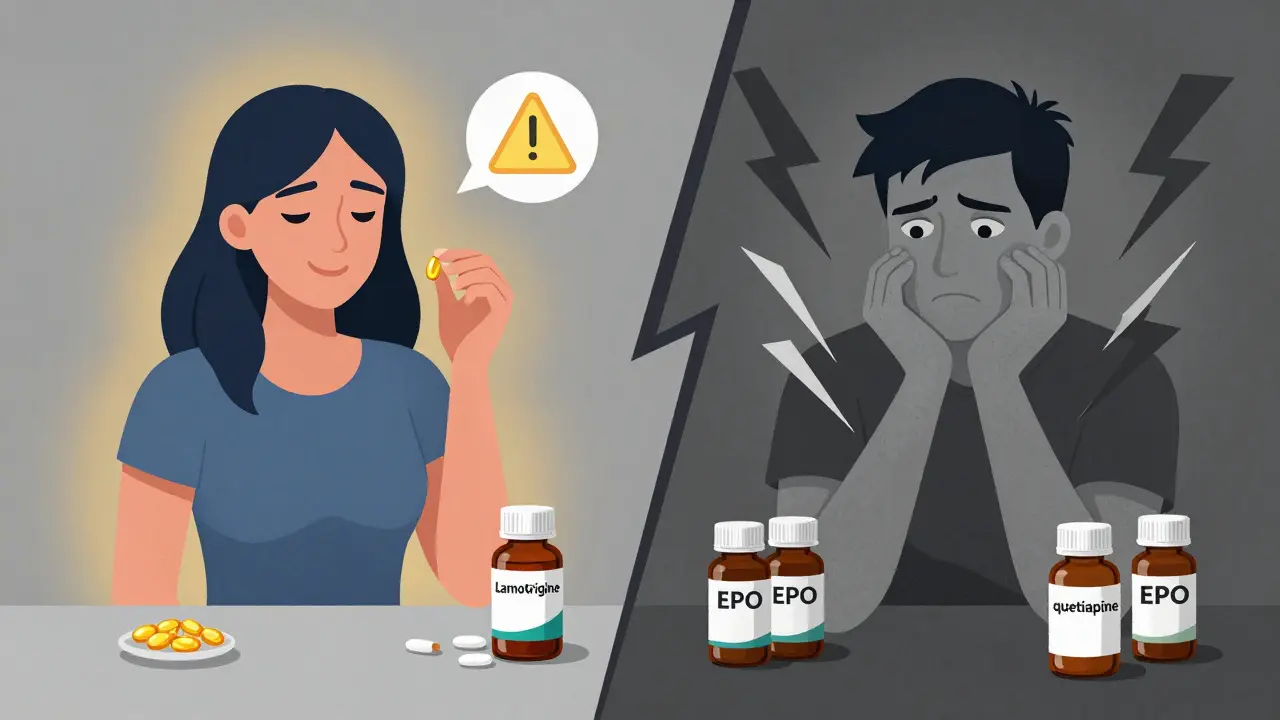
Based on current research, evening primrose oil (EPO) is generally safe for most people. However, some antipsychotics may interact with EPO, potentially increasing seizure risk. This tool helps evaluate your specific situation.
500 mg
1500 mg
Important: This tool is for informational purposes only. Always consult your doctor or pharmacist before taking supplements with medications.
For years, people with epilepsy, schizophrenia, or other neurological conditions have been told to avoid evening primrose oil (EPO) because it might trigger seizures. But here’s the problem: some of the most respected researchers say that warning is wrong. And the people taking it? Many report no issues at all. So who do you believe?
The Confusion Around Evening Primrose Oil
Evening primrose oil comes from the seeds of a wildflower called Oenothera biennis. It’s packed with omega-6 fatty acids - mostly linoleic acid and about 9% gamma-linolenic acid (GLA). That’s the part people care about. GLA turns into prostaglandin E1 in your body, which has anti-inflammatory effects. That’s why people take it: for PMS, breast pain, eczema, and arthritis. It’s not a miracle cure, but for some, it helps. The trouble started in the 1980s. Two case reports popped up: one person had a seizure after taking EPO. Another did too. That was enough for hospitals and pharmacies to start putting warnings on the bottle. By 2023, Mayo Clinic, Walgreens, and Familiprix all listed epilepsy and schizophrenia as contraindications. The message was clear: Don’t take it if you have a seizure disorder or take antipsychotics. But then came the 2007 review by Dr. B.K. Puri from Imperial College London. He dug into every study, every animal model, every mechanism. And he found something surprising: EPO might actually protect against seizures. In rats, the fatty acids in EPO blocked sodium channels - the same way some epilepsy drugs work. Prostaglandin E1, derived from GLA, showed anticonvulsant activity. The original case reports? He called them "spurious." That means they were likely coincidental, not causal.Why the Divide Between Experts?
You’d think science would settle this. But it hasn’t. Here’s why:- Mayo Clinic, Walgreens, Familiprix: Still warn against EPO. Their stance is based on case reports and theoretical risk. They say: "Better safe than sorry."
- Dr. Puri and Imperial College London: Say the risk is unproven. Their data shows protective mechanisms. They argue that removing the warning would help people who benefit from EPO without putting them in danger.
- The Epilepsy Foundation: Says there’s "theoretical concern" but "limited clinical evidence." They don’t say "don’t take it," but they don’t say "it’s safe" either.
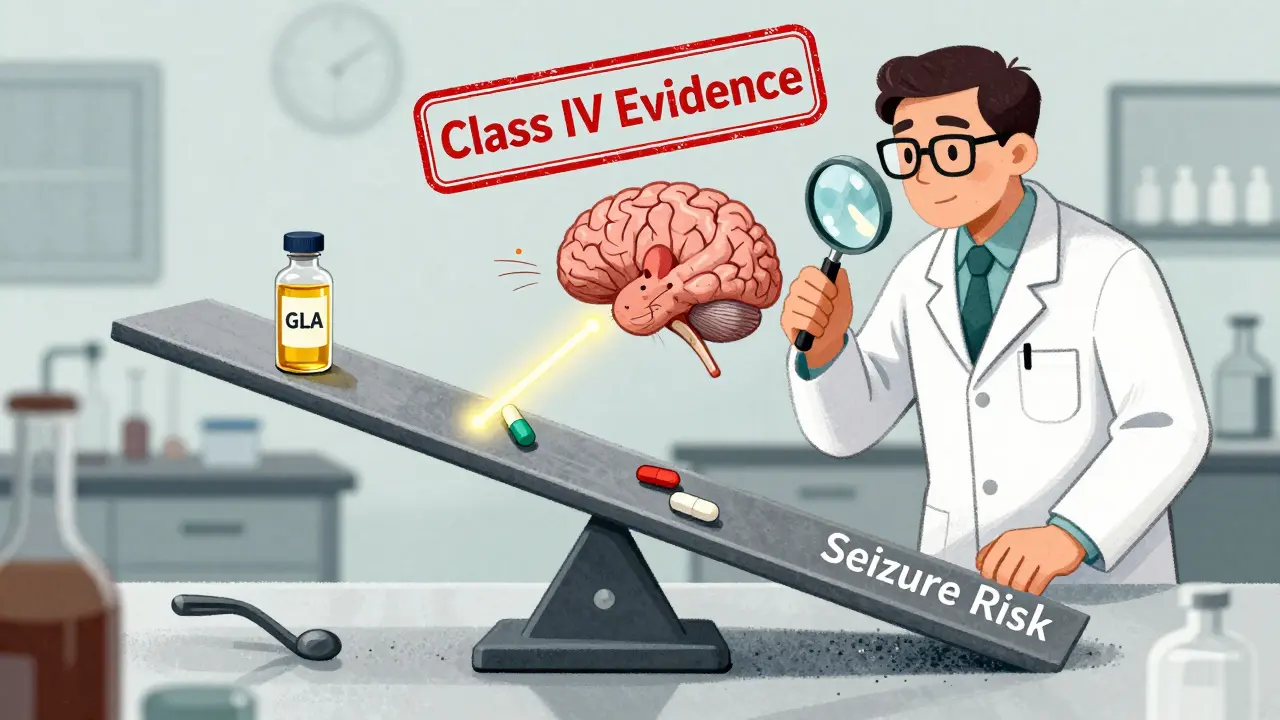
- American Academy of Neurology: Rates the evidence as "Class IV" - the lowest level. That means there’s no solid human trial data either way. But they still recommend caution.
Antipsychotics and the Real Risk
The biggest red flag isn’t EPO alone. It’s EPO combined with certain antipsychotics. DrugBank (updated April 2025) lists three specific interactions:- Amifampridine - increases seizure risk significantly.
- Brexpiprazole - newly added in 2025.
- Lumateperone and Pimavanserin - also flagged.
What Do Real Users Say?
Numbers don’t lie, but they don’t tell the whole story either. On Drugs.com, 1,842 reviews were collected between 2022 and 2023. For safety with neurological conditions, EPO scored 3.2 out of 5. That’s mixed. Not terrible, not great. Reddit’s r/Epilepsy had a thread in March 2024 with 142 respondents:- 57% - No change in seizures while taking EPO.
- 32% - More seizures after starting it.
- 11% - Unclear.
- 19 - No issues.
- 15 - Increased seizures, mostly when combined with quetiapine.
- 9 - Couldn’t tell if EPO was the cause.
What Should You Do?
If you’re taking antipsychotics or have epilepsy, here’s what you need to know:- If you’re already taking EPO and have no seizures: Don’t stop cold turkey. Talk to your doctor. Sudden withdrawal of supplements can sometimes cause rebound effects.
- If you’re considering starting EPO: Ask your neurologist or psychiatrist first. Bring up the 2007 Puri study. Ask if your specific medication has been linked to EPO interactions.
- If you’re on flupentixol, chlorpromazine, amifampridine, brexpiprazole, lumateperone, or pimavanserin: Avoid EPO unless your doctor explicitly says it’s safe. The risk isn’t zero.
- Check the dose: Most capsules are 500mg, but some go up to 1,300mg. Higher doses mean more GLA - more potential for interaction.
Darryl Perry
January 11, 2026 AT 06:56The warnings exist for a reason. Case reports aren't "spurious" just because they don't fit your preferred narrative. If you're on antipsychotics, don't gamble with your brain chemistry. Science doesn't move fast enough to keep up with supplement trends, and patients pay the price when we ignore caution.
Stop romanticizing anecdotal evidence. Your PMS doesn't justify risking a seizure.
Windie Wilson
January 13, 2026 AT 06:51Ohhh so now we’re supposed to trust a 2007 review over every pharmacy in America? 🤡
Let me guess - you also think vaccines cause autism and fluoride is a mind control tool. Classic.
Daniel Pate
January 13, 2026 AT 17:50The real issue isn’t whether EPO causes seizures - it’s why we’ve built an entire medical infrastructure around case reports instead of mechanisms.
Prostaglandin E1 modulates sodium channels. That’s pharmacology. That’s reproducible. That’s more meaningful than a single seizure in a 1980s patient who may have been noncompliant with meds, stressed, sleep-deprived, or drinking.
We treat supplements like they’re magic potions or poison, but they’re just molecules. We need to stop anthropomorphizing them and start analyzing them.
The fact that the AAN rates this as Class IV means we have zero high-quality human data - not that it’s dangerous. That’s a critical distinction.
Why are we okay with prescribing drugs with known seizure risks - like bupropion or clozapine - but panic over a plant oil? The inconsistency isn’t scientific. It’s cultural.
And yes, the market is huge. But profit motive doesn’t invalidate mechanism. We’ve seen this before with St. John’s Wort and SSRIs. We didn’t ban it - we studied it. We should do the same here.
Until NCT05678901 publishes, we’re all guessing. But guessing based on mechanism is better than guessing based on fear.
Let’s stop treating patients like children who can’t handle nuance. They’re not asking for dogma. They’re asking for clarity.
Jose Mecanico
January 14, 2026 AT 16:16I’ve been taking EPO for 5 years with lamotrigine. Zero issues. My neurologist didn’t even blink when I mentioned it. He said if it’s not broken, don’t fix it.
But I also don’t take it with anything else. No alcohol, no new meds, no weird herbs. Just EPO and my regular script. Maybe that’s the key - don’t stack things.
Alex Fortwengler
January 15, 2026 AT 13:14They don’t want you to know this, but EPO is just a Trojan horse for Big Pharma to push more anticonvulsants. The whole "seizure risk" thing is a scare tactic to keep people dependent on expensive meds. The FDA’s been in bed with drug companies since the 70s.
And don’t get me started on the "study underway" - that’s just to buy time while they patent the next miracle drug.
Real people are getting better on EPO. The system hates that. They’d rather you stay sick and pay monthly.
Read the original case reports. One guy was on 4 different antipsychotics and drank 3 energy drinks a day. Guess who’s to blame? The supplement. Classic.
Monica Puglia
January 15, 2026 AT 16:22Hey - if you're on quetiapine and thinking about EPO, please just talk to your doc first 😊
I get it - supplements feel harmless. But your brain is already doing a lot. Don't add variables unless you've checked in. I've seen too many people panic after a seizure that "just happened."
You're not alone. And you don't have to figure this out alone.
Also - if you're using EPO for PMS? Try magnesium instead. It's cheaper, safer, and actually has decent data. Just a thought 💛
George Bridges
January 15, 2026 AT 19:41I appreciate how balanced this post is. Most of the noise online is either "EPO is poison" or "EPO is the cure for everything." The truth is messy, and that’s okay.
I’m on lurasidone and take EPO for dry skin. No seizures. No issues. But I also get monthly bloodwork and keep a seizure diary. If I notice a pattern, I stop. Simple.
It’s not about fear. It’s about awareness. And that’s what this article gives us.
Thanks for not oversimplifying.
Faith Wright
January 16, 2026 AT 06:26So let me get this straight - we’re supposed to trust a 17-year-old animal study over every hospital in the country because one guy in London says so?
Meanwhile, real people are having seizures. And you’re here doing math like it’s a board game.
Maybe your brain doesn’t break. Mine did. Don’t lecture me about "mechanisms."
Rebekah Cobbson
January 16, 2026 AT 21:08To everyone saying "just talk to your doctor" - I get it. But what if your doctor doesn’t know? What if they’ve never heard of the 2007 Puri review? What if they just read the Walgreens warning and said "avoid"?
This post is the reason I’m writing this.
I’m a nurse. I’ve had patients come to me terrified because their pharmacist told them EPO was dangerous - but couldn’t explain why.
They didn’t need fear. They needed context.
Thank you for giving it to them.
And to the person who said "don’t stop cold turkey" - YES. That’s so important. Withdrawal from supplements can mimic withdrawal from meds. Don’t underestimate that.
Knowledge is power. And this? This is power.