
When you pick up a generic pill at the pharmacy, you expect it to work just like the brand-name version. But behind that simple tablet or capsule, there’s a complex manufacturing process where things can go wrong-sometimes in ways that put your health at risk. Between 2019 and 2023, generic drugs had 3.2 times more quality defects than their branded counterparts, according to FDA inspection data. These aren’t just cosmetic flaws. They’re failures that can lead to underdosing, contamination, or even dangerous side effects.
What Are the Most Common Manufacturing Defects?
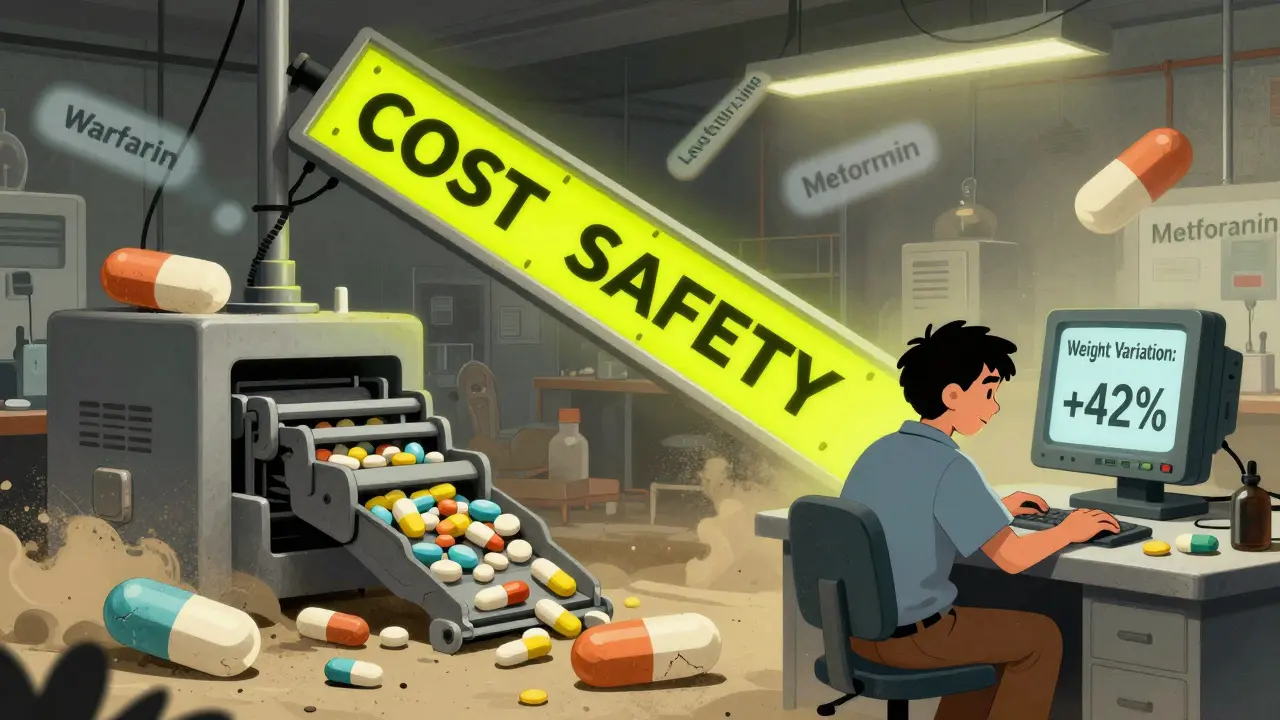
Generic drug manufacturers face intense pressure to cut costs. That pressure shows up in the final product. The most frequent defects fall into four main categories: physical flaws in tablets, dosage inconsistencies, contamination, and labeling errors.Capping happens when a tablet splits horizontally during production. It’s caused by too much compression force-over 15 kN-combined with low moisture levels in the powder mix. This is common in hydrophobic formulations like some blood pressure medications. A capping tablet doesn’t dissolve properly, so you might not get the full dose.
Lamination is when layers peel apart. This usually occurs when tablet presses run too fast-above 40 rotations per minute-and pre-compression isn’t strong enough. It’s often seen in extended-release tablets, where the outer layer separates from the inner core. That can cause the drug to release too quickly or not at all.
Weight variation is one of the most dangerous defects. The USP <905> standard allows no more than 5% deviation from target weight. But when granule flow rates drop below 0.5 grams per second, batches can have tablets that are 10%, 20%, or even 50% off target. That’s not just a bad batch-it’s a safety issue. A patient taking a blood thinner like warfarin could get too little or too much, leading to clots or bleeding.
Punch sticking occurs when the active ingredient sticks to the machine’s punch heads. This happens with APIs that have low melting points-below 120°C-and when moisture levels exceed 4% during long production runs. The result? Uneven dosing and machine downtime. One study found this defect increased ejection forces by 300-500 newtons, which damages equipment and slows production.
Mottling looks like uneven coloring on a tablet. It’s mostly a cosmetic issue, but it signals deeper problems: poor mixing of ingredients or inconsistent granule size. In a 2023 survey, 42% of pharmacists reported patients complaining about strange-looking generic pills. Even if the drug works, patients lose trust-and that affects adherence.
Why Are Generic Drugs More Prone to Defects?
It’s not that generic manufacturers are careless. It’s that the system pushes them to the edge.Branded drug companies spend 15-18% of their production budget on quality control. Generic manufacturers? Only 8-10%. That gap shows up in inspections. In 2023, 57% of generic manufacturing facilities failed FDA audits, compared to 28% of branded ones. The reason? Outdated equipment, shared facilities, and pressure to produce cheaper.
Many generic plants still use 20- or 30-year-old tablet presses. They’re not designed for modern quality standards. Some facilities produce dozens of different drugs on the same line. That increases the risk of cross-contamination. One 2023 recall involved a generic asthma inhaler contaminated with a steroid from another product made on the same machine.
Price competition is brutal. The U.S. generic market is worth $462 billion, but companies compete on price alone. If one manufacturer cuts costs and lowers the price, others have to follow-or lose business. That means less money for training, maintenance, and new technology. The Generic Pharmaceutical Association estimates it would take $28.7 billion to upgrade all U.S. generic facilities to modern standards. The industry spends $1.2 billion a year. The math doesn’t add up.
What Happens When Defects Reach Patients?
The consequences aren’t theoretical. In 2023, the FDA received 1,842 adverse event reports tied directly to generic drug quality issues. Over 300 of those involved visible defects: cracked tablets, discoloration, chipping.Pharmacists see it every day. A 2023 survey of 1,247 U.S. pharmacists found 68% had encountered quality problems in the past year. One pharmacist reported receiving a batch of metformin ER tablets that crumbled when handled. Another described patients complaining that their generic levothyroxine wasn’t working the same way as before-even though it was from the same manufacturer.
These aren’t just complaints. They’re clinical risks. A 2021 study in JAMA Internal Medicine found that 7.3% of generic drug applications failed bioequivalence testing-not because the formula was wrong, but because manufacturing inconsistencies altered how the drug was absorbed. That means two pills from the same bottle could behave differently in your body.
Hospitals are taking notice. In 2023, 17.3% of requests to switch from brand to generic drugs were rejected because of quality concerns. Nearly 10% of those cases led to permanent use of the brand-name drug, even though it cost three to five times more.
How Are Manufacturers Trying to Fix This?
Some companies are investing in solutions. The FDA’s Emerging Technology Program has helped 47 generic manufacturers switch to continuous manufacturing-a process that reduces defects by 65% compared to old batch methods. Instead of making tablets in large batches, they produce them in a steady, monitored flow. It’s like switching from printing pages one at a time to using a high-speed digital press.Advanced visual inspection systems are now catching defects as small as 0.1 mm at speeds of 600 tablets per minute. Human inspectors miss about 30% of flaws. Machines miss less than 2%. Some manufacturers are using AI to analyze images of tablets in real time, detecting patterns humans can’t see.
Quality by Design (QbD) is becoming standard. Instead of testing the final product, companies now build quality into the process from day one. They define a “design space”-the exact range of temperature, pressure, and moisture levels that guarantee a safe, effective tablet. If the machine goes outside that range, it stops automatically.
Training is also improving. Staff now get 40+ hours of GMP training each year, with requalification tests to ensure they know how to spot problems. One manufacturer reported a 70% drop in defects after implementing real-time weight monitoring that rejects tablets outside ±5% of target weight during production.
What Can You Do as a Patient?
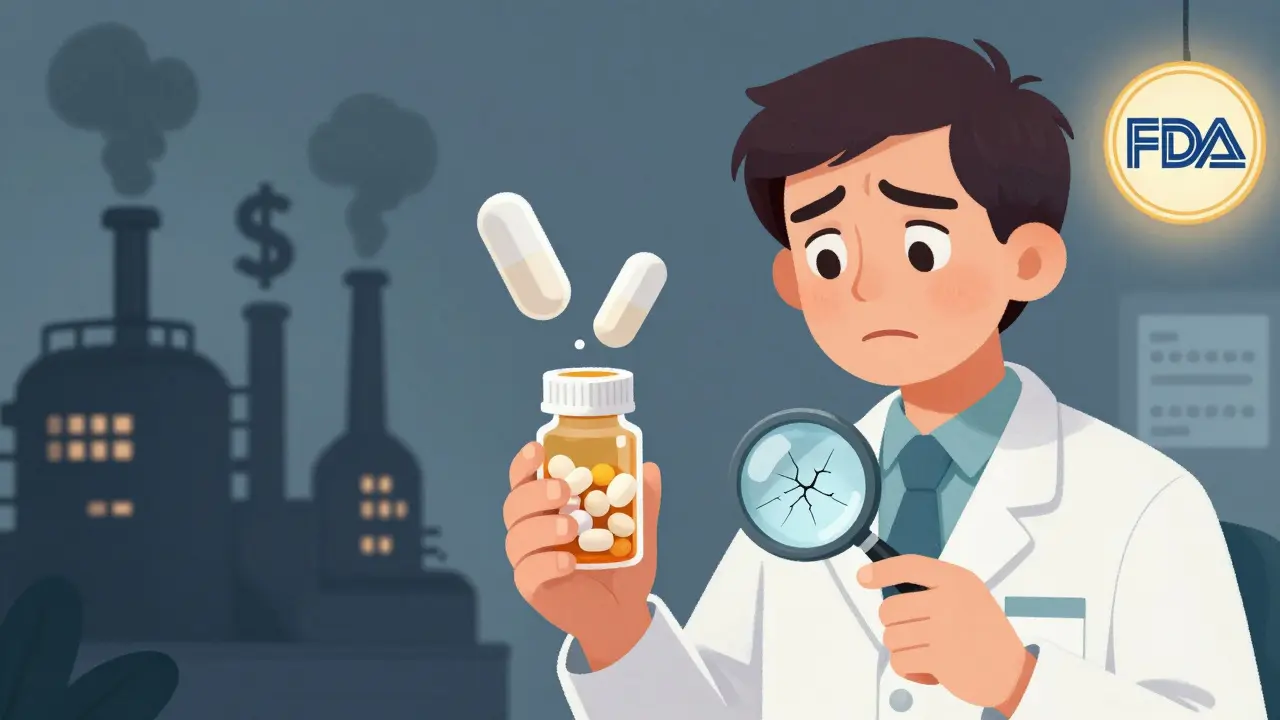
You can’t control the factory, but you can stay informed.- Pay attention to how your pills look. If your generic metformin suddenly looks different-smaller, darker, or crumbly-ask your pharmacist. It might be a new batch.
- Keep track of how you feel. If your blood pressure, thyroid levels, or pain control changes after switching generics, tell your doctor. It’s not “all in your head.”
- Use the FDA’s MedWatch system to report bad pills. Even if you’re not sure, report it. These reports help trigger inspections.
- If you’re on a critical medication-like warfarin, levothyroxine, or seizure drugs-ask if a brand-name version is medically necessary. Insurance often covers it if there’s documented safety concern.
Don’t assume all generics are the same. One manufacturer’s metformin might be flawless; another’s might crumble. The same company can make good pills one year and bad ones the next. Batch matters more than brand.
The Bigger Picture: Is This Fixable?
The system is under strain. The global generic market will hit $782 billion by 2030. But if quality keeps slipping, patients will pay the price-in health, in hospital visits, in lost trust.Regulators are pushing for change. The FDA’s 2024-2027 plan targets a 30% reduction in quality-related shortages. The Drug Supply Chain Security Act is improving traceability, helping catch counterfeit or tampered drugs faster.
But real change needs investment. Without funding for modern equipment, training, and oversight, the cycle will continue. Some manufacturers will leave the market. Others will cut corners. And patients will keep getting pills that don’t work the way they should.
The solution isn’t to stop using generics. They save billions every year. But we need to treat them like the vital medicines they are-not just cheap alternatives. Quality isn’t optional. It’s the foundation of safety.
What are the most dangerous manufacturing defects in generic drugs?
The most dangerous defects are those that affect dosage accuracy: weight variation (tablets too heavy or too light), incomplete dissolution (capping or lamination), and contamination. These can lead to underdosing-where the drug doesn’t work-or overdosing, which can cause serious side effects or toxicity. For example, a blood thinner tablet with 50% less active ingredient could cause a clot; one with twice the dose could cause internal bleeding.
Why do generic drugs have more defects than brand-name drugs?
Generic manufacturers face intense price pressure and operate on much thinner margins. While branded companies spend 15-18% of production costs on quality control, generics average only 8-10%. Many use older equipment, share facilities with multiple products, and lack the budget for advanced monitoring systems. This leads to higher failure rates during inspections and more recalls.
Can I tell if my generic drug has a quality defect?
Yes, sometimes. Look for visible changes: tablets that are cracked, discolored, crumbling, or oddly shaped. If your pill looks different from previous batches-even if it’s the same manufacturer-ask your pharmacist. Also, if you notice a change in how the medication works (e.g., your blood pressure isn’t controlled, or your thyroid symptoms return), it could be a quality issue. Report it.
Are all generic drugs unsafe?
No. Many generic manufacturers produce high-quality, safe drugs. Companies like Teva and Sandoz have defect rates below 1%. The problem is inconsistency. One batch may be perfect; the next, flawed. That’s why it’s important to monitor how you feel and report changes. Not all generics are risky-but the risk is real and growing.
What should I do if I suspect a defective generic drug?
First, contact your pharmacist. They can check if there’s a known issue with the batch. Then, report it to the FDA through MedWatch. Even if you’re unsure, your report helps regulators identify patterns. If you’re on a critical medication, ask your doctor if switching to the brand-name version is medically necessary. Safety comes before cost.
Dave Old-Wolf
January 9, 2026 AT 05:39I've had my generic blood pressure med switch batches twice this year, and the second time I felt like I was going to pass out. Didn't think much of it till I checked the pills-they were lighter and cracked when I dropped them. Now I keep the old batch as backup.
Molly Silvernale
January 10, 2026 AT 22:32It's not just pills-it's trust. We hand over our bodies to a factory in a country we've never seen, and we're told, 'It's the same.' But same doesn't mean safe. Same doesn't mean reliable. Same doesn't mean your heart won't skip a beat because some machine in a dusty plant was set to 'fast' instead of 'fine.' We're not just patients-we're guinea pigs in a cost-cutting experiment.
Ken Porter
January 11, 2026 AT 10:40Stop whining. If you can't afford brand-name, you shouldn't be on expensive meds. Generic is fine. The FDA approves them. End of story.
swati Thounaojam
January 12, 2026 AT 14:20in india we have so many generics and no one complains. maybe its just usa thing?
Annette Robinson
January 12, 2026 AT 18:23Hey, if you notice your meds aren't working like they used to, please don't ignore it. I had a friend who thought her thyroid meds were 'just acting up'-turned out the batch had half the levothyroxine. She ended up in the ER. Talk to your pharmacist. Report it. You're not overreacting.
Luke Crump
January 13, 2026 AT 23:01They're lying to us. The FDA is in bed with Big Pharma. They let these companies get away with it because they don't want to scare people away from generics. But the truth? Half the pills on the shelf are barely medicine. They're sugar pills with a chemical whisper.
Aubrey Mallory
January 15, 2026 AT 18:27Swati, your point is valid-but the regulatory systems in India and the U.S. are wildly different. In the U.S., we have more transparency, more reporting, and more people who actually notice when things go wrong. That doesn't mean India's system is better-it just means the problem is quieter there.
Kristina Felixita
January 15, 2026 AT 19:19My grandma takes generic warfarin and she's been on the same batch for 3 years. She says it's fine. But last week, the pills looked different-darker, smoother-and she started feeling dizzy. We called the pharmacy. Turns out, it was a new supplier. They switched her back. She's okay now. But what if we hadn't noticed? That's the scary part.
Joanna Brancewicz
January 16, 2026 AT 05:39Manufacturing variability in bioequivalence is a pharmacokinetic nightmare. Cmax and AUC fluctuations beyond 20% invalidate therapeutic equivalence. This isn't anecdotal-it's a regulatory failure.
Lois Li
January 16, 2026 AT 11:53I get why people are upset. But let's not throw out the baby with the bathwater. Most generics are fine. The problem is the bad batches. If we demand better oversight, better funding, better tech-we can fix this without going back to $500 pills. We just have to care enough to push for it.
christy lianto
January 16, 2026 AT 23:36My sister's seizure meds were inconsistent. She had three seizures in two weeks. Switched back to brand-zero since. Don't let anyone tell you it's 'all in your head.' Your body knows when something's wrong. Listen to it.