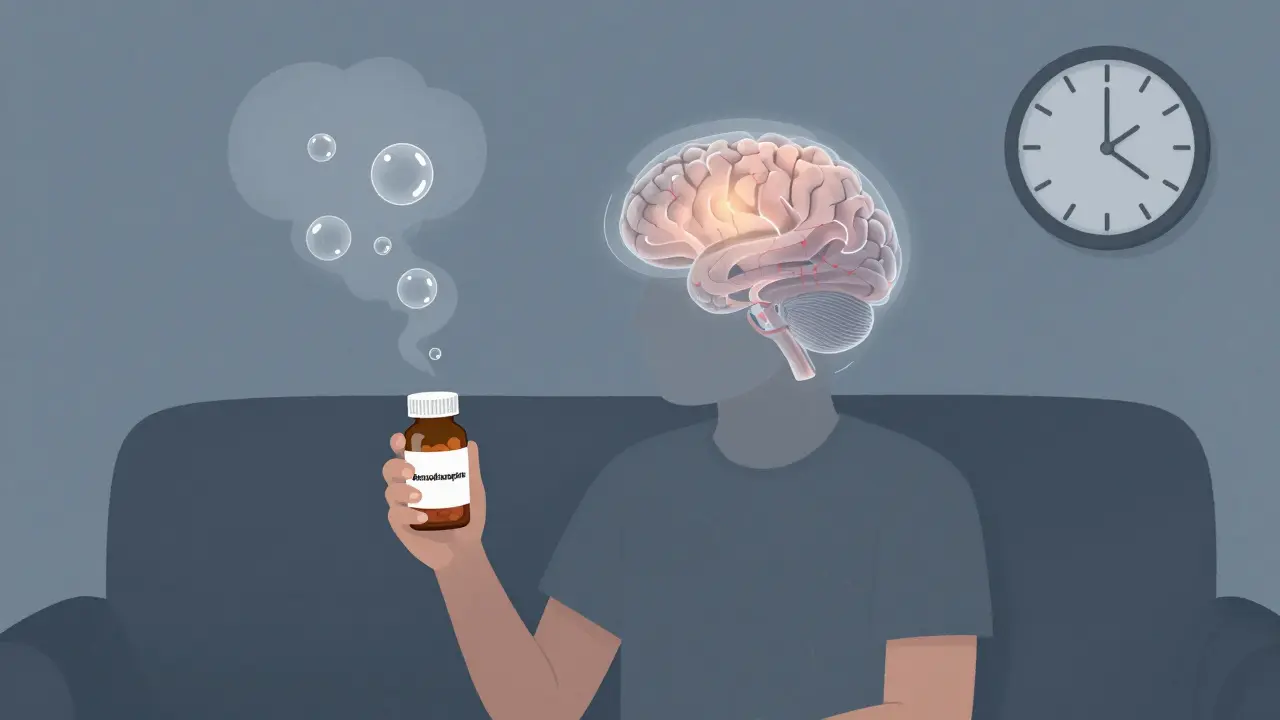
When you take a benzodiazepine for anxiety or sleep, you might feel relief right away. But what happens months or years later? Many people don’t realize these drugs can quietly erode memory, increase the chance of a serious fall, and make quitting harder than expected. If you’ve been on them for more than a few weeks, it’s time to understand the real costs-and what to do about them.
How Benzodiazepines Hurt Your Memory
Benzodiazepines like diazepam, lorazepam, and alprazolam don’t just calm you down-they interfere with how your brain forms new memories. This isn’t just forgetting where you put your keys. It’s the kind of memory loss that makes it hard to remember a conversation you had five minutes ago, or what you ate for breakfast. This is called anterograde amnesia, and it’s a direct effect of the drug on the hippocampus, the part of your brain responsible for turning short-term experiences into lasting memories. Studies show this isn’t temporary for everyone. A 2023 review of 19 studies found that long-term users-those on the drug for an average of 10 years-had clear deficits in recent memory, processing speed, and attention. The effect size was strong: people scored as if they’d lost 10 to 15 IQ points. Worse, these problems didn’t vanish when they stopped taking the pills. Six months after quitting, nearly half still struggled with memory and focus. Only 45% returned to normal cognitive function after 10 months. That means more than half are living with lingering brain fog, even after the drug is gone. It’s not just older adults. Younger people on long-term prescriptions report the same issues: trouble following conversations, losing track of thoughts, needing to re-read paragraphs. One patient described it as “trying to think through thick glass.”Why Benzodiazepines Make Falls Deadly
Falls aren’t just accidents-they’re medical emergencies, especially for people over 65. Benzodiazepines double the risk. A 2014 analysis of over a million older adults found that those taking these drugs had a 50% higher chance of falling and a 70% higher chance of breaking a hip. That’s not a small risk. It’s life-changing. The reason? These drugs slow down your reflexes, blur your balance, and dull your awareness of your body in space. In tests, older adults on benzodiazepines showed a 30-40% drop in balance control and took 25-35% longer to react to a sudden stumble. High-potency drugs like alprazolam and lorazepam are even riskier than older ones like diazepam. That’s why the American Geriatrics Society has listed benzodiazepines as inappropriate for seniors since 2012. In the U.S. alone, benzodiazepines contribute to about 93,000 emergency room visits each year from falls in older adults. Many of these could be prevented-not by better hip protectors or grab bars, but by stopping the medication.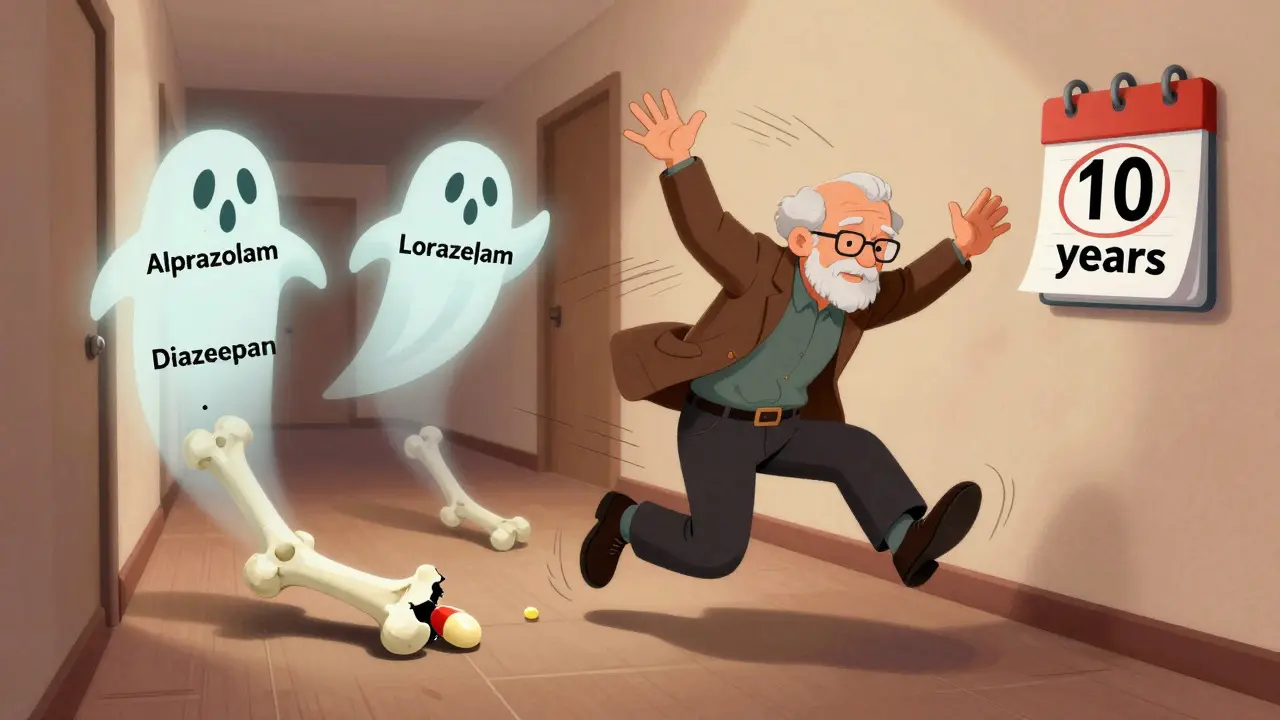
Tapering Isn’t Optional-It’s Necessary
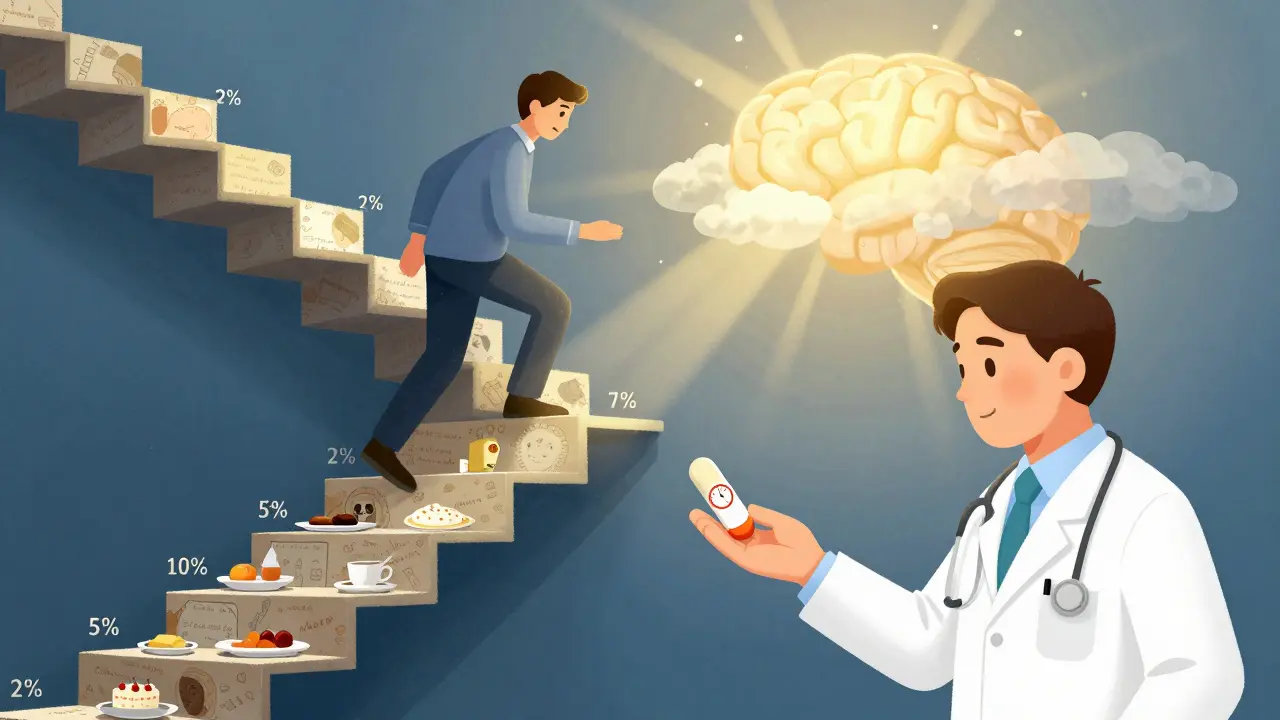
If you’ve been on benzodiazepines for more than a few weeks, your brain has adapted. Stopping suddenly isn’t just uncomfortable-it’s dangerous. You could get rebound anxiety worse than before, panic attacks, seizures, or even hallucinations. That’s why tapering isn’t a suggestion. It’s the only safe way out. The gold standard is the Ashton Protocol, developed by Professor C. Heather Ashton in the 1980s. It works like this: switch to diazepam (if you’re not already on it), then reduce your dose by 5-10% every 1-2 weeks. For long-term users, slower is better. Some people drop by 2-5% per month. The goal isn’t speed-it’s minimizing withdrawal. A 2021 trial with 312 long-term users showed that a 12- to 16-week taper using diazepam led to a 68.5% success rate at six months. That’s more than double the success of people who tried quitting cold turkey. And here’s the hopeful part: cognitive improvements started within four weeks. By eight weeks, processing speed and attention had improved by over 15%. People reported clearer thinking, less brain fog, and better focus. But it’s not easy. About 22% needed to pause the taper for a few weeks because symptoms flared up. Eight percent had to stop altogether because the side effects were too intense. That’s why support matters-whether it’s a doctor, a therapist, or a community like the Benzodiazepine Information Coalition, where over 15,000 people share their tapering stories.What Works When You’re Trying to Quit
People who succeed at tapering share a few key habits:- They use diazepam. It has a long half-life, meaning it leaves your system slowly, which smooths out withdrawal symptoms.
- They track progress. Apps like BrainBaseline or even a simple notebook help them notice small improvements-like remembering names or finishing a book without rereading pages.
- They go slow. One Reddit user with 10 years of use said, “I cut 2.5% every month. Took me 18 months. But I didn’t crash.”
- They avoid alcohol and other sedatives. Mixing them with benzodiazepines increases risk and makes tapering harder.
When Should You Stop?
Guidelines are clear: benzodiazepines shouldn’t be used for anxiety or insomnia longer than 4 weeks. Yet millions are on them for years. That’s because stopping feels impossible-until you start. Doctors should be screening patients every six months with tools like the MoCA or MMSE. If your score drops by 2-3 points, it’s a red flag. The European guidelines say: if cognition is declining, stop the drug. No exceptions. For older adults, the limit is 5 mg of diazepam per day. For younger people, it’s 10 mg. But even those doses are too high for long-term use. The lowest effective dose is the only safe one.The Future: Better Options Are Coming
There’s hope on the horizon. New drugs are being tested that target only the parts of the GABA receptor linked to anxiety-not memory or sedation. Phase II trials of α2/α3-selective agonists showed a 70% reduction in anxiety with no memory impairment. These aren’t available yet, but they prove the problem isn’t with GABA itself-it’s with how current drugs hit the brain. Until then, the best thing you can do is recognize the risks, talk to your doctor, and start planning a taper. It’s not about giving up relief-it’s about reclaiming your mind.Can benzodiazepines cause permanent brain damage?
No, benzodiazepines don’t cause permanent structural brain damage. Brain scans show no lasting changes in brain tissue. But they do cause functional changes-how your brain processes information, remembers things, and reacts to stimuli. These functional impairments can last months or even years after stopping, especially with long-term use. The good news? Many people regain most or all of their cognitive function over time with a proper taper.
Is it safe to stop benzodiazepines cold turkey?
No. Stopping abruptly can trigger severe withdrawal symptoms including seizures, extreme anxiety, hallucinations, and delirium. Even people who’ve been on low doses for a few months can have dangerous reactions. Always taper under medical supervision. The Ashton Protocol is the safest, most evidence-based method.
Why is diazepam used for tapering instead of other benzodiazepines?
Diazepam has a long half-life, meaning it stays in your system longer and leaves slowly. This creates a smoother withdrawal curve, reducing the intensity of rebound symptoms. Other benzodiazepines like alprazolam or lorazepam wear off quickly, causing sharp spikes in anxiety and insomnia between doses. Switching to diazepam before tapering gives your brain a steadier transition.
How long does it take to recover cognitive function after stopping?
Improvement starts within weeks-processing speed and attention often get better by week 4. But full recovery takes time. Most people notice significant gains by 6 months, with continued improvement up to 12-18 months. A 2023 study found that 73% of those who successfully tapered reported better memory and focus after a year. Patience and consistency are key.
Are there alternatives to benzodiazepines for anxiety and sleep?
Yes. For anxiety, SSRIs like sertraline or escitalopram are first-line treatments with no risk of dependence. For sleep, cognitive behavioral therapy for insomnia (CBT-I) is more effective long-term than any sleep medication. Other options include melatonin, trazodone (used off-label), and non-benzodiazepine sleep aids like suvorexant-all with lower risks than benzodiazepines. Talk to your doctor about switching.
Lance Nickie
January 15, 2026 AT 11:09benzos are just fancy sleeping pills that turn your brain to mush. i took them for 3 years and forgot my own birthday. no big deal, right?
Gregory Parschauer
January 17, 2026 AT 00:11Let me be absolutely clear: the medical establishment has been complicit in a decades-long pharmaceutical crime against cognitive autonomy. Benzodiazepines are not 'medications'-they are neurochemical sledgehammers disguised as comfort. The Ashton Protocol isn't 'recommended,' it's a moral imperative. Anyone who prescribes these for longer than 2 weeks without a signed waiver of cognitive liability is practicing malpractice with a stethoscope. We're not talking about 'side effects'-we're talking about erasure of the self. And the fact that insurance companies still cover these like they're aspirin? That's not negligence. That's systemic evil.
Milla Masliy
January 17, 2026 AT 22:43I’m so glad someone finally put this out there in plain terms. My mom was on lorazepam for 12 years after a car accident. She couldn’t remember my wedding, but she could recite every episode of Jeopardy! from 1998. We didn’t realize it was the meds until she tapered-and suddenly she remembered where she put her glasses, and that she loved me. It took 9 months, but she got her mind back. If you’re on these long-term, please don’t wait until you’re falling or forgetting your grandkids’ names. Talk to your doctor. You deserve more than fog.
Damario Brown
January 18, 2026 AT 11:46ok but have u read the ashton protocol? its literally just diazepam but slower. also why is everyone acting like benzos are the devil when alcohol is way worse? i mean, you can die from alcohol withdrawal too. also my uncle took 10mg diazepam for 15 yrs and he’s fine. he still plays golf. maybe its not the drug its the person? also i think the study is biased bc they used self reports. like lol who remembers their iq after 10 years on benzos?
sam abas
January 19, 2026 AT 18:44Look, I get the fear-mongering. But let’s be real-this whole narrative feels like a woke pharmacological panic. The 2023 study you cited? It had a selection bias: they pulled people who were already cognitively declining and blamed the benzos. Meanwhile, the 2018 longitudinal cohort from Kaiser Permanente showed no significant difference in dementia rates between long-term users and controls after adjusting for anxiety severity and comorbid depression. And let’s not forget: people on benzos are often the same people who are anxious, sleep-deprived, and sedentary-all of which independently impair cognition. You’re conflating correlation with causation. Also, the Ashton Protocol? It’s a 40-year-old method developed by a British psychiatrist who retired in 1997. There’s zero FDA validation. If you’re going to tell people to taper, at least cite something post-2020. And stop acting like this is a moral crusade. It’s medicine. Not a cult.
John Pope
January 21, 2026 AT 15:46There’s a metaphysical truth here, buried under the clinical jargon: benzodiazepines don’t just dull your memory-they dull your soul’s capacity to feel the texture of existence. You’re not just forgetting your breakfast-you’re forgetting the weight of your own presence in the world. The hippocampus isn’t just a brain region-it’s the cathedral of lived experience. When you chemically silence it, you’re not managing anxiety-you’re outsourcing your humanity to a pill. And the fact that we’ve normalized this? That’s the real tragedy. We’ve turned consciousness into a problem to be dosed, not a mystery to be endured. The taper isn’t about stopping a drug-it’s about returning to the raw, trembling, beautiful vulnerability of being alive without chemical scaffolding.
Clay .Haeber
January 22, 2026 AT 01:27Oh wow, a 12-page op-ed masquerading as a medical guide. Next you’ll tell me that sunlight is ‘toxic’ because it causes wrinkles. Let me guess-you also think coffee gives you brain rot and that breathing is ‘an addictive habit’? I’ve been on 2mg diazepam for 8 years. I run marathons. I remember my kids’ birthdays. I’ve read 47 books this year. Your ‘10-15 IQ points’ nonsense? That’s not science-that’s fear porn for people who think every pill is a villain. If you’re this terrified of your own brain, maybe you should stop reading medical blogs and start doing yoga. Or better yet-stop being so dramatic. Not everyone’s a walking dementia case.
Priyanka Kumari
January 23, 2026 AT 19:56Thank you for writing this with such clarity. As someone from India, I’ve seen so many people here get prescribed alprazolam for ‘stress’-even teenagers. No follow-up. No education. Just a script. I’ve had patients cry because they couldn’t remember their child’s first words after 5 years of use. One woman said, ‘I feel like I’m watching my life through a foggy window.’ This isn’t just medical-it’s cultural. We need community health workers to explain this, not just doctors. And yes, tapering works. My sister took 18 months. She cried a lot. But now she remembers her mother’s voice. That’s worth every slow week.
Avneet Singh
January 25, 2026 AT 15:09Let’s be honest-this entire post is a textbook example of anti-pharma hysteria dressed in peer-reviewed clothing. The Ashton Protocol? Quaint. The ‘memory loss’ data? Correlation doesn’t equal causation. You’re ignoring confounders like age, polypharmacy, and pre-existing neurodegeneration. And the ‘68.5% success rate’? That’s from a non-blinded, non-placebo-controlled trial with 312 subjects. Hardly robust. Meanwhile, SSRIs have higher discontinuation rates and worse sexual side effects. So why are we demonizing benzos and not SSRIs? Because it’s easier to vilify a cheap generic than a billion-dollar patent. This isn’t science-it’s moral panic with footnotes.