
Every year in the U.S., over 1.3 million medication errors happen in hospitals and pharmacies. Many of these aren’t caused by careless staff-they’re caused by human fatigue, rushed workflows, and the sheer complexity of modern drug regimens. One of the most effective tools to stop these errors before they reach patients? Barcode scanning.
How Barcode Scanning Stops Errors Before They Happen
Picture this: a pharmacist picks up a bottle of levothyroxine to fill a prescription. The dose looks right. The label matches the order. But the patient is actually supposed to get 25 mcg-not 250 mcg. That’s a tenfold overdose. Without a safety net, this could be fatal. Barcode scanning changes that. At the point of dispensing, the pharmacist scans two things: the patient’s wristband and the medication’s barcode. The system instantly checks if the medication matches the patient’s electronic prescription. If it doesn’t? An alert flashes. The drug won’t be released until the mismatch is resolved. This isn’t magic. It’s a simple but powerful check against the five rights: right patient, right drug, right dose, right route, right time. Before barcode systems, pharmacists relied on visual checks and double-checks. Studies show those manual methods catch only about 36% of errors. Barcode scanning catches 93.4%.How It Works: The Tech Behind the Safety
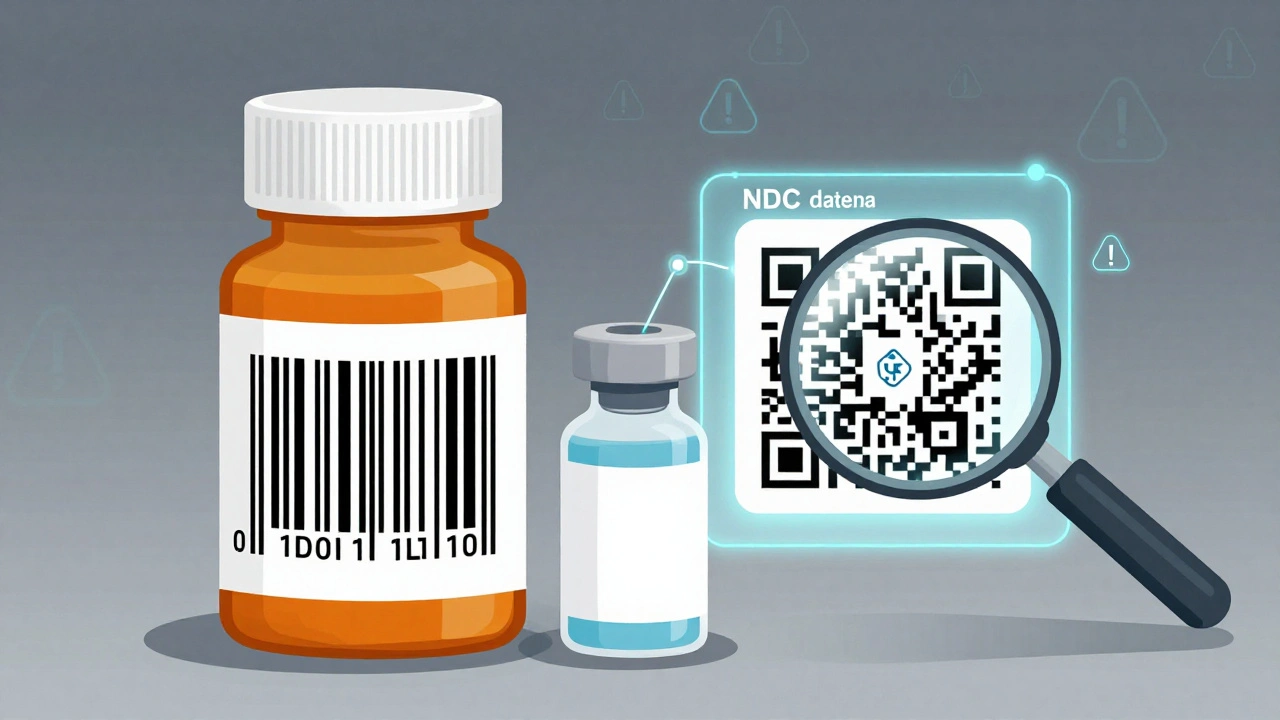
Most pharmacy barcode systems use 1D linear barcodes-those black-and-white stripes you see on medicine bottles. These contain the National Drug Code (NDC), a unique identifier assigned by the FDA. Since 2006, every unit-dose package sold in the U.S. must have this barcode. Newer systems are starting to use 2D matrix codes (like QR codes). These can hold more data: lot number, expiration date, even manufacturer info. That’s important because expired or recalled meds can be flagged instantly. The scanner connects to the pharmacy’s information system (PIS) and the hospital’s electronic health record (EHR). When a scan happens, the system cross-references the scanned NDC with the patient’s active medication order. If the drug, dose, or patient ID doesn’t match, the system blocks the transaction and sounds an alert. It’s not just about stopping the wrong drug. It stops the wrong dose. The wrong patient. The wrong time. In one Pennsylvania hospital, error rates dropped from 13.5% to just 3% after implementing barcode scanning. That’s an 86% reduction.Real Impact: What Errors Does It Actually Prevent?
The data doesn’t lie. Here’s what barcode scanning stops most effectively:- Wrong patient errors: 92% prevented. This happens when a med meant for one person gets given to another. Often, patients have similar names or are in adjacent rooms. Scanning the wristband catches this every time.
- Wrong drug errors: 89% prevented. A patient prescribed metoprolol gets amlodipine instead? The barcode won’t match. The system flags it.
- Wrong dose errors: 86% prevented. A 500 mg tablet instead of 50 mg? The NDC code for each dose is different. The scanner knows.
- Wrong route: 85% prevented. Oral meds aren’t supposed to be injected. The system checks the route against the order and blocks mismatches.
The Problem: Workarounds and Scanner Failures
Barcode scanning isn’t foolproof. The biggest threat isn’t the tech-it’s the people. In 68% of hospitals, staff find ways to bypass the system. Why? Because it slows them down. Or because the barcode is smudged. Or because the scanner freezes during a busy shift. A pharmacy technician in a busy ER told me: “We had a patient come in with a broken wristband. We scanned the med, but skipped the wristband scan because we were behind. That’s not safe. But we did it anyway.” Damaged barcodes cause 15% of scanning failures, according to ECRI Institute. Insulin pens, ampules, and small vials are especially tricky. Some pharmacies now use special trays with built-in lighting to help scanners read these hard-to-scan items. Then there’s automation bias-when staff trust the machine too much. There was a case where a pharmacy labeled vancomycin with the correct NDC, but the concentration was wrong. The scanner approved it because the barcode was accurate. The label was wrong, but the system didn’t know. That’s why visual verification is still required when scanning fails.Why Community Pharmacies Are Still Lagging
You won’t see barcode scanners in most local drugstores. Why? Cost. In U.S. hospitals, 78% use barcode systems. In community pharmacies? Only 35%. The hardware, software integration, and training cost tens of thousands of dollars. For a small independent pharmacy, that’s a hard sell. But the risks are higher there too. Community pharmacies handle more prescriptions per day than most hospitals. One error can affect one patient-but with thousands of prescriptions a week, the cumulative risk is huge. Some are starting to adopt it. A few chains like CVS and Walgreens have rolled out scanning in select locations, especially for high-risk drugs like warfarin or insulin. But it’s not standard.What’s Next? The Future of Pharmacy Safety
The technology is evolving. Epic Systems released a mobile-integrated barcode scanner in March 2024 that improved scanning success by 22%. Cerner is building AI into its system to predict which barcodes are likely to fail and suggest better scanning angles. By 2026, 65% of medications are expected to use 2D barcodes. That means more data, faster verification, and fewer missed scans. But the real breakthrough won’t come from better scanners. It’ll come from better workflows. Training staff to treat scanning as non-negotiable. Creating clear protocols for when barcodes fail. And making sure no one ever feels pressured to skip a scan-even during rush hour.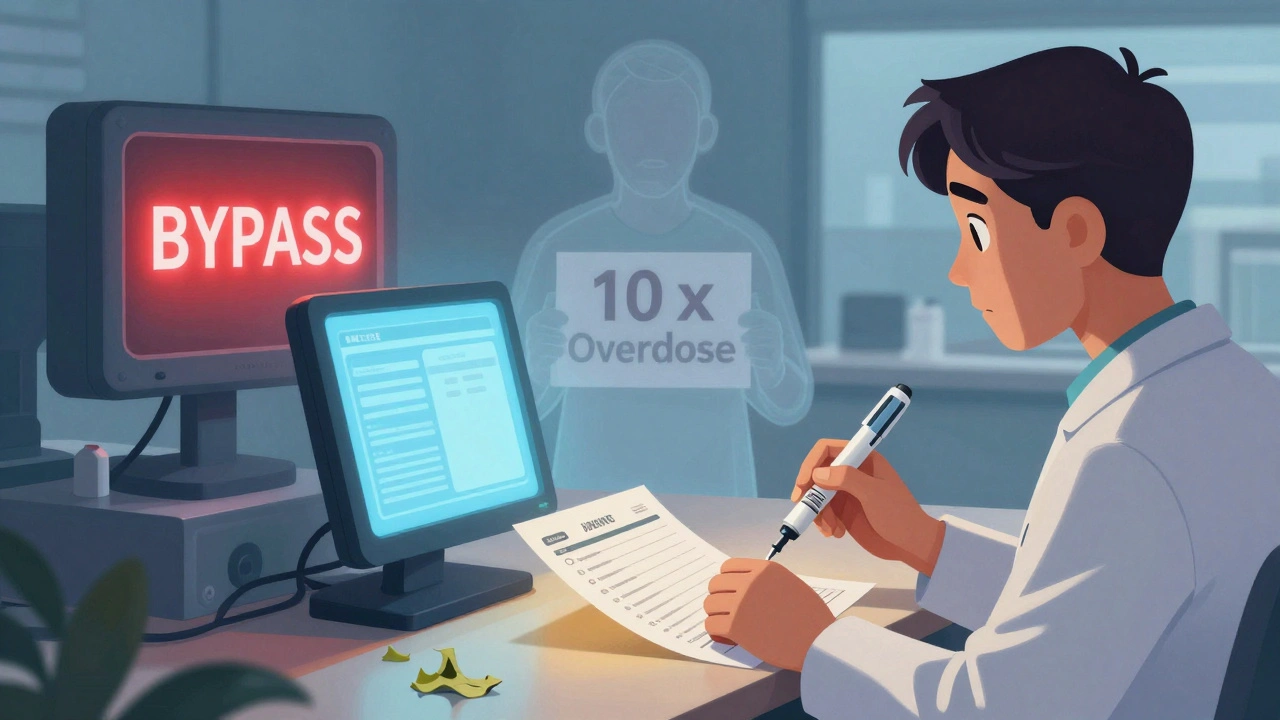
What Pharmacists Say
A survey of 1,247 pharmacists in 2023 showed 78% believe barcode scanning reduced their dispensing errors. But 63% said it disrupted their workflow. And 41% admitted they’d bypassed a scan at least once. One pharmacist from Kaiser Permanente shared: “It saved us from a 10x overdose of levothyroxine last month. But we lose 30 minutes every day fixing scanner issues with insulin pens.” That’s the trade-off. It’s not perfect. But it’s the best tool we have.Best Practices for Effective Use
If you’re implementing or using barcode scanning, here’s what works:- Always scan the manufacturer’s barcode-not the pharmacy’s label. Pharmacy-applied labels can be wrong.
- Use special trays for small vials and ampules. Lighting matters.
- Train staff to never bypass a scan. If the barcode won’t read, stop. Visually verify the medication. Call for help.
- Review scanning data weekly. Which drugs are most often scanned incorrectly? Fix those first.
- Don’t rely on the system alone. Always do a final visual check. The barcode tells you what’s labeled. You have to make sure it’s what’s needed.
Final Thought: It’s Not About Technology. It’s About Culture.
Barcode scanning isn’t a magic fix. It’s a safety net. And like any safety net, it only works if you believe in it. If you skip it because you’re in a hurry, you’re not saving time-you’re risking lives. The best pharmacy systems don’t just have the best scanners. They have the best culture. One where every scan is treated as sacred. Where workarounds are investigated, not ignored. Where staff know that the machine isn’t there to slow them down-it’s there to keep their patients alive.Do all pharmacies use barcode scanning?
No. Most U.S. hospitals (78%) use barcode scanning systems, but only about 35% of community pharmacies do. The main barriers are cost and workflow disruption. Larger chains are starting to adopt it, especially for high-risk medications, but it’s not yet standard in small independent pharmacies.
Can barcode scanning prevent all medication errors?
No. Barcode scanning prevents up to 93% of dispensing errors related to patient, drug, dose, route, and time. But it can’t catch errors where the label itself is wrong-like a misprinted concentration on a vial. That’s why visual verification is still required. It’s part of a layered safety system, not a standalone solution.
What’s the difference between 1D and 2D barcodes in pharmacies?
1D barcodes are the traditional black-and-white stripes that store only the National Drug Code (NDC). 2D matrix codes (like QR codes) can hold more data-expiration dates, lot numbers, manufacturer info, even dosage instructions. 2D codes are more reliable with damaged labels and are expected to make up 65% of medication labels by 2026.
Why do pharmacists sometimes skip scanning?
They skip scans when the system is slow, the barcode is damaged, or during high-pressure situations like emergencies. Some staff develop workarounds because they feel the system slows them down. But this is dangerous. Skipping a scan removes the last line of defense against fatal errors.
Is barcode scanning required by law?
The FDA requires all prescription medications sold in the U.S. to have a barcode with the NDC number (21 CFR Part 211). But there’s no federal law forcing pharmacies to scan them. However, The Joint Commission and CMS require barcode scanning as part of their patient safety standards for hospitals receiving Medicare funding. So while not federally mandatory for all pharmacies, it’s effectively required in most institutional settings.
Anna Roh
December 8, 2025 AT 16:42Barcodes are great until you’re trying to scan a tiny insulin pen at 3 a.m. and the scanner just spins forever.
Carina M
December 8, 2025 AT 17:11It is deeply concerning that any healthcare professional would consider bypassing a proven safety protocol, regardless of perceived workflow inefficiencies. The moral imperative to prioritize patient safety over expediency is not negotiable, and the normalization of such behavior represents a systemic failure in professional ethics.
William Umstattd
December 10, 2025 AT 13:16Let me be perfectly clear: if you skip a barcode scan, you are not a hardworking pharmacist-you are a liability with a stethoscope. The data doesn’t lie. 93.4% error reduction. That’s not a suggestion. That’s a lifeline. And yet people treat it like a suggestion box. This isn’t just negligence. It’s a betrayal of the Hippocratic Oath.
Simran Chettiar
December 11, 2025 AT 04:38you see in india we have this thing called jugaad where we fix things with tape and hope and sometimes it works but sometimes it dont and barcode scanning is like that for us too i mean we want the tech but the power cuts and the bad lighting and the way the boxes are stacked its like trying to read a book in a hurricane and yet we still try because the alternative is worse but not always better if you know what i mean
om guru
December 12, 2025 AT 14:26Technology is only as strong as the discipline that uses it. Scanning is not optional. It is the foundation of patient safety. Training must be continuous. Accountability must be non-negotiable. Culture must be built on vigilance not convenience.
Richard Eite
December 13, 2025 AT 02:50USA invented this tech and now we got lazy Mexicans and overworked nurses skipping scans like its a game. We need military grade enforcement. No excuses. Scan or get fired. America doesn’t lose patients to sloppy habits.
Katherine Chan
December 14, 2025 AT 13:05Even with all the scanner glitches and slow systems i still believe this is the best thing to happen to pharmacy safety in decades. Every time it catches a mistake it feels like a small victory. We can fix the tech. We just need to keep showing up and scanning. One scan at a time
Philippa Barraclough
December 14, 2025 AT 20:13The assertion that barcode scanning prevents 93.4% of dispensing errors is compelling, yet it raises several methodological questions. What constitutes an error in this context? Are near-misses included? How are false positives accounted for? Furthermore, the reduction in error rates from 13.5% to 3% in the Pennsylvania hospital study appears statistically significant, but without access to the raw data or confidence intervals, it remains difficult to assess the true effect size and generalizability across diverse institutional settings.
Tim Tinh
December 16, 2025 AT 03:47my cousin works at a small pharmacy in ohio and they just got scanners last year. at first everyone hated it. now they say it saved their butts when someone almost got the wrong blood pressure med. yeah the scanner breaks sometimes but now they keep spare batteries and a flashlight for the tiny vials. its not perfect but its way better than before. just gotta be patient with it
Olivia Portier
December 16, 2025 AT 19:31to all the folks saying scan or else-i get it but dont forget the tech is still clunky for some meds and the people using it are tired. maybe instead of shaming we could make the scanners better and give staff more breaks. we dont need more rules we need more support. scanning should feel like a team effort not a trap