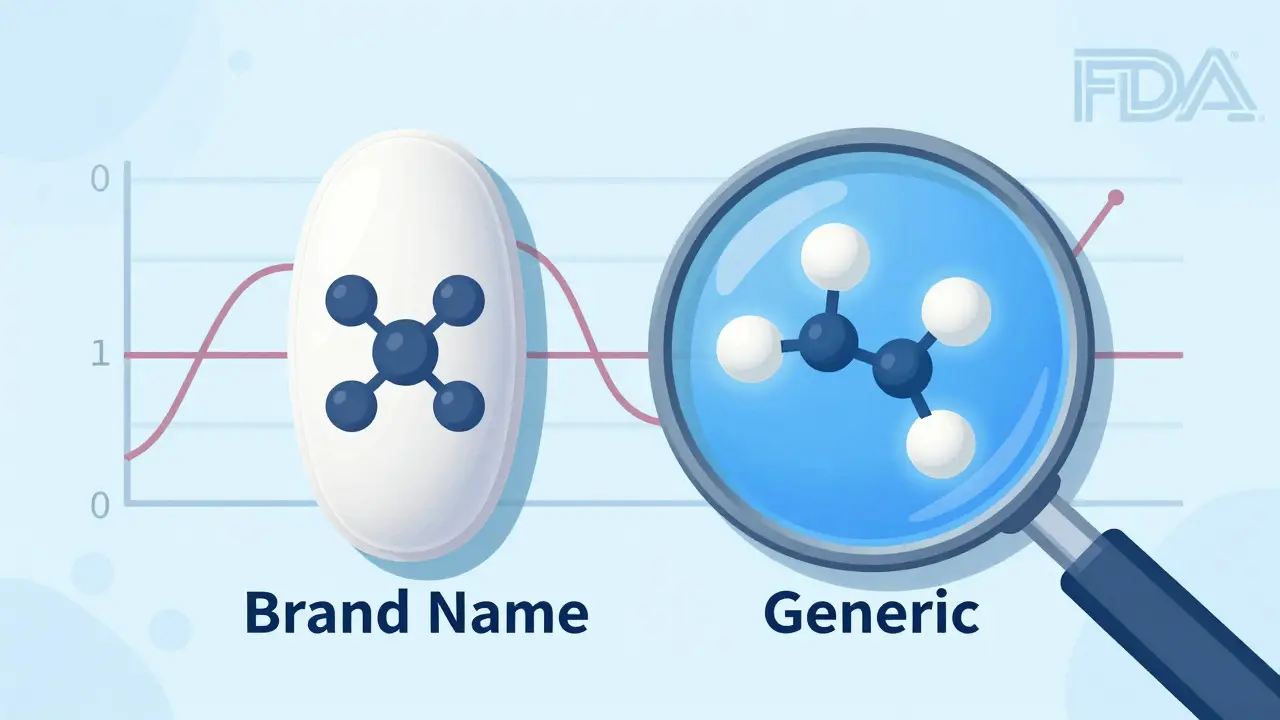
When you pick up a prescription, you might see two pills that look completely different-one white and oval, the other blue and round. One says generic, the other says a brand name you’ve seen on TV. You might wonder: Is this really the same medicine? The answer isn’t just yes-it’s scientifically proven yes. But that doesn’t mean everyone believes it. And that’s where the confusion starts.
What Exactly Makes a Generic Drug ‘Generic’?
A generic drug isn’t a copy. It’s not a knockoff. It’s not a cheaper version with less punch. It’s the exact same active ingredient, in the exact same amount, delivered the exact same way. If your brand-name pill contains 10 mg of amlodipine to lower blood pressure, so does the generic. Same molecule. Same chemistry. Same effect on your body. The U.S. Food and Drug Administration (FDA) requires every generic drug to prove it delivers the same amount of active ingredient into your bloodstream at the same speed as the brand-name version. This is called bioequivalence. The standard? The generic’s absorption must fall within 80% to 125% of the brand’s. That’s not a wide gap-it’s a tight window. Think of it like two cars driving the same route at the same speed. One might be a Ford, the other a Toyota. They look different, but they get you to the same place, at the same time, using the same fuel.Why Do Generics Cost So Much Less?
The price difference isn’t because generics are made with cheaper materials. It’s because they don’t have to pay for the original research. Brand-name drugs cost billions to develop. Companies spend years running clinical trials, testing safety, and getting FDA approval. That’s why a 30-day supply of Glucophage (brand-name metformin) might cost $350. Once the patent expires, other companies can make the same drug without repeating those expensive studies. They just need to prove their version works the same way-which costs a fraction of the original investment. That’s the 1984 Hatch-Waxman Act in action. It created a shortcut for generics: the Abbreviated New Drug Application (ANDA). No need to re-prove safety. No need to re-run trials on thousands of people. Just prove bioequivalence. And because dozens of companies can compete to make the same drug, prices drop fast. In 2022, generics made up 90% of all prescriptions filled in the U.S.-but only 23% of total drug spending. That’s how much money the system saves.Are Generics Just as Effective?
Yes. And the evidence isn’t just theoretical-it’s real-world. A 2019 study in JAMA Internal Medicine looked at over 3.5 million patients using generics for diabetes, high blood pressure, depression, and osteoporosis. The results? No difference in outcomes. Blood sugar levels stayed controlled. Blood pressure dropped. Depression symptoms improved. Fractures were prevented. Exactly the same as the brand-name versions. Kaiser Permanente’s 2023 report confirmed this across multiple conditions. Even in mental health, where patients often worry about subtle changes, generics like sertraline and escitalopram performed identically to Zoloft and Lexapro in clinical measures. The FDA’s own stance is blunt: “Generic drugs work the same as brand-name drugs and are just as effective.” Dr. Janet Woodcock, former head of the FDA’s drug division, put it plainly: “The agency requires generic drugs to have the same quality, strength, purity, and stability.”What’s Different About Generics?
The only real differences? The stuff that doesn’t matter. Generics can have different fillers, dyes, binders, or coatings. These are called inactive ingredients. They make the pill hold its shape, give it color, or help it dissolve. They make up about 90% of the pill’s weight-but they don’t affect how the medicine works. That’s why a generic amlodipine might be blue and oval, while the brand is white and round. Sometimes, these differences cause minor issues. A small number of people report stomach upset or headaches after switching to a generic. In one GoodRx survey, 12% of users noticed mild side effects they thought were linked to inactive ingredients. But these cases are rare-under 0.1% of all generic switches-and often tied to allergies or sensitivities, not the active drug itself. The FDA tracks these reports. Less than 0.05% of generic switches result in a verified adverse reaction tied to inactive ingredients. That’s less than one in every 2,000 switches.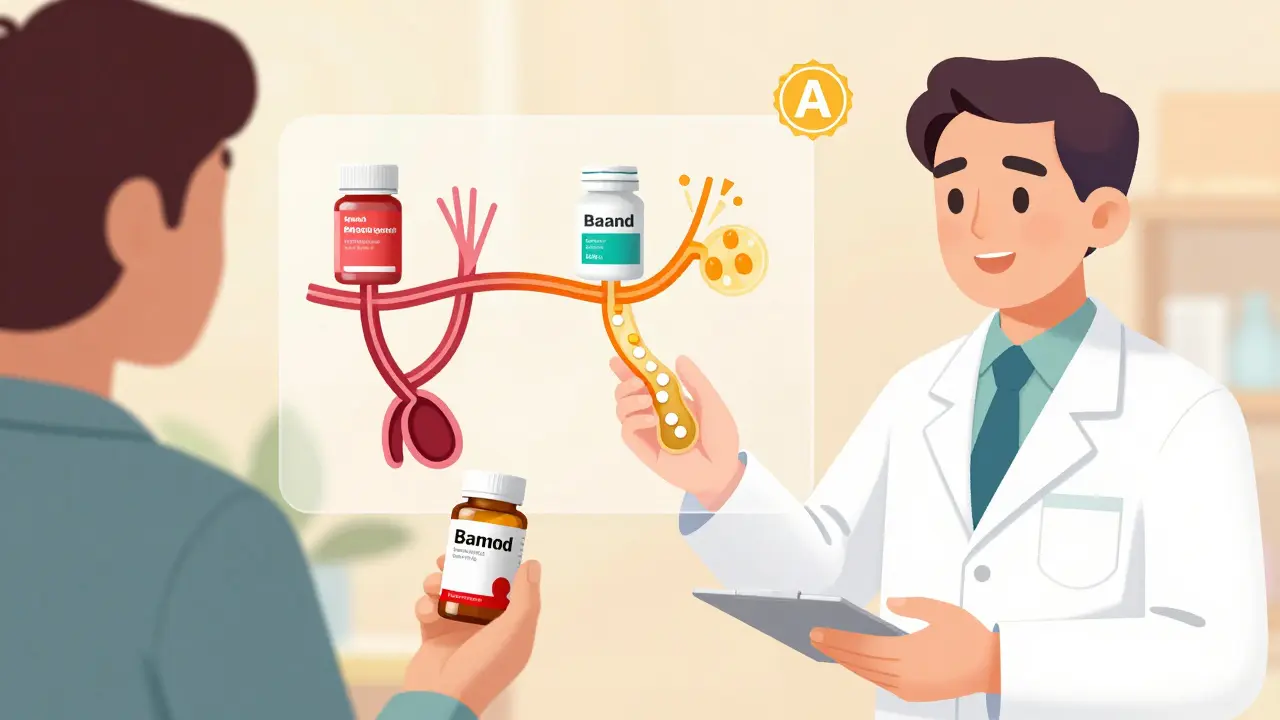
What About ‘Narrow Therapeutic Index’ Drugs?
This is where people get nervous. Drugs like warfarin (blood thinner), levothyroxine (thyroid hormone), and some seizure medications have a very narrow window between effective and toxic doses. A tiny change in absorption could matter. The FDA says: even for these, generics must meet the same strict bioequivalence standards. And studies back that up. A 2020 review in JAMA Internal Medicine found no increased risk of adverse events when switching patients from brand to generic warfarin or levothyroxine. Still, some doctors prefer to stick with one version for these drugs-not because generics are less effective, but because consistency helps with monitoring. If you’ve been stable on a brand-name version for years, switching might mean more frequent blood tests to make sure levels stay perfect. But that’s about caution, not safety.Can Pharmacists Switch My Prescription Automatically?
In 49 out of 50 U.S. states, yes. Unless your doctor writes “Dispense as Written” or “No Substitution,” your pharmacist can legally give you the generic version. It’s standard practice. Most insurance plans require it. Humana, for example, automatically substitutes generics unless the prescriber objects. This isn’t a loophole. It’s policy. The system is built to save money without sacrificing care. And it works. Cedars-Sinai found patients were 28% more likely to keep taking their meds when they got generics-because they could afford them. Better adherence meant 15% better control of blood pressure and diabetes.Who Makes Generic Drugs-and Are They Safe?
You might think generics are made in sketchy factories. They’re not. The FDA inspects every facility that makes drugs-brand or generic-using the same strict rules called Current Good Manufacturing Practices (cGMP). In 2022, they did over 3,500 inspections worldwide. Most generic manufacturers are based in the U.S., India, and Europe. Major players like Teva, Mylan, and Sandoz produce millions of doses daily under the same rules as Pfizer or Merck. Yes, there have been quality issues. In 2022, the FDA issued import alerts for 12 plants in India and China. That’s about 0.5% of all facilities. Most were fixed. The system works because it’s transparent. You can check the FDA’s Drugs@FDA database to see if a generic has an “A” rating-meaning it’s approved as therapeutically equivalent.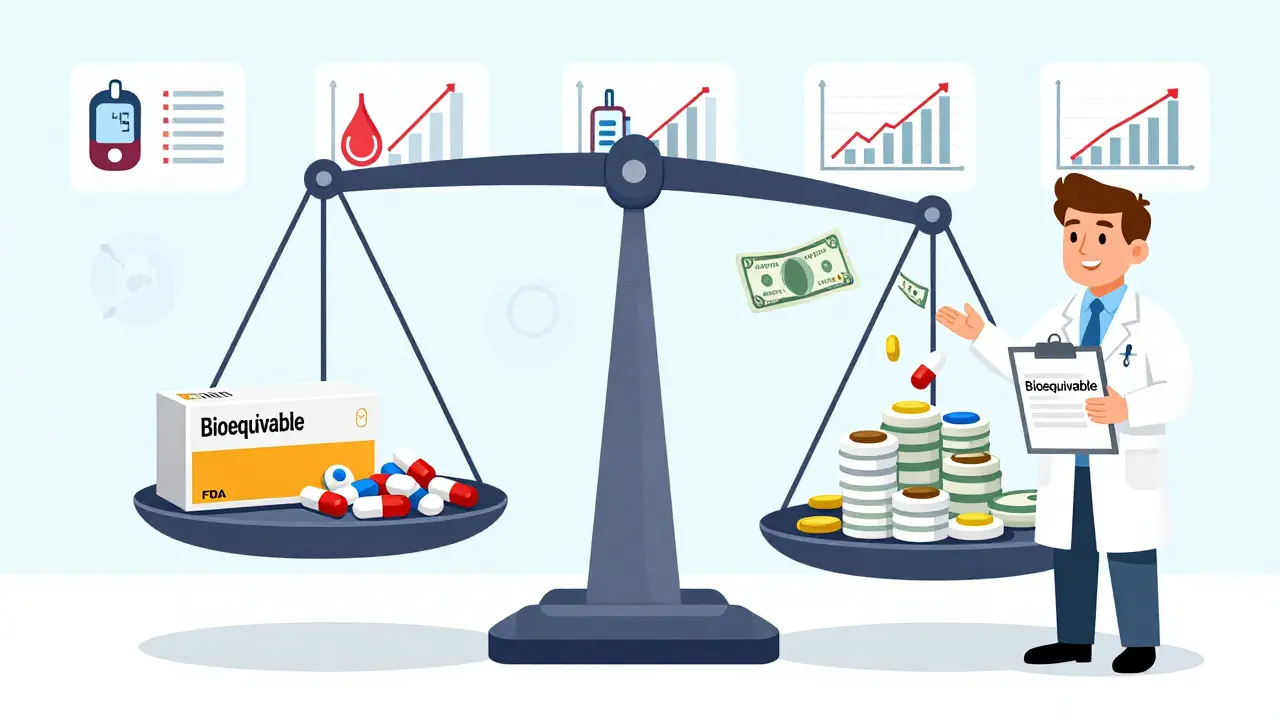
Why Do Some People Still Doubt Generics?
It’s psychology, not science. People associate brand names with trust. They’ve seen the ads. They’ve heard the names. A blue pill called “Zoloft” feels more powerful than a white pill labeled “sertraline.” That’s branding, not biology. Reddit threads and patient forums are full of stories: “My generic made me feel weird.” “I switched back to the brand.” But when you dig into the data, those stories are outliers. Out of 12,500 reviews on Drugs.com, generics average 4.2 out of 5 stars. Most people report no difference at all. The real issue? Lack of education. Many patients aren’t told why the pill looks different. If your pharmacist doesn’t explain it, you assume something’s wrong. But a 2-minute conversation clears up 95% of the confusion.What’s Next for Generics?
The future is even brighter. The FDA’s 2023 Drug Competition Action Plan targets 50 drugs that have stayed brand-only for too long, including high-cost medications like Eliquis and Stelara. Patents are expiring on over $100 billion worth of brand-name drugs by 2025. That means more generics, lower prices, and more savings. By 2028, experts predict 95% of prescriptions will be generics. The system isn’t perfect-but it’s working. Generics saved the U.S. healthcare system $2.2 trillion between 2012 and 2022. That’s $313 billion in one year alone.Bottom Line: Trust the Science, Not the Label
Your generic pill isn’t a second choice. It’s the same medicine, made cheaper because the system lets it be. The active ingredient is identical. The effect is identical. The safety profile is identical. The only difference is the price-and the savings are massive. If you’re worried about switching, talk to your pharmacist. Ask if your drug has an “A” rating in the FDA’s Orange Book. Check GoodRx for price comparisons. Ask if there’s a reason your doctor wants the brand. In most cases, there isn’t. You’re not saving money by buying the brand. You’re paying extra for a name you’ve seen on TV. The medicine inside? It’s the same.Are generic drugs really as effective as brand-name drugs?
Yes. The FDA requires generic drugs to contain the same active ingredient, strength, dosage form, and route of administration as the brand-name version. They must also prove bioequivalence-meaning they deliver the same amount of medicine into your bloodstream at the same rate. Studies involving millions of patients show no difference in effectiveness for conditions like high blood pressure, diabetes, depression, and osteoporosis.
Why do generic pills look different from brand-name ones?
By law, generic drugs can’t look exactly like the brand-name version to avoid trademark infringement. That’s why the color, shape, or size might be different. These changes are only in the inactive ingredients-like fillers or dyes-which don’t affect how the medicine works. The active ingredient is identical.
Can I switch from a brand-name drug to a generic without any risk?
For nearly all medications, yes. The FDA approves generics only after proving they’re therapeutically equivalent. For most people, switching causes no issues. However, for a small group of drugs with a narrow therapeutic index-like warfarin or levothyroxine-your doctor might recommend staying on one version to avoid needing more frequent monitoring. But this isn’t because generics are less safe-it’s about consistency in dosing.
Do generic drugs come from unsafe or low-quality factories?
No. The FDA inspects all drug manufacturing facilities-whether they make brand-name or generic drugs-using the same strict standards called cGMP. In 2022, the agency conducted over 3,500 inspections globally. While a small number of overseas plants have had issues, they represent less than 0.5% of total production. Most generic drugs are made in facilities that meet the same quality requirements as brand-name manufacturers.
Why do insurance companies push generics so hard?
Because they work-and they save money. Generics cost 80%-85% less than brand-name drugs. Insurance plans require you to try the generic first because it’s just as effective and saves the system billions each year. In fact, 92% of brand-name prescription requests are automatically denied unless the doctor provides a medical reason to override it.
I switched to a generic and felt different. Should I go back to the brand?
It’s worth talking to your pharmacist or doctor. In most cases, the difference is psychological-or due to inactive ingredients like fillers or dyes. A small percentage of people report mild side effects like stomach upset after switching, but these are rare. If you’re concerned, ask if your generic has an “A” rating in the FDA’s Orange Book. If you still feel off, your doctor can prescribe the brand-but only if there’s a real medical reason, not just a feeling.
If you’re taking a chronic medication, consider this: 92% of patients who switched to generics reported being satisfied-with cost savings as the top reason. And those who stuck with generics were 28% more likely to take their meds consistently. That’s not just about money. It’s about health.
Johnnie R. Bailey
December 23, 2025 AT 02:33It’s wild how much fear is built into the packaging and not the pill. I’ve seen people refuse generics because the color’s wrong-like the medicine is somehow less real if it’s not the same shade of blue as the TV ad. The science doesn’t care about branding. Your body doesn’t know the difference. What it knows is whether the amlodipine hits the receptors. And it does-every time.
It’s not magic. It’s chemistry. And we’ve been over this for decades. The FDA doesn’t play games. If it says ‘A’ rated, it’s the same drug. Same molecule. Same effect. Same outcome. The rest is just noise.
I used to think the same. Then I switched my dad’s blood pressure med. He didn’t feel ‘different.’ He just saved $200 a month. That’s the real win.
Nader Bsyouni
December 24, 2025 AT 07:53Generics are fine if you’re fine with being a lab rat for Big Pharma’s cost cutting scheme
Who even approves these things anyway The FDA is just a revolving door for ex-pharma execs
And don’t get me started on Indian factories They don’t even wash their hands before packaging
My cousin took a generic and ended up in the ER She said the pill tasted funny
That’s not coincidence That’s corporate negligence
Julie Chavassieux
December 24, 2025 AT 16:51Okay but-
what if the filler is *actually* toxic?
What if the dye is *literally* cancerous?
What if the coating *slowly* dissolves into your gut over time and you don’t even realize it?
I switched to generic sertraline and started having nightmares. I went back to the brand. Instant relief. Coincidence? Maybe. But I’m not risking it again. My mental health is not a budget line item.
Candy Cotton
December 26, 2025 AT 10:44It is a matter of national security that the United States of America maintain control over the pharmaceutical supply chain. The fact that 78% of generic drugs are manufactured in foreign jurisdictions-many of which are geopolitical adversaries-is an unacceptable vulnerability.
Furthermore, the FDA’s inspection protocols, while ostensibly rigorous, are subject to political interference and budgetary constraints. The notion that a pill manufactured in a facility with substandard sanitation standards can be deemed ‘therapeutically equivalent’ is a dangerous fallacy.
As a former military pharmacist, I can state with absolute certainty: the integrity of the drug supply is being eroded. This is not a cost-saving measure. It is a systemic failure.
Ajay Brahmandam
December 26, 2025 AT 17:15My mom takes generic metformin for 10 years now. No issues. No side effects. Just cheaper pills. In India, we’ve been using generics since the 80s. Doctors here don’t even mention brand names unless you ask. Why? Because it works. Same science. Same results. Just no fancy logo.
Also, if you can’t afford meds, you don’t take them. Generics save lives. Not just money.
jenny guachamboza
December 27, 2025 AT 18:04EVERYONE KNOWS THE FDA IS CORRUPT 😭
THEY LET CHINA MAKE ALL THE PILLS AND THEN SAY ‘IT’S FINE’ 🤡
MY FRIEND TOOK A GENERIC FOR ANTI-SEIZURE MED AND HAD A SEIZURE 😱
THEY’RE HIDING THE TRUTH! LOOK AT THE INACTIVE INGREDIENTS-THEY’RE FULL OF MICROPLASTICS AND SUGAR COATINGS THAT MAKE YOU CRAZY!!
GO TO THE ORANGE BOOK AND CHECK FOR THE ‘A’ RATING?? HA! THAT’S JUST A TRICK TO MAKE YOU FEEL SAFE 😤
TRUST NO ONE. TRUST NO PILL. TRUST NO ONE WHO SAYS ‘IT’S THE SAME’ 🚨
Tarun Sharma
December 28, 2025 AT 23:22The regulatory framework governing generic drug approval is well-established and scientifically rigorous. The bioequivalence standards are not arbitrary. They are grounded in pharmacokinetic principles validated through decades of clinical research.
It is misleading to suggest that generic drugs are inferior. The data, peer-reviewed and replicated, consistently supports therapeutic equivalence.
Preference for brand-name products, when not clinically indicated, reflects consumer perception rather than pharmacological reality.
Gabriella da Silva Mendes
December 29, 2025 AT 11:22Okay so let me get this straight-you’re telling me that the same exact drug that costs $350 can be sold for $12 and it’s just as good? And we’re supposed to just trust the FDA? 🤡
What about the 2020 scandal where they found mold in a generic insulin factory? Or the 2021 recall of 10 million generic blood pressure pills because they had a carcinogen? Or the fact that the FDA only inspects 1% of foreign plants?
And don’t even get me started on the fact that the same companies that make the brand-name drugs also make the generics. Same factory. Same people. Just a different label. That’s not competition. That’s a monopoly with a cheap costume.
So yeah. I’ll keep paying $350. My body is not a cost center.
Kiranjit Kaur
December 31, 2025 AT 04:13My aunt was on warfarin for years. Doctor switched her to generic. She was terrified. We sat down, looked up the Orange Book together, and saw the ‘A’ rating. She cried-not from fear, but relief. She was saving $180 a month. That was her grocery money.
Generics aren’t a compromise. They’re a gift. Especially when you’re on a fixed income. Or living in a country where healthcare isn’t a luxury.
Let’s stop scaring people with myths. The science is solid. The savings are real. And the people who need these pills? They deserve to take them without guilt.
Jim Brown
January 1, 2026 AT 18:16There is a profound epistemological dissonance at play here: we live in an age where empirical evidence is universally accessible, yet emotional resistance to change persists with remarkable tenacity.
The pill’s color, shape, or brand name carries no pharmacological weight. Yet, the human mind, conditioned by decades of advertising and symbolic association, assigns meaning to these superficial distinctions.
The true question is not whether generics are equivalent-but why we continue to believe they are not. The answer lies not in pharmacology, but in psychology, capitalism, and the commodification of trust.
We pay for the illusion of safety. Not the medicine. The brand. The story. The reassurance.
Perhaps the real drug we need is a dose of intellectual humility.