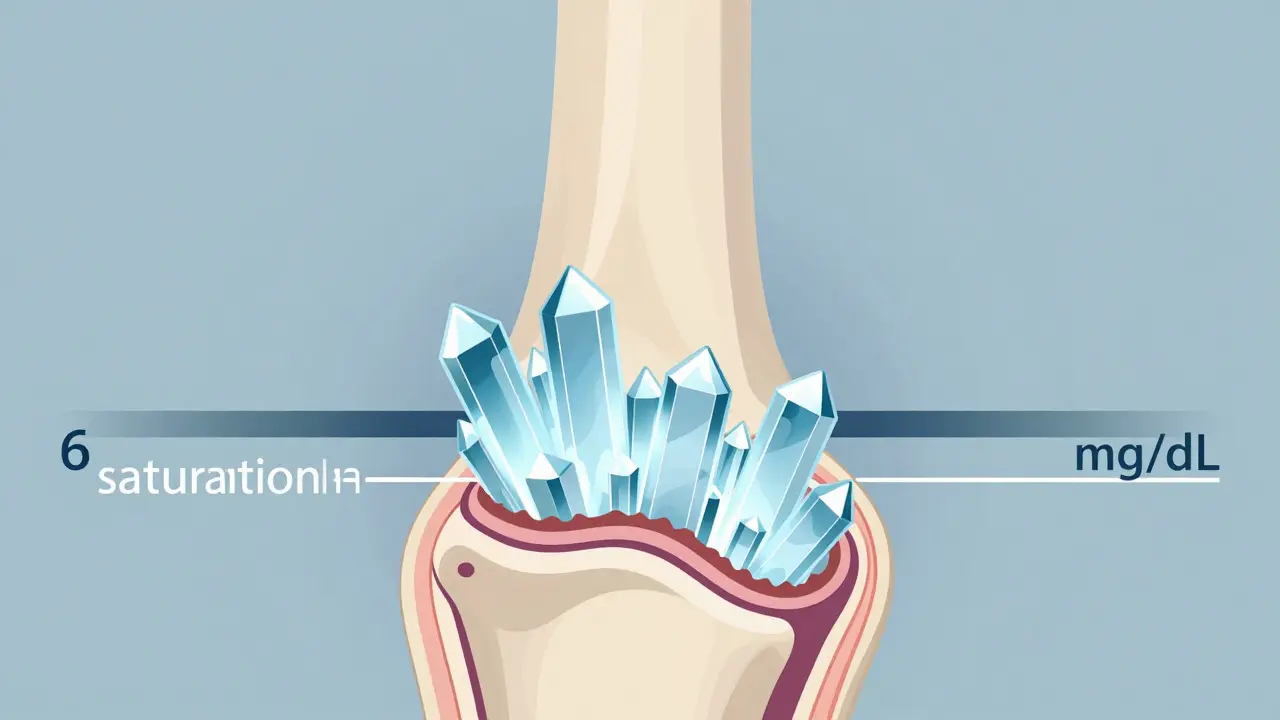
Imagine your joints are filled with microscopic shards of glass. That is essentially what happens when Gout is a form of inflammatory arthritis caused by the buildup of monosodium urate crystals in joints. For years, doctors treated this pain as a nuisance to be managed rather than a disease to be cured. But the medical landscape has shifted dramatically. We now know that simply taking a pill during a flare-up isn't enough. To truly stop the damage and dissolve those crystal deposits, we need to hit specific serum urate targets that evidence-based goals for blood uric acid levels to prevent crystal formation and promote dissolution. This approach, known as "treat-to-target," relies heavily on two main medications: Allopurinol is a first-line xanthine oxidase inhibitor used to lower uric acid production in the body and Febuxostat is an alternative non-purine selective xanthine oxidase inhibitor for patients who cannot tolerate allopurinol.
If you have been diagnosed with gout, understanding these numbers is not just academic-it is the difference between living with chronic pain and returning to a normal life. The goal isn't just to feel better today; it is to ensure your joints don't suffer irreversible damage tomorrow. Let's break down exactly what those targets are, how to reach them, and why your current dose might be failing you.
The Magic Number: Why 6 mg/dL Matters
You might wonder why there is such a specific focus on a number like 6. It comes down to basic chemistry. Uric acid dissolves in blood up to a certain point-approximately 6.8 mg/dL (0.40 mmol/L). Once your levels go above this saturation point, the excess uric acid precipitates out of your blood and forms sharp crystals in your joints. These crystals trigger the intense inflammation we recognize as a gout flare.
To stop new crystals from forming, you need to stay below that saturation point. However, to actually dissolve existing crystals, you need to go lower. Major guidelines, including the 2020 American College of Rheumatology (ACR) Guideline and NICE Guideline NG219, agree on a standard target: keep your serum urate level below 6 mg/dL (360 micromol/L or 0.36 mmol/L). Think of this as the baseline for control. At this level, you prevent new flares and slow disease progression.
But what if you already have visible lumps under your skin, known as tophi, or significant joint damage? In these severe cases, the standard target isn't aggressive enough. The European Alliance of Associations for Rheumatology (EULAR) 2023 recommendations and NICE guidelines suggest aiming even lower: below 5 mg/dL (300 micromol/L or 0.30 mmol/L). This stricter target accelerates the dissolution of tophi. Professor Nicola Dalbeth, a leading expert in gout research, notes that observational data shows an 89% reduction in tophus burden at levels below 0.30 mmol/L compared to 72% at 0.36 mmol/L. However, caution is advised: guidelines explicitly state that levels should not drop below 3 mg/dL, as the benefits of going lower are unproven and potential risks increase.
Allopurinol: The First-Line Workhorse
When starting urate-lowering therapy (ULT), Allopurinol remains the gold standard for most patients. It is effective, well-studied, and inexpensive. Yet, one of the biggest reasons people fail to reach their urate targets is incorrect dosing. Many patients start on a low dose and never get higher, assuming they are "on treatment" because they are taking a pill.
This is a critical mistake. The ACR 2020 guideline strongly recommends starting allopurinol at a low dose-typically ≤100 mg/day (or ≤50 mg/day if you have moderate to severe chronic kidney disease)-and then titrating up. You do not stay at that starting dose. Instead, you check your serum urate levels monthly and increase the dose by 50-100 mg increments until you hit your target. This process can take months. Real-world data from New Zealand’s BPAC NZ 2025 guidelines reveals that 30-50% of patients require doses exceeding the standard 300 mg to reach their targets. In fact, doses of 600-800 mg/day are often needed to achieve target serum urate in 75-80% of patients with normal kidney function.
Why does this matter? Because many primary care providers hesitate to raise the dose due to fears of side effects or lack of familiarity with the titration protocol. Dr. John Fitzgerald, lead author of the ACR guideline, emphasizes that this "start low, go slow" strategy is non-negotiable. If you are on 100 mg of allopurinol and your urate level is still 7.5 mg/dL, you are not being treated effectively-you are merely taking a sub-therapeutic dose.
Febuxostat: When Allopurinol Isn't Enough
If you cannot tolerate allopurinol, or if you fail to reach your target despite high doses, Febuxostat becomes the next logical step. Unlike allopurinol, which is derived from purines, febuxostat is a non-purine selective xanthine oxidase inhibitor. This chemical difference matters for two reasons: safety profiles and efficacy in kidney disease.
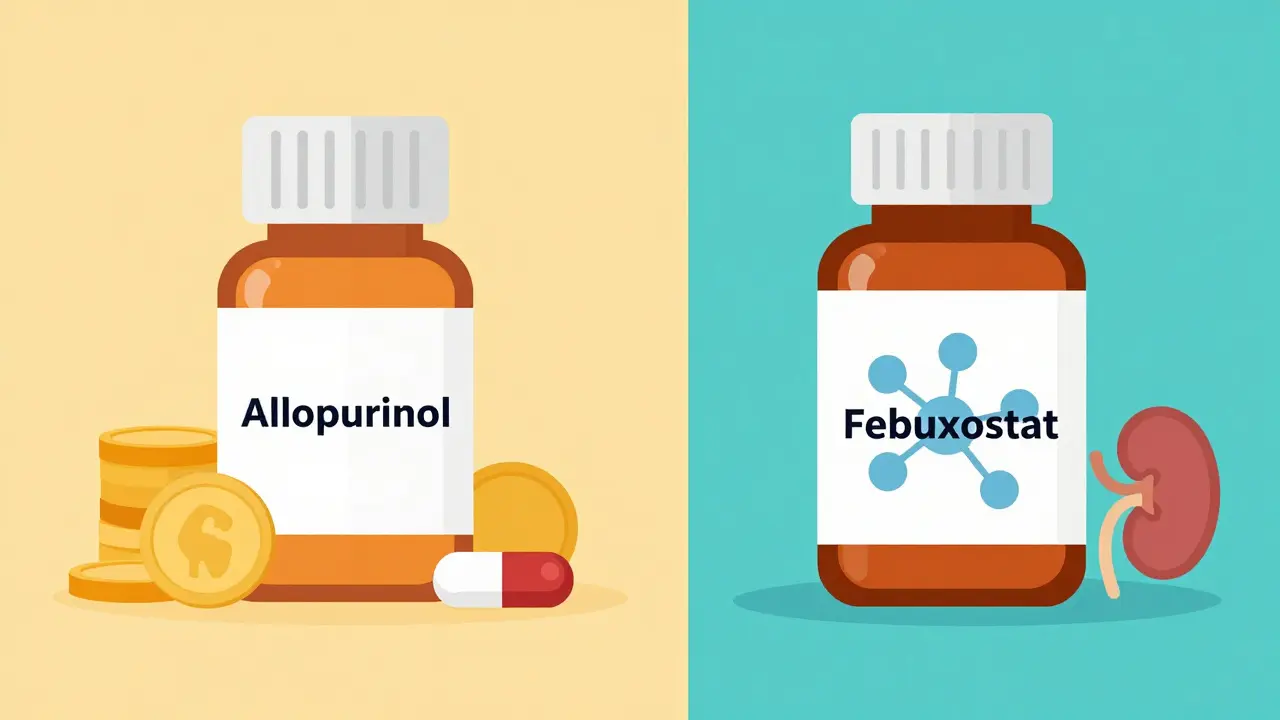
A 2023 meta-analysis published in *Rheumatology* (Oxford) found that febuxostat showed superior efficacy in patients with severe chronic kidney disease (CKD), achieving target urate levels 15% more often than allopurinol in this subgroup. This makes it a valuable tool for patients whose kidneys struggle to clear allopurinol metabolites. However, cost is a barrier. Generic allopurinol costs approximately $4-12 per month in the US, while febuxostat can range from $30-50 per month. NICE Guideline NG219 offers equal preference between the two as first-line options based on patient comorbidities, but insurance coverage often dictates reality.
Starting febuxostat also requires caution. The recommended initiation dose is ≤40 mg/day, titrating to 80 mg/day if needed. Like allopurinol, it requires regular monitoring. Do not assume one medication works instantly for everyone. Your body’s ability to produce and excrete uric acid varies significantly based on genetics, diet, and kidney function.
| Feature | Allopurinol | Febuxostat |
|---|---|---|
| First-Line Status | Preferred by ACR & EULAR for most patients | Alternative or co-first-line (NICE) |
| Starting Dose | ≤100 mg/day (≤50 mg if CKD ≥3) | ≤40 mg/day |
| Max Typical Dose | 600-800 mg/day | 80 mg/day (sometimes 120 mg) |
| Kidney Disease Efficacy | Lower in severe CKD | Higher in severe CKD (15% better target achievement) |
| Cost (US Generic) | $4-12/month | $30-50/month |
| Key Risk | Hypersensitivity syndrome (HLA-B*5801 risk) | Potential cardiovascular signals (monitor closely) |
The Titration Trap: Why Monthly Monitoring is Crucial
Here is where most treatment plans fall apart. Reaching your target isn't a one-time adjustment; it is a process. The ACR’s implementation toolkit documents that monthly serum urate monitoring increases target achievement by 31% compared to quarterly checks. Yet, Medicare claims data from 2023 shows only 54% of patients receive this recommended monthly testing during the titration phase.
Why is monthly checking so important? Because your body needs time to adjust to each new dose. Increasing your allopurinol from 100 mg to 200 mg won't show its full effect immediately. If you test too soon, you might think the dose is ineffective and jump to 300 mg unnecessarily, increasing the risk of side effects. Conversely, waiting six months to retest means you could spend half a year with uncontrolled urate levels, allowing silent joint damage to continue.
Dr. Peter Tugwell’s 2021 systematic review highlighted a sobering statistic: 37% of guideline recommendations are based on low-quality evidence due to limited long-term randomized controlled trials. While this sounds alarming, the consensus on titration remains strong. The practical takeaway is simple: ask your doctor for a clear titration schedule. Write it down. "Start at 100 mg, check labs in 4 weeks, increase by 100 mg if urate >6." Without this plan, you are guessing.
Navigating Side Effects and Patient Concerns
Fear of side effects is the second biggest barrier to reaching targets. Clinical pharmacists report that 68% of dose escalation failures stem from patient concerns about adverse effects. For allopurinol, the most feared side effect is Hypersensitivity Syndrome (AHS), a rare but serious reaction occurring in 0.1-0.4% of patients. The risk is 25 times higher in individuals carrying the HLA-B*5801 genetic variant, which is more common in Asian populations. Genetic testing before starting allopurinol is recommended for high-risk groups.
However, many patients confuse mild rashes or gastrointestinal upset with AHS, leading them to stop medication prematurely. Open communication with your rheumatologist is key. Most minor side effects can be managed by slowing the titration rate further (e.g., increasing by 50 mg instead of 100 mg).
There is also the "flare paradox." When you first start ULT or increase your dose, you may experience more flares. This happens because changing urate levels destabilizes existing crystals, causing them to shed into the joint space and trigger inflammation. About 29% of patients describe this frustrating experience. The solution is prophylaxis: taking anti-inflammatory medication like colchicine or NSAIDs alongside your ULT for the first 3-6 months. Don't let early flares scare you off the treatment path-they are often a sign that the therapy is working.

Real-World Challenges and Equity Issues
Gout management is not just a biochemical puzzle; it is influenced by social and systemic factors. Implementation science studies from New Zealand reveal stark disparities. While Māori and Pacific populations have 1.8-2.5 times higher dispensing rates for urate-lowering medicines, they experience 23% lower target achievement compared to European/Other ethnicities. This gap highlights systemic barriers, including access to specialist care, health literacy resources, and cultural competency in provider-patient interactions.
In the US, CDC data shows only 28% of gout patients receive appropriate ULT dosing. Primary care providers initiate ULT in just 34% of eligible cases. This suggests that much of the responsibility falls on patients to advocate for themselves. You must bring up the concept of "treat-to-target" in your appointments. Ask: "What is my current serum urate level? Are we aiming for below 6 mg/dL? If not, what is our plan to get there?"
Community feedback from the Gout Support Group on HealthUnlocked (over 12,000 members) reinforces this. 78% of respondents reported needing more than 6 months to reach target levels, and 43% required allopurinol doses over 400 mg/day. Their primary frustration? Inadequate provider education about gradual titration. Armed with knowledge, you can bridge this gap.
Future Directions: Precision Medicine and New Drugs
The field of gout treatment is evolving rapidly. Emerging research focuses on precision dosing algorithms. The 2024 GOUT-PRO study demonstrated that genotype-guided allopurinol dosing-considering polymorphisms in genes like ABCG2 and SLC22A12-increased target achievement from 61% to 83% at 6 months. This means your DNA could soon dictate your starting dose, reducing trial-and-error.
Newer drugs like verinurad, a novel uricosuric that helps kidneys excrete uric acid, are in development. These agents may help patients who fail to respond to xanthine oxidase inhibitors alone. Additionally, the ULTRA-GOUT trial (expected results Q4 2025) will compare fixed-dose strategies versus treat-to-target approaches, potentially refining how we view long-term management. Until then, the evidence supports sticking to the proven method: measure, adjust, and repeat until you hit your target.
What is the ideal serum urate level for someone with gout?
For most patients with gout, the target serum urate level is below 6 mg/dL (360 micromol/L). For those with severe gout, including tophi or joint damage, the target is lower: below 5 mg/dL (300 micromol/L). Levels should not drop below 3 mg/dL.
How quickly should I expect to reach my urate target?
It typically takes several months to reach target levels. Real-world data shows 78% of patients need more than 6 months. This is because doses must be increased gradually (titrated) every 4-5 weeks to avoid side effects and allow your body to adjust.
Can I take allopurinol if I have kidney disease?
Yes, but with caution. The ACR recommends allopurinol as first-line regardless of kidney status, but you must start at a lower dose (≤50 mg/day for moderate/severe CKD) and titrate slowly. Febuxostat may be more effective in severe kidney disease.
Why do I get more flares when I start urate-lowering therapy?
This is called the "flare paradox." Changing urate levels causes existing crystals to destabilize and shed, triggering inflammation. Taking preventive anti-inflammatories like colchicine for the first 3-6 months can mitigate this.
Is febuxostat better than allopurinol?
Not necessarily. Allopurinol is preferred for most due to cost and long-term safety data. Febuxostat is reserved for those who cannot tolerate allopurinol or have severe kidney disease, where it shows slightly better efficacy. It is also significantly more expensive.
How often should I check my serum urate levels?
During the titration phase, you should check your levels monthly. Once you reach your target and stabilize, testing can become less frequent (e.g., every 6-12 months). Monthly monitoring increases target achievement by 31%.
Brett Aungst
July 3, 2026 AT 20:56Great breakdown on the titration process. Most people give up because they think one pill fixes everything instantly, but as you noted, it's a slow climb. I started on 100mg and stayed there for three months because my doctor was scared to increase it. My levels never dropped below 7. It took me finding a rheumatologist who actually understood the ACR guidelines to get pushed up to 600mg. Now I'm at 4.8 mg/dL and haven't had a flare in two years. The key is patience and pushing your doc to keep raising the dose until you hit that target.
Vinay Bairagi
July 3, 2026 AT 21:58This entire article is just Western medical propaganda designed to keep us dependent on expensive pharmaceuticals while ignoring traditional remedies that have worked for centuries in our cultures. They want you to believe their pills are magic when really they are just suppressing symptoms with dangerous side effects. Look at how they push febuxostat despite the cardiovascular risks, clearly prioritizing profit over patient safety. We should be focusing on diet and natural healing instead of letting these corporate doctors dictate our health with their arbitrary numbers like 6 mg/dL which means nothing in the real world of holistic wellness.
Blythe Ward
July 5, 2026 AT 19:23oh darling please 🙄 as if anyone here actually reads the fine print of NICE guidelines before chugging their little rainbow pills ✨ i mean sure titration is cute but let’s be real most of us just want the pain gone so we can enjoy our artisanal cheese boards without crying into our wine glasses 🍷🧀 also why is everyone so obsessed with being perfect about this disease it’s not a math test lol just take the drug and try not to die 💅
Casey Eickhoff
July 7, 2026 AT 04:35I find the discussion regarding the 'flare paradox' particularly illuminating; it is a phenomenon that often deters patients from continuing necessary treatment. One must understand that the destabilization of crystals is, in fact, a sign of efficacy, albeit an uncomfortable one. It is imperative that patients communicate openly with their healthcare providers about these initial exacerbations rather than discontinuing therapy prematurely. Furthermore, the emphasis on monthly monitoring cannot be overstated, as it allows for precise adjustments to dosage, thereby optimizing outcomes and minimizing potential adverse effects. Let us strive for a more informed approach to our collective well-being.
rob van oudernallern
July 7, 2026 AT 10:17i totally agree with the first guy about the titration thing its so frustrating when doctors just leave u on low doses forever. i was on 100mg for like a year and nothing happened then i switched docs and he bumped me up every month till i hit target. now im good. also the part about kidney disease is scary but true i have mild CKD so i had to start super low. glad someone wrote this cause my gp has no clue what hes doing honestly.
Mary Howarth
July 8, 2026 AT 11:20Oh my goodness, this is such an incredibly helpful and detailed explanation of something that so many of us struggle with! I am so glad that you took the time to write this out because it really does make a huge difference when you understand exactly what is happening inside your body! I know that starting allopurinol can feel overwhelming, especially with all the talk about side effects and flares, but please remember that you are not alone in this journey! There is a whole community of people who have been through the exact same thing and come out the other side feeling amazing! Keep pushing for those monthly tests and don’t let anyone tell you that your current dose is fine if you are still having pain! You deserve to live a life free from that glass-shard sensation!
Sean Estabrooks
July 9, 2026 AT 14:49The FDA buried the cardiac risk data for febuxostat for years while big pharma lobbied hard to get it approved as a first-line alternative. This isn't medicine, it's a controlled narrative. The HLA-B*5801 testing recommendation is a smokescreen to distract from the systemic failure of primary care to manage basic metabolic disorders. They want you addicted to lifelong titration protocols that generate recurring revenue streams for insurance companies. Wake up. The 'treat-to-target' paradigm is a construct designed to maximize chronicity, not cure. Your kidneys are failing because of the environmental toxins they aren't telling you about, not just uric acid.
Alana Frassinelli
July 10, 2026 AT 19:23i hear you man its tough dealing with the system sometimes but i think getting the facts straight helps a lot. i was scared of the flares too but my pharmacist explained that taking colchicine alongside the allopurinol really helped me get through the first few months without too much pain. it feels weird taking extra meds just to prevent the reaction to the main med but it works. i just try to stay positive and keep tracking my levels even though the blood draws suck. hopefully more people read this and realize they need to advocate for themselves because doctors are so busy they forget to explain the long game.
Gavin Edley
July 11, 2026 AT 23:15Typical American obsession with metrics and targets. In the UK we just suffer quietly and complain about the NHS waiting times. Also who cares if you have tophi? It adds character. This whole treat-to-target nonsense is just another way to pathologize normal aging. I drank beer my whole life and now my joints hurt, deal with it. Why are you all so sensitive about a bit of inflammation? Get a grip. And stop asking your doctors to hold your hand through every single milligram adjustment. Grow up.
jeremy pritchett
July 12, 2026 AT 10:15YOU GOT THIS!!! dont listen to the haters or the confused docs. knowledge is power bro. if you know the number is 6 then fight for it. i went from 9 to 5 in six months by just nagging my doc every single visit. bring this article to your next appt and slap it on the desk. demand the titration plan. you are the CEO of your own body so act like it. stop letting them treat you like a passive recipient of whatever pill they feel like prescribing today. take control and crush those crystals!!
Kimberly Simbulan
July 13, 2026 AT 03:46Sarcasm aside, this is actually spot on. I love how optimistic Mary is, but let's be real, half the battle is just getting your GP to open the chart and look at the last lab result. I spent two years being told 'your level is 7.2, that's close enough' until I basically threatened to sue for malpractice (joking... mostly). Once I started bringing up the ACR guidelines verbatim, suddenly my doctor remembered how to titrate. So yes, educate yourself, but also learn to be annoyingly persistent. It pays off.