Imagine you’ve been taking a specific medication for years. It works well, your side effects are manageable, and you know exactly how it feels in your body. Then, your pharmacy hands you a box with a different color, a different shape, and a lower price tag. The label says it’s the same drug, just a "generic." Do you trust it? Most of us do, but have you ever wondered what actually guarantees that this new pill will work exactly like the old one?
The answer lies in a concept called therapeutic equivalence. It is not just a marketing term or a vague promise. It is a rigorous scientific determination that ensures two drugs-usually a brand-name original and a generic copy-will produce the exact same clinical effect and safety profile in your body. Without this standard, the healthcare system would be chaotic, expensive, and potentially unsafe. Understanding therapeutic equivalence helps you feel confident when switching medications, knowing that science, not luck, is behind the change.
What Exactly Is Therapeutic Equivalence?
At its core, therapeutic equivalence means that two drug products are interchangeable because they are proven to behave identically inside the human body. This definition was formalized by the U.S. Food and Drug Administration (FDA) through a system known as the Orange Book. Established under the Hatch-Waxman Act of 1984, this framework allows manufacturers to introduce generic versions of brand-name drugs once patents expire, provided they meet strict standards.
According to the FDA’s Center for Drug Evaluation and Research (CDER), for a drug to be considered therapeutically equivalent, it must be a pharmaceutical equivalent where bioequivalence has been demonstrated. In plain English, this means the generic drug contains the same active ingredient, in the same amount, and in the same dosage form (like a tablet or capsule) as the brand-name drug. When administered under the conditions specified in the labeling, patients can expect the same clinical outcome and safety profile.
This system is critical for patient safety. It ensures that cost-saving measures do not come at the expense of health outcomes. Between 2009 and 2019, generic substitution enabled approximately $1.7 trillion in savings for the U.S. healthcare system, according to a 2020 report by the Generic Pharmaceutical Association. That money saved didn’t mean people got worse care; it meant the system became more efficient while maintaining high standards of efficacy.
The Three Pillars of Scientific Proof
You might wonder how regulators prove that a generic drug is truly equivalent. It isn’t enough to just look similar. The FDA requires meeting three specific scientific criteria before granting therapeutic equivalence status.
| Criterion | Definition | Key Requirement |
|---|---|---|
| Pharmaceutical Equivalence | Identical active ingredients | Same active ingredient, strength, dosage form, and route of administration. Inactive ingredients (fillers, dyes) may differ. |
| Bioequivalence | Identical absorption rate | The rate and extent of absorption must not differ significantly from the brand-name drug. Typically within +/- 20% variance. |
| Clinical Effect | Identical therapeutic outcome | Expected to have the same clinical effect and safety profile when used as directed. |
Let’s break these down. Pharmaceutical equivalence is the baseline requirement that the drug contains the identical active ingredient in the identical dosage form. You can take a brand-name aspirin and a generic aspirin; both contain acetylsalicylic acid. However, the generic might be white instead of pink, or round instead of oval. These cosmetic differences don’t matter because the active part is the same.
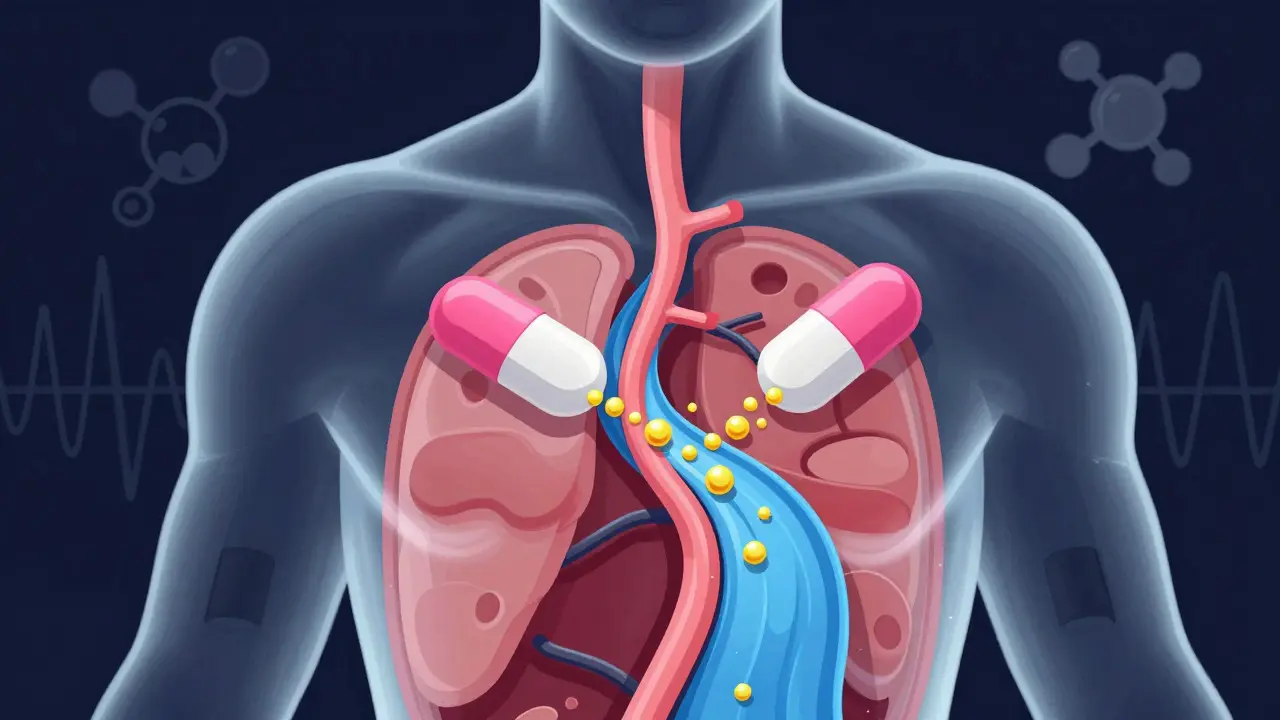
Bioequivalence is the measure of how quickly and how much of the drug enters your bloodstream. This is where the real science happens. The FDA uses rigorous statistical analysis. They require that the 90% confidence intervals for the geometric mean ratios of AUC (area under the curve, which measures total exposure) and Cmax (maximum concentration) fall within 80-125%. This range ensures that the generic drug reaches your system at a speed and intensity that is statistically indistinguishable from the brand name for the vast majority of patients.
Decoding the FDA Orange Book
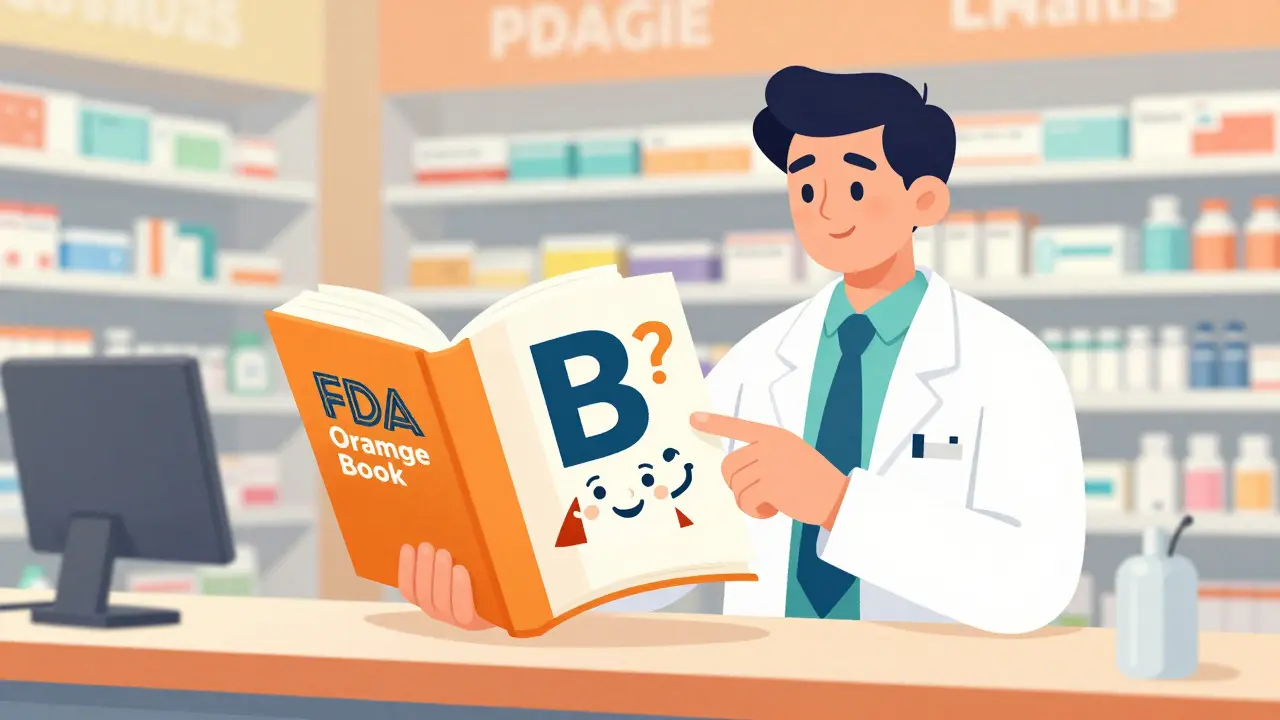
If you want to verify if a generic is therapeutically equivalent to a brand-name drug, you need to look at the FDA Orange Book. This database lists all approved drug products and their patent information. As of October 2023, it contained evaluations for over 13,000 drug products.
The Orange Book uses a two-letter code system to indicate therapeutic equivalence. Understanding these codes is crucial for pharmacists and healthcare providers.
- 'A' Codes: These indicate that the products are considered therapeutically equivalent. For example, an 'AB' code means the immediate-release product has documented bioequivalence and is suitable for substitution. If you see an 'A' code, you can generally switch with confidence.
- 'B' Codes: These indicate potential therapeutic inequivalence. This might happen due to formulation differences, lack of bioequivalence data, or other issues. A 'B' code suggests that the drugs should not be automatically substituted without careful consideration by a healthcare provider.
The first letter tells you about the overall therapeutic equivalence status (A = fail to establish therapeutic inequivalence; B = evidence suggesting therapeutic inequivalence). The second letter provides additional product-specific information. For instance, 'AB' is common for standard generics, while 'BX' might indicate a product that lacks sufficient bioequivalence data.
When Does Therapeutic Equivalence Matter Most?
For most drugs, like antibiotics or blood pressure medications, therapeutic equivalence works seamlessly. Patients rarely notice a difference. However, there are exceptions where precision is paramount. These are known as Narrow Therapeutic Index (NTI) drugs.
NTI drugs have a very small window between a dose that works and a dose that causes toxicity or fails to treat the condition. Examples include warfarin (a blood thinner), levothyroxine (for thyroid issues), and phenytoin (for seizures). Even minor variations in absorption can lead to significant clinical consequences.
Dr. Jerry Avorn, Professor of Medicine at Harvard Medical School, noted in a 2020 New England Journal of Medicine commentary that while the standard 20% bioequivalence margin is generally safe, for drugs like levothyroxine, even small variations can affect sensitive patients. To address this, the FDA applies stricter standards for NTI drugs. Instead of the usual 80-125% confidence interval, the agency often requires a tighter 90-110% range. This ensures that patients on these critical medications receive consistent dosing regardless of the manufacturer.
Patient Experiences and Real-World Data
How does this play out in real life? Generally, very well. A 2022 UnitedHealthcare survey of 12,500 patients found that 87% reported identical therapeutic effects when switching to Orange Book-listed therapeutically equivalent generics. Only 3.2% reported adverse effects they attributed to the switch.
However, anxiety about generics is real. On online forums like Reddit’s r/pharmacy community, patients sometimes share stories of feeling worse after a switch. An investigation into 47 such cases revealed that only 3 involved products with 'A' therapeutic equivalence ratings. The rest involved either 'B' rated products or non-therapeutic interchange (switching to a different drug class entirely).
The Institute for Safe Medication Practices (ISMP) documented 127 adverse event reports potentially related to generic substitution between 2018 and 2022. Crucially, only 17 of those involved products with established therapeutic equivalence per the Orange Book. Most cases were attributed to patient anxiety, the nocebo effect (expecting a negative outcome), or other factors rather than actual therapeutic inequivalence. This highlights the importance of patient education and reassurance from healthcare providers.
Challenges with Complex Drugs
Not all drugs are simple pills. Inhalers, topical creams, and injectables present unique challenges. For these complex drug products, demonstrating bioequivalence through standard blood tests is difficult. How do you measure the bioequivalence of a cream applied to skin?
The FDA acknowledges these difficulties. In their 2023 draft guidance on complex generic products, they expanded therapeutic equivalence considerations for drugs like topical dermatological corticosteroids. The agency is investing heavily in new methodologies. Under the Generic Drug User Fee Amendments (GDUFA) III, $65 million is allocated specifically for advancing therapeutic equivalence methodologies for complex products through 2027.
Additionally, the rise of biosimilars-generic versions of biologic drugs made from living cells-has created a new layer of complexity. Biosimilars are highly similar to the reference product but not identical. The FDA has established a separate "interchangeability" designation for biosimilars that builds upon but differs from traditional therapeutic equivalence principles. This ensures that even as medicine becomes more advanced, patient safety remains the priority.
How Healthcare Providers Ensure Safety
In the U.S., 49 states permit automatic substitution of therapeutically equivalent generics. Pharmacists play a key role in this process. Before handing you a generic, they verify the therapeutic equivalence code in the Orange Book. If the code is 'A', they can substitute. If it’s 'B', they may need to consult with the prescriber.
Common implementation challenges include confusion between therapeutic equivalence and therapeutic interchange. Therapeutic interchange allows substitution within the same therapeutic class (e.g., swapping one statin for another) but not necessarily the same molecule. A 2019 study in JAMA Internal Medicine showed 32% higher adverse event reporting with therapeutic interchange compared to generic substitution based on therapeutic equivalence. This underscores why sticking to therapeutically equivalent generics is safer than broad class substitutions.
To help professionals navigate this, the FDA offers free online training modules. These 90-minute courses cover the coding system and regulatory requirements. In 2022, 85% of participants demonstrated improved accuracy in therapeutic equivalence determinations after completing the training.
The Future of Therapeutic Equivalence
As technology advances, so does our ability to ensure drug safety. The FDA is partnering with MIT’s Laboratory for Financial Engineering on a project to use artificial intelligence to predict potential therapeutic inequivalence. Machine learning models are being developed to identify formulation characteristics that might affect therapeutic outcomes, adding an extra layer of scrutiny before drugs reach the market.
Long-term, therapeutic equivalence will remain central to pharmaceutical regulation. It balances innovation with accessibility, ensuring that life-saving treatments are available to everyone, not just those who can afford brand-name prices. By understanding what therapeutic equivalence means, patients can engage more confidently with their healthcare providers, knowing that the science behind their medication switches is robust, tested, and designed with their safety in mind.
Is a generic drug always the same as the brand-name drug?
Yes, if it is therapeutically equivalent. This means it has the same active ingredient, strength, and dosage form, and has passed bioequivalence testing to ensure it works the same way in the body. Inactive ingredients like colors or fillers may differ, but the clinical effect is identical.
What does the 'A' code in the FDA Orange Book mean?
An 'A' code indicates that the generic drug is considered therapeutically equivalent to the brand-name reference product. It has demonstrated bioequivalence and can be expected to have the same clinical effect and safety profile. Pharmacists can typically substitute these drugs automatically.
Are there any risks associated with switching to a generic drug?
For most patients, the risk is negligible. Studies show high rates of identical therapeutic effects. However, for narrow therapeutic index (NTI) drugs like warfarin or levothyroxine, even small variations can matter. The FDA applies stricter standards for these drugs, but patients should still monitor their response closely and consult their doctor if they notice changes.
Why do some patients feel different on a generic drug?
Sometimes, patients experience the nocebo effect, where anxiety about the switch leads to perceived negative symptoms. Other times, differences in inactive ingredients (like binders or dyes) might cause mild digestive issues or allergic reactions, though the active drug performance remains the same. True therapeutic inequivalence is rare for 'A' rated generics.
How does therapeutic equivalence differ from therapeutic interchange?
Therapeutic equivalence involves switching between the exact same drug molecule (brand vs. generic) with proven identical performance. Therapeutic interchange involves switching between different drugs in the same class (e.g., one blood pressure med for another). Interchange carries higher risks of adverse events because the molecules are not identical.
What is bioequivalence?
Bioequivalence is a scientific measure showing that a generic drug is absorbed into the bloodstream at a similar rate and extent as the brand-name drug. The FDA requires that the 90% confidence intervals for absorption metrics fall within 80-125% of the brand-name drug to ensure comparable clinical effects.
Do biosimilars follow the same rules as generic drugs?
Not exactly. Biosimilars are similar to but not identical copies of biologic drugs. They undergo a different approval process. While they must be highly similar to the reference product, the FDA uses a separate "interchangeability" designation for biosimilars, which includes additional requirements for switching back and forth between products safely.