Opioid & Sleep Apnea Risk Estimator
This tool estimates relative risk based on clinical data regarding opioid-induced respiratory depression and sleep apnea prevalence.
- Chronic users with SDB: 71%
- O2 response reduction: 25-50%
- CO2 response blunting: 30-60%
Assessment Result
Risk Level:
Estimated AHI Impact:
Physiological Effect:
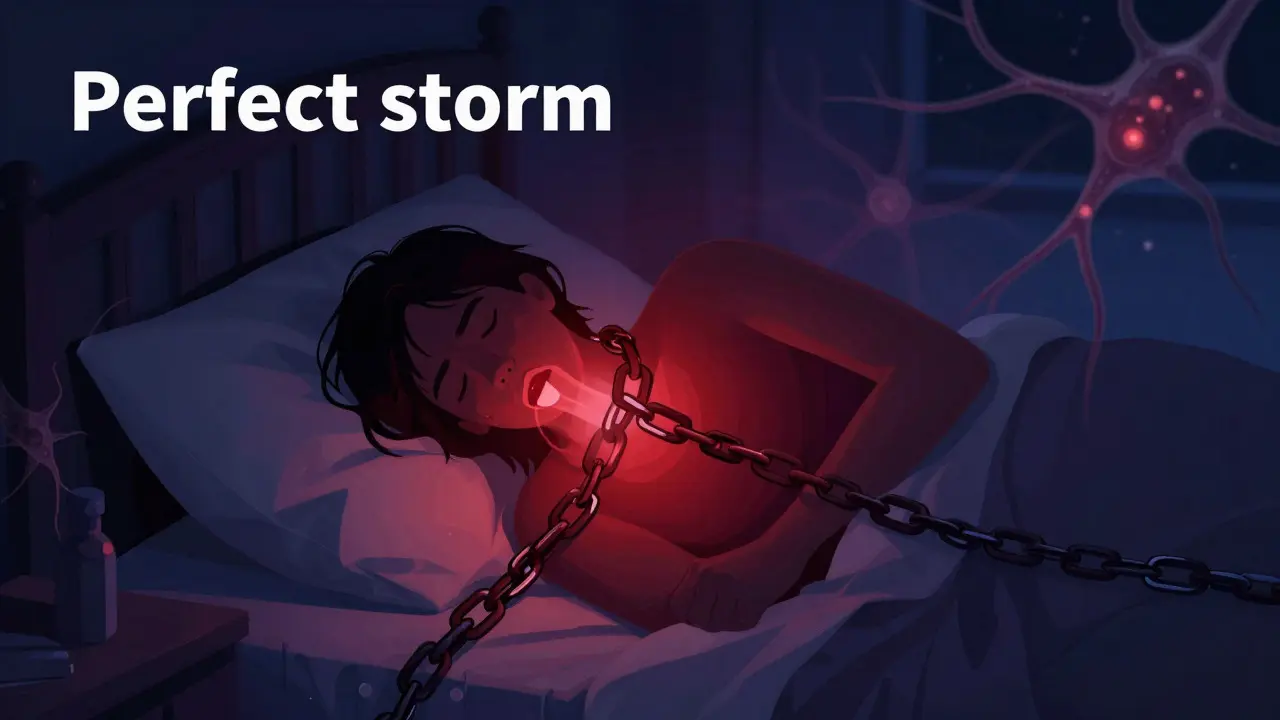
Imagine going to bed feeling safe, only to wake up gasping for air in the middle of the night. For millions of people managing chronic pain with prescription medications, this is not a nightmare scenario-it is a documented medical reality. When Sleep Apnea is a disorder characterized by repeated pauses in breathing during sleep meets opioid use, the result can be dangerous drops in blood oxygen levels known as nighttime hypoxia is a condition where blood oxygen saturation falls below normal levels during sleep. This combination creates a perfect storm for respiratory failure, often going undetected until it becomes critical.
You might think that taking your prescribed pain medication is straightforward. But if you have undiagnosed sleep apnea or are on long-term opioid therapy, your body’s ability to breathe while you sleep changes drastically. Recent data suggests that nearly 71% of chronic opioid users suffer from moderate-to-severe sleep-disordered breathing. That is more than two out of three patients. Understanding this link isn't just about better sleep; it is about survival.
How Opioids Quiet Your Breathing Drive
To understand why this happens, we need to look at what opioids actually do inside your brain. These drugs don’t just block pain signals; they interact directly with the parts of your brainstem responsible for keeping you breathing. Specifically, they activate μ-opioid receptors in areas like the medullary pre-Bötzinger complex. Think of this area as the engine room of your breathing rhythm.
When opioids bind to these receptors, they dampen the system. Studies show that opioids can reduce your body's response to low oxygen (hypoxic ventilatory response) by 25-50%. They also blunt your reaction to high carbon dioxide levels (hypercapnic ventilatory response) by 30-60%. In plain English? If your oxygen gets too low or CO2 builds up, your brain normally screams at your lungs to work harder. Opioids turn that scream into a whisper. During sleep, when your natural drive to breathe is already lower, this effect is amplified.
It’s not just about the central nervous system either. Opioids relax the muscles in your upper airway, including the genioglossus muscle in your tongue. This relaxation reduces the pressure needed to keep your airway open by 2-4 cm H2O. For someone without sleep apnea, this might cause occasional snoring. For someone with obstructive sleep apnea (OSA), it means their airway collapses much more easily, leading to longer and more frequent pauses in breathing.
The Silent Epidemic: Prevalence and Severity
The numbers behind this issue are staggering. A 2022 meta-analysis found that 46% of chronic opioid users have severe sleep apnea, defined as an Apnea-Hypopnea Index (AHI) of 30 or more events per hour. To put that in perspective, an AHI of 5-15 is considered mild. We are talking about people stopping breathing 30 times every hour, every single night.
| Metric | Non-Opioid Users (with similar BMI) | Chronic Opioid Users |
|---|---|---|
| Average AHI (events/hour) | 15-20 | 25-35 |
| Central Apnea Index (CAI) | 2-5 events/hour | 10-15 events/hour |
| Risk of Severe Hypoxemia (<88% SpO2) | 22% | 68% |
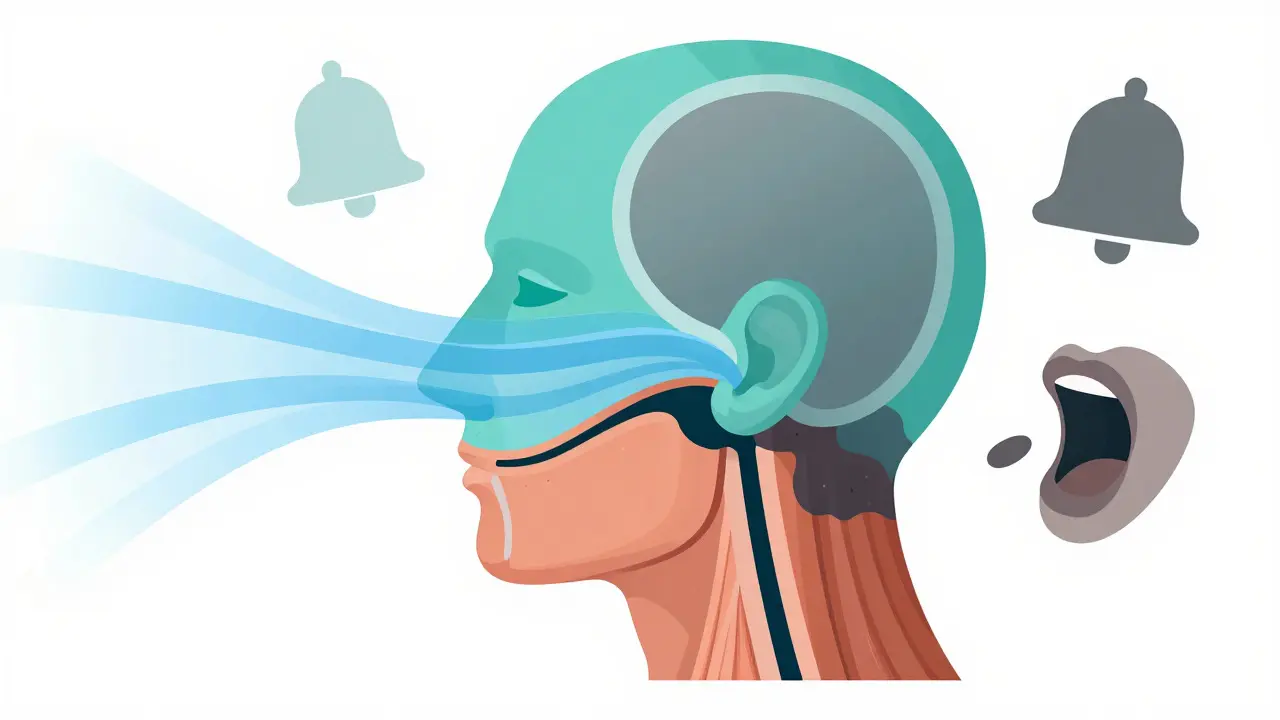
Notice the jump in Central Apnea Index (CAI). While obstructive apnea involves physical blockage, central apnea happens when the brain simply forgets to tell the body to breathe. Opioids are notorious for causing this type of event. Research indicates that methadone, in particular, carries the highest risk, with doses over 100 mg/day associated with severe central apnea in 65% of patients. Even standard morphine equivalents play a role: for every 10 mg increase in daily dose, the AHI rises by 5.3%.
Recognizing the Warning Signs
So, how do you know if you or a loved one is at risk? It rarely looks like the dramatic scenes in movies where someone chokes violently. Often, it is subtle and insidious. You might notice excessive daytime fatigue, even after a full eight hours in bed. Morning headaches are another common red flag, caused by the buildup of carbon dioxide overnight.
Partners often report loud snoring followed by silence, then a sudden gasp or choke. However, because opioids sedate the patient, the arousals from apnea might not be strong enough to wake them fully. Instead of waking up refreshed, they wake up exhausted. Cognitive issues like brain fog, poor concentration, and mood swings are frequently misattributed to the pain condition itself or the opioid side effects, rather than the lack of oxygen.
If you are on long-term opioid therapy-especially doses exceeding 50 Morphine Equivalent Daily Dose (MEDD)-and you experience any of these symptoms, do not ignore them. Dr. David M. Rapoport from NYU School of Medicine has noted that screening should be mandatory before starting high-dose therapy. Waiting for symptoms to become severe can have fatal consequences.

Clinical Management and Treatment Options
Diagnosis usually starts with a polysomnography, or sleep study. The American Academy of Sleep Medicine recommends this for all patients initiating long-term opioid therapy at higher doses, particularly if they have other risk factors like obesity or a history of snoring. Home sleep apnea testing (HSAT) devices, such as the FDA-cleared Nox T3 Pro, are becoming more accessible and have shown 92% sensitivity in detecting significant sleep apnea in opioid-treated patients.
Once diagnosed, treatment focuses on keeping the airway open and stabilizing breathing. Continuous Positive Airway Pressure (CPAP) remains the gold standard for obstructive sleep apnea. It works by delivering pressurized air through a mask, acting as a pneumatic splint to keep the throat open. However, adherence can be tricky. Studies show that only 58% of opioid users adhere to CPAP therapy compared to 72% of non-users, often due to discomfort or cognitive side effects.
For those who struggle with CPAP, there are alternatives. Opioid rotation involves switching to a different opioid that may have less respiratory depressant effects. Dose reduction is always considered, though it must be balanced against pain management needs. Positional therapy, which encourages sleeping on your side, can also help reduce obstructive events.
Emerging treatments offer hope. Clinical trials are investigating acetazolamide, a medication that stimulates breathing, showing a 35% reduction in AHI in preliminary data. Additionally, researchers are looking into selective opioid receptor modulators like cebranopadol, which aim to provide pain relief without the heavy respiratory cost. While these are still in development, they represent a shift toward safer pain management strategies.
Practical Steps for Patients and Caregivers
If you are navigating this complex landscape, here is what you can do right now:
- Ask for Screening: If you are prescribed opioids for more than a few weeks, ask your doctor about a sleep apnea screening. Mention if you snore or feel tired during the day.
- Monitor Oxygen Levels: Consider using a pulse oximeter at home. While not a diagnostic tool, seeing your oxygen drop below 90% at rest can be a powerful motivator to seek further evaluation.
- Optimize Sleep Environment: Avoid alcohol and sedatives alongside opioids, as they compound respiratory depression. Sleep on your side if possible.
- Communicate with Specialists: Ensure your pain specialist and sleep physician are communicating. Co-management leads to better outcomes.
- Review Medication Regularly: Work with your doctor to ensure you are on the lowest effective dose. Never adjust your dosage without professional guidance.
The synergy between opioids and sleep-disordered breathing is real, but it is manageable. By recognizing the risks and seeking appropriate screening and treatment, you can protect your health and improve your quality of life. Don't let silent hypoxia steal your nights-or your future.
What is nighttime hypoxia?
Nighttime hypoxia refers to abnormally low levels of oxygen in the blood during sleep. It is commonly caused by sleep apnea, where breathing pauses repeatedly, preventing adequate oxygen exchange. In patients taking opioids, this risk is significantly heightened due to drug-induced respiratory depression.
Do all opioids cause sleep apnea?
All opioids carry some risk of respiratory depression, but the severity varies. Methadone is associated with the highest risk of central sleep apnea. The risk is also dose-dependent; higher doses of any opioid increase the likelihood of developing sleep-disordered breathing and nighttime hypoxia.
How is opioid-related sleep apnea diagnosed?
Diagnosis typically involves a polysomnography (in-lab sleep study) or a validated home sleep apnea test (HSAT). These tests measure breathing patterns, oxygen levels, and heart rate throughout the night to calculate the Apnea-Hypopnea Index (AHI) and identify central vs. obstructive events.
Is CPAP effective for people on opioids?
Yes, CPAP is the first-line treatment for obstructive sleep apnea in opioid users. However, adherence rates are lower (around 58%) compared to non-opioid users. Despite this, it remains highly effective at preventing airway collapse and improving oxygenation when used consistently.
Can stopping opioids reverse sleep apnea?
In many cases, reducing or discontinuing opioids can improve sleep-disordered breathing, especially central apnea. However, some studies suggest that long-term use may lead to neural adaptations, meaning symptoms might persist even after cessation. Medical supervision is crucial for tapering off opioids safely.