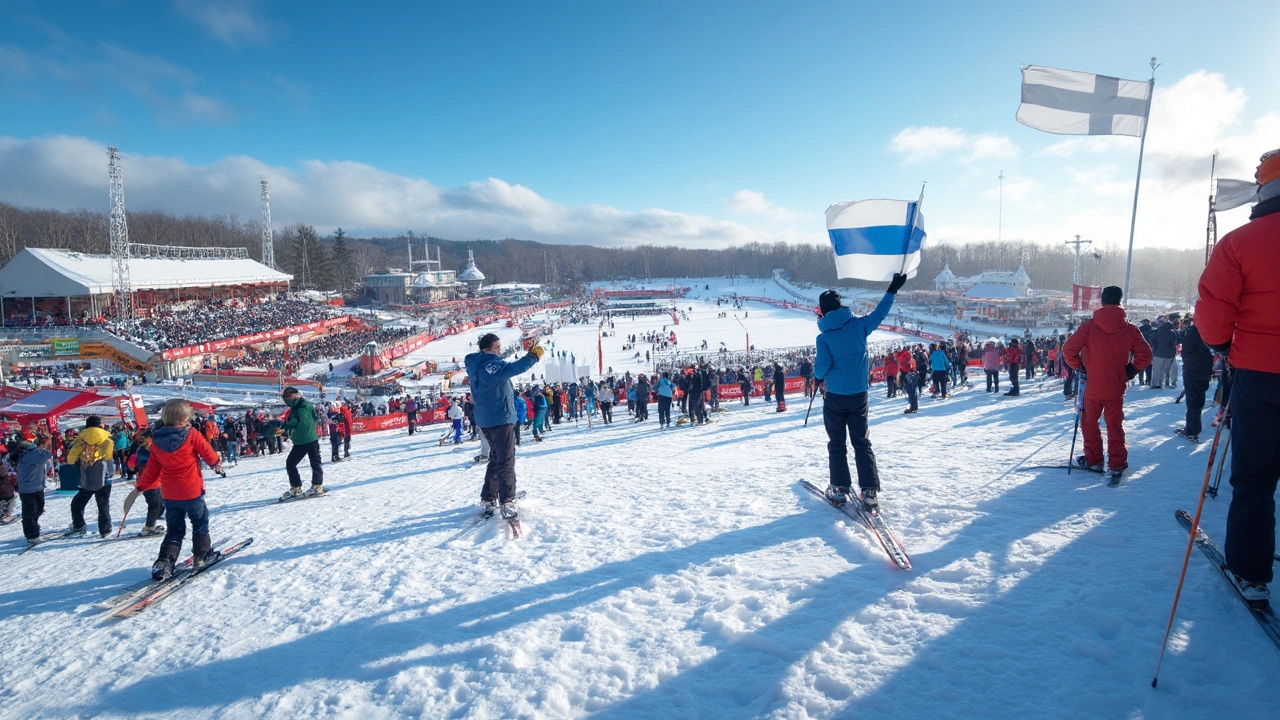
If you want to see where the next Olympic and World Cup champions get their start, look straight at the Nordic Junior World Ski Championships. In 2019, Lahti, Finland, turned heads—not just for the snow, but for the way it changed the game, especially for young women in Nordic sports.
Most people think of alpine or cross-country when they hear 'skiing', but Nordic means so much more. It's cross-country, ski jumping, and Nordic combined (which mixes jumping with racing). This event threw all three onto one freezing stage, and for a full week, the world watched future stars take their first major wins.
Now here's the thing—2019 wasn't just another round of junior races. It was the first time young women got their own shot in the Nordic combined event, which, if you ask me, was long overdue. Ayane Miyazaki, a teenager from Japan, grabbed that new piece of history for herself by winning the very first women's title in the event. Imagine being the 'first ever' to do something on a world stage. Talk about pressure—and she handled it like a champ.
- Why Lahti Matters in Nordic Skiing
- A Game-Changer for Women Athletes
- Highlight Performances and Standout Moments
- Legacy and Future Watching
Why Lahti Matters in Nordic Skiing
Ask anyone involved in Nordic skiing and they'll tell you: Lahti is sort of a holy ground for these sports. It has hosted the FIS Nordic World Ski Championships a record seven times—more than any other city. When people talk about legendary ski venues, Lahti always pops up, and not just for the scenic forests or perfectly groomed trails.
The city's facilities are built for serious competition. The Lahti Sports Center is stacked with world-class ski jumps, a tight stadium, long cross-country loops, and all the infrastructure young athletes need. If you're a junior skier who gets to race here, you're on a course used by Olympic medalists. That alone is a confidence boost.
But Lahti is more than its buildings. Because the city sits in southern Finland, athletes face every weather twist—icy winds, big dumps of snow, and days with nothing but hard-packed, fast conditions. Athletes have to adapt, and that skill pays off when they move to senior events around the globe.
Hosting the 2019 Junior and U23 World Championships wasn’t Lahti's first rodeo. The city also has plenty of experience handling big events. They know how to keep things running (even if temps drop to -20°C), and fans love coming out to cheer, making it actually feel like a major championship. Here’s a glance at some Lahti hosting highlights:
| Event | Year(s) Hosted |
|---|---|
| FIS Nordic World Ski Championships | 1926, 1938, 1958, 1978, 1989, 2001, 2017 |
| Nordic Junior & U23 World Ski Championships | 2019 |
So for any young skier, getting to race in Lahti isn't just a big deal—it's like playing football at Wembley or baseball at Fenway. You're part of the sport's living history, and that brings out the best in everyone.
A Game-Changer for Women Athletes
The big story out of the 2019 Nordic Junior World Ski Championships wasn’t just about medals. For the first time ever, women got to compete in the Nordic combined event, which is a mix of ski jumping and cross-country skiing. For years, only men got a shot at this challenge at the world junior level, so this move was honestly overdue. The Nordic skiing community finally gave young women the platform to prove themselves on a stage that could launch a pro career.
Ayane Miyazaki from Japan made sure she’d be part of ski history. She won the first-ever women’s title in the Nordic combined (normal hill and 5 km). This isn’t just a line in a record book—she became a role model for girls who never saw their event at the world level before. If you’re curious how she did it, it came down to solid ski jumping and smart pacing in the cross-country race. This combo takes guts, balance, endurance, and a fearless attitude.
And here’s why this matters: Nordic combined has long been one of the toughest winter sports, but there was a gap. Women were officially recognized now, which means more training, funding, and attention for young female athletes. That boost can change how national teams operate and how sponsors think about supporting girls early on.
To see the impact, take a look at the headline stats from that historic day:
| Event | Gold | Country | Winning Time |
|---|---|---|---|
| Women's Nordic Combined (Normal hill/5 km) | Ayane Miyazaki | Japan | No time published* |
*Official timing wasn't widely promoted, but the focus was on the breakthrough participation rather than the clock. The win itself opened doors.
Since then, more young women have started taking up Nordic combined. Discussions about getting the women’s event into the Olympic program have gotten louder, and federations are slowly catching up with this new reality. If you're a girl watching this, it's pretty cool to know there’s finally a path to the top in every part of Nordic sport.
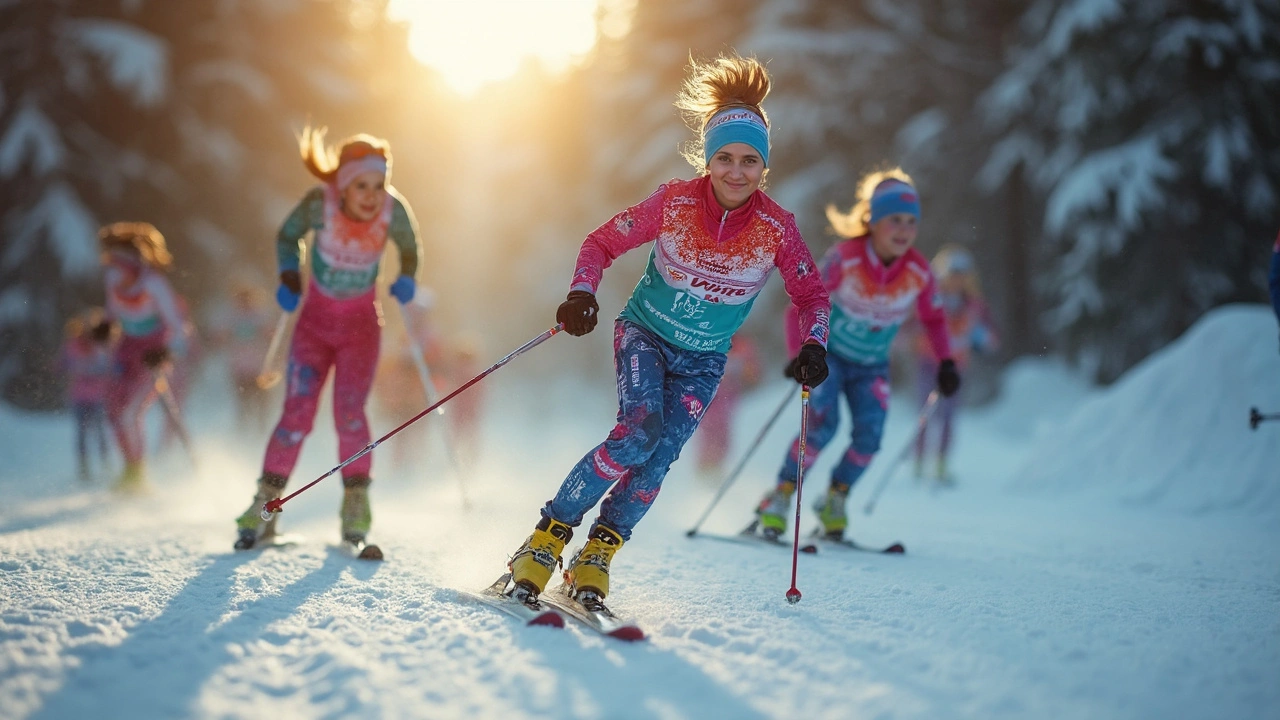
Highlight Performances and Standout Moments
If you want to see raw potential and serious competition, this week in Lahti had it all. One of the biggest highlights was watching Ayane Miyazaki from Japan step up and win the first women’s Nordic combined title. She didn’t just win; she made history at only 17 years old. There’s something special about watching an athlete become a record-breaker before turning 20.
On the men’s side, Jules Chappaz from France outpaced a stacked field in the cross-country sprint classical (1.6 km). Picture tight finishes and skiers collapsing at the finish line from pure exhaustion – that’s how hard-fought his win was. Alexander Terentev (Russia) and Iver Tildheim Andersen (Norway) rounded out the podium, both proving themselves as future stars to watch.
The ski jumping ladies’ normal hill event also delivered, with top young jumpers flying farther than many expected. Each jump was a story in itself, with nerves, snow, and split-second decisions deciding medals. Results from these events feed directly into who gets noticed by national teams and sponsors – not just the fans.
Here’s a quick table of the standout event winners at the 2019 Nordic skiing junior championships:
| Event | Winner | Country |
|---|---|---|
| Women's Nordic Combined (NH/5 km) | Ayane Miyazaki | Japan |
| Men's Cross-Country Sprint (Classic, 1.6 km) | Jules Chappaz | France |
| Ladies' Ski Jumping (Normal Hill) | See official documents for full results* | - |
*Full result lists are kept by the International Ski Federation, but the main story is clear: new names elbowed their way into the spotlight in Lahti.
- Ayane Miyazaki’s win cracked open a path for more girls in Nordic combined.
- The podium in men’s sprint cross-country showed just how international the sport is getting, with France, Russia, and Norway sharing honors.
- These moments launch careers. A medal here? You’re probably going to see those athletes in the next few years on bigger stages.
Legacy and Future Watching
What really made the 2019 Nordic Junior World Ski Championships special was the window it opened into the future of Nordic sports. This wasn't just another winter event stacked with typical results. Lahti became the place where young athletes, many barely out of high school, set the bar for what's next in Nordic skiing.
First up: breaking old barriers. With the debut of the women's Nordic combined event, the championship smashed one big glass ceiling. Ayane Miyazaki, who took home the very first women's gold, didn't just win a race—she changed the sport's landscape. Since then, that event has become a standard, showing more girls worldwide that they have a real shot at climbing the ranks into adult competitions.
Besides individual firsts, these championships are like a talent scout’s dream. If you look back, a ton of Olympic and professional medalists started right here at junior events. Organizers and coaches from countries like France, Norway, and Japan scout these competitions to spot the next big names. Keep an eye on those podium finishers: Jules Chappaz led the French sprint team here, and years later, he popped up on senior World Cup scoresheets.
Here's a quick look at what the event delivered in 2019, based on those standout performances:
| Event | Winner | Country | Category |
|---|---|---|---|
| Men's Sprint Classical | Jules Chappaz | France | Cross-country |
| Women's Nordic Combined | Ayane Miyazaki | Japan | Nordic combined |
| Men's U23 Cross-country | Iver Tildheim Andersen | Norway | Cross-country |
For families with kids in Nordic clubs, or anyone just keen on following the sport, this championship is a must-watch every year. Not only do you see up-and-comers, but you also spot changes in coaching styles, gear, and racing tactics before they hit the adult circuits. If you're considering taking your own training up a notch, studying how juniors compete here is way more helpful than just watching the pros—they’re closer to your stage, and you can see what really works at the development level.
The message is clear: Lahti 2019 didn't just hand out medals; it handed out opportunities for future greatness. As athletes like Miyazaki and Chappaz move up and inspire others, expect the legacy of these championships to keep growing, year after year.
Charity Peters
June 26, 2025 AT 12:18That first women's Nordic combined win was everything.
Sarah Khan
June 27, 2025 AT 20:41It’s wild to think that for decades, half the population was told their physical potential didn’t matter in Nordic combined-like the sport itself was a cathedral built without doors for them. Ayane didn’t just win a race; she kicked down the threshold. The fact that it took until 2019 for this to happen isn’t progress-it’s a correction. And now? Girls in Japan, Norway, Canada, even rural Vermont, are looking up at a sky they were told was out of reach and realizing: no, it was just locked. And someone finally had the key.
Kelly Library Nook
June 29, 2025 AT 17:12While the narrative surrounding Ayane Miyazaki’s victory is emotionally compelling, one must acknowledge the structural inequities that persisted in FIS regulations for over a century. The absence of a women’s Nordic combined event until 2019 constitutes a documented institutional failure, not a milestone of inclusion. Furthermore, the lack of published timing data for her win suggests a performative gesture rather than a substantive integration into competitive standards. The media’s romanticization of this event obscures the fact that gender parity in winter sports remains statistically unbalanced in funding, media coverage, and elite development pipelines.
Crystal Markowski
July 1, 2025 AT 13:45Watching young athletes like Ayane step onto a stage that was never meant for them-and then own it-reminds me why sport matters beyond medals. It’s about proving that potential doesn’t care about gender, tradition, or who got to decide the rules. The fact that Lahti hosted this moment with such grace, with fans cheering and coaches nodding in respect, tells me the culture is shifting. It’s not just about who wins-it’s about who gets to stand on the podium at all. Keep showing up, keep pushing, and don’t let anyone tell you your dream is too big because the sport hasn’t caught up yet. You’re not late. You’re the future.
Faye Woesthuis
July 2, 2025 AT 09:15It’s 2019 and we’re still patting ourselves on the back for letting girls ski? Pathetic.
raja gopal
July 4, 2025 AT 06:46I come from a place where winter sports are rare, but I watched Ayane’s race on my phone in a tiny village in Kerala. I cried-not because she won, but because I saw my daughter in her. No one told her she couldn’t. She just did it. That’s the kind of quiet revolution that changes everything, even if the world doesn’t notice right away.
Samantha Stonebraker
July 5, 2025 AT 16:22There’s something sacred about witnessing the first time a door swings open-not because someone asked nicely, but because they walked through it like they owned the frame. Ayane didn’t wait for permission. She didn’t ask for a seat at the table. She built her own table, carved it from snow and ice and pure stubborn will, and sat down like she’d been there all along. That’s the kind of quiet power that doesn’t need a headline to matter. It just does.
Kevin Mustelier
July 6, 2025 AT 07:52Another feel-good story for the woke masses 😒 Honestly, Nordic combined was always a men’s sport. Now they’re forcing diversity into it like it’s a diversity training slide. Next thing you know, they’ll make the ski jumps wheelchair accessible. 🤷♂️
Keith Avery
July 7, 2025 AT 08:18Let’s be real-Nordic combined is a niche event with minimal global relevance. The fact that they gave it to women in 2019 isn’t progress, it’s tokenism. The real champions are the men who’ve been grinding in this sport for decades, and now they’re being sidelined for symbolic gestures. If you want equality, equalize the funding, not the events. And by the way, the ‘first-ever’ narrative is just PR fluff. The sport didn’t need this.
Luke Webster
July 7, 2025 AT 16:17It’s beautiful how Lahti, a city that’s hosted Nordic championships since the 1920s, became the place where the next generation of athletes-especially young women-finally got to see themselves in the sport’s history. I’ve been to Lahti. The snow there smells like pine and determination. And that day? The air was different. It wasn’t just cold-it was alive with possibility. For every girl who watched Ayane win and thought, ‘Maybe I could do that too,’ the future got a little wider.
Natalie Sofer
July 9, 2025 AT 14:40i just watched the video of ayane and i cried like a baby 😭 like, how is she 17?? she looked so calm like she was just out for a walk in the woods. also, lahti looks like a fairy tale with all that snow and the crowd cheering?? so beautiful. thank you for sharing this.
Tiffany Fox
July 10, 2025 AT 08:35That win was more than a medal-it was a signal. Girls everywhere are seeing it now: if you’re good enough, the door opens. No need to wait for permission.
Rohini Paul
July 12, 2025 AT 07:38Why did it take so long? I get that Nordic combined is physically brutal, but so are a lot of sports. The real question is why no one pushed for this sooner. The fact that it took a 17-year-old from Japan to force the issue says more about the system than about her. She didn’t break the mold-she just refused to fit in it.
Courtney Mintenko
July 13, 2025 AT 06:12Let’s be honest-this was just the FIS trying to look woke before the Olympics. The real story? The women’s event was rushed, poorly covered, and the timing wasn’t even published. It’s not empowerment-it’s optics. And now we’re supposed to pretend this was some historic moment? Please. The men’s event has been elite for 100 years. This? It’s a PR stunt dressed in snow gear.