For decades, the medical community treated obesity as a lifestyle choice. If you gained weight, it was because you ate too much or moved too little. Simple, right? Well, not really. In June 2013, the American Medical Association officially recognized obesity is a chronic, progressive, relapsing, multifactorial, neurobehavioral disease characterized by excessive fat accumulation that impairs health. This shift changed everything. It moved the conversation from blame to biology. Today, we know that your body fights hard to maintain its weight, often against your best intentions. Understanding this biological reality is the first step toward managing your health effectively.
Why We Reclassified Obesity as a Disease
The reclassification wasn't just semantic; it was practical. By defining obesity as a disease, doctors could prescribe evidence-based treatments instead of just telling patients to "try harder." The World Health Organization defines adult obesity as a Body Mass Index (BMI) of 30 kg/m² or higher. However, BMI alone misses the mark. The Obesity Medicine Association describes it more accurately as a condition where increased body fat promotes adipose tissue dysfunction. This dysfunction leads to abnormal fat mass physical forces, resulting in adverse metabolic, biomechanical, and psychosocial health consequences.
This definition matters because it highlights that fat cells are active organs, not just storage containers. When they expand beyond their capacity, they leak inflammatory markers into your bloodstream. This state, known as adiposopathy, drives systemic inflammation. For example, individuals with obesity often have 2 to 3 times higher levels of C-reactive protein, a key marker of inflammation. This chronic low-grade inflammation is what links excess weight to serious conditions like type 2 diabetes and heart disease.
The Biology Behind the Struggle
So, why does the body hold onto weight so tightly? It’s not a lack of willpower; it’s a complex interplay of genetics, hormones, and environment. Twin studies suggest that genetic factors account for 40% to 70% of susceptibility to obesity. Genome-wide association studies have identified over 250 genetic variants associated with BMI. One notable example involves mutations in the MC4R gene, present in 2% to 5% of individuals with severe obesity. These mutations disrupt the signaling pathways that tell your brain you’re full.
Beyond genetics, there’s a vicious cycle at play. As weight increases, mobility often decreases. Moderate obesity can reduce daily energy expenditure by 15% to 20%. Less movement means fewer calories burned, which leads to further weight gain. Simultaneously, psychological distress stimulates appetite via cortisol-mediated pathways. Sleep plays a huge role here too. Obese individuals often sleep 30 to 45 minutes less per night on average. This sleep deprivation increases ghrelin (the hunger hormone) by 15% and decreases leptin (the satiety hormone) by 18%. Your body literally gets hungrier and feels less satisfied when you’re tired and carrying extra weight.
Metabolic Risks and Complications
Ignoring these biological signals has serious consequences. Obesity isn’t just about looking different; it’s a driver of multiple comorbidities. Data from the CDC indicates a 3-fold increased risk of type 2 diabetes and a 2.5-fold increased risk of cardiovascular disease. Visceral fat, the fat stored around your organs, correlates strongly with metabolic syndrome components. A correlation coefficient of r=0.78 shows just how tightly linked visceral fat is to these metabolic issues.
Other risks include non-alcoholic fatty liver disease, which affects 75% of individuals with a BMI over 35. Sleep apnea is also prevalent, present in 70% of people with obesity. Even cancer risk is elevated, with associations found for at least 13 types of cancer. The Edmonton Obesity Staging System helps categorize severity. Stage 0 might show no apparent health risk despite elevated BMI, while Stage 4 represents severe end-organ damage. Recognizing these stages helps tailor treatment intensity to individual needs.

Evidence-Based Weight Management Strategies
Since obesity is a chronic disease, it requires lifelong management, similar to hypertension or diabetes. Dr. Caroline Apovian, past president of The Obesity Society, noted that 90% of people who lose weight through dieting regain most of it within five years. This high relapse rate underscores the need for comprehensive, multi-pronged approaches rather than quick fixes.
Effective strategies typically combine several elements:
- Medical Nutrition Therapy: Working with registered dietitians who specialize in obesity care. Note that access can be limited, with only about 1,200 certified specialists in the U.S. as of 2023.
- Physical Activity Prescription: Aim for at least 150 minutes of moderate exercise per week. Consistency matters more than intensity initially.
- Behavioral Counseling: Studies show that each additional hour of counseling yields an average of 0.23% greater weight loss. The OMA recommends a minimum of 14 hours of intensive therapy over six months for clinically significant results.
- Pharmacotherapy: Medications can help regulate appetite and metabolism. Five FDA-approved options exist, including semaglutide (Wegovy), approved in 2021.
- Bariatric Surgery: For severe cases, surgery remains the most effective long-term intervention. Centers performing at least 125 procedures annually offer optimal outcomes.
Medications and Surgical Interventions
Pharmacotherapy has seen a massive surge in recent years. GLP-1 receptor agonists like semaglutide have shown remarkable efficacy. Clinical trials report average weight loss of 15% to 18% of body weight over 68 weeks. However, side effects are common. About 65% of users report gastrointestinal issues such as nausea or diarrhea. Cost is another barrier, ranging from $10 to $1,400 monthly depending on insurance coverage.
Newer drugs are on the horizon. Retatrutide, a triple agonist approved by the FDA in July 2023, showed 24.2% average weight loss at 48 weeks in phase 2 trials. This represents the most effective pharmacotherapy to date. Meanwhile, bariatric surgery continues to be a vital tool for those with severe obesity. While costs range from $15,000 to $25,000, insurance covers 87% of qualifying patients under CMS guidelines. Post-surgical support is critical, as vitamin deficiencies occur in 41% of patients if follow-up care is inadequate.
| Modality | Average Weight Loss | Key Considerations | Typical Cost (USD) |
|---|---|---|---|
| Lifestyle Modification Alone | 3-5% | High relapse rate (90% regain within 5 years) | Low (Counseling fees vary) |
| GLP-1 Agonists (e.g., Semaglutide) | 15-18% | Gastrointestinal side effects (65%), insurance barriers | $10 - $1,400/month |
| Retatrutide (Triple Agonist) | 24.2% (Phase 2) | Newly approved, long-term data pending | TBD |
| Bariatric Surgery | 25-30%+ | Invasive, requires lifelong monitoring, vitamin supplementation | $15,000 - $25,000 |
Overcoming Barriers and Stigma
Despite available treatments, access remains a major hurdle. Only 7% of eligible U.S. adults receive guideline-recommended obesity treatment. Why? Partly due to workforce shortages; the U.S. needs an estimated 35,000 additional obesity medicine specialists. There’s also persistent bias. A 2023 survey found that 69% of patients reported experiencing weight bias in healthcare settings. Many feel dismissed or blamed, leading them to avoid care altogether.
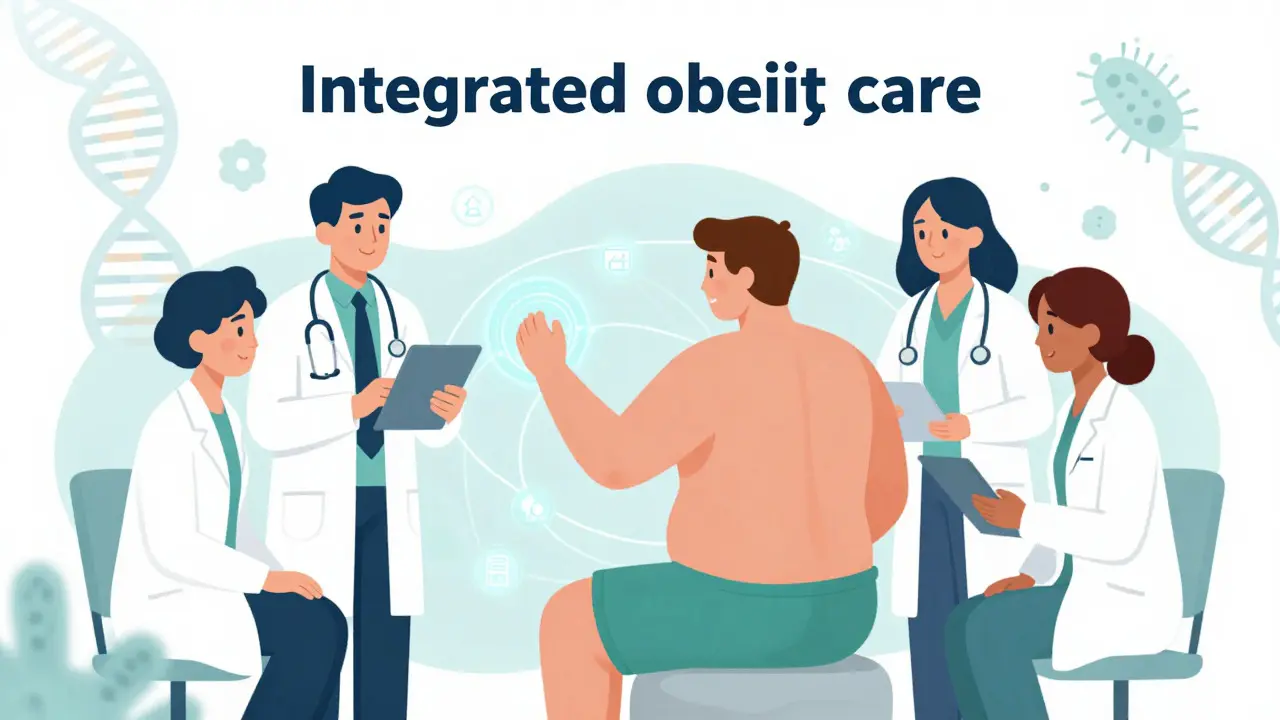
To combat this, patient advocacy groups like the Obesity Action Coalition work to educate providers and patients. Success stories often involve multidisciplinary teams. A 2021 Mayo Clinic study found that 72% of positive outcomes involved a combination of nutrition therapy, physical activity, behavioral counseling, and medication when indicated. No single intervention works for everyone. Tailoring the approach to your specific subtype of obesity-whether stress-induced, menopause-related, or congenital-is crucial.
The Future of Obesity Care
The landscape is shifting rapidly. The ICD-11 now includes detailed obesity staging codes (OB10-OE9Z) that account for adipose tissue dysfunction, not just BMI. This allows for more precise diagnosis and treatment tracking. Digital health tools are also playing a bigger role. Platforms combining remote monitoring, coaching, and data analysis show high adherence rates, with 73% user engagement in some 2022 studies. McKinsey & Company projects that integrated care models could reduce obesity-related healthcare costs by $190 billion annually in the U.S. by 2030.
Research into the gut microbiome offers another promising avenue. Specific bacterial profiles, such as reduced abundance of Faecalibacterium prausnitzii, correlate with obesity severity. Probiotics or prebiotics targeting these microbes might become part of future therapeutic regimens. As our understanding deepens, the goal remains clear: treat the root causes, manage the chronic nature of the disease, and improve quality of life for the millions affected.
Is obesity really a disease?
Yes. The American Medical Association officially recognized obesity as a chronic disease in 2013. It is defined by excessive fat accumulation that impairs health, driven by complex interactions between genetic, environmental, and physiological factors, rather than just poor lifestyle choices.
What is the most effective treatment for obesity?
There is no one-size-fits-all answer. For mild to moderate cases, a combination of lifestyle changes, behavioral therapy, and medication (like GLP-1 agonists) is effective. For severe obesity, bariatric surgery often provides the most significant and sustained weight loss, but it requires lifelong follow-up care.
How does genetics affect weight gain?
Genetics accounts for 40% to 70% of susceptibility to obesity. Variants in genes like MC4R can disrupt hunger and satiety signals. This means some people’s bodies are biologically predisposed to store more fat and resist weight loss, making management more challenging without medical intervention.
Are GLP-1 medications safe for long-term use?
Current data suggests they are generally safe for many patients, though gastrointestinal side effects are common. Long-term cardiovascular benefits have been demonstrated in trials like SELECT. However, individual responses vary, and ongoing monitoring by a healthcare provider is essential to manage potential risks and adjust dosages.
Why do people regain weight after losing it?
The body actively defends its set weight. After weight loss, metabolic rate drops, and hunger hormones increase to signal the body to eat more. This biological response, combined with social and environmental triggers, makes relapse common. Treating obesity as a chronic condition requiring continuous management helps mitigate this effect.