
Melatonin & Sedative Interaction Risk Calculator
Configure Your Scenario
Interaction Severity Index
Analysis Pending
Configure your inputs and click 'Assess Interaction Risk' to see specific safety guidance based on current medical literature.
It feels harmless enough. You have a prescription for sleep trouble, maybe zolpidem or a benzodiazepine, and you grab a bottle of melatonin, the popular over-the-counter supplement, to help it work better. It is natural, right? So it must be safe to mix with your medication. This common assumption is dangerous. Combining melatonin with sedatives creates an additive drowsiness effect that can lead to severe impairment, memory loss, and even respiratory depression. While melatonin alone is generally mild, stacking it on top of central nervous system depressants amplifies their effects in ways that are not linear-they are multiplicative.
The reality is that millions of people make this mistake every year. In 2022, approximately 3.1 million American adults used melatonin supplements, a number that has skyrocketed by 165% since 2007. Yet, awareness of the specific dangers of mixing these substances remains low. A 2022 survey found that 28% of users combined melatonin with prescription sedatives without asking a doctor. Of those, 37% experienced unintended oversedation. This article breaks down why this combination is risky, how the interaction works biologically, and exactly what steps you should take to stay safe if you use both.
Why Melatonin and Sedatives Don't Mix Well
To understand the risk, you need to look at how these substances affect your brain. Melatonin is a hormone produced by the pineal gland that regulates your sleep-wake cycle. It signals to your body that it is time to rest. When you take it as a supplement, it binds to MT1 and MT2 receptors in the suprachiasmatic nucleus, but it also interacts with GABA-B receptors and opioid receptors.
Sedatives like zolpidem (Ambien) or benzodiazepines (such as diazepam or alprazolam) work by enhancing the effect of GABA, a neurotransmitter that slows down brain activity. Because melatonin also touches these pathways, adding it to a sedative does not just add two small effects together. It creates a synergistic reaction. Dr. Neil Stanley, a sleep expert with over 35 years of experience, explains that "two mild sedatives together can create effects equivalent to a much stronger single sedative."
The consequence is profound drowsiness. The National Health Service warns that melatonin can cause significant daytime drowsiness. When you combine it with a prescription sedative, the risk of next-day impairment spikes. A Cochrane Review noted that while zolpidem reduces sleep latency by about 22 minutes, it carries a high risk of complex sleep behaviors. Adding melatonin doesn't necessarily help you sleep deeper; it makes you more likely to experience confusion, amnesia, and physical instability upon waking.
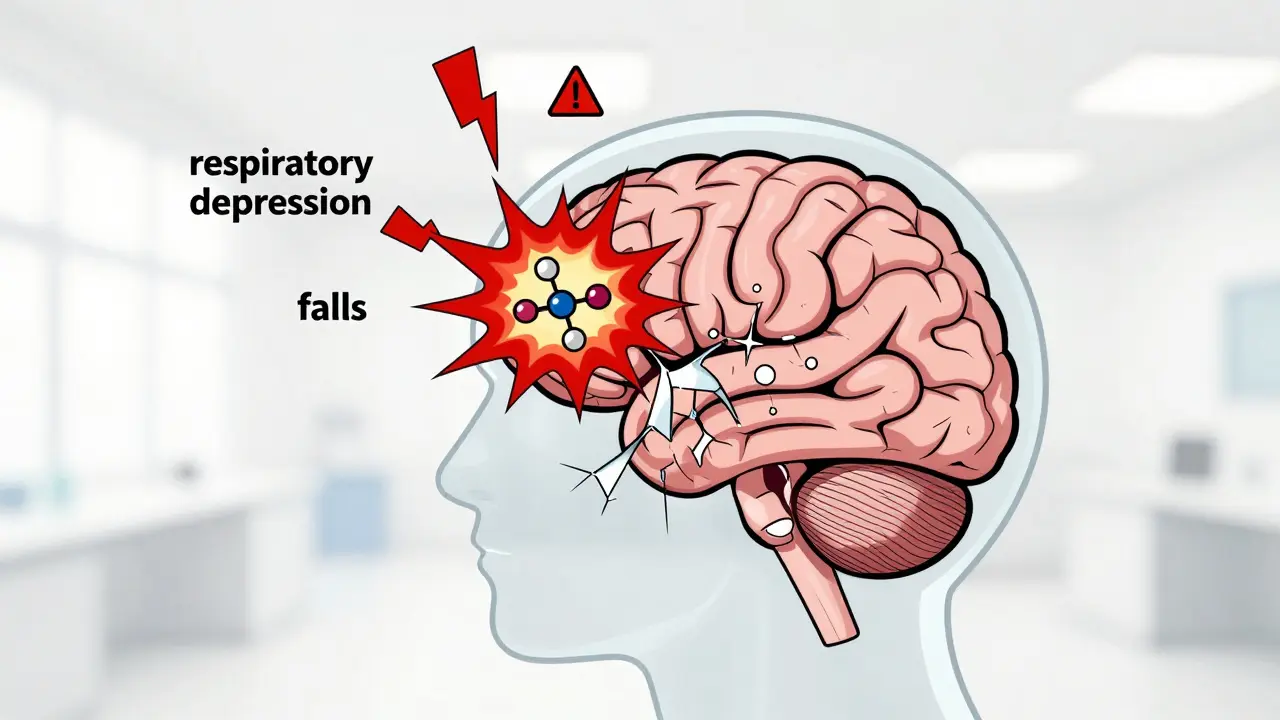
The Hidden Danger: Respiratory Depression and Falls
The most serious risk of combining melatonin with sedatives is respiratory depression-when your breathing becomes too slow or shallow. This is particularly dangerous for older adults or those with underlying health conditions. A 2020 study published in the Journal of Clinical Sleep Medicine found that combining melatonin with benzodiazepines increases the risk of respiratory depression by approximately 47%. For context, combining two different prescription sedatives typically raises this risk by only 22-35%.
Falls are another major concern, especially for seniors. The American Geriatrics Society’s 2023 Beers Criteria lists melatonin as potentially inappropriate for older adults when taken with benzodiazepines. Why? Because the combination leads to a substantially increased risk of falls-estimated to be 68% higher than using either agent alone. Imagine taking your usual evening dose of melatonin and your prescribed sleep aid, then getting up to use the bathroom. Your coordination might be severely compromised, turning a simple trip into a broken hip or head injury.
Real-world stories highlight this danger. On patient forums like Inspire, users have reported car accidents after driving within hours of taking melatonin with prescription sleep meds. One user described taking 2mg of melatonin with zolpidem and waking up in a ditch three miles from home. These aren't rare outliers; they are preventable tragedies stemming from a lack of understanding about drug interactions.
| Feature | Melatonin | Prescription Sedatives (e.g., Zolpidem) |
|---|---|---|
| Efficacy | Reduces sleep latency by ~4 minutes | Reduces sleep latency by ~22 minutes |
| Dependence Risk | No evidence of physical dependence after 6 months | High risk of dependence and withdrawal symptoms |
| Next-Day Impairment | Mild drowsiness possible (8.7% incidence) | 32% higher risk of next-day impairment |
| Interaction Severity | Additive/Multiplicative with CNS depressants | Severe respiratory depression risk when combined |
| Regulation | Dietary supplement (US), Medication (EU) | Strictly regulated prescription drug |
How to Stay Safe: Practical Guidelines
If you are prescribed a sedative, you might wonder if you can still use melatonin. The answer isn't always a hard "no," but it requires strict caution. Here are the safety protocols recommended by leading health organizations.
- Maintain a Time Buffer: The Mayo Clinic recommends a minimum 5-hour buffer between taking melatonin and any sedative medication. If you take melatonin at night, do not take your sedative until early morning, or vice versa. Ideally, keep them on completely separate days if possible.
- Reduce Dosages Significantly: If your doctor approves concurrent use, the American Academy of Sleep Medicine suggests reducing the melatonin dose to the lowest effective amount, typically 0.3mg to 0.5mg. Simultaneously, decrease the sedative dose by at least 25%.
- Prioritize Sleep Duration: Ensure you have at least 8 hours dedicated to sleep after taking either substance. UCSF Health emphasizes that while sedatives alone require 7 hours, the combination demands a full 8 hours to avoid residual drowsiness during activities like driving.
- Avoid Driving: Do not drive or operate heavy machinery within five hours of taking melatonin, and certainly not if you have also taken a sedative. The impairment can linger longer than you feel.
- Consult Your Doctor First: Never self-prescribe melatonin if you are on medication. Cleveland Clinic guidelines suggest screening for 14 specific medication classes, including opioids, antidepressants, and antipsychotics, before recommending melatonin.
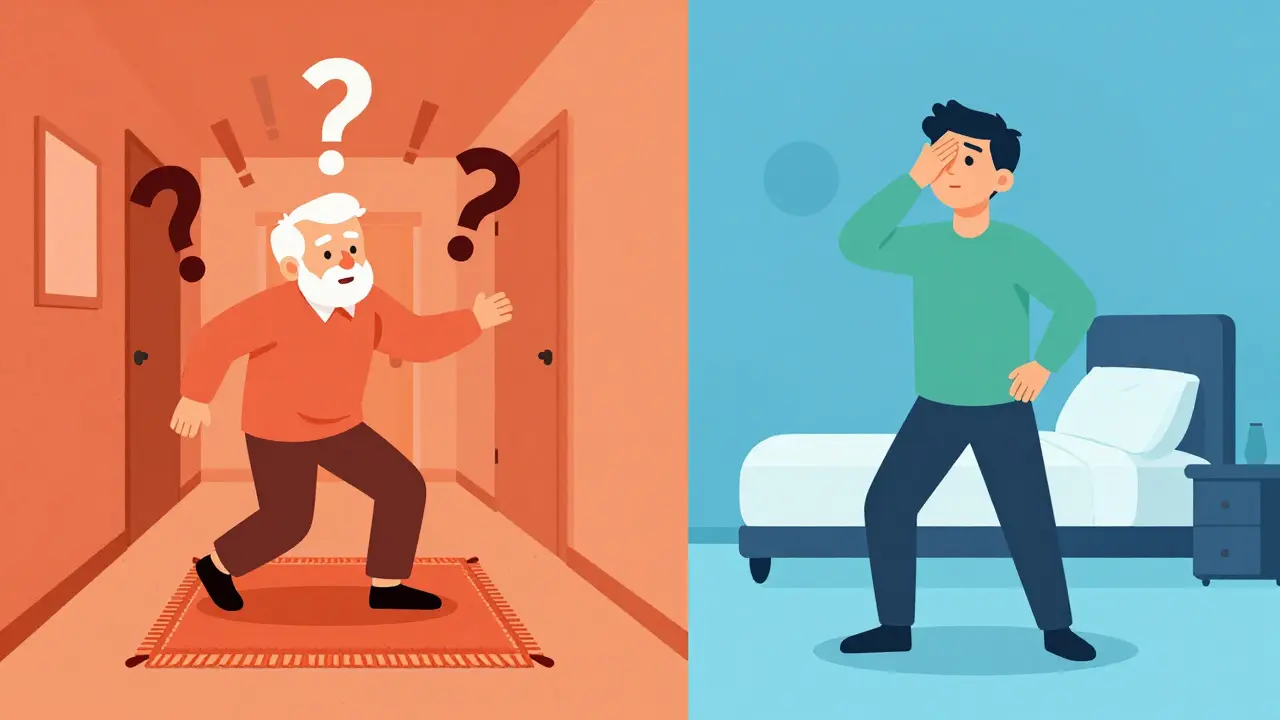
Better Alternatives to Mixing Meds
Rather than risking dangerous interactions, consider safer alternatives for improving sleep quality. Cognitive Behavioral Therapy for Insomnia (CBT-I) is widely recognized as the first-line treatment for chronic sleep issues. Unlike medications, CBT-I addresses the root causes of insomnia, such as anxiety and poor sleep hygiene, without any risk of drowsiness or dependency.
You can also optimize your environment. Keep your bedroom cool, dark, and quiet. Avoid screens an hour before bed, as blue light suppresses natural melatonin production. If you struggle with falling asleep, try relaxation techniques like deep breathing or progressive muscle relaxation. These methods support your body's natural rhythms without introducing external chemicals that could interact with your prescriptions.
Remember, the goal is restorative sleep, not just unconsciousness. By avoiding the trap of additive drowsiness, you protect your long-term health and ensure that your sleep aids work safely and effectively.
Can I take melatonin with Xanax?
No, you should not combine melatonin with Xanax (alprazolam) without explicit medical supervision. Both are central nervous system depressants. Combining them significantly increases the risk of extreme drowsiness, confusion, and respiratory depression. Many users report memory loss and excessive sedation when mixing these two substances.
Is melatonin safe for elderly people taking sleeping pills?
Generally, no. The American Geriatrics Society lists melatonin as potentially inappropriate for older adults when combined with benzodiazepines due to a 68% higher risk of falls. Older adults are more sensitive to the effects of sedatives, making the additive drowsiness effect particularly dangerous.
How long does melatonin stay in your system?
Melatonin has a short elimination half-life of 20-50 minutes. However, its effects on sleep architecture can last longer. Immediate-release formulations peak in plasma within 30-60 minutes. Prolonged-release versions mimic natural release patterns but may extend the window of potential interaction with other drugs.
Does melatonin interact with antidepressants?
Yes, melatonin can interact with certain antidepressants, particularly SSRIs and SNRIs. Some antidepressants inhibit the enzymes that break down melatonin, leading to higher levels of melatonin in your blood. This can increase drowsiness and other side effects. Always consult your doctor before combining them.
What is the safest dose of melatonin to take?
Most clinical trials for insomnia use doses between 0.3mg and 5mg. Lower doses, such as 0.3mg to 0.5mg, are often sufficient to signal sleep onset without causing significant next-day grogginess. Higher doses (10mg+) do not necessarily improve sleep and may increase the risk of side effects and interactions.