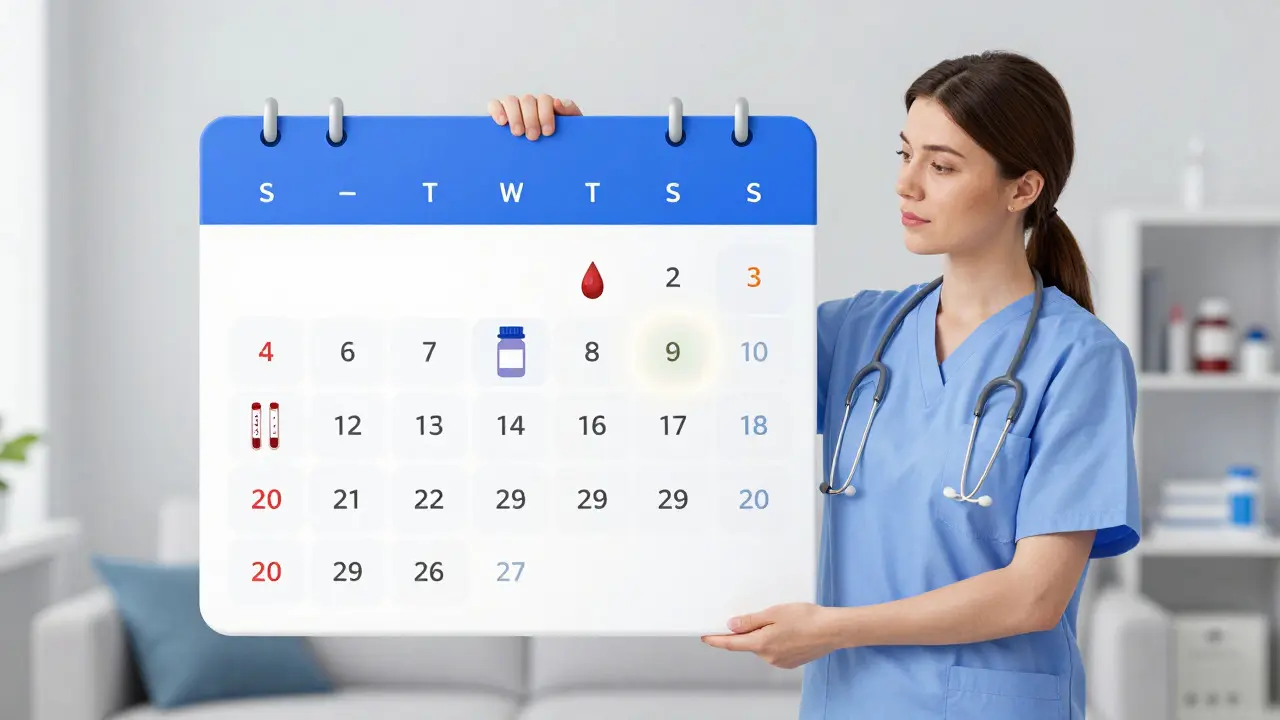
Lab Monitoring Schedule Generator
Select a medication to view schedule
Click on one of the medication cards to generate a personalized monitoring timeline and critical safety alerts.
Imagine taking a life-saving medication that also carries the risk of severe complications if not monitored correctly. Now imagine missing just one blood test because you forgot the schedule. For patients on high-risk medications, this isn't a hypothetical scenario-it's a preventable danger. A lab monitoring calendar is a systematic schedule for tracking medication-related laboratory tests and clinical assessments to detect and prevent adverse drug reactions. These tools are no longer optional extras; they are critical safety nets for anyone managing complex treatment plans.
Whether you are dealing with cancer therapies, mood stabilizers, or anticoagulants, the margin for error can be razor-thin. This guide breaks down how to build and use these calendars effectively, ensuring you stay ahead of potential side effects rather than reacting to them after they happen.
Why You Need a Structured Monitoring Plan
Medications with narrow therapeutic windows require precise timing for both dosing and testing. The practice of using structured schedules originated from clinical guidelines developed by healthcare institutions and regulatory bodies to standardize pharmacovigilance. Without a clear plan, it is easy to let routine tasks slip through the cracks, especially when daily life gets busy.
The core purpose of these calendars is synchronization. They align your lab testing dates with your medication schedule while providing a space to document emerging symptoms. This proactive approach helps catch issues like low white blood cell counts or rising drug levels before they become emergencies. It transforms passive compliance into active management of your health.
High-Risk Medications Requiring Strict Tracking
Not every pill needs a complex monitoring chart, but certain classes of drugs demand rigorous oversight due to their potency and potential toxicity. Understanding which medications fall into this category is the first step in building an effective system.
Clozapine is an antipsychotic medication requiring strict neutrophil count monitoring to prevent agranulocytosis. For patients on clozapine, absolute neutrophil count (ANC) must be tracked weekly for the first four weeks once ANC reaches 1500/μL. If levels drop below 500/μL, immediate intervention is required. This surveillance continues for the duration of treatment, making a reliable calendar essential for survival.
Mood stabilizers like lithium is a psychiatric medication used for bipolar disorder that requires regular serum level checks to avoid toxicity. Lithium has a very narrow range between being effective and becoming toxic. Serum level checks are needed 5-7 days after starting treatment, then weekly until stable. Even after stability is reached, tests must occur at least every six months. Timing matters immensely here-blood draws must happen exactly 12 hours after the last dose to ensure accurate readings.
Anticoagulants such as warfarin is a blood thinner that requires frequent INR monitoring to balance clotting risks against bleeding dangers. Warfarin users need monthly International Normalized Ratio (INR) monitoring under stable conditions. However, any change in dosage, diet, or other medications requires increased frequency. Gaps in INR monitoring are a leading cause of preventable warfarin-induced bleeding events.
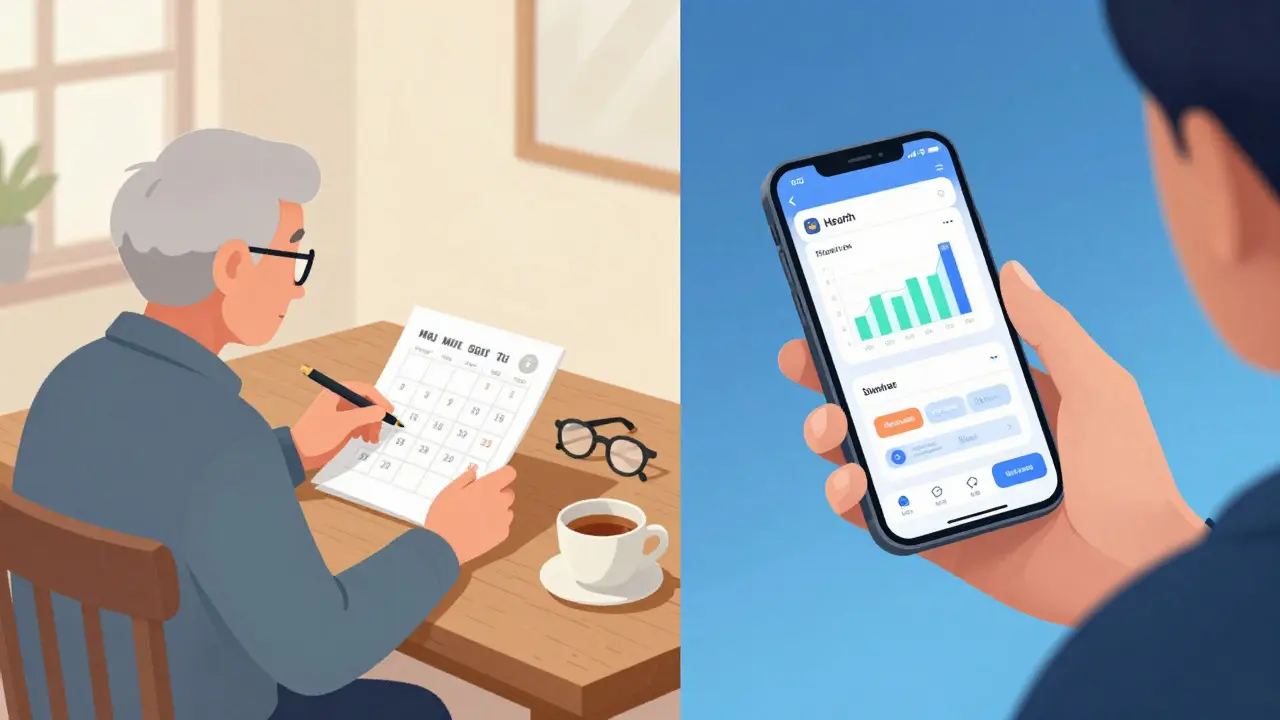
Digital Tools vs. Paper Systems
You have options when it comes to how you track these appointments. The right choice depends on your comfort with technology and the complexity of your regimen.
| Method Type | Key Features | Best For | Limitations |
|---|---|---|---|
| Digital Apps (e.g., Health Manager) |
Real-time correlation of side effects with meds/diet; reminders; longitudinal analysis | Patients wanting data insights and automated alerts | Requires smartphone access and tech literacy |
| Printable Templates (e.g., CBH Philly PDF) |
Standardized workflows; visual overview; no battery needed | Elderly patients or those preferring physical records | Lacks interactivity; manual updates only |
| EHR-Integrated Systems | Direct sync with doctor’s office; automatic result population | Patients within large hospital networks | Dependent on provider’s specific software platform |
Digital tools like Blood Cancer United's Health Manager app enable real-time correlation of side effects with medication timing and dietary factors. You can log how you feel alongside your lab results, spotting patterns that might otherwise go unnoticed. For instance, you might notice fatigue spikes consistently two days after a specific dose adjustment.
On the other hand, static templates offer standardized workflows without the learning curve of new apps. They are particularly useful for sharing with multiple caregivers who may not all be tech-savvy. The key is consistency-whatever tool you choose, you must update it religiously.
Cancer Therapy and Specialized Calendars
Oncology treatments often come with highly specific monitoring requirements tailored to the drug mechanism. Pharmaceutical companies recognize this and sometimes provide condition-specific tools. For example, Taiho Oncology created a treatment calendar for LONSURF is a combination chemotherapy drug containing trifluridine and tipiracil used for colorectal and gastric cancers.
This generator outputs dose-specific tracking sheets that monitor hematological parameters (like white blood cells and platelets) and gastrointestinal side effects. Patients are instructed to track temperature, missed doses, and specific symptoms like diarrhea or nausea. Because LONSURF affects bone marrow function, catching drops in blood counts early allows doctors to adjust doses before infections take hold.
Systemic corticosteroids also warrant attention. If you take steroids for more than two consecutive weeks, you need adrenal suppression screening via morning cortisol tests during withdrawal protocols. Missing this window can lead to an Addisonian crisis, a dangerous drop in blood pressure and electrolytes when stopping the medication abruptly.

Implementing Your Calendar Successfully
Creating the calendar is only half the battle. Using it effectively requires integrating it into your daily routine. Here is how to make it stick:
- Sync with Medication Changes: Update your calendar immediately whenever your doctor adjusts a dose. A change in lithium dosage, for example, resets the clock for when you need your next level check.
- Share at Every Visit: Bring your physical or digital log to every clinical appointment. It serves as objective evidence of your adherence and symptom history, allowing your provider to make better-informed decisions.
- Coordinate Draw Times: Remember that timing affects accuracy. Lithium levels require consistent 12-hour post-dose windows. Schedule your lab appointments around your dosing time, not just convenience.
- Log Non-Lab Symptoms: Don't just record numbers. Note headaches, rashes, mood shifts, or digestive issues. These qualitative data points help clinicians distinguish between normal side effects and serious adverse reactions.
Challenges often arise with adherence to complex schedules. Clozapine’s transition from weekly to monthly ANC checks based on sustained recovery can confuse patients. Clear labeling on your calendar indicating "Weekly" versus "Monthly" phases prevents accidental skips. Similarly, coordinating with lab availability can be tricky; book slots well in advance for specialized tests.
Future Trends in Patient Monitoring
The landscape of patient monitoring is evolving rapidly. Current standards reflect updates like the June 2025 psychotropic monitoring guidelines, which continue clozapine’s ANC requirements despite changes in REMS programs. Emerging trends include app-based integrations that sync lab calendars with wearable biometrics. Imagine your smartwatch detecting elevated heart rates and automatically flagging a note in your monitoring app for your doctor to review.
Future developments may incorporate AI-driven risk prediction using historical lab-trend data. Algorithms could analyze years of your personal health data to predict when you are most likely to experience toxicity, prompting preemptive testing. However, evidence-based protocols remain foundational. Technology enhances human judgment; it does not replace the need for informed medical oversight.
Long-term viability depends on balancing customization with standardization. Condition-specific tools like LONSURF’s calendar address unique needs, while generalized frameworks like the NIH’s adverse effect screening algorithms provide broad safety nets. As a patient, your goal is to find the hybrid approach that works for your specific body and lifestyle.
What is a lab monitoring calendar?
A lab monitoring calendar is a systematic schedule used to track required laboratory tests and clinical assessments associated with specific medications. Its primary goal is to detect and prevent adverse drug reactions by ensuring timely testing and documentation of side effects.
Which medications require the most frequent monitoring?
Medications with narrow therapeutic windows or high toxicity risks require frequent monitoring. Key examples include clozapine (weekly ANC checks), lithium (serum levels weekly then every 6 months), warfarin (monthly INR checks), and certain cancer therapies like LONSURF (hematological and GI tracking).
How do I know if my monitoring schedule has changed?
Monitoring schedules often change based on test results or dosage adjustments. For instance, clozapine monitoring frequency reduces only after sustained recovery from neutropenia. Always confirm any changes with your healthcare provider and update your calendar immediately to avoid gaps in care.
Can digital apps replace paper calendars?
Digital apps like the Health Manager offer advantages such as reminders and pattern analysis, but paper calendars remain valuable for simplicity and accessibility. The best choice depends on your personal preference and tech comfort. Some patients use a hybrid approach, keeping a physical copy for clinic visits while using an app for daily logging.
Why is timing important for blood tests like lithium levels?
Timing is critical because drug concentrations in the blood fluctuate throughout the day. Lithium levels must be drawn exactly 12 hours after the last dose to accurately reflect trough levels. Drawing blood at inconsistent times can lead to misinterpretation of results, potentially causing unnecessary dose changes or missed toxicity signs.
What should I do if I miss a scheduled lab test?
Contact your healthcare provider or pharmacy immediately. Do not wait for the next scheduled date. Depending on the medication, a missed test could mean you are operating without necessary safety checks. Your provider will advise whether to reschedule promptly or adjust your medication temporarily.
Are there free resources for creating monitoring calendars?
Yes, many organizations provide free printable templates. For example, Community Behavioral Health offers PDF guides for psychotropic monitoring. Additionally, some pharmaceutical companies provide disease-specific trackers online. You can also create a simple spreadsheet customized to your needs.
How long do I need to keep monitoring after stopping a drug?
The duration varies by medication. Corticosteroid users may need adrenal function testing during withdrawal. Anticoagulant monitoring stops once the drug is cleared, but follow-up depends on the underlying condition. Always follow your doctor's specific discontinuation protocol, which may include tapering periods with continued checks.