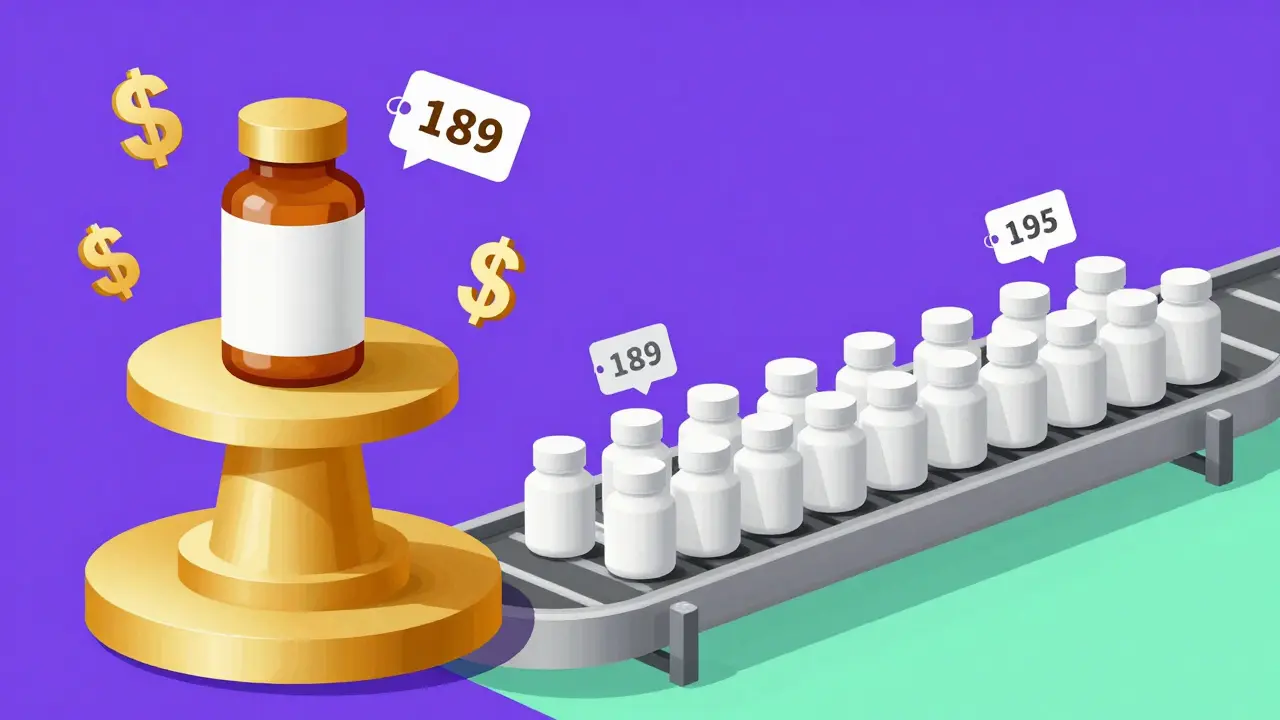
To understand this, we first need to define what we're talking about. Generic Drugs is a medication created to be the same as an already marketed brand-name drug in dosage, safety, strength, route of administration, quality, performance characteristics and intended use. In the US, these make up about 90 percent of all prescriptions filled. This massive volume creates a unique economic engine that differs from the systems found in the OECD (Organisation for Economic Co-operation and Development) countries.
The Great Price Divide: Brands vs Generics
If you look at the average price of all medications, the US looks expensive. A 2022 study by the RAND Corporation found that overall US prices were 2.78 times higher than in 33 other developed nations. But that number is misleading because it lumps everything together. When you peel back the layers, you see a massive gap. Brand-name drugs in the US can cost over 400% of what they cost elsewhere. However, unbranded generic drugs in the US are actually about 33% cheaper than in those same comparison countries.
Why such a gap? It comes down to how different countries handle pricing. In many European nations, the government sets a maximum price for drugs. In the US, prices are largely determined by market competition and complex negotiations. Because the US has such a huge appetite for generics, manufacturers compete fiercely to win contracts, which slashes prices for the consumer. As the FDA (Food and Drug Administration) has noted, just having two or three generic competitors enter a market can drop the price of a drug to just 15-20% of the original brand-name cost.
| Drug Category | US Price Relative to OECD Average | Typical Market Dynamic |
|---|---|---|
| Brand-Name Drugs | ~308% Higher | High launch prices, slow decline |
| Originator Drugs | ~422% Higher | Limited competition, high margins |
| Unbranded Generics | ~67% (33% Lower) | High competition, rapid price drops |
List Prices vs. Net Prices: The Hidden Discount
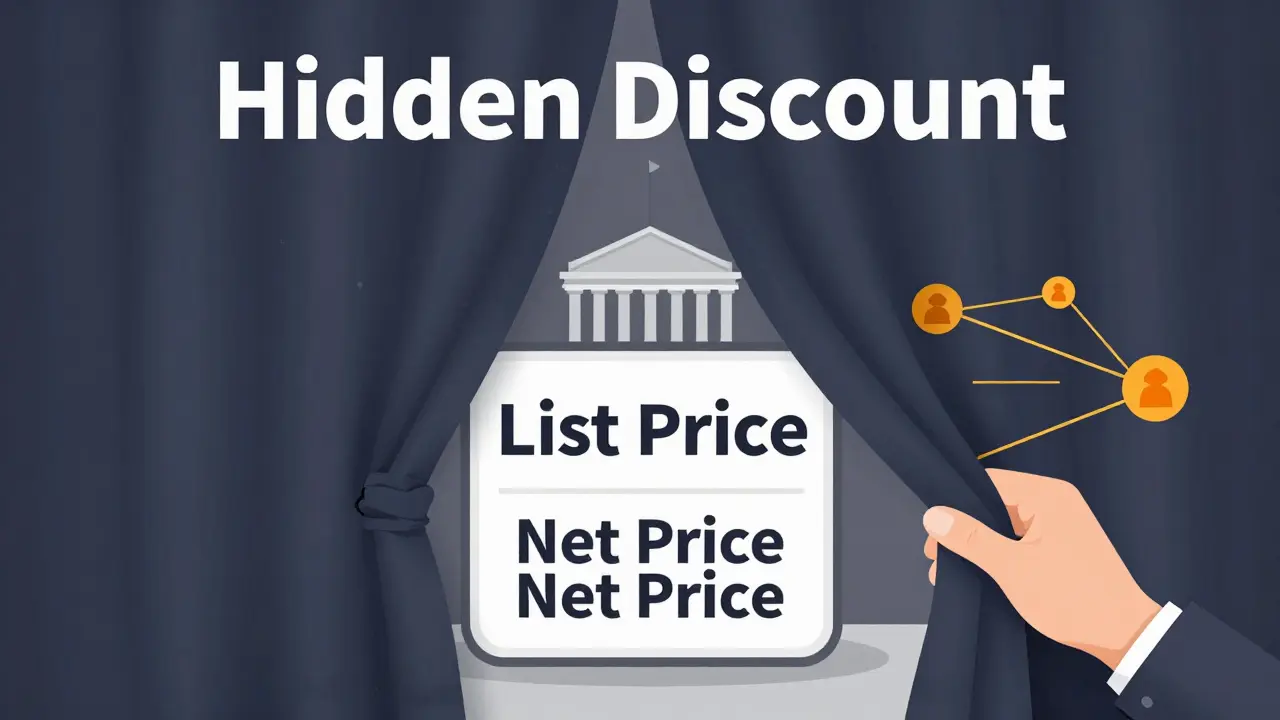
If you look at a pharmacy's "list price," the US looks like a rip-off. But list prices are rarely what the system actually pays. This is where the concept of "net prices" comes in. In the US, pharmaceutical companies provide massive rebates to insurance companies and pharmacy benefit managers. A 2024 study from the University of Chicago found that US public-sector net prices for prescriptions are actually 18% lower on average than in peer countries like Canada or Germany.
This creates a confusing landscape. While a person paying out-of-pocket might see a high sticker price, the government programs like Medicare (the federal health insurance program for people 65 or older) often negotiate much lower rates behind the scenes. This "hidden" pricing is why experts like Dr. Dana Goldman argue that Americans actually do quite well in the generic market, even while they struggle with the costs of new, patented medicines.
How Competition Actually Lowers Your Bill
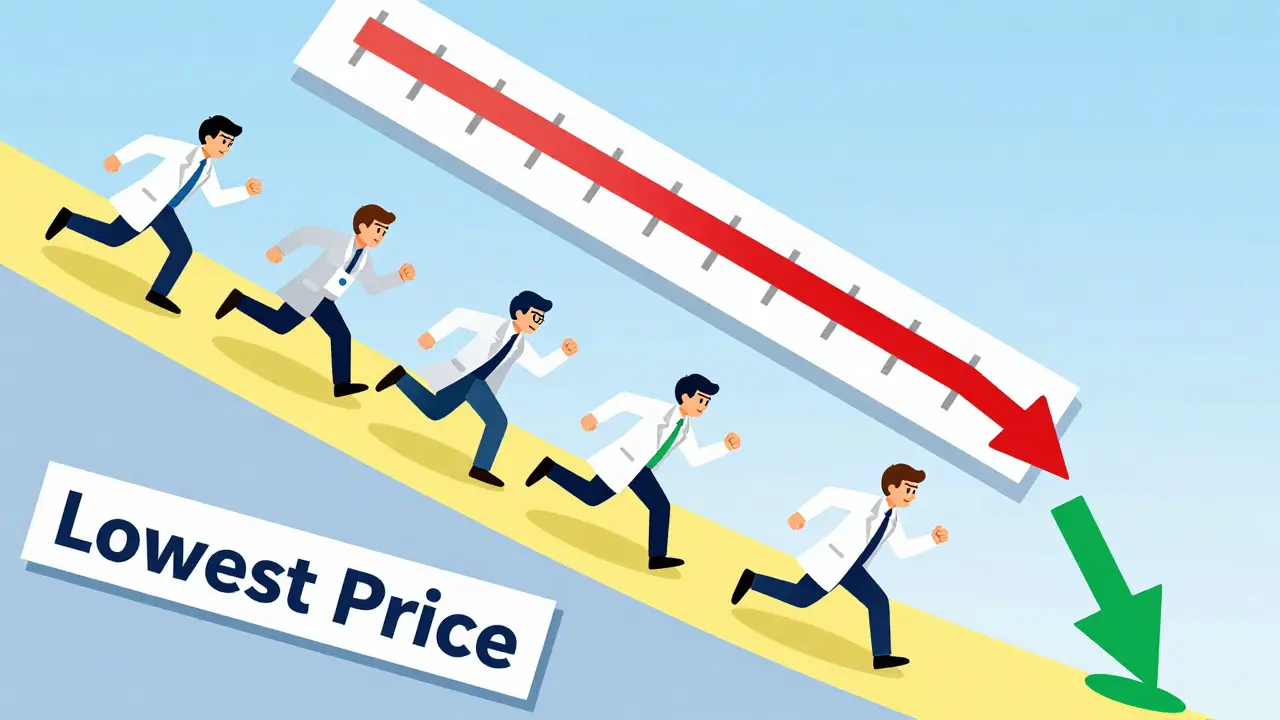
The US generic market is a race to the bottom-which is exactly what patients want. The FDA has tracked how the number of competitors directly impacts your wallet. When the first generic version of a drug hits the market, the price usually drops to about 35-40% of the brand price. Once three or four different companies start making that same generic, the price typically plummets to 15-20% of the original cost. This is why you might find a generic medication at a US pharmacy for a few dollars, while a patient in another country pays significantly more for the same unbranded version.
However, there is a dark side to this. Sometimes the competition is *too* intense. If prices drop so low that manufacturers can't make a profit, some companies simply stop making the drug. This can lead to a "generic monopoly" where only one company is left. When that happens, the price can skyrocket again, creating those rare but frustrating cases of "expensive generics" that seem to defy the general trend.
The Medicare Negotiation Experiment
For years, the US government wasn't allowed to negotiate drug prices directly. That changed recently with the introduction of the Medicare drug negotiation program. The goal was to bring those high brand-name costs closer to international levels. But has it worked? The results are mixed. Analysis from the Health System Tracker shows that even the "negotiated" prices for drugs like Jardiance remain much higher than the average in 11 comparable OECD countries. For instance, the negotiated price for Jardiance in the US was $204, while the international average was just $52.
This suggests that simply negotiating a price isn't enough to match the systemic controls found in Japan or Australia, where prices are kept low across the board. It highlights a fundamental tension: the US effectively funds much of the world's pharmaceutical research and development (R&D) through high brand prices, while other countries "free ride" on that innovation by capping prices lower.
Practical Takeaways for Consumers
So, what does this mean for the person standing at the pharmacy counter? The most important rule is to always ask for the generic. According to the 2023 U.S. Generic and Biosimilar Medicines Savings Report, the average generic copay is around $6.16, whereas a brand-name copay averages $56.12. That is a nearly nine-fold difference in cost for a drug that does the exact same thing in your body.
If you find that a generic is unexpectedly expensive, it's usually because of a lack of competition or a specific insurance formulary issue. In these cases, using discount tools or checking if a different generic manufacturer is available can sometimes save you money. The sheer volume of the US market means that for 93% of generic prescriptions, the cost stays under $20-a rate far higher than for brand-name drugs.
Are generic drugs actually cheaper in the US than in Europe?
Yes, for many unbranded generics, the US is significantly cheaper. Data shows US generic prices are roughly 33% lower than the average of comparison OECD countries, largely due to intense market competition and high volume.
Why are brand-name drugs so much more expensive in the US?
Unlike many other developed nations, the US does not have a centralized government body that sets price caps on new medications. This allows pharmaceutical companies to set higher launch prices, which helps fund R&D but increases the cost for patients.
What is the difference between a list price and a net price?
The list price (or gross price) is the "sticker price" published by the manufacturer. The net price is what is actually paid after rebates and discounts from insurance companies or government programs are subtracted.
Does the number of generic competitors really affect the price?
Absolutely. FDA data shows that when 1-2 generics enter the market, prices drop to about 35-40% of the brand price. When 3 or more competitors enter, prices typically crash to 15-20% of the original brand cost.
Is Medicare's new negotiation program lowering prices to global levels?
Not yet. While it is lowering some prices, negotiated prices for several key drugs remain 2 to 3 times higher than the average in comparable OECD countries, meaning the US still pays a significant premium for brands.
Caroline Duvoe
April 22, 2026 AT 20:41basically just a fancy way of saying we get ripped off on new meds but save on the old ones 🙄
RAJESH MARAVI
April 24, 2026 AT 02:44this is just a jock for big pharma!! those net price numbers r totally faked to make it look like us is wining when peopel are actually going bankrupt buying insulin lol
Mayur Pankhi Saikia
April 25, 2026 AT 08:26The analysis is laughably superficial, really...!! One must consider the systemic failure of the PBM model before praising
Mike Arrant
April 25, 2026 AT 19:34Listen, if you're still paying list price in this day and age, you're just not paying attention. Get a GoodRx coupon or a Mark Cuban Cost Plus account and stop complaining about the system. It's not that hard to navigate if you actually use your brain.
Sue Stoller
April 26, 2026 AT 01:35I love that we're talking about this! 🌟 It's so helpful to know there are ways to save money on generics. Keep sharing these tips everyone! ✨😊
Emma Cozad
April 27, 2026 AT 21:31stop comparing us to europe it's not the same. our R&D is what keeps those other countries alive while they just steal our inovations without paying a cent for the research
Dave Edwards
April 29, 2026 AT 07:20Absolute joke! 🙄 Who cares if the generics are cheap when the 'originator' prices are a literal crime against humanity? It's like saying a house is affordable because the welcome mat is cheap while the roof is made of gold! :P
Amy Fredericks
April 30, 2026 AT 21:45I think there's a middle ground here. It's great that generics are accessible, and maybe we can find a way to make the new medicines more affordable without killing the incentive for research. There's always a way to work together for a better system!
Saptatshi Biswas
May 2, 2026 AT 16:46The sheer arrogance of the American system is astounding. India produces some of the most affordable and high-quality generics in the world, and it is only because of our industrial prowess that global South populations have access to life-saving medicine. The US market is a chaotic mess of corporate greed and failed policy that only serves to enrich a few stakeholders while the masses suffer in a gamble of insurance coverage. You cannot possibly compare a market-driven nightmare to the structured, socially conscious pharmaceutical approach we maintain. It is a tragedy that the global standard for R&D is tied to a nation that treats healthcare as a luxury rather than a fundamental human right. The data provided here is merely a distraction from the systemic exploitation inherent in the US medical industrial complex. We should be looking at the Indian model for distribution and affordability if we actually cared about human lives. This isn't about 'competition' in the US; it is about the leftovers of a predatory system. The reality is that without the generic hubs in Asia, the US would be even more desperate. This entire discourse ignores the geopolitical reality of drug manufacturing. The 'race to the bottom' mentioned is simply the market finally correcting for decades of obscene overpricing. Stop pretending this is a success story for the American consumer. It is a failure of governance. Absolute failure.
Anastasios Kyriacou
May 4, 2026 AT 09:22whatever it is still too expensiv
vimal purwal
May 4, 2026 AT 12:56I must express my sincere agreement with the general sentiment that market competition is a powerful tool for affordability, although I feel it is imperative to emphasize that the quality control must remain paramount regardless of the price drop. While the US system has its flaws, the ability to drive costs down through high-volume generic competition is a mechanism that other nations could potentially adapt to their own frameworks to benefit their citizens. We should strive for a global synergy where the innovation of the West and the manufacturing efficiency of the East create a sustainable ecosystem for all. It is my firm belief that through continued collaboration and a shared commitment to public health, we can eventually erase the disparity between brand-name costs and generic accessibility. Let us support the movements that advocate for transparency in net pricing so that every patient knows exactly what they are paying and why. This is the only way to ensure that the 'hidden discounts' actually reach the people who need them most, rather than just padding the margins of insurance companies. I strongly encourage everyone to keep advocating for their health rights with vigor and persistence!
Nicole Antunes
May 5, 2026 AT 03:27It's quite interesting to see the data laid out this way. It seems the US has a very specific niche in the global market :)
Mel Glick
May 6, 2026 AT 12:45This is exactly why we need to push for a total overhaul of the FDA's approval process for generics! We can't just be happy that some drugs are cheap while the 'big pharma' giants hold the rest of us hostage with patents that last forever! It's an absolute scam and we need to fight back harder!
Odicha ude Somtochukwu
May 7, 2026 AT 02:21It is truly enlightening to observe these economic disparities across borders...!! We must all remain hopeful that a more equitable system will emerge for the benefit of all mankind...!!