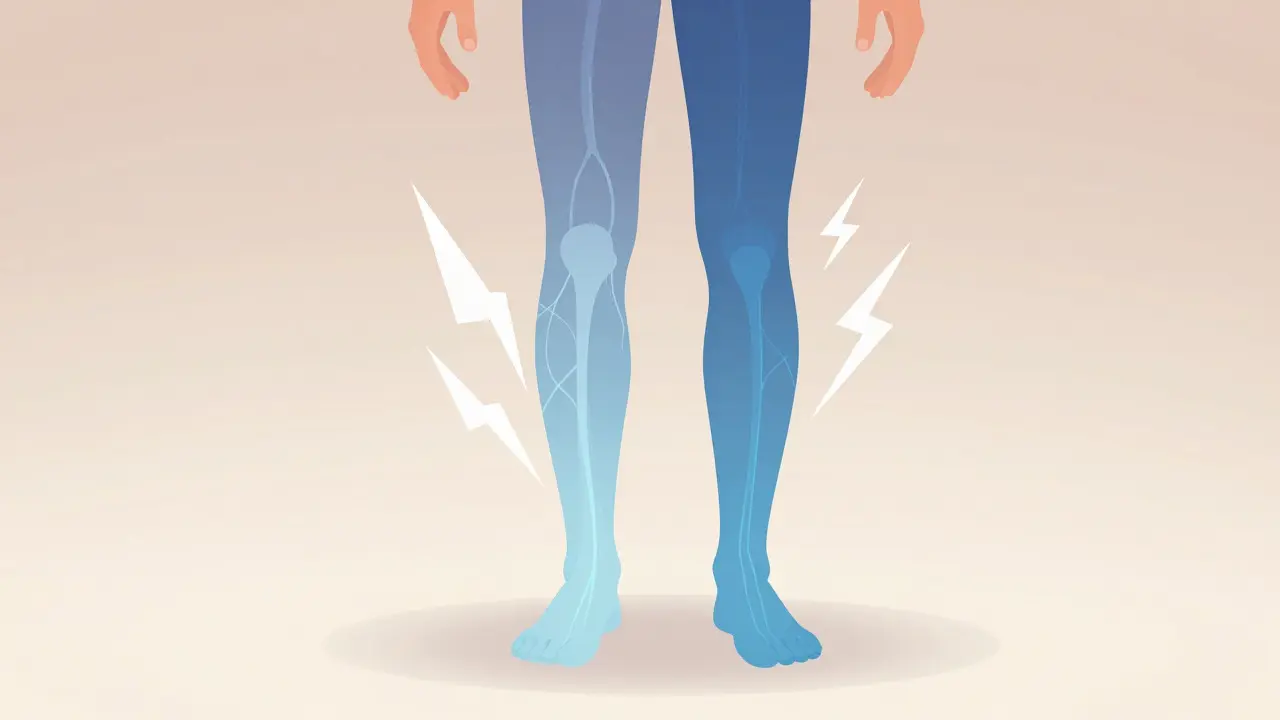
Imagine waking up one morning feeling fine, only to find your legs refusing to cooperate by evening. For patients with Guillain-Barré Syndrome (GBS), this terrifying progression is reality. It is a rare but serious condition where the body’s immune system mistakenly attacks its own nerves, leading to rapid muscle weakness that can escalate to paralysis. While it sounds like a nightmare scenario, modern medicine has developed effective treatments, primarily intravenous immunoglobulin (IVIG) therapy, which can significantly shorten recovery time and prevent long-term disability.
Understanding GBS is crucial because early recognition saves lives. This article breaks down what causes this sudden weakness, how doctors diagnose it, and why IVIG has become the gold standard for treatment. We will also look at what to expect during recovery and the latest developments in managing this complex neurological disorder.
What Is Guillain-Barré Syndrome?
Guillain-Barré Syndrome is an autoimmune disorder affecting the peripheral nervous system. First described in 1916 by French physicians Georges Guillain, Jean Alexandre Barré, and André Strohl, it remains a medical emergency today. The condition occurs when the immune system, usually our defense against invaders, turns against the myelin sheath-the protective covering of nerves-or the axons themselves. This damage disrupts the signals between the brain and muscles, causing weakness, tingling, and eventually paralysis.
GBS is not contagious, nor is it genetic. Instead, it is typically triggered by an infection. In the United States, the Centers for Disease Control and Prevention (CDC) reports approximately 3,000 to 6,000 cases annually, affecting about 1 to 2 people per 100,000. The most common trigger is Campylobacter jejuni, a bacteria often found in undercooked poultry, which accounts for 20-40% of cases. Other triggers include viruses like cytomegalovirus (CMV), Epstein-Barr virus (EBV), Zika virus, and even recent surgeries or vaccinations, though these are less common.
Recognizing the Symptoms: The Ascending Pattern
The hallmark of GBS is its specific pattern of onset. Unlike stroke, which affects one side of the body, GBS usually starts symmetrically. Most patients experience weakness beginning in the lower extremities-specifically the feet and legs-and moving upward toward the arms and torso. This "ascending" weakness occurs in 85-90% of cases.
- Early Signs: Tingling or prickling sensations in the fingers and toes, followed by mild leg weakness.
- Progression: Weakness spreads to the upper body, making it difficult to walk, climb stairs, or lift objects.
- Cranial Nerve Involvement: About 50% of patients develop facial weakness, difficulty swallowing, or trouble speaking.
- Respiratory Failure: In severe cases, the muscles controlling breathing weaken, requiring mechanical ventilation. This happens in 20-30% of hospitalized patients.
The speed of progression varies. Some patients reach maximum weakness within hours, while others take weeks. However, 90% of patients hit their peak severity within 3 to 4 weeks of symptom onset. If you notice sudden, unexplained weakness spreading from your legs, seek immediate medical attention. Time is critical.
Diagnosis: Ruling Out Mimics
Diagnosing GBS requires a combination of clinical examination and specialized tests. Because other conditions like botulism, myasthenia gravis, or spinal cord compression can mimic GBS, accurate diagnosis is vital to avoid mismanagement. Misdiagnosis occurs in 5-10% of cases, according to studies from Johns Hopkins.
Doctors rely on three key diagnostic tools:
- Lumbar Puncture (Spinal Tap): This test checks cerebrospinal fluid for albuminocytological dissociation-high protein levels without increased white blood cells. This finding is present in 80% of patients by the second week of illness.
- Nerve Conduction Studies: These electrical tests measure how fast signals travel through nerves. In the most common subtype, Acute Inflammatory Demyelinating Polyradiculoneuropathy (AIDP), conduction velocities are significantly reduced due to demyelination.
- Brighton Collaboration Criteria: Established in 2014, this case definition requires progressive weakness in more than one limb plus absent reflexes (areflexia) to confirm a probable or definite diagnosis.
IVIG Treatment: How It Works
Once diagnosed, treatment begins immediately. The goal is to halt the immune attack and accelerate recovery. Two first-line therapies exist: plasma exchange (plasmapheresis) and intravenous immunoglobulin (IVIG). IVIG has largely become the preferred choice due to its ease of administration and comparable efficacy.
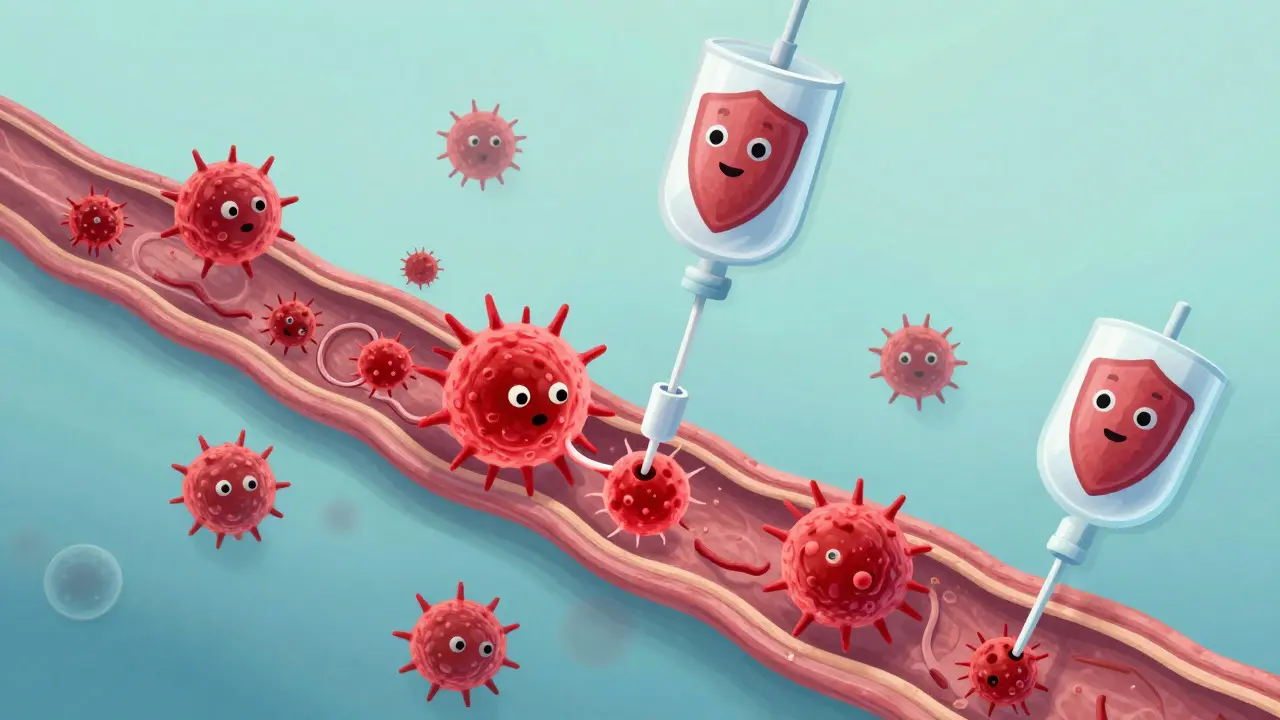
Intravenous Immunoglobulin (IVIG) is a medication made from pooled blood plasma donated by thousands of healthy individuals. It contains antibodies that help modulate the immune system. In GBS, IVIG works by saturating Fc receptors on immune cells, reducing inflammation, and neutralizing autoantibodies attacking the nerves.
The standard protocol involves administering 0.4 g/kg/day for 5 consecutive days. Ideally, treatment should start within two weeks of symptom onset. Research shows that starting IVIG within the first 7-14 days is crucial; each day of delay may reduce efficacy by approximately 5%. Clinical trials demonstrate that IVIG reduces the time to independent walking by about three weeks compared to supportive care alone. Sixty percent of treated patients show improvement within 2-4 weeks, versus 40% in control groups.
IVIG vs. Plasma Exchange: Making the Choice
While both IVIG and plasma exchange are effective, they differ significantly in practical application. Plasma exchange involves filtering the blood to remove harmful antibodies, requiring central line placement and specialized equipment. IVIG is administered through a standard IV drip.
| Feature | IVIG Therapy | Plasma Exchange |
|---|---|---|
| Efficacy | Equivalent to plasma exchange at 4 weeks | Equivalent to IVIG at 4 weeks |
| Administration | Standard IV access; less invasive | Central line required; highly invasive |
| Complication Rate | ~15% (mostly headaches, fever) | ~30% (infection risk, low blood pressure) |
| Cost (US Average) | $15,000 - $25,000 per course | $20,000 - $30,000 per course |
| Patient Satisfaction | Higher (7.2/10) | Lower (5.8/10) |
A 2019 study in JAMA Neurology confirmed no significant difference in primary outcomes between the two treatments at four weeks. However, IVIG scored higher in patient satisfaction due to its non-invasive nature. Plasma exchange might still be chosen for patients with severe respiratory failure who need rapid antibody removal, or those with contraindications to IVIG, such as severe IgA deficiency or renal impairment.
Side Effects and Risks of IVIG
While IVIG is generally safe, it is not without side effects. Patients should be monitored closely during infusion. Common adverse reactions include:
- Headaches: Occurring in 25% of patients, these can be severe and may require analgesics.
- Flu-like Symptoms: Fever, chills, and fatigue affect about 15% of recipients.
- Thromboembolic Events: Rare but serious blood clots occur in 1-3% of cases, particularly in elderly patients or those with cardiovascular risk factors.
- Renal Issues: Acute renal failure is rare (0.5%) but has been reported, especially with sucrose-containing formulations.
To mitigate risks, doctors often pre-medicate with acetaminophen or antihistamines and adjust infusion rates based on tolerance. Hydration is also critical to protect kidney function.
Recovery and Long-Term Outlook
Recovery from GBS is a marathon, not a sprint. After the acute phase, patients enter a rehabilitation period that can last months or even years. The International GBS Outcome Study (IGOS) provides valuable data on prognosis:
- Full Recovery: Approximately 60% of patients achieve full functional recovery within 6-12 months.
- Residual Weakness: About 30% have lingering weakness that may require assistive devices like braces or walkers.
- Severe Disability: Roughly 10% remain severely disabled at one year, often due to complications or incomplete nerve regeneration.
Physical therapy is essential throughout this process. It helps maintain muscle strength, prevent contractures, and improve mobility. Psychological support is equally important, as the trauma of sudden paralysis can lead to anxiety and depression.
Despite advances, challenges remain. Dr. Hugh Willison of the University of Glasgow notes that while IVIG reduces short-term disability, 20% of patients still face significant long-term issues. This highlights the need for ongoing research into better therapeutic approaches.
Future Directions in GBS Care
Research into GBS is evolving rapidly. Scientists are exploring new biomarkers, such as anti-ganglioside antibodies, to predict treatment response and tailor therapies. Complement inhibitors like eculizumab showed promise in a 2022 phase 2 trial, offering 30% faster recovery in some patients. Additionally, the ongoing IGOS consortium is refining guidelines, suggesting that earlier IVIG initiation (within 72 hours) could improve outcomes by 15%.
Supply chain vulnerabilities were exposed during the 2020-2022 pandemic, when global shortages affected 40% of hospitals. This has spurred interest in alternative delivery methods, including subcutaneous immunoglobulin, though this is currently approved only for chronic conditions like CIDP, not acute GBS.
How quickly does Guillain-Barré Syndrome progress?
GBS progresses rapidly, with symptoms worsening over hours to days. Most patients reach maximum weakness within 3 to 4 weeks of onset. Early signs include tingling in the extremities, followed by ascending muscle weakness. Immediate medical evaluation is crucial if weakness spreads quickly.
Is IVIG painful?
The IV insertion itself is minor, but side effects like severe headaches (reported by 25% of patients) can be uncomfortable. Infusions are monitored closely, and pain management strategies are used to ensure patient comfort. Many describe the headache as feeling like "a vice around the skull," but it is manageable with medication.
Can Guillain-Barré Syndrome be cured?
There is no cure for GBS, but it is treatable. With timely IVIG or plasma exchange, most patients recover significantly. However, recovery is gradual. About 60% achieve full functional recovery, while others may have residual weakness. Rehabilitation plays a key role in maximizing outcomes.
What triggers Guillain-Barré Syndrome?
GBS is usually triggered by an infection. Campylobacter jejuni is the most common cause, linked to 20-40% of cases. Viruses like CMV, EBV, and Zika can also trigger it. Rarely, surgery or vaccination precedes onset. The immune system mistakes nerve components for pathogens due to molecular mimicry.
How much does IVIG treatment cost?
In the United States, a course of IVIG for GBS costs between $15,000 and $25,000. Plasma exchange is slightly more expensive, ranging from $20,000 to $30,000. Total hospitalization costs average $85,000 per case, with lifetime costs exceeding $500,000 for patients with severe residual disability.