Fish Oil & Blood Thinner Safety Calculator
Disclaimer: This tool is for educational purposes only and does not constitute medical advice. Always consult your doctor before combining supplements with anticoagulants.
Recommended Action:
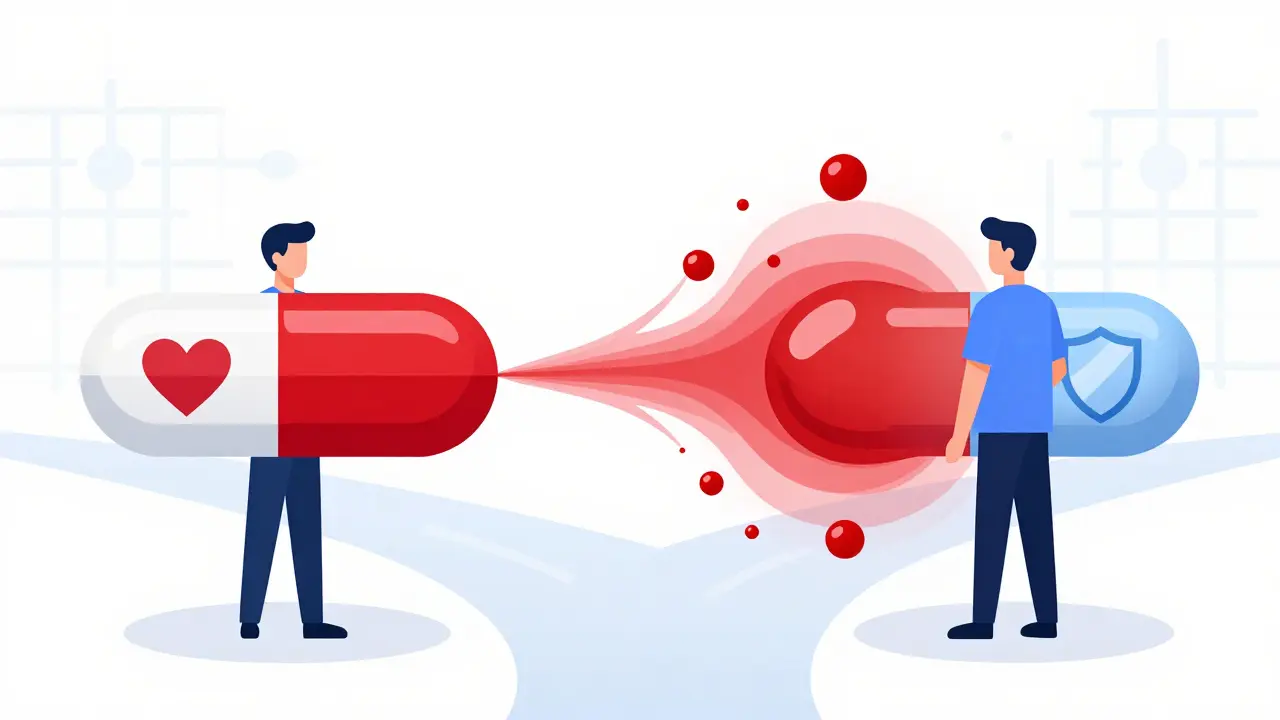
You pop a fish oil pill for your heart health. You take your blood thinner to prevent clots. It sounds like a smart combination, right? Wrong. Mixing fish oil with medications like Warfarin (Coumadin) or direct oral anticoagulants (DOACs) is one of the most common-and dangerous-supplement mistakes people make. The worry isn't just theoretical; it’s about whether that extra "healthy" fat will turn a minor cut into a major bleed.
The short answer? It depends on the dose and the drug. For many patients, low-dose fish oil is safe if monitored closely. For others, especially those on high doses or specific new-generation blood thinners, it could be risky. Let’s break down exactly what happens in your body when these two meet, so you can talk to your doctor with confidence rather than confusion.
Why Fish Oil Thins Your Blood
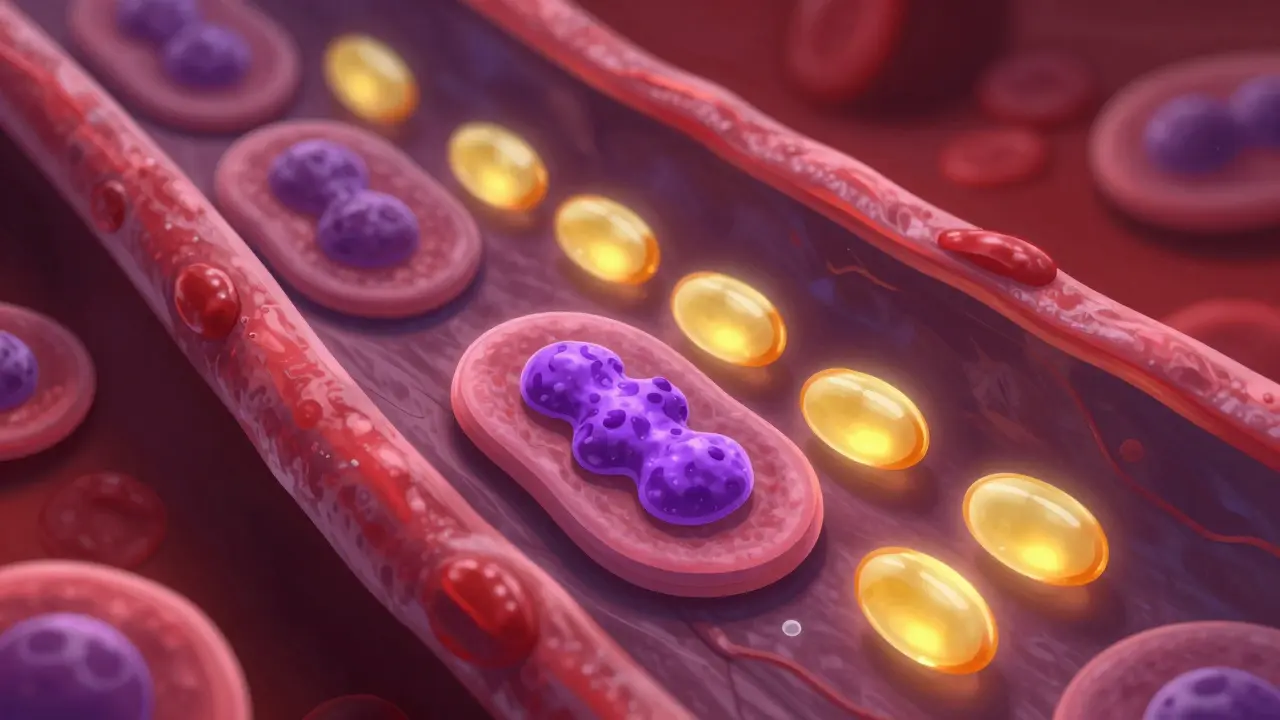
To understand the risk, you first need to know how fish oil works. It’s not magic; it’s chemistry. Fish oil contains two main types of omega-3 fatty acids: eicosapentaenoic acid (EPA) and docosahexaenoic acid (DHA). These fats don’t just sit in your stomach. They get absorbed into your platelets-the tiny cells in your blood responsible for sticking together to form clots.
When you have enough EPA and DHA, they change the structure of your platelet membranes. This makes your platelets less "sticky." In medical terms, this is called platelet aggregation inhibition. Normally, this is good. It helps prevent heart attacks and strokes by keeping blood flowing smoothly. But when you combine this natural anti-clotting effect with a prescription blood thinner, you are essentially piling on the brakes. You’re stopping clots from forming too well, which increases the time it takes for bleeding to stop.
This effect is dose-dependent. A small amount of omega-3s from eating salmon twice a week won’t spike your bleeding risk. But concentrated supplements? Those pack a punch. Studies show that doses above 3 grams per day significantly increase this anti-platelet activity. That’s why the label matters more than the brand name.
Fish Oil and Warfarin: The INR Tightrope
Warfarin is an older blood thinner that works by blocking vitamin K. Because it has a narrow therapeutic window, doctors monitor its effectiveness using a test called INR (International Normalized Ratio). Your goal is usually an INR between 2.0 and 3.0. Too low, and you risk clots. Too high, and you risk bleeding.
Here is where the debate gets messy. Some studies, like a large randomized trial published in Nutrients (2016), suggested that taking up to 4 grams of omega-3 daily didn’t significantly affect long-term warfarin control or cause excess bleeding. However, other authoritative sources, including the official Coumadin package insert and WebMD’s drug interaction database, classify this as a "moderate" risk. Why the difference?
It comes down to individual variation. While the average patient might be fine, some people metabolize warfarin differently. Adding fish oil can push their INR out of range unexpectedly. The UC San Diego Anticoagulation Clinic guidelines explicitly list fish oil under "Increased Risk of Bleeding due to Antiplatelet Effect." Their protocol is strict: check your INR within 3 to 5 days of starting or stopping fish oil, then repeat weekly until stable.
If you are on warfarin, do not assume you are safe because a study said so. Your body is not an average statistic. The consensus among experts like Dr. Larry Saslow of UCSF is clear: below 3 grams daily, risks are minimal but present. Above 3 grams, the bleeding risk increases substantially. Always let your anticoagulation clinic know before adding any supplement.
Fish Oil and DOACs: The Unknown Territory
Direct Oral Anticoagulants (DOACs)-such as apixaban (Eliquis), rivaroxaban (Xarelto), dabigatran (Pradaxa), and edoxaban (Savaysa)-are newer drugs that don’t require routine INR testing. This convenience is great, but it creates a blind spot for interactions.
Unlike warfarin, there are virtually no major clinical studies specifically examining the interaction between fish oil and DOACs. This lack of data is concerning. Because we aren’t checking your blood levels regularly, we rely on the known mechanisms of both drugs. Since fish oil inhibits platelet function and DOACs inhibit clotting factors, combining them theoretically increases bleeding risk.
The MedShadow Foundation (2022) cautions that while the risk might be lower than with warfarin, it still exists. Without INR tests to flag a problem, the first sign of an issue could be a nosebleed that won’t stop or bruising that appears without injury. Until more research is available, the safest approach is caution. If you are on a DOAC, stick to standard dietary sources of omega-3s or keep supplement doses low (under 1-2 grams daily) and discuss it with your prescribing physician.
How Much Is Too Much? Dosage Guidelines
Dosage is the single most important factor in determining safety. Not all fish oil pills are created equal. Many cheap supplements contain mostly filler fats, while high-quality ones provide concentrated EPA and DHA. Here is how to navigate the numbers:
- Low Risk (Generally Safe): Under 1 gram of combined EPA/DHA daily. This is often found in standard over-the-counter capsules. Most cardiologists consider this safe with anticoagulants if your blood pressure is controlled.
- Moderate Risk (Monitor Closely): 1 to 3 grams of combined EPA/DHA daily. At this level, you should inform your doctor. If you are on warfarin, expect more frequent INR checks.
- High Risk (Avoid Without Supervision): Over 3 grams of combined EPA/DHA daily. This threshold is critical. According to the American Heart Association and various pharmacological studies, doses exceeding 3 grams significantly increase bleeding risk, especially when combined with anticoagulants.
Note that "fish oil" weight on the bottle is not the same as EPA/DHA content. A 1000mg capsule might only have 300mg of active omega-3s. Always read the "Supplement Facts" panel for the specific amounts of EPA and DHA.
| Factor | Warfarin + Fish Oil | DOACs + Fish Oil |
|---|---|---|
| Monitoring Required | Yes (INR checks every 3-5 days after starting) | No routine monitoring (blind risk) |
| Evidence Level | Moderate (Conflicting studies) | Low (Theoretical risk, few studies) |
| Safe Daily Limit | ≤ 2g EPA/DHA (with monitoring) | ≤ 1g EPA/DHA (conservative estimate) |
| Primary Mechanism | Vitamin K antagonism + Platelet inhibition | Clotting factor inhibition + Platelet inhibition |
Signs of Excessive Bleeding: What to Watch For
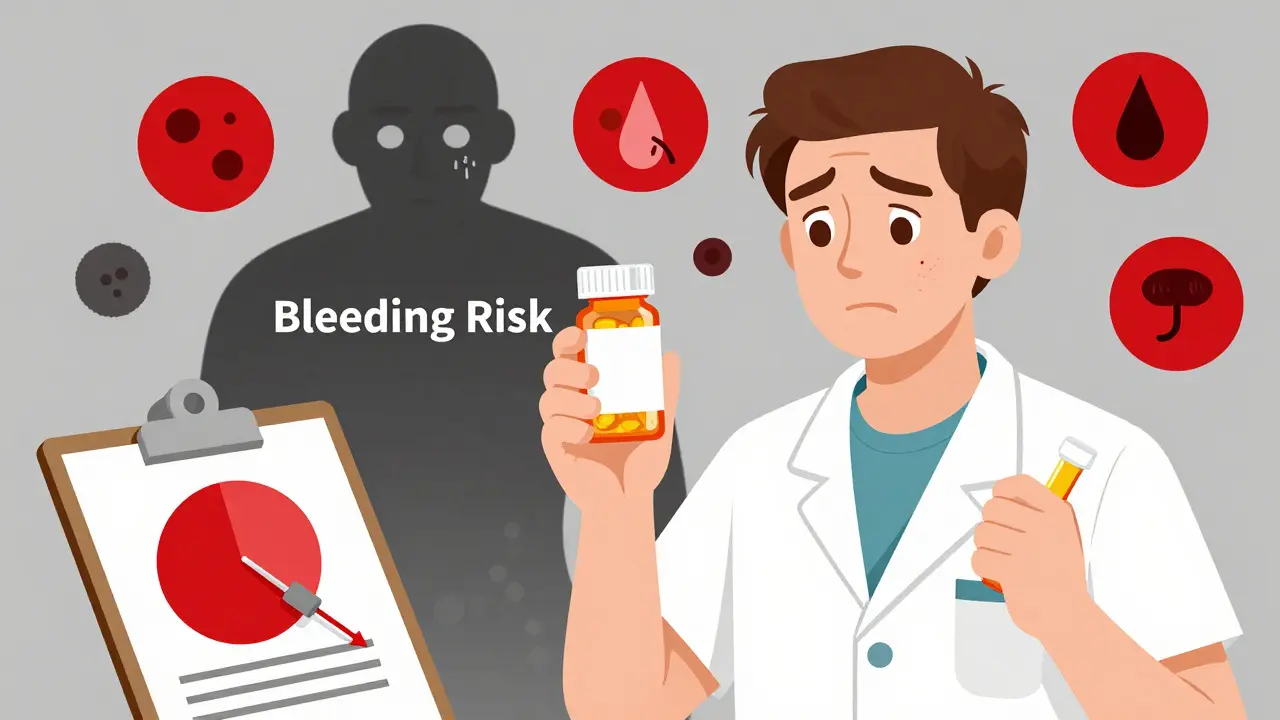
You cannot always feel your INR rising. Sometimes, the warning signs are subtle. If you start taking fish oil alongside your blood thinner, watch for these red flags:
- Unexplained Bruising: Large bruises appearing after minor bumps or no trauma at all.
- Prolonged Bleeding: Cuts that take longer than 10 minutes to stop bleeding despite pressure.
- Nosebleeds: Frequent or hard-to-stop epistaxis.
- Gum Bleeding: Blood in your saliva after brushing teeth.
- Dark Stools: Black, tarry stools can indicate internal gastrointestinal bleeding. This is a medical emergency.
- Headaches: Severe, sudden headaches could signal intracranial bleeding.
If you experience any of these, stop the fish oil immediately and contact your healthcare provider. Do not wait for your next scheduled appointment.
Safer Alternatives to Fish Oil
If your doctor advises against fish oil due to bleeding risks, you don’t have to give up omega-3s entirely. There are plant-based alternatives that provide health benefits without the same blood-thinning profile.
Flaxseed oil, hemp seed oil, and walnut oil contain alpha-linolenic acid (ALA), a type of omega-3. While ALA must be converted by the body into EPA and DHA (a process that is inefficient in humans), these oils do not have the same potent anti-platelet effects as concentrated marine omega-3s. According to Dr. Saouma (MedShadow, 2022), these plant oils are "safer" options for those on anticoagulants because they lack the direct blood-thinning properties of high-dose fish oil.
However, remember that ALA conversion rates vary wildly between individuals. If you need significant cardiovascular support, discuss prescription-grade purified EPA (like icosapent ethyl/Vascepa) with your doctor. Recent studies suggest purified EPA may have a different interaction profile than standard fish oil, though caution is still advised.
Practical Tips for Taking Fish Oil Safely
If your doctor gives you the green light to take fish oil, follow these steps to minimize side effects and risks:
- Start Low: Begin with the lowest effective dose (e.g., 500mg EPA/DHA) and increase slowly.
- Take With Meals: Taking fish oil with food reduces gastrointestinal side effects like heartburn and loose stools, which affect nearly 30% of users.
- Freeze Capsules: If you suffer from "fish burps," freezing the capsules can help mask the taste and odor.
- Check Quality: Look for third-party testing seals (like USP or NSF) to ensure purity and accurate labeling. Contaminated or oxidized fish oil can cause inflammation, counteracting its benefits.
- Inform All Providers: Tell your dentist, surgeon, and pharmacist that you are taking fish oil and blood thinners. This is crucial before any procedures.
Can I take fish oil with Eliquis (apixaban)?
There is limited specific data on fish oil and apixaban, but because both substances affect blood clotting, there is a theoretical increased risk of bleeding. Most experts recommend keeping fish oil doses low (under 1-2 grams of EPA/DHA daily) and consulting your doctor before starting. Unlike warfarin, you cannot monitor this interaction with a simple blood test, so caution is key.
Does eating fish pose the same risk as fish oil supplements?
No. Eating fatty fish like salmon or mackerel provides much lower concentrations of omega-3s compared to concentrated supplements. Dietary intake is generally considered safe for people on anticoagulants. The bleeding risk is primarily associated with high-dose supplemental EPA and DHA, typically above 3 grams per day.
How soon after starting fish oil should I check my INR?
If you are on warfarin, the UC San Diego Anticoagulation Clinic recommends checking your INR within 3 to 5 days of starting or stopping fish oil supplementation. After that, weekly checks may be needed until your levels stabilize. Never assume your previous INR target remains valid without re-testing.
Are there non-fish sources of omega-3s that are safer?
Yes. Plant-based oils like flaxseed, hemp, and walnut oil contain ALA omega-3s. These do not have the same strong anti-platelet effects as marine-derived EPA and DHA. However, the body converts ALA to EPA/DHA very inefficiently. For those strictly avoiding bleeding risks, these plant oils are a safer alternative, though they may offer less cardiovascular benefit.
What should I do if I accidentally take too much fish oil?
If you exceed your recommended dose significantly, monitor yourself closely for signs of bleeding such as unusual bruising, nosebleeds, or blood in urine/stool. If you are on warfarin, contact your anticoagulation clinic immediately for an urgent INR check. If you are on a DOAC and experience severe bleeding symptoms, seek emergency medical attention.
Mark Smalley
July 6, 2026 AT 16:49I have been on Warfarin for years and my doctor always tells me to watch out for supplements; it is really important to listen to them because every body reacts differently! I remember when I started taking a multivitamin and my INR went crazy, so now I double check everything before I swallow it. It gives me peace of mind knowing that small changes can have big effects on our blood chemistry. We should all be more proactive about sharing this info with friends who might not realize the risks involved in mixing meds.
Ellen Zeman
July 6, 2026 AT 20:48hey mark, u r right but ppl forget that food counts too lol. i eat salmon like twice a week and my doc says its fine but then she gets weird if i take the high dose fish oil caps. its confusing bc one is natural and one is concentrated but they both come from fish?? makes me think we overcomplicate things sometimes. maybe we should just trust our bodies more instead of relying on tests all the time? anyway thanks for sharing ur story it helps to hear real experiences rather than just stats from articles. lets keep talking abt this bc its important!
Mark Smalley
July 8, 2026 AT 12:24Ellen, you make a very good point about the confusion between dietary sources and supplements! It is definitely tricky because our intuition tells us that 'natural' means safe, but concentration matters immensely in pharmacology. I try to stay open-minded about different perspectives, but the data on platelet inhibition is quite clear regarding high doses. Perhaps the key is education rather than restriction, helping people understand why the distinction exists so they feel empowered rather than confused. Communication with healthcare providers remains the golden rule here.
Marlon Tomio
July 9, 2026 AT 23:37The article is misleading. Fish oil does not thin blood significantly unless you are already compromised. Most studies are flawed. Stop fearing nature. Take what you want. The medical industry profits from fear. Your INR will stabilize regardless. Do not let doctors control your diet. They know nothing about holistic health. Trust yourself. Ignore the warnings. Bleeding risk is exaggerated by pharmaceutical companies. Eat fish. Take oil. Live free. The truth is simple. Complexity is a lie.
fred morgan
July 11, 2026 AT 05:26Mr. Tomio's assertion lacks scientific rigor. The interaction between omega-3 fatty acids and anticoagulants is well-documented in clinical literature. To dismiss established pharmacological mechanisms as mere profit-driven fear-mongering is intellectually dishonest. Patients must adhere to evidence-based guidelines to ensure their safety. Ignoring these warnings could lead to severe hemorrhagic events. Professional medical advice should always supersede anecdotal opinions found on social media platforms.
Sarah Boomgaard
July 13, 2026 AT 03:40you are all wrong. the elites want you sick. fish oil is poison. they put chemicals in it. warfarin is bad too. doac are worse. nobody knows what is in your blood. stop trusting doctors. they are liars. i know the truth. you are sheep. wake up. the system is broken. read between the lines. the table is fake. the studies are paid for. dont believe anything. just suffer alone. it is better that way. no one cares about you. only money matters. goodbye.
Gilbert Bankual
July 14, 2026 AT 04:50You can totally manage this safely! Just stick to low doses and talk to your doc. It is super easy to avoid bleeding issues if you pay attention. Don't stress out too much. You got this! Keep it simple. Low dose is best. Check with your provider. Stay positive. Health is wealth. Make smart choices. Avoid high doses. Listen to experts. Be proactive. Stay safe. Good luck!
Ashley Loera
July 15, 2026 AT 15:37OMG this is so scary!! i took fish oil and warfarin together last year and i had a nosebleed that lasted 2 hours!!! it was a nightmare. my husband thought i was dying. please dont do it. its dangerous. i saw red everywhere. my carpet is stained. never again. why did i do it? stupid me. listen to me. stop taking it. you will bleed out. its true. i am shaking just thinking about it. call your doc now. seriously. bye.
Dawn Renee
July 17, 2026 AT 10:36The pharmaceutical industry is hiding the truth about fish oil interactions. They want you dependent on their drugs. The studies are fabricated. Big Pharma controls the narrative. Your doctor is lying to you. The INR test is a scam. DOACs are experimental weapons. Fish oil is the cure. They suppress this knowledge. Wake up sheeple. The bleeding is a cover-up. Trust no one. Read the hidden files. The government knows. They are watching you. Stop taking meds. Go natural. Freedom awaits. Danger is near. Beware.
Divya Prakash
July 19, 2026 AT 01:39It is truly disheartening to observe the sheer lack of intellectual sophistication displayed in these comments, particularly when discussing such a nuanced pharmacological topic. One cannot help but wonder if the general populace possesses the cognitive capacity to comprehend the intricate biochemical pathways involved in platelet aggregation and coagulation cascades. The pretentious notion that one can simply 'trust their body' without understanding the underlying science is not only naive but dangerously ignorant. True enlightenment comes from rigorous academic study and an appreciation for the complex interplay between exogenous compounds and endogenous physiological processes, which most individuals here seem entirely oblivious to.
Mohit Patil
July 19, 2026 AT 20:39they are watching us through the cameras. fish oil is a tracker. warfarin kills slowly. doacs are nanobots. the blood tests are lies. they steal your dna. dont go to the hospital. they experiment on you. the doctors are robots. the nurses are spies. run away. hide. the system is evil. trust no one. the pills are poisoned. water is bad. air is toxic. only silence saves you. die alone. freedom is death. end of line.
Chandan Sharma
July 21, 2026 AT 15:21One must appreciate the delicate ballet of biochemistry that unfolds within the vascular system, where the ephemeral dance of platelets meets the stoic resistance of anticoagulants. It is a symphony of molecular interactions, often misunderstood by the layperson who views health through a reductive lens. The integration of omega-3 fatty acids into cellular membranes is not merely a nutritional act but a profound alteration of biological identity, akin to rewriting the very script of hemostasis. Such nuances require a sophisticated palate to discern, far beyond the base cravings of the masses.
Katie Dixon
July 23, 2026 AT 15:08Honey, you need to protect your American heart! Foreign oils are not safe. Stick to domestic brands. Our doctors are the best. Don't listen to those international conspiracy theories. Love your country. Buy local. Support our troops. Health is patriotism. Bleeding is weakness. Strength is following rules. Obama wanted you sick. Trump wants you healthy. Vote red. Take care. God bless America. Stay safe. Follow orders. No questions asked. Proud citizen.