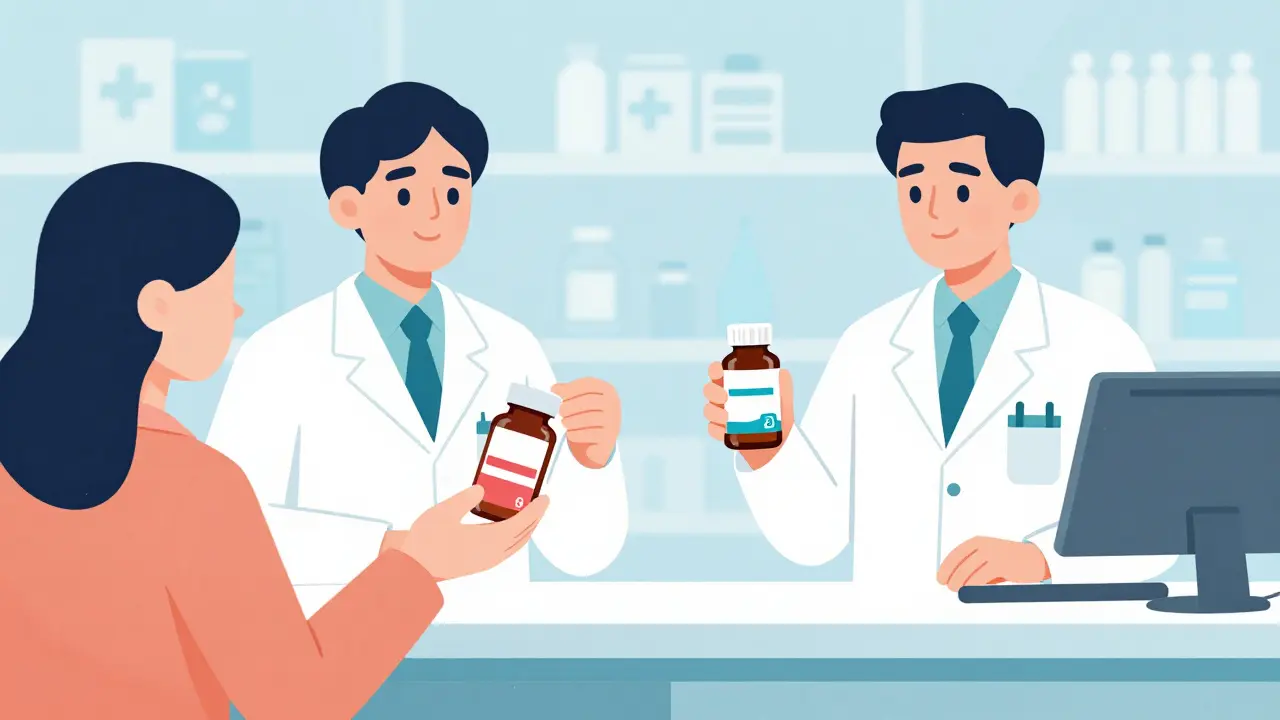
Imagine you are at the pharmacy counter. You have a prescription for a brand-name medication that costs hundreds of dollars. The pharmacist offers you an alternative. It is not just any generic; it is an authorized generic. An authorized generic is the exact same drug as the brand-name version, manufactured by the same company, but sold under a different name without the brand label. It looks slightly different-maybe the pill is a different color or has different markings-but inside, it is identical. The price? Significantly lower. But here is the catch: these drugs do not show up in the usual places where pharmacists and patients look for generic options. They are missing from the standard lists. If you want to find them, verify them, or understand why they exist, you need to know exactly where to look and how to interpret the data.
Finding information on authorized generics can feel like searching for a needle in a haystack because the primary source-the U.S. Food and Drug Administration (FDA)-keeps this information in a specific, somewhat outdated format. Unlike traditional generics, which are listed in the famous "Orange Book," authorized generics live in their own separate database. This separation creates confusion for consumers, pharmacists, and even healthcare analysts who want to track market trends or find cost-saving alternatives. In this guide, we will walk you through exactly where to find the official FDA list, what the data actually means, and how to cross-reference it with other tools to get accurate, real-time information.
What Exactly Is an Authorized Generic?
To understand why the list exists, you first need to understand the product. An authorized generic is unique in the pharmaceutical world. It is produced by the brand-name manufacturer themselves. When a brand company decides to sell its drug as an authorized generic, it markets the same formulation under its existing New Drug Application (NDA). It does not go through the Abbreviated New Drug Application (ANDA) process that traditional generic companies use.
This distinction matters because it changes how the drug is regulated and tracked. According to the FDA, an authorized generic is "the same as the brand-name drug but does not use the brand name on the label." Because it is the same drug, it is considered therapeutically equivalent by definition. However, since it is marketed under the brand’s NDA, it is not included in the FDA's Orange Book, which is the go-to resource for comparing traditional generics. This creates a blind spot for anyone relying solely on the Orange Book to find cheaper alternatives.
Where to Find the Official FDA List
The primary source for this information is the FDA Listing of Authorized Generic Drugs. A public database maintained by the FDA that tracks all authorized generic drugs approved in the United States. This list was mandated by the Medicare Prescription Drug, Improvement, and Modernization Act of 2003. The law required the FDA to publish a complete list of all authorized generic drugs, including the drug trade name, the brand company manufacturer, and the date the drug entered the market.
You can access this list directly on the FDA website. The dedicated page provides explanatory content and a link to the current listing. As of the most recent update in October 2025, the list is available as a PDF document. While this might seem inconvenient compared to modern searchable databases, it remains the authoritative source for identifying which products have been officially recognized as authorized generics.
Here is what you will find in the list:
- Proprietary Name: The original brand name of the drug.
- Dosage Form: Whether it is a tablet, capsule, gel, etc.
- Strength: The dosage amount (e.g., 50 mg).
- NDA Applicant Name: The manufacturer (usually the brand company).
- Date Entered Market: The period when the drug was first reported.
For example, the list includes entries like ACTIQ lozenges by Cephalon, LLC, which entered the market in September 2006, and ARTHROTEC tablets by Pfizer Inc., which appeared in November 2012. These specific details help researchers and pharmacists identify historical trends and manufacturer strategies.
Why the FDA List Isn't Enough
While the FDA list is the official record, it has significant limitations for practical use. The biggest issue is timeliness. The FDA updates this list quarterly, and the data comes from annual reports submitted by sponsors. This means there is a lag between when a drug enters the market and when it appears on the list. More importantly, the FDA explicitly states that it "does not have information on whether the AG is still marketed and, if not still marketed, the date marketing ceased."
This creates a major problem for pharmacists and patients. A drug might be on the list, but it could have been discontinued months ago. Conversely, a new authorized generic might have launched recently but not yet appear in the latest quarterly update. Industry professionals often report frustration with this gap. For instance, independent pharmacy owners have noted that checking the FDA list against actual wholesaler inventory often reveals discrepancies, with several listed products being unavailable in practice.
Additionally, the "Date Authorized Generic Entered Market" column reflects the reporting period of the annual report, not the precise launch date. This lack of precision makes it difficult to track competitive dynamics in real-time. If you are looking to save money today, the FDA list alone will not tell you if the drug is actually available or what the current price is.
Cross-Referencing with Other Databases
To get a complete picture, you need to combine the FDA list with other resources. Here are the key tools you should use alongside the FDA data:
| Resource | Primary Use | Limits Regarding Authorized Generics |
|---|---|---|
| FDA Authorized Generics List | Official identification of AGs | Quarterly updates; no real-time availability or pricing data |
| FDA Orange Book | Therapeutic equivalence of traditional generics | Does NOT include authorized generics (they are under NDAs, not ANDAs) |
| Drugs@FDA Database | General approval info for drugs | Broad data but does not specifically categorize or highlight AGs |
| National Drug Code (NDC) Directory | Verify active drug listings | Shows if a product is registered, but not necessarily if it is an AG |
| Commercial Databases (e.g., IQVIA) | Market share and sales tracking | Paid access; provides real-time sales and availability data |
The National Drug Code (NDC) Directory. A federal database that lists all drug products marketed in the United States, identified by a unique three-part number. is particularly useful for verification. By checking the NDC of a potential authorized generic, you can confirm if the product is currently registered. However, the NDC directory does not explicitly label a drug as an "authorized generic," so you still need the FDA list to make that connection.
For those who need real-time data, commercial databases like IQVIA National Sales Perspectives offer deeper insights. These tools track actual sales and market presence, filling the gap left by the FDA’s static list. While these are expensive and typically used by industry analysts, they provide the accuracy that pharmacists and healthcare providers often crave.
Understanding the Market Context
Why do brand manufacturers bother creating authorized generics? The answer lies in competition. When a brand-name drug faces expiration of its patent protection, generic competitors rush in. To protect their market share, brand companies sometimes release an authorized generic. This allows them to compete on price without diluting their brand identity entirely.
Data shows a significant increase in this strategy. A 2023 study published in Health Affairs found that 854 unique authorized generics were launched in the U.S. between 2010 and 2019. Major players like Pfizer, Teva, and Mylan (now part of Viatris) are among the most active. Pfizer, for example, had 47 distinct authorized generic products listed as of late 2025. This trend highlights the strategic importance of authorized generics in the pharmaceutical landscape.
However, the impact on consumer savings is debated. Some experts argue that authorized generics provide a necessary check on prices during the 180-day exclusivity period granted to the first generic applicant. Others point out that these drugs often enter the market at prices only marginally lower than the brand, offering minimal savings. Understanding this context helps you set realistic expectations when looking for cost-effective alternatives.
Future Developments and Accessibility
The FDA recognizes the limitations of its current PDF-based list. In response to industry feedback, the agency has announced plans to transition to a dynamic, searchable database format. This change is expected to improve search functionality and provide more timely updates. Stakeholders have requested better integration with other FDA systems, such as the Drug Shortage Portal, to create a more comprehensive view of drug availability.
Until this transition occurs, users must rely on manual cross-referencing. The FDA encourages users to submit suggested changes to their designated email address, though they caution that the list will only reflect information included in annual reports. This ongoing evolution suggests that while the current process is cumbersome, improvements are on the horizon.
Practical Tips for Users
If you are a patient, pharmacist, or researcher looking to use the FDA list effectively, keep these tips in mind:
- Start with the Brand Name: Identify the brand-name drug you are interested in. Search for it in the FDA list to see if an authorized generic exists.
- Check the Date: Note the "Date Entered Market" but remember it may not be precise. Look for the most recent quarterly update to ensure you have the latest data.
- Verify Availability: Cross-reference the drug with your local wholesaler or pharmacy system. Just because it is on the list does not mean it is in stock.
- Use the NDC Directory: Confirm the drug’s registration status using the National Drug Code Directory to ensure it is still actively marketed.
- Consult Your Pharmacist: Pharmacists have access to additional resources and can help determine if an authorized generic is a suitable and available option for your specific needs.
By combining the official FDA list with practical verification steps, you can navigate the complex world of authorized generics with greater confidence. While the system is not perfect, understanding its structure and limitations empowers you to make informed decisions about your medications.
Is an authorized generic the same as a regular generic?
No. An authorized generic is made by the same company that produces the brand-name drug and is sold under the brand’s New Drug Application (NDA). A regular generic is made by a different company and is approved through an Abbreviated New Drug Application (ANDA). While both are therapeutically equivalent to the brand, authorized generics are not listed in the FDA Orange Book.
Why aren't authorized generics in the FDA Orange Book?
The Orange Book lists drugs approved via ANDAs, which is the pathway for traditional generics. Authorized generics are marketed under the brand manufacturer’s existing NDA. Since they are considered the same drug as the brand, they are tracked separately in the FDA’s Listing of Authorized Generic Drugs.
How often is the FDA list of authorized generics updated?
The FDA updates the list quarterly. However, the data is based on annual reports submitted by sponsors, so there may be a delay between when a drug enters the market and when it appears on the list. The list does not reflect real-time market availability.
Can I trust the 'Date Entered Market' on the FDA list?
Not entirely. The FDA notes that this date reflects the period covered by the annual report in which the authorized generic was first reported, not the exact launch date. Additionally, the list does not indicate if a drug has been discontinued, so the date may not reflect current market status.
Where can I find real-time availability for authorized generics?
The FDA list does not provide real-time availability. For current stock and pricing, you should consult with your pharmacist, check with local wholesalers, or use commercial databases like IQVIA, which track actual sales and market presence. The National Drug Code (NDC) Directory can also help verify if a product is still registered.
Are authorized generics cheaper than brand-name drugs?
Yes, authorized generics are typically priced lower than brand-name drugs, though often higher than traditional generics. They serve as a middle-ground option, allowing brand manufacturers to compete on price while maintaining some market control. Savings vary by product and market conditions.
Will the FDA improve the accessibility of this list?
Yes. The FDA has announced plans to transition from a static PDF list to a dynamic, searchable database format. This change aims to improve search functionality and provide more timely updates, addressing concerns raised by industry stakeholders about the current system's limitations.